Driven by next-token prediction, NLP shifted from task-specific models into powerful generalist foundation models. What, then, is the equivalent catalyst needed to achieve a general-purpose model in computer vision? In this paper, we contend that large-scale text-to-video generation serves as a strong pre-training paradigm for computer vision, providing the necessary spatiotemporal priors, vision-language alignment, and scalability required for general visual intelligence. We introduce GenCeption, which leverages a pre-trained video generative diffusion backbone to define a feed-forward perception model, capable of performing various vision tasks steered by text instructions. Empirical results demonstrate that GenCeption achieves state-of-the-art performance across a diverse suite of tasks, including depth, surface normal, and camera pose estimation, expression-referring segmentation, and 3D keypoint prediction, often matching or surpassing specialized models (e.g. DepthAnything3, SAM3, D4RT, VGGT-Omega, Sapiens, David, Genmo, and Lotus-2). Furthermore, the video generative pretrained backbone outperforms alternative pretraining paradigms (e.g., V-JEPA, and Video MAE) under comparable settings. Importantly, GenCeption exhibits preliminary data and model scaling properties along with exceptional data efficiency, where it achieves comparable performance with leading models like D4RT and VGGT-Omega with 7 to 500 less training data. Finally, GenCeption also exhibits intriguing emergent behaviors: a model trained exclusively on synthetic human videos generalizes to real-world footage and out-of-distribution object categories (e.g., animals and robots). These findings suggest that video generation is not merely a synthesis tool, but a foundational path toward generalist vision intelligence for the physical world. Project page: https://genception.github.io
Pre-trained vision encoders like DINOv2 have demonstrated exceptional performance on unimodal tasks. However, we observe that their feature representations are poorly aligned across different modalities. For instance, the feature embedding for an RGB image and its corresponding depth map of the same scene exhibit a cosine similarity that is nearly identical to that of two random, unrelated images. To address this, we propose the Omnivorous Vision Encoder, a novel framework that learns a modality-agnostic feature space. We train the encoder with a dual objective: first, to maximize the feature alignment between different modalities of the same scene; and second, a distillation objective that anchors the learned representations to the output of a fully frozen teacher such as DINOv2. The resulting student encoder becomes "omnivorous" by producing a consistent, powerful embedding for a given scene, regardless of the input modality (RGB, Depth, Segmentation, etc.). This approach enables robust cross-modal understanding while retaining the discriminative semantics of the original foundation model.
We introduce the "single-life" learning paradigm, where we train a distinct vision model exclusively on egocentric videos captured by one individual. We leverage the multiple viewpoints naturally captured within a single life to learn a visual encoder in a self-supervised manner. Our experiments demonstrate three key findings. First, models trained independently on different lives develop a highly aligned geometric understanding. We demonstrate this by training visual encoders on distinct datasets each capturing a different life, both indoors and outdoors, as well as introducing a novel cross-attention-based metric to quantify the functional alignment of the internal representations developed by different models. Second, we show that single-life models learn generalizable geometric representations that effectively transfer to downstream tasks, such as depth estimation, in unseen environments. Third, we demonstrate that training on up to 30 hours from one week of the same person's life leads to comparable performance to training on 30 hours of diverse web data, highlighting the strength of single-life representation learning. Overall, our results establish that the shared structure of the world, both leads to consistency in models trained on individual lives, and provides a powerful signal for visual representation learning.
We present Recurrent Video Masked-Autoencoders (RVM): a novel video representation learning approach that uses a transformer-based recurrent neural network to aggregate dense image features over time, effectively capturing the spatio-temporal structure of natural video data. RVM learns via an asymmetric masked prediction task requiring only a standard pixel reconstruction objective. This design yields a highly efficient “generalist” encoder: RVM achieves competitive performance with state-of-the-art video models (e.g. VideoMAE, V-JEPA) on video-level tasks like action recognition and point/object tracking, while also performing favorably against image models (e.g. DINOv2) on tasks that test geometric and dense spatial understanding. Notably, RVM achieves strong performance in the small-model regime without requiring knowledge distillation, exhibiting up to 30x greater parameter efficiency than competing video masked autoencoders. Moreover, we demonstrate that RVM's recurrent nature allows for stable feature propagation over long temporal horizons with linear computational cost, overcoming some of the limitations of standard spatio-temporal attention-based architectures. Finally, we use qualitative visualizations to highlight that RVM learns rich representations of scene semantics, structure, and motion.
Multi-camera systems are increasingly practical for robotics, AR/VR, and autonomous driving because complementary views reduce depth ambiguity and preserve visibility under occlusion. Existing point-tracking benchmarks, however, focus on a single video or static multi-camera rigs. None test long-term 3D point tracking across several synchronized views under camera motion. We introduce TAPVid-MV (Tracking Any Point in Video across Multiple Views), the first benchmark for this setting. It contains a curated set of 284 sequences, 1,142 calibrated camera streams, and 109,769 point tracks across seven subsets spanning indoor and outdoor domains, from robotics and human activity to driving and synthetic procedural scenes. We obtain these trajectories using dataset-specific auxiliary modalities: sensor depth, LiDAR, SLAM and SfM points, human meshes, posed object meshes, and simulation. Every sequence and trajectory is visually verified by human annotators. Across more than 30 baselines, no method comes close to solving the task. Surprisingly, existing multi-view point trackers do not consistently outperform monocular point trackers. By evaluating reconstruction and point tracking on the same datasets, TAPVid-MV helps distinguish errors in recovered geometry from errors in point correspondence. Through this joint analysis, we identify geometry recovery as a major bottleneck for accurate 3D point tracking. Beyond multi-view 3D point tracking, our released annotations support monocular 2D and 3D point tracking, future-trajectory prediction, and 4D reconstruction.
We propose a novel block for causal video modelling. It relies on a time-space-channel factorisation with dedicated blocks for each dimension: gated linear recurrent units (LRUs) perform information mixing over time, self-attention layers perform mixing over space, and MLPs over channels. The resulting architecture TRecViT is causal and shows strong performance on sparse and dense tasks, trained in supervised or self-supervised regimes, being the first causal video model in the state-space models family. Notably, our model outperforms or is on par with the popular (non-causal) ViViT-L model on large scale video datasets (SSv2, Kinetics400), while having 3× less parameters, 12× smaller memory footprint, and 5× lower FLOPs count than the full self-attention ViViT, with an inference throughput of about 300 frames per second, running comfortably in real-time. When compared with causal transformer-based models (TSM, RViT) and other recurrent models like LSTM, TRecViT obtains state-of-the-art results on the challenging SSv2 dataset. Code and checkpoints are available online https://github.com/google-deepmind/trecvit.
Visual intelligence requires anticipating the future behavior of agents, yet vision systems lack a general representation for motion and behavior. We propose dense point trajectories as visual tokens for behavior, a structured mid-level representation that disentangles motion from appearance and generalizes across diverse non-rigid agents, such as animals in-the-wild. Building on this abstraction, we design a diffusion transformer that models unordered sets of trajectories and explicitly reasons about occlusion, enabling coherent forecasts of complex motion patterns. To evaluate at scale, we curate 300 hours of unconstrained animal video with robust shot detection and camera-motion compensation. Experiments show that forecasting trajectory tokens achieves category-agnostic, data-efficient prediction, outperforms state-of-the-art baselines, and generalizes to rare species and morphologies, providing a foundation for predictive visual intelligence in the wild.
The Third Perception Test challenge was organised as a full-day workshop alongside the IEEE/CVF International Conference on Computer Vision (ICCV) 2025. Its primary goal is to benchmark state-of-the-art video models and measure the progress in multimodal perception. This year, the workshop featured 2 guest tracks as well: KiVA (an image understanding challenge) and Physic-IQ (a video generation challenge). In this report, we summarise the results from the main Perception Test challenge, detailing both the existing tasks as well as novel additions to the benchmark. In this iteration, we placed an emphasis on task unification, as this poses a more challenging test for current SOTA multimodal models. The challenge included five consolidated tracks: unified video QA, unified object and point tracking, unified action and sound localisation, grounded video QA, and hour-long video QA, alongside an analysis and interpretability track that is still open for submissions. Notably, the unified video QA track introduced a novel subset that reformulates traditional perception tasks (such as point tracking and temporal action localisation) as multiple-choice video QA questions that video-language models can natively tackle. The unified object and point tracking merged the original object tracking and point tracking tasks, whereas the unified action and sound localisation merged the original temporal action localisation and temporal sound localisation tracks. Accordingly, we required competitors to use unified approaches rather than engineered pipelines with task-specific models. By proposing such a unified challenge, Perception Test 2025 highlights the significant difficulties existing models face when tackling diverse perception tasks through unified interfaces.
A current limitation of video generative video models is that they generate plausible looking frames, but poor motion --- an issue that is not well captured by FVD and other popular methods for evaluating generated videos. Here we go beyond FVD by developing a metric which better measures plausible object interactions and motion. Our novel approach is based on auto-encoding point tracks and yields motion features that can be used to not only compare distributions of videos (as few as one generated and one ground truth, or as many as two datasets), but also for evaluating motion of single videos. We show that using point tracks instead of pixel reconstruction or action recognition features results in a metric which is markedly more sensitive to temporal distortions in synthetic data, and can predict human evaluations of temporal consistency and realism in generated videos obtained from open-source models better than a wide range of alternatives. We also show that by using a point track representation, we can spatiotemporally localize generative video inconsistencies, providing extra interpretability of generated video errors relative to prior work. An overview of the results and link to the code can be found on the project page: trajan-paper.github.io.
The ability to segment objects based on open-ended language prompts remains a critical challenge, requiring models to ground textual semantics into precise spatial masks while handling diverse and unseen categories. We present OpenWorldSAM, a framework that extends the prompt-driven Segment Anything Model v2 (SAM2) to open-vocabulary scenarios by integrating multi-modal embeddings extracted from a lightweight vision-language model (VLM). Our approach is guided by four key principles: i) Unified prompting: OpenWorldSAM supports a diverse range of prompts, including category-level and sentence-level language descriptions, providing a flexible interface for various segmentation tasks. ii) Efficiency: By freezing the pre-trained components of SAM2 and the VLM, we train only 4.5 million parameters on the COCO-stuff dataset, achieving remarkable resource efficiency. iii) Instance Awareness: We enhance the model's spatial understanding through novel positional tie-breaker embeddings and cross-attention layers, enabling effective segmentation of multiple instances. iv) Generalization: OpenWorldSAM exhibits strong zero-shot capabilities, generalizing well on unseen categories and an open vocabulary of concepts without additional training. Extensive experiments demonstrate that OpenWorldSAM achieves state-of-the-art performance in open-vocabulary semantic, instance, and panoptic segmentation across multiple benchmarks, including ADE20k, PASCAL, ScanNet, and SUN-RGBD.
We introduce LayerLock, a simple yet effective approach for self-supervised visual representation learning, that gradually transitions from pixel to latent prediction through progressive layer freezing. First, we make the observation that during training of video masked-autoencoding (MAE) models, ViT layers converge in the order of their depth: shallower layers converge early, deeper layers converge late. We then show that this observation can be exploited to accelerate standard MAE by progressively freezing the model according to an explicit schedule, throughout training. Furthermore, this same schedule can be used in a simple and scalable approach to latent prediction that does not suffer from "representation collapse". We apply our proposed approach, LayerLock, to large models of up to 4B parameters with results surpassing those of non-latent masked prediction on the 4DS perception suite.
We address the challenge of representation learning from a continuous stream of video as input, in a self-supervised manner. This differs from the standard approaches to video learning where videos are chopped and shuffled during training in order to create a non-redundant batch that satisfies the independently and identically distributed (IID) sample assumption expected by conventional training paradigms. When videos are only available as a continuous stream of input, the IID assumption is evidently broken, leading to poor performance. We demonstrate the drop in performance when moving from shuffled to sequential learning on three tasks: the one-video representation learning method DoRA, standard VideoMAE on multi-video datasets, and the task of future video prediction. To address this drop, we propose a geometric modification to standard optimizers, to decorrelate batches by utilising orthogonal gradients during training. The proposed modification can be applied to any optimizer - we demonstrate it with Stochastic Gradient Descent (SGD) and AdamW. Our proposed orthogonal optimizer allows models trained from streaming videos to alleviate the drop in representation learning performance, as evaluated on downstream tasks. On three scenarios (DoRA, VideoMAE, future prediction), we show our orthogonal optimizer outperforms the strong AdamW in all three scenarios.
Forecasting future events is a fundamental capability for general-purpose systems that plan or act across different levels of abstraction. Yet, evaluating whether a forecast is "correct" remains challenging due to the inherent uncertainty of the future. We propose a unified evaluation framework for assessing the forecasting capabilities of frozen vision backbones across diverse tasks and abstraction levels. Rather than focusing on single time steps, our framework evaluates entire trajectories and incorporates distributional metrics that better capture the multimodal nature of future outcomes. Given a frozen vision model, we train latent diffusion models to forecast future features directly in its representation space, which are then decoded via lightweight, task-specific readouts. This enables consistent evaluation across a suite of diverse tasks while isolating the forecasting capacity of the backbone itself. We apply our framework to nine diverse vision models, spanning image and video pretraining, contrastive and generative objectives, and with or without language supervision, and evaluate them on four forecasting tasks, from low-level pixel predictions to high-level object motion. We find that forecasting performance strongly correlates with perceptual quality and that the forecasting abilities of video synthesis models are comparable or exceed those pretrained in masking regimes across all levels of abstraction. However, language supervision does not consistently improve forecasting. Notably, video-pretrained models consistently outperform image-based ones.
We introduce a framework for online learning from a single continuous video stream -- the way people and animals learn, without mini-batches, data augmentation or shuffling. This poses great challenges given the high correlation between consecutive video frames and there is very little prior work on it. Our framework allows us to do a first deep dive into the topic and includes a collection of streams and tasks composed from two existing video datasets, plus methodology for performance evaluation that considers both adaptation and generalization. We employ pixel-to-pixel modelling as a practical and flexible way to switch between pre-training and single-stream evaluation as well as between arbitrary tasks, without ever requiring changes to models and always using the same pixel loss. Equipped with this framework we obtained large single-stream learning gains from pre-training with a novel family of future prediction tasks, found that momentum hurts, and that the pace of weight updates matters. The combination of these insights leads to matching the performance of IID learning with batch size 1, when using the same architecture and without costly replay buffers.
Following the successful 2023 edition, we organised the Second Perception Test challenge as a half-day workshop alongside the IEEE/CVF European Conference on Computer Vision (ECCV) 2024, with the goal of benchmarking state-of-the-art video models and measuring the progress since last year using the Perception Test benchmark. This year, the challenge had seven tracks (up from six last year) and covered low-level and high-level tasks, with language and non-language interfaces, across video, audio, and text modalities; the additional track covered hour-long video understanding and introduced a novel video QA benchmark 1h-walk VQA. Overall, the tasks in the different tracks were: object tracking, point tracking, temporal action localisation, temporal sound localisation, multiple-choice video question-answering, grounded video question-answering, and hour-long video question-answering. We summarise in this report the challenge tasks and results, and introduce in detail the novel hour-long video QA benchmark 1h-walk VQA.
Current vision models typically maintain a fixed correspondence between their representation structure and image space. Each layer comprises a set of tokens arranged “on-the-grid,” which biases patches or tokens to encode information at a specific spatio(-temporal) location. In this work we present *Moving Off-the-Grid* (MooG), a self-supervised video representation model that offers an alternative approach, allowing tokens to move “off-the-grid” to better enable them to represent scene elements consistently, even as they move across the image plane through time. By using a combination of cross-attention and positional embeddings we disentangle the representation structure and image structure. We find that a simple self-supervised objective—next frame prediction—trained on video data, results in a set of latent tokens which bind to specific scene structures and track them as they move. We demonstrate the usefulness of MooG’s learned representation both qualitatively and quantitatively by training readouts on top of the learned representation on a variety of downstream tasks. We show that MooG can provide a strong foundation for different vision tasks when compared to “on-the-grid” baselines.
Image-to-3D models increasingly rely on hierarchical generation to disentangle geometry and texture. However, the design choices underlying these two-stage models–particularly the optimal choice of intermediate geometric representations–remain largely understudied. To investigate this, we introduce unPIC (undo-a-Picture), a modular framework for empirical analysis of image-to-3D pipelines. By factorizing the generation process into a multiview-geometry prior followed by an appearance decoder, unPIC enables a rigorous comparison of intermediate geometry representations. Through this framework, we identify that a specific representation, Camera-Relative Object Coordinates (CROCS), significantly outperforms alternatives such as depth maps, pretrained visual features, and other pointmap-based representations. We demonstrate that CROCS is not only easier for the first-stage geometry prior to predict, but also serves as an effective conditioning signal for ensuring 360-degree consistency during appearance decoding. Another advantage is that CROCS enables fully feedforward, direct 3D point cloud generation without requiring a separate post-hoc reconstruction step. Our unPIC formulation utilizing CROCS achieves superior novel-view quality, geometric accuracy, and multiview consistency; it outperforms leading baselines, including InstantMesh, Direct3D, CAT3D, Free3D, and EscherNet, on datasets of real-world 3D captures like Google Scanned Objects and the Digital Twin Catalog.
Serverless computing allows developers to deploy and scale stateless functions in ephemeral workers easily. As a result, serverless computing has been widely used for many applications, such as computer vision, video processing, and HTML generation. However, we find that the stateless nature of serverless computing wastes many of the important benefits modern language runtimes have to offer. A notable example is the extensive profiling and Just-in-Time (JIT) compilation effort that runtimes implement to achieve acceptable performance of popular high-level languages, such as Java, JavaScript, and Python. Unfortunately, when modern language runtimes are naively adopted in serverless computing, all of these efforts are lost upon worker eviction. Checkpoint-restore methods alleviate the problem by resuming workers from snapshots taken after initialization. However, production-grade language runtimes can take up to thousands of invocations to fully optimize a single function, thus rendering naive checkpoint-restore policies ineffective.
 Andrew Zisserman合作论文数Department of Engineering Science, University of Oxford35
 Carl Doersch合作论文数Google Deepmind17
 Viorica Patraucean合作论文数Google DeepMind13
 Cristian Sminchisescu合作论文数Department of Mathematics, Faculty of Engineering, Lund University;Google DeepMind12
 Skanda Koppula合作论文数DeepMind, Google11
 Jitendra Malik合作论文数Department of Electrical Engineering and Computer Sciences, University of California, Berkeley11
 Yi Yang (杨亿)合作论文数10
 Joseph Heyward合作论文数9
 Daniel Zoran合作论文数Google DeepMind9
 Rishabh Kabra合作论文数DeepMind;University College London8
 Jean-Baptiste Alayrac合作论文数DeepMind8
 Shubham Tulsiani合作论文数Robotics Institute, Carnegie Mellon University8
 Andrew (Drew) Jaegle合作论文数Mirage8
 Henrique Madeira合作论文数Departamento de Engenharia Informatica, Universidade de Coimbra8
 Dima Damen合作论文数School of Computer Science, University of Bristol;Google DeepMind8
 Olivier J Hénaff合作论文数Google DeepMind7
 Abhishek Kar合作论文数Google7
 Mateusz Malinowski合作论文数Google DeepMind7
 Jorge Batista合作论文数Electrical Engineering Department, University of Coimbra;Institute of Systems and Robotics, University of Coimbra7
 Nikhil Parthasarathy合作论文数Center for Neural Science, New York University6
 Lucas Smaira合作论文数DeepMind6
 Relja Arandjelovic合作论文数Google DeepMind6
 Dilara Gokay合作论文数Technical University of Munich5
 Ignacio Rocco合作论文数DeepMind5
 Drew A. Hudson合作论文数Google DeepMind5
 Oriol Vinyals合作论文数Google DeepMind5
 Catalin Ionescu合作论文数DeepMind;Institute for Numerical Simulation, University of Bonn5
 Sérgio M. M. de Faria合作论文数Departamento de Engenharia Eletrotécnica, Instituto Politécnico de Leiria5
 Pedro Antonio Amado Assunção合作论文数Instituto de Telecomunicações;Polytechnic Institute of Leiria5
 Adrià Recasens合作论文数Google DeepMind4
 Ankush Gupta合作论文数DeepMind4
 Pauline Luc合作论文数Google DeepMind4
 Evan Shelhamer合作论文数Department of Computer Science, Faculty of Science, The University of British Columbia4
 Sjoerd Van Steenkiste合作论文数Google Research4
 Paulo Peixoto合作论文数Centre for Social Studies, Faculty of Economics, University of Coimbra4
 Fuxin Li合作论文数School of Electrical Engineering and Computer Science, Oregon State University4
 Joao Gabriel Silva合作论文数 University of Coimbra; Faculty of Science and Tecnology;Informatics Engineering ; Department of Informatics Engineering 4
 Simon Osindero合作论文数DeepMind4
 Mehdi S. M. Sajjadi合作论文数Google DeepMind4
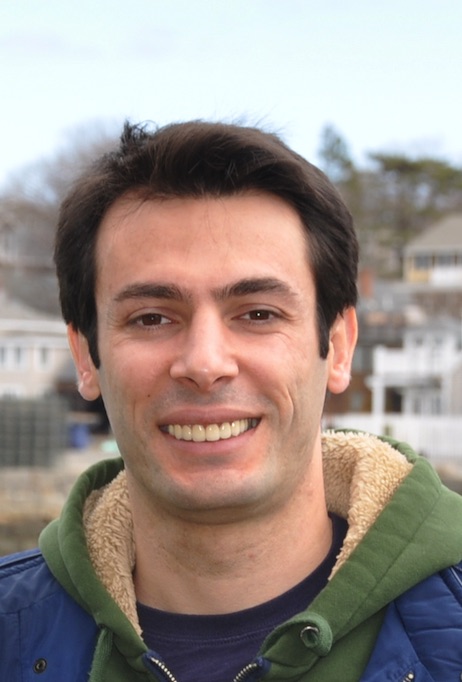 Yusuf Aytar合作论文数Deepmind4
 Lourdes Agapito合作论文数Department of Computer Science, University College London;Synthesia4
 Adrian Ion合作论文数Partium.io4
 Chuhan Zhang (张楚晗)合作论文数Google DeepMind3
 Thomas Kipf合作论文数Google DeepMind3
 Rohit Girdhar合作论文数GenAI Research Group, Meta3
 Ross Goroshin合作论文数Google Brain Montreal Team;Mila3
 Ahmet M. Kondoz合作论文数Institute for Digital Technologies, Loughborough University3Diamantino Costa合作论文数* Dependable Systems Group
* Databases Group3
Ahmet M. Kondoz合作论文数Institute for Digital Technologies, Loughborough University3Diamantino Costa合作论文数* Dependable Systems Group
* Databases Group3





