While modern sampling techniques, such as autonomous underwater vehicles, are increasing our knowledge of the fauna beneath Antarctic sea ice of only a few meters in depth, greater sampling difficulties mean that little is known about the marine life underneath Antarctic ice shelves over 100 in thick. In this study, we present underwater images showing the underside of an Antarctic ice shelf covered by aggregated invertebrate communities, most likely crudarians and isopods. These images, taken at an average depth of 145 m, were obtained with a digital still camera system attached to Weddell seals Leptonychotes weddellii foraging just beneath the ice shelf. Our observations indicate that, similar to the sea floor, ice shelves serve as an important habitat for a remarkable amount of marine invertebrate fauna in Antarctica.
Changes in mass and body composition, measured with labelled water, were used to quantify the energy expenditure during lactation and energy replenishment during the post-breeding aquatic phase in Southern elephant seal females at Stranger Point, King George Island. During lactation females spent a mean of 6,021±1,365 MJ, which resulted in a loss of 35% of the initial mass, comprising 63% of initial body fat and 20% of initial body protein. During the 58±5.4 day post-breeding foraging period, females gained 135±39 Kg, which allowed them to recover an average of 55% of the mass, including 46% of the fat, 71% of the protein and 47% of the energy lost during lactation. Neither the mass nor the energy lost during lactation were related to those replenished while at sea. However, protein loss expressed in absolute terms or as a proportion of that present at the beginning of lactation explained about 50% of the variation in the protein gained during the post-breeding phase. This might indicate the presence of a mechanism favouring an increase in lean tissue during post-breeding. Daily energy requirements for an average sized female, during the post-breeding aquatic phase were estimated at 96 MJ. Estimation of prey consumption varies according to assumptions about diet composition. On a basis of 450 females, the total biomass of fish and squid consumed by the breeding group, assuming a diet composed of 75% cephalopods and 25% fish, was estimated to be 521 and 174 metric tonnes, respectively, for the period examined.
Labelled-water methodology was used to quantify energy costs and energy transfer efficiency in 18 mother-pup pairs of southern elephant seals (Mirounga leonina) during lactation. During the lactation period, mothers lost a mean mass of 227±47 kg. Mass loss included 22% of the protein, 60% of the fat, and 51% of the energy in the mother’s body upon arrival. Total body-energy reserves at parturition explained 69% of the variation in the total lactation costs and 50% of the variation in the pup’s body energy at weaning. On average, pups retained 48% of the mass, 49% of protein, 53% of fat and 51% of energy lost by their mothers. Greater, fatter females showed a decrease in the efficiency of energy and fat transfer and, at the same time, an increase in the efficiency of protein transfer. This may be due to an increased use of protein as metabolic fuel, as fat demands for milk production increase. There was no evidence that greater total lactation costs influence the ability of mothers to produce a pup in the next breeding season.
Representatives of the Antarctic food web (krill, cephalopod, fish, penguin, seal) of the area around Elephant Island and from the Weddell Sea were analysed for the most recalcitrant organochlorine compounds. Due to sorption of the compounds to sinking particles and accumulation in sediments, two benthic fish species (Gobionotothen gibberifrons, Chaenocephalus aceratus) feeding on benthos invertebrates and fish reflected significantly increasing concentrations within a decade (1987-1996), while a benthopelagic species (Champsocephalus gunnari) feeding on krill did not. In the pelagic food chain, lipid normalised concentrations of all compounds increased from Antarctic krill to fish proving that biomagnification of highly lipophilic pollutants (log octanol-water partition coefficient>5) occurs in water-breathing animals. As top predators Weddell and southern elephant seals (Leptonychotes weddellii, Mirounga leonina) biomagnified the persistent organic pollutants relative to krill 30-160 fold with the exception of hexachlorobenzene, the levels of which were lower than in fish indicating its intense specific elimination.
Weaned pups and post-moult female elephant seals (Mirounga leonina) were fitted with satellite transmitters at King George Island (South Shetland Islands) between December 1996 and February 1997. Of the nine adult females tracked for more than two months, three stayed in a localized area between the South Shetland Islands and the South Orkney Islands. The other six females travelled south-west along the coast of the Antarctic Peninsula up to the Bellingshausen Sea. Two of them then moved north-east and hauled out on South Georgia in October. One female was last located north of the South Shetland Islands in March 1998. In total, eight females were again sighted on King George Island and six of the transmitters removed. The tracks of the weaners contrasted with those of the adults. In January, five juveniles left King George Island for the Pacific sector spending about four weeks in the open sea west of the De Gerlache Seamounts. Three of them returned to the tip of the Antarctic Peninsula in June, of which one was last located on the Patagonian Shelf in November 1997. The juveniles avoided sea ice while the adults did not. The latter displayed behavioural differences in using the pack ice habitat during winter. Some females adjusted their movement patterns to the pulsating sea ice fringe in distant foraging areas while others ranged in closed pack ice of up to 100%. The feeding grounds of adult female elephant seals are more closely associated with the pack ice zone than previously assumed. The significance of the midwater fish Pleuragramma antarcticum as a potential food resource is discussed.
The haul-out and underwater activity patterns of five Weddell seals were investigated in relation to the tide. Electronic recorders measured the seals' dive depth and internal body temperature simultaneously. Diving and temperature data were analysed with the help of time series analyses tools. We identified a half-day (semicircadian) rhythm in underwater activity and body temperature. A close correlation was found between the rhythmicity of the tide and the timing of the seals' underwater activity and oscillations of their body temperature. We propose that the tide is the principal zeitgeber for the Weddell seals' ultradian cycle of behaviour during the austral summer.
Fifty specimens of Notothenia coriiceps caught in Potter Cove, King George Island, were examined for ecto- and endoparasites. Of the 22 parasite species found, 18 were helminths, 2 were hirudineans and 2 were crustaceans. The isopod Aega antarctica and an unidentified hirudinean are reported for the first time from this fish host. Dominant parasites were the adults of Aspersentis megarhynchus , the invasive stage of Corynosoma spp. (cystacanth) and the adults of Macvicaria pennelli , with respective prevalences of infestation of 94, 76 and 74%. The preferred sites of infestation were the pylorus and intestine, where five different larval (nematodes and cestodes) and eight adult (digeneans and acanthocephalans) parasite species were found. No adult nematodes and cestodes were found and no parasites could be isolated from the musculature. The results of the present study are related to previous findings on the parasite fauna of N. coriiceps . The comparison implies a high parasite diversity in this benthic Antarctic fish species. Most parasites found appear to have a wide range of distribution within Antarctic waters together with a low host specificity. Besides its role as final host for several species of trematodes and acanthocephalans, N. coriiceps serves as transmitter of parasite larvae to piscivorous birds and seals. It is concluded that the parasite fauna in Antarctic fish species provides important insights into the different habitat use and trophic relationship of their fish hosts.
The chiral stationary phase β-TBDM (35% heptakis(6-O-tert.-butyldimethylsily12,3-di O-methyl)-β-cyclodextrin in OV-1701) was applied to study the enantioenrichment of α-HCH, oxychlordane, and PCB 149 in blubber of two seal species from Iceland by gas chromatography with electron capture detection. The examined habour seals (Phoca vitulina) and grey seals (Halichoerus grypus) showed α-HCH enantiomeric ratios (ER) > 1. The ER of PCB 149 was comparable in the two species from Iceland but for oxychlordane ER < 1 was observed in harbour seals while the oxychlordane ER in grey seals was > 1. In blubber of Weddell seals (Leptonychotes Weddelf) from the Antarctic we determined an α-HCH ER < 1 which is in contrast to the Icelandic seal species and a sample from Lake Baikal.
The emetics apomorphine hydrochloride and emetine dihydrochloride were tested on Weddell seals ( Leptonychotes weddellii ) to obtain stomach contents for dietary studies. The drugs prostaglandin F 2 α, carbachol, and hydergine, which have emetic side effects, were also used. None of the drugs induced regurgitation and possible reasons for this are discussed.
In the Romano-Ward syndrome, an inherited form of abnormally prolonged QT duration is a matter for concern. The frequency-corrected QTc value in the ECG amounts to more than 0.44 s. Persons suffering from Romano-Ward syndrome are vitally endangered by attacks of arrhythmia, syncope and cardiac arrest which are triggered or aggravated by stress or certain drugs. In obstetrical anaesthesia, attention should be paid to the foetus, which, due to the genetic dominance, will have a 50% probability of suffering from the disorder. A 28-year-old para I was admitted with cervical dilation on her predetermined date of delivery. Romano-Ward syndrome had been diagnosed 10 years earlier. The patient had been free of complaints and had received no treatment. Due to cephalopelvic disproportion and the cardiac syndrome, a primary Caesarean section was performed. The QTc values were pathologically prolonged (0.47 s; 0.48-0.63 s) during the pre- and intraoperative period. Haemodynamic irregularities did not occur in the perioperative period. The newborn was vital (3.830 g; 50 cm; Apgar scores 10/10/10; umbilical cord pH 7.29). Directly postpartum isolated supraventricular extra systoles occurred, and the QTc duration increased to 0.51 s.
During the antarctic summer 1990, the pattern of food intake in comparison to diving-activity was investigated on adult Weddell seals. Diving depths were recorded by a time-depth recorder (TDR). The TDR is a free programmable electronic datalogger, which can store data on up to 5 channels. It was fixed on the fur of the seal, ensuring that no longer lasting irritation of the animal was caused. The pattern of food-intake was monitored by measuring the jaw-movements, using strain gauges for recording the deformation of the muscles by mastication. After electronic amplification and filtering, the frequency of jaw-activity within a measuring period was recorded one channel of the TDR. By simultaneously observing the diving depths, these data may lead to conclusions about chewing patterns of the seal in water depths where they catch prey. The graph of these data and the mathematical evaluation by Fourier analysis and Plexogramme show a close correlation between diving depth and jaw-activity.
SummaryMonitoring the feeding behaviour on freely diving Weddell seals (Leptonychotes weddellii)During the antarctic summer 1990, the pattern of food intake in comparison to diving‐activity was investigated on adult Weddell seals. Diving depths were recorded by a time‐depth recorder (TDR). The TDR is a free programmable electronic datalogger, which can store data on up to 5 channels. It was fixed on the fur of the seal, ensuring that no longer lasting irritation of the animal was caused.The pattern of food‐intake was monitored by measuring the jaw‐movements, using strain gauges for recording the deformation of the muscles by mastication. After electronic amplification and filtering, the frequency of jaw‐activity within a measuring period was recorded one channel of the TDR. By simultaneously observing the diving depths, these data may lead to conclusions about chewing patterns of the seal in water depths where they catch prey.The graph of these data and the mathematical evaluation by Fourier analysis and Plexogramme show a close correlation between diving depth and jaw‐activity.ZusammenfassungIm Rahmen eines Forschungsprojektes des AWI sollte das Freßverhalten der Weddellrobbe untersucht werden. Hierzu wurde ein elektronischer Datenspeicher (TDR) benutzt, der frei programmierbar auf bis zu 5 Kanälen Meßwerte speichern kann. Dieses Gerät wird extracorporal so befestigt, deß eine anhaltende Beeinträchtigung für das Tier ausgeschlossen wird. Zur Registrierung der Freßaktivität wurde eine Methode entwickelt, bei der die Verformung der Kaumuskulatur mit Hilfe von Dehnungsmeßstreifen (DMS) registriert wird. Nach elektronischer Verstärkung und Filterung kann so die Häufigkeit der Kieferbewegungen innerhalb eines Meßintervalles registriert werden. Simultan dazu wurde auf einem weiteren Kanal die Tauchtiefe registriert. Sowohl die grafische Darstellung der Meßwerte als auch eine mathematische Auswertung mit Hilfe der Fourier‐Analyse und des Plexogramms zeigen einen engen Zusammenhang zwischen Tauchtiefe und Kieferaktivität.
In the Romano-Ward syndrome, an inherited form of abnormally prolonged QT duration is the matter of concern. The frequency-corrected QTc value in the ECG amounts to more than 0.44 s (upper mean value: 0.44 s). Persons suffering from Romano-Ward syndrome are vitally endangered by attacks of arrhythmia, syncope, and cardiac arrest that are triggered or aggravated by stress or certain drugs. In obstetrical anesthesia, attention should be paid to the fetus, which, due to the genetic dominance, will have a 50% probability of having the disorder. A 28-year-old para I was admitted with cervical dilation on her predetermined date of delivery. Romano-Ward syndrome had been diagnosed 10 years earlier; the patient had been free of complaints and had received no treatment. Due to cephalopelvic disproportion and the cardiac syndrome, a primary cesarean section was performed. Following premedication and provision of a beta-blocker, defibrillator, and drugs for resuscitation, intubation anesthesia with methohexital, nitrous oxide, enflurane, and succinylcholine was carried out. The QTc values were pathologically prolonged (0.47 s; 0.48-063 s) during the pre- and intraoperative period. Hemodynamic irregularities did not occur in the perioperative period. The newborn was vital (3,830 g, 50 cm; Apgar scores 10/10/10; umbilical cord pH 7.29). Directly postpartum isolated supraventricular extrasystoles occurred, and the QTc duration increased to 0.51 s. Simultaneous registration of the ECG and phonocardiogram showed premature occurrence of the second cardiac sound, which is typical of Romano-Ward syndrome.
Neutralizing antibodies against European phocine herpesvirus were detected in sera of to two Antarctic seal species, Weddell seals (Leptonychotes weddellii) and crabeater seals (Lobodon carcinophagus), collected in the eastern Weddell Sea. A large number of positive sera crossneutralized canine herpesvirus, but only few sera also contained antibodies to feline herpesvirus. The Weddell seals suffered from a respiratory disease when the sera were collected (January–February, 1990). The significance and possible origin of herpesvirus infections in Antarctic seals documented for the first time in this communication is discussed. All sera were negative for antibodies against phocine and canine distemper viruses.
A 39-year-old primigravida was admitted to the hospital in the 33rd week of pregnancy due to fetal retardation and placental insufficiency, malnutrition, decreased cutaneous turgor, and cardiotocographic (CTG) fetal distress. Body weight had increased subnormally through the 29th week of gestation and had since decreased by 2.5 kg. The following laboratory tests were obtained (normal values for pregnant women in parentheses [5, 10]: serum bicarbonate 50.9 (20-24) mmol/l, pH 7.61 (7.4), PCO2 52.4 (31) mmHg, SaO2 89-91 (> 95%); serum sodium 125 (137-145), potassium 1.8 (3.6-5.5), chloride 55 (94-111) mmol/l; colloid osmotic pressure 20.7 (19-22) mmHg. A decompensated hypochloremic-hypokalemic acidosis together with hypovolemic, isotonic hyponatremia was diagnosed and bulimic vomiting that had existed for two decades was discovered as the underlying cause. The acute therapy was aimed at normalization of the fluid-electrolyte status, oxygenation, utero-placental perfusion, and placental-fetal O2 transfer and was carried out under close clinical, biochemical, and CTG surveillance. In addition to the basic measures (lateral tilt position, nasal O2 application, isotonic electrolyte solutions, parenteral nutrition), 158 mmol H+, 240 mmol K+, and 414 mmol Na+ ions were administered. This therapy improved the maternal and fetal parameters continuously (Table 3, Fig. 1). Twenty-six hours following the initiation of treatment, a cesarean section was performed after induction of catheter-epidural anesthesia.
A seabird and mammal census was carried out in the north-eastern Weddell Sea during the austral winter of 1986. The German research icebreaker Polarstern operated in heavy pack ice along the Greenwich Meridian between the northern sea ice boundary and the Antarctic coast. Crabeater seals (Lobodon carcinophagus), minke whales (Balaenoptera acutorostrata), Adélie penguins (Pygoscelis adeliae), Antarctic petrels (Thalassoica antarctica) and snow petrels (Pagodroma nivea) were found to be more abundant in the vicinity of the submarine Maud Rise, about 700 km north of the continental margin, than in other areas of substantial ice cover traversed during that cruise. The aggregations of birds and mammals are expected to reflect aggregations of their principal food, krill (Euphausia superba) wintering underneath the ice cover. The distribution pattern of krill predators coincides with the course of a warm water belt upwelling near Maud Rise. This upwelling could induce local ice melting which in turn may result in an increased release of sea ice algae.
 Horst Bornemann合作论文数10E. Mohr合作论文数4Saez Ramdohr合作论文数4H. Heidegger合作论文数3Alejandro R. Carlini合作论文数Depto. de Ciencias Biológicas Cerrito 1248, Instituto Antártico Argentino3Krone Ha合作论文数2
 W. Vetter合作论文数Institut fur Lebensmittelchemie, Universitat Hohenheim2
 Bernd Luckas合作论文数2R. Von Hugo合作论文数2G. A. Daneri合作论文数Div. Mastozoología, Museo Argentino de Ciencias Naturales, “B. Rivadavia” (MACNBR),2M. E. I. Marquez合作论文数2m kreyscher合作论文数1N Liebsch合作论文数1B Liess合作论文数1lutz sellmann合作论文数1Thomas Martin合作论文数1
 Harry Palm合作论文数Aquaculture and Sea-ranching, Faculty of Agricultural and Environmental Sciences, University Rostock1
 Gesche Krause合作论文数Helmholtz Ctr Polar & Marine Res, Alfred Wegener Inst AWI1
 Yasushi Naito合作论文数1Nobuyuki Miyazaki (宮﨑信之)合作论文数Atmosphere and Ocean Research Institute, Center for International Cooperation, The University of Tokyo1P. Fischer合作论文数1G. Viehweger合作论文数1Michael Spindler合作论文数1Ulrike Klobes合作论文数1Ricardo J Casaux合作论文数Instituto Antártico Argentino Cerrito1
 Karl Skirnisson合作论文数University of Iceland Institute for Experimental Pathology1
 Yuuki Watanabe合作论文数Graduate School of Science and Engineering, Yamagata University1
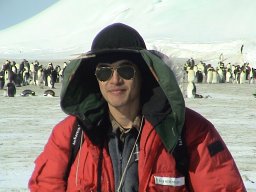 Katsufumi Sato合作论文数National Institute of Polar Research1
 Timm Harder合作论文数National Reference Laboratory for Avian Influenza, Institute of Diagnostic Virology, Friedrich-Loeffler-Institut1Kurt Weber合作论文数1Manfred Bersch合作论文数1H. Goerke合作论文数1




