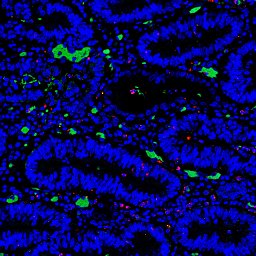
Pancreatic ductal adenocarcinoma (PDAC) is driven by genetic alterations in the pancreatic epithelium (e.g., KRAS) coupled with dysregulated innate immunity that triggers tumor-promoting chronic inflammation. However, the identity of innate immune molecular regulators as therapeutic targets in PDAC is ill-defined. Here, we show in PDAC patients that elevated tumoral expression of the inflammasome adaptor protein ASC and its downstream effector Caspase-1 is primarily colocalized to the pancreatic ductal epithelium and prognostic for poor survival. In the mutant Kras-driven KPC PDAC mouse model, global and conditional (pancreatic epithelial) ablation of ASC, or nanobody-mediated targeting of extracellular ASC, suppresses pancreatic tumorigenesis. Whole transcriptome profiling and multiplex immunofluorescence reveal that the tumor-promoting activities of epithelial-derived ASC align with molecular pathways for mitochondrial respiration, metabolism (glycolysis), and immune responses. Our discovery that ASC-containing inflammasomes promote PDAC by acting as a molecular bridge between innate immunity, mitochondrial dysfunction and metabolic reprogramming provides the rationale to therapeutically target ASC in cancers.
Background and study aims Pancreatic ductal adenocarcinoma (PDAC) is a poor prognostic malignancy. Comprehensive genomic profiling (CGP) has improved outcomes in many cancers, but widespread uptake in PDAC remains elusive. This study investigated the feasibility of using endoscopic ultrasound with fine-needle biopsy (EUS-FNB) for CGP in advanced PDAC. Patients and methods (experimental design) A multicenter prospective cohort study was conducted to assess the feasibility of using DNA and RNA extracted from fresh frozen or archival formalin-fixed paraffin-embedded (FFPE) EUS-FNB for CGP on advanced PDAC using the TSO-500 gene panel testing. Results of the CGP were reviewed at a molecular tumor board (MTB) and subsequent treatment recommendations were forwarded to the referring clinicians. Results CGP was successful in 129 of 143 patients (90%) enrolled between May 2020 to September 2023. Fresh frozen EUS-FNB provided suitable genetic material for CGP in 123 of 133 patients (92%). Conversely, CGP was successful on FFPE biopsy blocks from only six of 16 patients (38%). Fifty-two of 143 patients (36%) had a potentially targetable mutation detected, and eight of these patients (6%) were treated with targeted therapy based on their EUS-FNB-derived molecular profile. Patients who received personalized therapy had a significant ( P < 0.0001) increase in survival versus standard or no therapy at 12 and 36 months. Median patient survival on standard therapy was 9.47 months versus > 18 months for personalized therapy. Conclusions This real-world study confirms the feasibility and utility of CGP using EUS-FNB in advanced PDAC. It illustrates the importance of timely access to personalized therapy informed by CGP, which can impact the treatment pathway and improve survival outcomes.
11125 Background: ctDNA detection following curative intent treatment is highly prognostic, with potential to impact patient fear of cancer recurrence (FCR). In 3 separate randomized trials (DYNAMIC II, III, rectal), pts with early-stage CRC were randomly assigned to treatment decision guided by ctDNA results (adjuvant chemotherapy escalation if ctDNA positive, de-escalation or no treatment if ctDNA negative), or according to standard clinicopathological features. The relationship between being informed of a high recurrence risk, or treatment de-escalation, and FCR is unclear. This study aims to explore the relationship between biomarker-informed adjuvant chemotherapy (ACT) decision making and FCR, including changes over time. Methods: A subset of pts from the 3 DYNAMIC studies completed validated self-report questionnaires measuring FCR, anxiety, depression and quality of life. Data were collected at three time points: after surgery (T1), at the time of the ACT decision (T2), and 9-12 months later (T3). Pts randomized to the ctDNA-guided group received a ctDNA test result (positive or negative) at T2, while those in the standard of care (SOC) group did not. The primary endpoint was the FCR Inventory Short Form score (FCRI-SF). FCR patterns over time were analyzed using a mixed model 2 (Randomization) x 3 (Time) ANCOVA. A 2 (Randomization) x 2 (Chemotherapy Status) ANCOVA was used to assess ACT’s impact on FCR at follow-up. Gender, age, and cancer stage were included as covariates. Results: 317 pts from 35 Australian sites participated in the FCR substudy (74% response rate for all timepoints). Two-thirds were male, and the mean age was 60 years. Of the ctDNA-guided group (n=176), 73% had a negative ctDNA result. At baseline, 63% of patients exhibited clinically significant levels of FCR (FCRI-SF >13). Younger age, female gender, anxiety, and higher cancer stage all predicted higher baseline FCR. FCR significantly decreased over time for all pts ( F (2,176) = 3.64, p = .03). This reduction was more pronounced in the ctDNA-guided group compared to the SOC group ( F (2, 176) = 3.83; p = .02), although the effect size was small (Cohen’s d =0.24). In the ctDNA-guided group, no differences in FCR were found between pts based on ctDNA result (positive vs. negative). High baseline anxiety was the only independent predictor of FCR at 12 months. Chemotherapy receipt, cancer stage, depression, and quality of life scores were not predictive of FCR over time. Conclusions: In pts with early-stage CRC, neither a positive nor negative ctDNA result impacted FCR. ctDNA-guided approach to determining ACT was associated with a greater reduction in FCR over time compared to SOC. This biomarker-guided treatment approach has potential to improve ACT selection as well as psychosocial outcomes. Temporal reduction in FCR is likely driven by increased prognostic certainty over time. Clinical trial information: 12615000381583 .
3123 Background: ATG-037 is a highly potent oral small molecule inhibitor of CD73. STAMINA-01 is an open-label, first-in-human, phase 1/1b study (NCT05205109) designed to evaluate the safety, pharmacokinetics, and optimal dosing of ATG-037 as monotherapy and in combination with pembrolizumab in patients with refractory/relapsed solid tumors. Methods: The study successfully completed enrollment of dose escalation of ATG-037 with optional addition of pembrolizumab following two cycles of monotherapy in May 2024. The primary objectives were to evaluate the safety and define the optimal biological dose of ATG-037 as monotherapy and combination treatment. As of 20 January 2025, 43 patients were enrolled across the following doses - 20mg BID (n=3), 60mg BID (n=6), 120mg BID (n=10), 240mg BID (n=6), 400mg BID (n=12) and 600mg BID (n=6). The trial is currently recruiting the second part of the study for dose optimization of upfront combination therapy at two dose levels (120mg BID and 400mg BID). Results: Efficacy: As of the data cut-off (20 Jan 2025), 43 patients were enrolled on study and received monotherapy. While on ATG-037 monotherapy, 21 patients had a best response of stable disease (SD) with a disease control rate (DCR) of 49%. Twenty-eight patients with a history of acquired checkpoint inhibitor resistance received combination therapy; 7 of which (5 melanoma and 2 NSCLC patients) achieved a confirmed partial response (PR) with an overall response rate (ORR) of 25% (95% CI: [51.33, 86.78]). Additionally, 15 patients had a best response of SD with a DCR of 79% (95% CI: [8.30, 40.95]). Of the 11 enrolled melanoma patients who received combination, 5 achieved a PR for an ORR of 45% and 6 achieved SD for an DCR of 100%. Of the 9 enrolled NSCLC patients who received combination, 2 achieved a PR for an ORR of 22% and 4 achieved SD for an DCR of 67%. Safety: While on monotherapy, 24/43 (56%) patients reported treatment-related adverse events (TRAEs). While on combination therapy, 17/28 (61%) patients reported TRAEs. The majority of TRAEs were grades 1-2. The only dose limiting toxicity was a grade 3 rash which occurred at the monotherapy 400mg BID dose. Only one serious TRAE (grade 3 immune mediated hepatitis) was reported at the data cut-off. Conclusions: In relapsed/refractory solid tumor patients, ATG-037 appears to be well tolerated as monotherapy and in combination with pembrolizumab. The preliminary efficacy data is encouraging and suggests that the combination regimen may provide a new therapeutic option for CPI resistant NSCLC and melanoma patients. Clinical trial information: NCT05205109 .
BACKGROUND:Endoscopic ultrasound-guided fine needle biopsy (FNB) is the gold standard in tissue acquisition of pancreatic ductal adenocarcinoma (PDAC). There is a paucity of evidence of the impact of needle type or size on the genetic yield and quality. METHODS:Patients 18 years and older with PDAC who underwent FNB were retrospectively identified from a single database from 2016 to 2021. Genetic quantity is measured in micrograms (µg) and quality defined by RNA or DNA integrity number (RIN and DIN). FNB needles examined were Acquire 22 gauge (Boston Scientific, Marlborough, MA, USA) and ProCore 22 and 20 gauges (Cook Medical, Bloomington, IN, USA). RESULTS:Two hundred seventy-seven patients were identified. ProCore 20G needle procured higher RNA quantity (4125.8µg, IQR: 2003.8, 5954.8, p = 0.012) compared to ProCore 22G (2050µg IQR: 966.4, 3181.6) and Acquire 22G (2310.6µg, IQR: 1439.3, 4312). Median DNA quantity was 3340.5µg (Acquire 22G), 2610.4µg (ProCore 22G) and 3499.7µg (ProCore 20G) (p = 0.763). Median DIN was 7.3 (Acquire 22G and ProCore 22G) and 7.4 (ProCore 20G) (p = 0.449). Median RIN was 3.0 (Acquire 22G and ProCore 22G) and 2.7 (ProCore 20G) (p = 0.886). CONCLUSION:ProCore 20G was associated with higher quantity of RNA. There were no differences in the quality acquired by different needles.
Pancreatic cancer is associated with a high mortality rate, and there are still very few effective treatment options. Patient-derived xenografts have proven to be invaluable preclinical disease models to study cancer biology and facilitate testing of novel therapeutics. However, the severely immune-deficient mice used to generate standard models lack any functional immune system, thereby limiting their utility as a tool to investigate the tumor-immune cell interface. This chapter will outline a method for establishment of "humanized" patient-derived xenografts, which are reconstituted with human immune cells to imitate the immune-rich microenvironment of pancreatic cancer.
751 Background: Pancreatic cancer carries a dismal prognosis and limited treatment options. Attempts to implement precision therapies have proved difficult to date, in part due to challenges obtaining high quality genetic material from pancreatic biopsies. Endoscopic ultrasound (EUS) is a common diagnostic procedure, but limited data is available on the clinical utility of these biopsies for comprehensive molecular profiling (CMP) to inform therapeutic choices. Methods: This study aimed to enrol up to 150 patients undergoing EUS biopsies for pancreatic cancer, in order to complete targeted DNA/RNA sequencing on 100. The primary outcome was to characterise the proportion of patients able to undergo CMP on their diagnostic EUS biopsies, with fresh-frozen biopsies preferred but FFPE specimens accepted if there was no alternative. Secondary endpoints included the proportion of patients with clinically relevant molecular findings as determined by Molecular Tumour Board (MTB) discussion, proportion of patients initiating targeted therapies, and quantitative/qualitative analysis on molecular material derived from fresh-frozen versus FFPE EUS biopsies. Results: 109 patients have been enrolled since May 2020, and molecular profiling has been completed for 102 patients. 2 patients (1.8%) were excluded due to having no available biopsies, and 5 biopsies (4.7%) were unable to be sequenced due to inadequate quality metrics. Common oncogenes were detected at roughly expected frequencies, with mutations in KRAS occurring in 91 (89.2%), TP53 in 67 (65.7%), SMAD4 in 11 (10.8%) and CDKN2A in 7 (6.8%). Median tumour mutation burden (TMB) in this cohort was low at 3.1Mut/Mb although 7 patients (6.9%) had a high TMB (defined as >10Mut/Mb), of which 3 (2.9%) had markedly hypermutated tumours (>200Mut/Mb). All processed samples were microsatellite stable. Therapeutically relevant mutations were detected in 21 (20.6%) including RNF43 in 7 patients (6.9%), KRAS G12C and BRCA in 3 patients each (2.9%), in addition to BRAF V600E in 2 (1.9%), and CHEK2 and BARD1 mutations in 1 each (0.9%). High TMB was observed in 7 patients (6.9%). To date, 5 patients (4.9%) have commenced on targeted therapies, with one patient notably experiencing a complete response to targeted therapy which has now been sustained for >12 months. Conclusions: This real-world study confirms the utility of endoscopic biopsies as a valuable and reliable source of genetic material for clinically relevant molecular tumour profiling. Secondary analyses are underway to further characterise treatment and survival implications in this cohort.
Patient-derived xenografts (PDXs) are valuable models to study cancer biology, behavior, and response to therapies in vivo. Pancreatic cancer is an aggressive and treatment-resistant disease, and typical biopsies are often of low cellular yield and therefore present challenges for the creation of PDXs. This chapter will describe a method to establish PDX models from tissue biopsies obtained via endoscopic ultrasound-guided fine-needle aspiration, a relatively noninvasive technique which compared to surgery is available to pancreatic cancer patients at all stages of disease. Furthermore, we also describe methods to incorporate "humanization" of PDXs via reconstitution with human immune cells, thus mimicking the immune cell-rich microenvironment of pancreatic tumors.
Objective The objectives of the study are to investigate the sensitivity and specificity of circulating tumor DNA (ctDNA) for the diagnosis of pancreatic cancer and to assess the utility of ctDNA as a prognostic marker in this disease.Methods Cell-free DNA was extracted from plasma of patients who underwent endoscopic ultrasound fine-needle aspiration or surgical resections for pancreatic cancer. The cell-free DNA was then analyzed using droplet digital polymerase chain reaction for KRAS G12/13 mutations. Eighty-one patients with pancreatic cancer and 30 patients with benign pancreatic disease were analyzed.Results ctDNA KRAS G12/13 mutations were detected in 63% of all patients with pancreatic cancer and in 76% of those patients who also had KRAS G12/13 mutations detected in the pancreatic primary. Specificity and tissue concordance were both 100%. Circulating tumor DNA corresponded with tumor size and stage, and high ctDNA was associated with significantly worse prognosis on both univariate and multivariate testing.Conclusion Our study shows that ctDNA is an accurate diagnostic tool and strong prognostic marker in patients with pancreatic cancer. The continued investigation of ctDNA will enable its implementation in clinical practice to optimize the care and survival outcomes of patients with pancreatic cancer.
Low skeletal muscle index (SMI) and low skeletal muscle radiodensity (SMD) are associated with reduced survival time in pancreatic ductal adenocarcinoma (PDAC). The negative prognostic impact of low SMI and low SMD is often reported as independent of cancer stage when using traditional clinical staging tools. Therefore, this study sought to explore the relationship between a novel marker of tumour burden (circulating tumour DNA) and skeletal muscle abnormalities at diagnosis of PDAC. A retrospective cross-sectional study was conducted in patients who had plasma and tumour tissue samples stored in the Victorian Pancreatic Cancer Biobank (VPCB) at diagnosis of PDAC, between 2015 and 2020. Circulating tumour DNA (ctDNA) of patients with G12 and G13 KRAS mutations was detected and quantified. Pre-treatment SMI and SMD derived from analysis of diagnostic computed tomography imaging was tested for its association to presence and concentration of ctDNA, as well as conventional staging, and demographic variables. The study included 66 patients at PDAC diagnosis; 53% female, mean age 68.7 years (SD ± 10.9). Low SMI and low SMD were present in 69.7% and 62.1% of patients, respectively. Female gender was an independent risk factor for low SMI (OR 4.38, 95% CI 1.23–15.55, p = 0.022), and older age an independent risk factor for low SMD (OR 1.066, 95% CI 1.002–1.135, p = 0.044). No association between skeletal muscle stores and concentration of ctDNA (SMI r = − 0.163, p = 0.192; SMD r = 0.097, p = 0.438) or stage of disease according to conventional clinical staging [SMI F (3, 62) = 0.886, p = 0.453; SMD F (3, 62) = 0.717, p = 0.545] was observed. These results demonstrate that low SMI and low SMD are highly prevalent at diagnosis of PDAC, and suggest they are comorbidities of cancer rather than related to the clinical stage of disease. Future studies are needed to identify the mechanisms and risk factors for low SMI and low SMD at diagnosis of PDAC to aid screening and intervention development.
Acute and chronic pancreatitis, the latter associated with fibrosis, are multifactorial inflammatory disorders and leading causes of gastrointestinal disease-related hospitalization. Despite the global health burden of pancreatitis, currently, there are no effective therapeutic agents. In this regard, the protease A Disintegrin And Metalloproteinase 17 (ADAM17) mediates inflammatory responses through shedding of bioactive inflammatory cytokines and mediators, including tumor necrosis factor α (TNFα) and the soluble interleukin (IL)-6 receptor (sIL-6R), the latter of which drives proinflammatory IL-6 trans-signaling. However, the role of ADAM17 in pancreatitis is unclear. To address this, Adam17ex/ex mice-which are homozygous for the hypomorphic Adam17ex allele resulting in marked reduction in ADAM17 expression-and their wild-type (WT) littermates were exposed to the cerulein-induced acute pancreatitis model, and acute (1-wk) and chronic (20-wk) pancreatitis models induced by the cigarette smoke carcinogen nicotine-derived nitrosamine ketone (NNK). Our data reveal that ADAM17 expression was up-regulated in pancreatic tissues of animal models of pancreatitis. Moreover, the genetic (Adam17ex/ex mice) and therapeutic (ADAM17 prodomain inhibitor [A17pro]) targeting of ADAM17 ameliorated experimental pancreatitis, which was associated with a reduction in the IL-6 trans-signaling/STAT3 axis. This led to reduced inflammatory cell infiltration, including T cells and neutrophils, as well as necrosis and fibrosis in the pancreas. Furthermore, up-regulation of the ADAM17/IL-6 trans-signaling/STAT3 axis was a feature of pancreatitis patients. Collectively, our findings indicate that the ADAM17 protease plays a pivotal role in the pathogenesis of pancreatitis, which could pave the way for devising novel therapeutic options to be deployed against this disease.
Pancreatic cancer (PC) is currently the seventh leading cause of cancer death worldwide, but is predicted to become the second leading cause of worldwide cancer death by 2030. More than 80% of patients present with locally advanced or metastatic disease, and the mainstay of treatment in this setting is systemic chemotherapy. Despite incremental advances in recent years, prognosis remains poor with a median 5-year survival rate of just 10%.
2593 Background: The novel small molecule CCX559 is a highly potent and selective PD-L1 inhibitor that induces the dimerization and internalization of cell-surface PD-L1. CCX559, when orally administered in animal models, demonstrated anti-tumor efficacy, including the ability to induce complete responses (Li C, et al. Cancer Res 2021;81(13_Suppl): Abstract nr 1274). Safety pharmacology and toxicology studies in animals demonstrated an acceptable safety profile for CCX559. Taken together, the preclinical data supports the initiation of human trials in patients with advanced solid tumors. PD-(L)1 therapies have been shown to increase peripheral T cell activation and cytokines such as IFNγ and CXCL9 in patients (Herbst RS, et al. Nature.2014; 515(7528):563–567). Methods: This phase 1, first-in-patient, multicenter, open-label, dose-escalation study evaluates safety, tolerability, pharmacokinetics (PK), pharmacodynamics (PD), and preliminary anti-tumor activity of CCX559 in patients with refractory, locally advanced or metastatic solid tumors. CCX559 is dosed orally once daily with a starting dose level of 30 mg. Dose escalation/de-escalation is based on the Bayesian Optimal Interval (BOIN) design. PBMC and plasma samples were collected from patients over the first 2 cycles (6 weeks) of treatment, and PD assays were performed, including measurement of cytokines and T cell proliferation. Results: As of February 1, 2022, one patient per cohort was enrolled at the 30 mg and 60 mg levels, and 9 patients were enrolled in the 120 mg dose cohort. Of the 11 patients enrolled, 5 patients (all 120 mg cohort) remain on treatment. No DLTs, treatment-related SAEs, or severe (Grade 3 or higher) treatment-related AEs have been reported. PD assays have been performed with samples from the 30 mg (n=1), 60 mg (n=1), and 120 mg (n=3) cohorts. Patients in all three cohorts showed increased peripheral CD4 and CD8 T cell proliferation starting in the first cycle (21 days) of treatment, as measured by Ki67 positivity. Increases in plasma IFNγ, CXCL9, CXCL10, and CXCL11 levels were observed, in particular in one patient (120 mg cohort) starting 15 days after treatment initiation. Conclusions: Initial results from the phase 1 dose-escalation study of CCX559 indicate on-target PD effects consistent with PD-L1 inhibition. Updated PD data, together with the safety and PK profile, will be presented. Clinical trial information: ACTRN12621001342808.
Background The novel small molecule CCX559 is a highly potent and selective PD-L1 inhibitor that induces dimerization and internalization of cell-surface PD-L1. CCX559, when orally administered in animal models, demonstrated anti-tumor efficacy, including the ability to induce complete responses.1 Initial results from a phase 1 study of CCX559 indicated on-target pharmacodynamic (PD) effects consistent with PD-L1 inhibition, including peripheral T cell activation and stimulation of cytokines.2,3 Methods This phase 1, first-in-patient, dose-escalation trial is evaluating safety, tolerability, pharmacokinetics (PK), PD, and preliminary anti-tumor activity of CCX559 in patients with advanced solid tumors. CCX559 is dosed orally once daily in repeated 21-day cycles with a starting dose level of 30 mg. PBMC and plasma samples are collected from patients over the first 2 cycles of treatment for PD assessments, including quantification of T cell proliferation and measurement of plasma cytokines and chemokines. Principal component analysis (PCA) was used to identify patient clusters with discrete cytokine/chemokine profiles. Results As of July 12, 2022, a total of 17 patients were dosed with CCX559, including 13 patients across the 120 mg and 180 mg dose groups. No DLTs, treatment-related SAEs, or severe (Grade 3 or higher) treatment-related AEs were reported. The observed PK exposures were generally dose-proportional from 30 mg to 180 mg and in line with projections based on nonclinical data. PD assays were performed with samples from the 30 mg (n=1), 60 mg (n=1), 120 mg (n=8) and 180 mg (n=2) cohorts. Patients in all four cohorts showed 1.5-fold or greater increases in peripheral CD4 and CD8 T cell proliferation starting in the first cycle (21 days) of treatment, as measured by Ki67 positivity. In patients treated with CCX559 120 mg or 180 mg, plasma levels of IFNγ, IFNγ-stimulated factors CXCL10 and CXCL11, and soluble PD-L1 were significantly increased (p<0.05) during the first treatment cycle, and changes in these factors were positively correlated with each other. PCA of the 120 mg cohort showed that patients with increased IFNγ-stimulated factors formed a cluster with a differentiated global cytokine/chemokine response, including upregulation of CXCL13, CXCL8, and IL-1β. Conclusions Interim results from the phase 1 dose-escalation trial of CCX559 indicate on-target PD effects consistent with PD-L1 inhibition. Peripheral IFNγ-stimulated responses were observed in the 120 mg and 180 mg cohorts, consistent with the expected activity profile for immune checkpoint inhibitors. Additional PD data, together with the safety and PK profile, will be presented. Trial Registration ANZCTR registration ACTRN12621001342808 References Li C, et al. CCX559, A Potent, Orally-Administered Small Molecule PD-L1 Inhibitor That Induces Anti-Tumor Immunity. In: Proceedings of the American Association for Cancer Research Annual Meeting 2021; 2021 Apr 10-15 and May 17-21. Philadelphia (PA): AACR; Cancer Res. 2021;81(13_Suppl):Abstract nr 1274. Tapia-Rico G, et al. Preliminary data from an ongoing phase 1 dose-escalation study of CCX559, an orally administered small molecule PD-L1 inhibitor, in patients with advanced solid tumors. J Clin Oncol. 2022;40(16_Suppl):2593–2593. Herbst RS, et al. Predictive Correlates Of Response To The Anti-PD-L1 Antibody MPDL3280A In Cancer Patients. Nature. 2014;515(7528):563–567. doi:10.1038/nature14011. Ethics Approval This study was approved by the central Human Research Ethics Committee Bellberry Limited; approval numbers 2021-04-374, 2021-04-374-AB, 2021-04-374-AC, and 2021-04-374-AD.
Background: KRAS G12D mutation subtype is present in over 40% of pancreatic ductal adenocarcinoma (PDAC), one of the leading global causes of cancer death. This retrospective cohort study aims to investigate whether detection of the KRAS G12D mutation subtype in PDAC patients is a determinant of prognosis across all stages of disease. Methods: We reviewed the medical records of 231 patients presenting with PDAC at a large tertiary hospital, and compared survival using the Kaplan Meier, log-rank test and Cox proportional hazards regression model. Results: KRAS G12D mutation subtype was not significantly associated with poorer survival compared across the whole population of PDAC patients (p = 0.107; HR 1.293 95% CI (0.946–1.767)). However, KRAS G12D patients who were resectable had a shorter median survival time of 356 days compared to all other genotypes (median survival 810 days) (p = 0.019; HR 1.991 95% CI (1.121–3.537)). Conclusions: KRAS G12D patients who were resectable at diagnosis had shorter survival compared to all other PDAC patients. These data suggest that KRAS G12D may be a clinically useful prognostic biomarker of PDAC.
Patient-derived xenografts (PDXs) are created by implanting human tumor tissue or cells into immunodeficent mice, and enable the study of tumor biology, biomarkers and response to therapy in vivo. This chapter describes a method for lung adenocarcinoma (LAC) PDX generation using subcutaneous implantation of tumor tissue and cell suspensions and incorporating the humanization of PDX models by reconstitution with human immune cells.
 Daniel Croagh合作论文数MacCallum Cancer Centre Surgical Oncology Research Laboratory Locked Bag 1, Peter24Brendan J. Jenkins合作论文数20Hugh Gao合作论文数Upper Gastrointestinal Hepatobiliary & Gen Surg U, Monash Hlth7Owen McKay合作论文数4Marion Harris合作论文数4
 Masoumi-Moghaddam Samar合作论文数St George Hospital, the University of New South Wales4
 Ahmad Syed A合作论文数4
 Andrew Hector Strickland合作论文数Department of Medical Oncology, Guy’s Hospital4
 Dr. Jayati Chakrabarti合作论文数Department of Receptor Biology and Tumor Metastasis, Chittaranjan National Cancer Institute4Yana Zavros合作论文数Department of Molecular and Cellular Physiology, University of Cincinnati4
 Michael P Swan合作论文数Department of Gastroenterology and Hepatology, Westmead Hospital4
 Mohamed I. Saad合作论文数3Christopher Desmond合作论文数3Trevor Wilson合作论文数3Andrew Perry合作论文数3Aaron James Scott合作论文数3Henry Shen合作论文数3Gearing Linden J合作论文数3Lee Belinda合作论文数3Wang Jiang合作论文数3
 John Zalcberg合作论文数School of Public Health and Preventive Medicine, Monash University;Alfred Health3Ben Markman合作论文数3
 Vinod Ganju合作论文数Department of Medical Oncology and Clinical Haematology, Monash Medical Centre (Moorabbin Campus),3
 Rachna Shroff合作论文数Department of Medicine, College of Medicine Tucson, The University of Arizona3Karen Ebsworth合作论文数2Rav Sellahewa合作论文数2Emil deGoma合作论文数2Alison Freimund合作论文数2
 Alison West合作论文数2Niky Zhao合作论文数2Virginia Paton合作论文数2Pritha Adhikary合作论文数2Chantal Woodson合作论文数2Bo Gao合作论文数2Christie Norris合作论文数2H. Yue合作论文数2Tarek Meniawy合作论文数2K. Sullivan合作论文数2Nina G. Steele合作论文数2John Wu合作论文数2Paul Harnett合作论文数School of Medicine, Faculty of Medicine and Health, The University of Sydney2
 Rita Jain合作论文数Dept. of Electron. & Commun. Eng., Lakshmi Narain Coll. of Technol.;c2
 Gary Richardson合作论文数2
 Thomas J. Schall合作论文数Medtech Alert2Penglie Zhang合作论文数2
 Michael Friedlander合作论文数The University of New South Wales;Royal Hospital for Women;Prince of Wales Hospital2Rathi Vivek合作论文数2
 Paul de Souza合作论文数Faculty of Medicine and Health, The University of Sydney;Sydney Medical School, The University of Sydney;School of Clinical Medicine, Western Sydney University2
 Manoop S. Bhutani合作论文数Department of Gastroenterology Hepatology and Nutrition, Division of Internal Medicine, The University of Texas MD Anderson Cancer Center;Department of Radiation Oncology, Division of Radiation Oncology, The University of Texas MD Anderson Cancer Center;Department of Endoscopic Research and Development, The University of Texas MD Anderson Cancer Center2




