Catalog of qRT-PCR primers, CRISPR guide sequences, and antibodies used in this study
differential gene expression in HupT3 cells following TFAP4 knockout and overexpression
Arenaviruses are divided into Old World (OW) and New World (NW) groups. OW arenaviruses enter cells through a pH-dependent receptor switch from a plasma-membrane factor to an endolysosomal receptor for subsequent membrane fusion, whereas clade B NW arenaviruses use transferrin receptor 1 without a secondary receptor. Using a vesicular stomatitis virus (VSV) chimera expressing the glycoprotein complex (GPC) of the clade A NW arenavirus Pichindé virus, we performed a genome-wide CRISPR loss-of-function screen and identified the endolysosomal sialomucin CD164 as an essential host factor. CD164 knockout cells were resistant to VSV chimeras bearing the GPCs of Pichindé, Paraná, and Flexal viruses, and to authentic Pichindé and Paraná virus, with susceptibility restored by complementation. The requirement mapped to the cysteine-rich domain of CD164, which bound GP1 in a pH-dependent manner through main-chain interactions. These findings define CD164 as an endolysosomal receptor for clade A NW arenaviruses expanding the receptor switching paradigm.
expression of Hallmark IFNγ/IFNα gene sets in HupT3 cells following TFAP4 knockout and overexpression
enriched gene sets in HupT3 cells following TFAP4 knockout and overexpression, generated by the Enrichr search engine
Abstract Pediatric low-grade gliomas (pLGGs) are the most common brain cancers diagnosed in children, often leading to life-long neurological impairments. Whilst targeted inhibitors exist, their effects are often short-lived, highlighting the urgent need for innovative treatments. Notably, some pLGG tumors spontaneously regress with age, suggesting that changes in the tumor microenvironment can arrest tumor growth. In this work, we aim to characterize which signaling interactions promote the growth of pLGG cells and how these interactions change dynamically with time. To achieve this, we have optimized a protocol for introducing pLGG mutations into developing mouse brains via in utero electroporation. This study revealed that brains harboring the common KIAA1549::BRAF fusion mutation have a striking phenotype characterized by increased astrocyte reactivity and myeloid cell infiltration. To better understand how signals derived from immune cells may impact pLGG cell fitness, we are additionally performing a high-throughput cytokine screen. We are developing barcoded cytokine constructs tethered to the cell membrane to comprehensively screen the impact of cytokine signaling on the growth of neural stem cells engineered to overexpress common pLGG mutations. Together this work aims to unravel which signaling factors govern the age-dependent growth of pLGG tumors, which may reveal targetable aspects of the tumor microenvironment amenable to therapeutic intervention. Citation Format: Jenna Robinson, Joohee Lee, Sarah Reel, Shriya Rangaswamy, Michelle Boisvert, John Doench, David TW Jones, Timothy Phoenix, Pratiti Bandopadhayay. Dynamic characterization of tumor-microenvironment factors that drive pediatric low-grade gliomas [abstract]. In: Proceedings of the American Association for Cancer Research Annual Meeting 2026; Part 1 (Regular Abstracts); 2026 Apr 17-22; San Diego, CA. Philadelphia (PA): AACR; Cancer Res 2026;86(7 Suppl):Abstract nr 632.
Abstract Identifying cancer gene dependencies is essential for nominating new therapeutic targets. However, because most experimental models do not sufficiently represent the full diversity of tumors—especially for rare cancers—it remains challenging to use functional screening on experimental models to infer the dependency landscape of individual tumors. We used machine learning to infer gene dependencies from tumor transcriptional profiles, applying our model to the TCGA (>11000 tumors across 28 lineages), rare cancers (>1,000 samples, including multiple rare kidney cancer subtypes), and >500 previously unscreened cancer cell lines. In addition to validating our approach via recovery of known dependencies previously identified in functional genetic screens, we were able to directly infer drug response and synthetic essential relationships from tumor data, highlighting associations with RB1 inactivation, KRAS mutations, and microsatellite instability. Via dependency prediction, we discovered and validated a shared reliance on oxidative phosphorylation in two previously unscreened rare cancers both driven by TFE3 gene fusions: translocation renal cell carcinoma (tRCC) and alveolar soft part sarcoma (ASPS). We also nominate potentially actionable vulnerabilities across other rare cancers, most of which lack in experimental models, but for which RNA-Seq data from tumors are available. These findings demonstrate that machine learning applied to transcriptomic data can uncover novel cancer vulnerabilities and actionable targets in individual tumors, even in the absence of functional screening. This may represent a scalable approach to advance precision oncology in rare and/or under-characterized cancer types. Citation Format: Ananthan Sadagopan, Bingchen Li, Jiao Li, Yantong Cui, Riva Deodhar, Di Yang, Yuqianxun Wu, Prathyusha Konda, Christy Biji, Dharma Thapa, Meha Thakur, Cary Weiss, Toni Choueiri, Jaime Cheah, John Doench, Benjamin Drapkin, Srinivas Viswanathan. Target discovery in rare cancers enabled by transcriptome-based virtual CRISPR screening [abstract]. In: Proceedings of the AACR Special Conference in Cancer Research: Breaking Barriers in the Fight against Rare Cancers; 2026 Jul 18-20; Philadelphia, PA. Philadelphia (PA): AACR; Cancer Res 2026;86(14_Suppl):Abstract nr PR006.
Identifying receptors for bat coronaviruses is critical for spillover risk assessment, countermeasure development, and pandemic preparedness. While Middle East respiratory syndrome coronavirus (MERS-CoV) uses DPP4 for entry, the receptors of many MERS-related betacoronaviruses remain unknown. The bat merbecovirus HKU5 was previously shown to have an entry restriction in human cells. Using both pseudotyped and full-length virus, we show that HKU5 uses Pipistrellus abramus bat ACE2 but not human ACE2 or DPP4 as a receptor. Cryo-electron microscopy analysis of the virus-receptor complex and structure-guided mutagenesis reveal a spike and ACE2 interaction that is distinct from other ACE2-using coronaviruses. MERS-CoV vaccine sera poorly neutralize HKU5 informing pan-merbecovirus vaccine design. Notably, HKU5 can also engage American mink and stoat ACE2, revealing mustelids as potential intermediate hosts. These findings highlight the versatility of merbecovirus receptor use and underscore the need for continued surveillance of bat and mustelid species.
Supplementary Table S3: ## Raw count matrix of the RNA-seq data. ## Atg5-KO vs Ctrl-KO (Veh).
Supplementary Fig. S6 shows functional links between autophagy and cytokine signaling pathways.
Supplementary Table S2: ## Raw count matrix of mini-pool CRISPR screens. ## Normalized gene scores in mini-pool screens.
Supplementary Table S5 shows the rank order list of genes targeted by sgRNAs enriched in the custom minipool CRISPR/Cas9 knockout screens.
Malaria continues to pose significant health challenges globally despite advances in control measures. Plasmodium falciparum, the parasite responsible for most severe malaria cases, uses multiple redundant invasion pathways to enter the red blood cell (RBC) during the blood stage of infection. Through a combination of RNA interference screening in erythroid cells and validation by CRISPR/Cas9-mediated knockout in primary human hematopoietic stem cells, we identified the glycosyltransferase Core 1 Synthase Glycoprotein-N-Acetylgalactosamine 3-Beta-Galactosyltransferase 1 (C1GALT1) as a novel host determinant for P. falciparum invasion. Analyses of C1GALT1-deficient cultured reticulocytes and RBCs with the glycophorin A/B-null MkMk blood group phenotype demonstrated that the C1GALT1-dependent α(2-3) sialic acid structures within mucin-type O-glycans are crucial for efficient invasion of both sialic acid-dependent and sialic acid-independent P. falciparum strains, but not the primate malaria parasite Plasmodium knowlesi. However, different P. falciparum parasite strains exhibit variable dependencies on distinct sialic acid configurations on the RBC surface. Overall, our findings highlight a key role for RBC glycans in malaria infection.
Cell Painting images offer valuable insights into a cell's state and enable many biological applications, but publicly available arrayed datasets only include hundreds of genes perturbed. The JUMP Cell Painting Consortium perturbed roughly 75% of the protein-coding genome in human U-2 OS cells, generating a rich resource of single-cell images and extracted features. These profiles capture the phenotypic impacts of perturbing 15,243 human genes, including overexpressing 12,609 genes (using open reading frames) and knocking out 7,975 genes (using CRISPR-Cas9). Here we mitigated technical artifacts by rigorously evaluating data processing options and validated the dataset's robustness and biological relevance. Analysis of phenotypic profiles revealed previously undiscovered gene clusters and functional relationships, including those associated with mitochondrial function, cancer and neural processes. The JUMP Cell Painting genetic dataset is a valuable resource for exploring gene relationships and uncovering previously unknown functions.
 David Root合作论文数Broad Institute72
 William C. Hahn合作论文数Department of Medical Oncology, Dana-Farber Cancer Institute;Harvard Medical School;Broad Institute, MIT45
 Piccioni Federica合作论文数30
 Todd R. Golub合作论文数Broad Institute;Dana-Farber Cancer Institute;Harvard Medical School29
 Jesse S. Boehm合作论文数The Broad Institute of MIT and Harvard, 7 Cambridge Center, Cambridge, MA 02142, USA29
 Kai Wucherpfennig合作论文数Division of Medical Sciences, Harvard Medical School;Department of Cancer Immunology and Virology, Dana-Farber Cancer Institute26
 Keith L. Ligon合作论文数Center for Patient Derived Models, Dana-Farber Cancer Institute;Division of Neuropathology, Brigham and Women's Hospital;Medical School, Harvard University;Travera;Broad Institute, Massachusetts Institute of Technology;Boston Children's Hospital26
 Samuel McBrayer合作论文数Dept Med Oncol, Dana Farber Canc Inst22
 Hegde Mudra合作论文数Broad Institute of MIT and Harvard, Cambridge, Massachusetts, USA.21Julie-Aurore Losman合作论文数21
 X. Shirley Liu合作论文数GV20 Therapeutics21Kathryn E. Gunn合作论文数20Betty Rouaisnel合作论文数20
 Mike Levitt合作论文数20John Z Cao合作论文数20
 Diplas Bill H合作论文数Pediatric Brain Tumor Foundation Institute at Duke, Duke University Medical Center20Myllykoski Matti合作论文数Department of Biochemistry and Biocenter Oulu, University of Oulu20
 Kathleen Yates合作论文数Broad Institute20
 Hai Yan合作论文数School of Medicine, Duke University;Duke Cancer Institute, Duke University20
 Lucy A. Godley合作论文数Center for Clinical Cancer Genetics, University of Chicago;Department of Medicine, University of Chicago;Institute for Integrative Physiology, University of Chicago20
 Ryan E Looper合作论文数Department of Chemistry, Colorado State University20
 Peppi Koivunen合作论文数Biocenter Oulu, University of Oulu Collagen Research Unit20
 Harley I. Kornblum合作论文数Department of Molecular and Medical Pharmacology, University of California Los Angeles20Bofu Huang合作论文数19
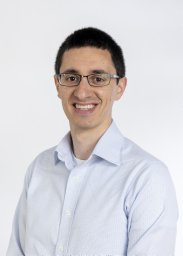 Robert T. Manguso合作论文数Department of Pediatric Oncology, Dana-Farber Cancer Institute, Division of Hematology/Oncology, Children's Hospital, Harvard Medical School, Boston, MA;19Ruth E. Hanna合作论文数19Cihangir Duy合作论文数19Yoshinaga Ito合作论文数Graduate School of Medicine, Kyoto University18
 Jason Pyrdol合作论文数18
 Nick Haining合作论文数ArsenalBio18Manna Ahmed合作论文数17Brown Adam合作论文数17
 Francisca Vazquez合作论文数Broad Institute17Bagul Mukta合作论文数17Nina Ilic合作论文数Department of Cancer Biology, Dana–Farber Cancer Institute16
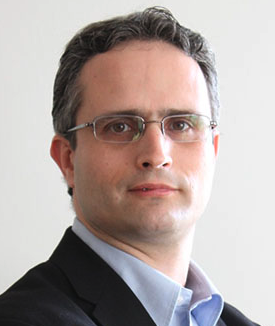 Gad A. Getz合作论文数Harvard Medical School;Department of Pathology, Massachusetts General Hospital;Broad Institute of Harvard and MIT16Aravind Subramanian合作论文数16Amy Goodale合作论文数Broad Inst MIT & Harvard, Cambridge, MA 02142 USA15
 Arlene Sharpe合作论文数Department of Immunology, Blavatnik Institute, Harvard Medical School, Harvard University15
 Mathewson Nathan合作论文数15
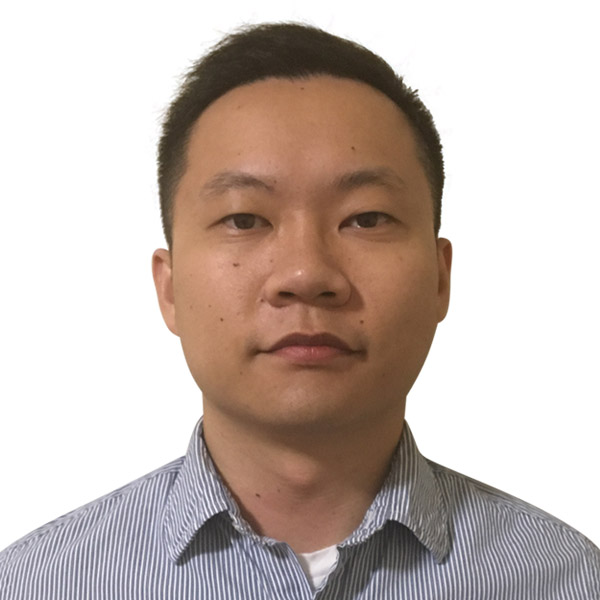 Deng Pan (潘登)合作论文数School of Medicine, Tsinghua University15Peter C DeWeirdt合作论文数Broad Inst MIT & Harvard, Genet Perturbat Platform, Cambridge, MA 02142 USA14Shrestha Yashaswi合作论文数14Corsello Steven M合作论文数14Wu Xiaoyun合作论文数14
 Joshua M Dempster合作论文数Broad Inst MIT & Harvard, Cambridge, MA 02142 USA13
 Ted Natoli合作论文数Broad Inst Harvard & MIT13
 Craig B. Wilen合作论文数Laboratory Medicine and Immunobiology, Yale University;School of Medicine, Yale University13
 David E. Root合作论文数Keysight Technologies13




