The reaction of CrCp2 with K2SnSb yields a Zintl-ion cluster containing an octahedral Cr6 core, surrounded by an Sn8Sb8 ring and two further ethylenediamine ligands that cap two mutually trans Cr centers. The Cr-Cr bond lengths of 2.453(2) to 2.482(2) Å are remarkably short, much shorter than those in any of the 20-electron chalcogenide-capped analogues, Cr6E8(PR3)6, indicating unusually strong Cr-Cr bonding. An isotropic signal in the electron paramagnetic resonance (EPR) spectrum with g = 2.21 is consistent with a 23-electron Cr613+ core, three electrons more reduced than the Cr616+ units present in Cr6E8(PR3)6. An analysis of the electronic structure using density functional theory (DFT) indicates that the additional three electrons enter Cr-Cr bonding orbitals, which are stabilized as a result of the weak π-donor properties of the Sn8Sb816- Zintl ligand.
Density functional theory, in conjunction with the quasi-harmonic approximation, has been used to study the equilibrium between the orthorhombic and tetragonal phases of Ba3Ge4. A transition from the high-temperature tetragonal phase containing isolated Ge46- units to the low-temperature orthorhombic phase, where precisely half of the Ge46- units are polymerised along one axis, is predicted at 930 K, somewhat higher than the experimental value of 630 K. An analysis of the phonon density of states shows that the lower entropy of the orthorhombic phase is not associated directly with the polymerisation of the Ge46- units, but rather with the contraction of the unit cell, which raises the frequencies of ion-ion modes involving the relative motions of the Ba2+ and Ge46- units. Calculations also predict that a third, as yet unobserved, p-tetragonal phase, where all of the Ge46- units are polymerised to form two separate chains running in orthogonal directions, might be accessible at pressures close to 1 GPa.
The thermally assisted reaction of Cr(NO3)39H2O, 4-Cl-pzH, and Et3N yielded electrochemically active trinuclear CrIII-oxo-pyrazolate complexes with formula (Ph4P)2[Cr3(mu 3-O)(mu-4-Cl-pz)6X3], X = Cl (1) and Br (2). Magnetic susceptibility measurements and EPR spectroscopy show that 1 has an antiferromagnetically coupled Cr3O-core with an S = 1/2 ground state and isotropic exchange of J = -12.7 cm-1. (Hex = -2JS1S2). Cyclic voltammetry reveals a facile reversible oxidation to the formally CrIII2CrIV analogue of 1. The UV-Vis-NIR spectra of CrIII3 and CrIII2CrIV species have been assigned with the help of DFT calculations.
We report here the synthesis and characterization of two endohedral Zintl-ion clusters, [Fe4Sn18](4-) and [Fe4Pb18](4-), which contain rhombic Fe-4 cores. The Fe-Fe bond lengths are all below 2.5 angstrom, distinctly shorter than in the corresponding Cu clusters, indicating the presence of Fe-Fe bonding. Subtle differences in the structure of the Fe-4 core between the two clusters suggest that the change in tetrel element causes a change in electronic ground state, with a very short Fe-Fe bond length of 2.328 angstrom present across the diagonal of the rhombus in the lead case.
The thermally assisted reaction of Cr(NO3)3·9H2O, 4-Cl-pzH, and Et3N yielded electrochemically active trinuclear CrIII-oxo-pyrazolate complexes with formula (Ph4P)2[Cr3(μ3-O)(μ-4-Cl-pz)6X3], X = Cl (1) and Br (2). Magnetic susceptibility measurements and EPR spectroscopy show that 1 has an antiferromagnetically coupled Cr3O-core with an S = 1/2 ground state and isotropic exchange of J = -12.7 cm-1. (Hex = -2JS1S2). Cyclic voltammetry reveals a facile reversible oxidation to the formally CrIII2CrIV analogue of 1. The UV-Vis-NIR spectra of CrIII3 and CrIII2CrIV species have been assigned with the help of DFT calculations.
We report here the synthesis and characterization of two new members of the M2E12 family of endohedral Zintl clusters, [Fe2Sn4Bi8]3– and [Cr2Sb12]3–, both of which contain open-shell metal dimers encapsulated inside a triple-decker cluster of main-group atoms. The 75-electron [Fe2Sn4Bi8]3– cluster has a D4h-symmetric structure, while [Cr2Sb12]3–, despite having the same 75-electron count, is strongly distorted to a geometry that resembles a CrSb8 crown capped by a CrSb4 unit. The structural differences between the two are driven by the increasing availability of 3d electron density in the earlier transition metal, which leads, ultimately, to different electronic configurations in the two clusters. The trends precisely mirror those observed in the ME10 and ME12 families containing a single transition metal ion.
Infra-red multiple-photon dissociation spectroscopy on Xe-tagged Re/Si clusters, [ReSin]+, n = 3-9, reveals intense absorption features around 400 cm-1, along with, in some cases, additional bands in the 250-350 cm-1 window. A survey of the potential energy surface using density functional theory in conjunction with particle swarm optimisation indicates a growth pattern based on a growing network of Si atoms wrapped around the Re centre: the Sin units can be viewed as fragments of a putative 16-vertex Frank-Kasper polyhedron. The structural evolution for the [ReSin]+ series differs significantly from the iso-electronic Mn series studied previously, where the metal ion is typically bound externally to the surface of a growing 3-dimensional Sin cluster, the differences reflecting the greater accessibility of 5d vs. 3d electron density.
Abstract Although not the only greenhouse gas, CO2 is the poster child. Unsurprisingly, therefore, there is global interest across industrial and academic research in its removal and subsequent valorisation, including to methanol and its surrogates. Although difficult to study, the heterogenous pnictogens represent one important category of catalytic materials for these conversions; their high crustal abundance and low cost offers advantages in terms of sustainability. Here, Zintl clusters based on these elements are studied as homogenous atom-precise models in CO2 reduction. A family of group 13 functionalized pnictogen clusters with the general formula [(R2E)Pn7]2– (E = B, Al, In; Pn = P, As) is synthesized and their catalytic competency in the reduction of CO2 probed. Trends in both turnover numbers and frequencies are compared across this series, and [(iBu2Al)P7]2– found to be very high-performing and recyclable. Electronic structures across the series are compared using density functional theory to provide mechanistic insights.
We report here the synthesis and structural characterization of the first binary iron arsenide cluster anion, [Fe 3 (As 3 ) 3 (As 4 )] 3− , present in both [K([2.2.2]crypt)] 3 [Fe 3 (As 3 ) 3 (As 4 )] ( 1 ) and [K(18 - crown - 6)] 3 [Fe 3 (As 3 ) 3 (As 4 )] ⋅ en ( 2 ). The cluster contains an Fe 3 triangle with three short Fe−Fe bond lengths (2.494(1) Å, 2.459(1) Å and 2.668(2) Å for 1 , 2.471(1) Å, 2.473(1) Å and 2.660(1) Å for 2 ), bridged by a 2-butene-like As 4 unit. An analysis of the electronic structure using DFT reveals a triplet ground state with direct Fe−Fe bonds stabilizing the Fe 3 core.
Nanoalloy catalysis, part 3 Ewald Janssens opened a discussion of the paper by Daojian Cheng: Can you comment on the stability of the trimetallic PdAgCu catalysts? Does the structure of the nanoalloys change during the hydrogenation reaction? Daojian Cheng replied: In this
Upon nuclear waste canister failure and contact of spent nuclear fuel with groundwater, the UO2 matrix of spent fuel will interact with oxidants in the groundwater generated by water radiolysis. Bicarbonate (HCO3-) is often found in groundwater, and the H2O2 induced oxidative dissolution of UO2 in bicarbonate solution has previously been studied under various conditions. Temperatures in the repository at the time of canister failure will differ depending on the location, yet the effect of temperature on oxidative dissolution is unknown. To investigate, the decomposition rate of H2O2 at the UO2 surface and dissolution of UVI in bicarbonate solution (0.1, 1, 10 and 50 mM) was analysed at various temperatures (10, 25, 45 and 60 °C). At [HCO3-] ≥ 1 mM, the concentration of dissolved UVI decreased with increasing temperature. This was attributed to the formation of UVI-bicarbonate species at the surface and a change in the mechanism of H2O2 decomposition from oxidative to catalytic. At 0.1 mM, no obvious correlation between temperature and U dissolution was observed, and thermodynamic calculations indicated this was due to a change in the surface species. A pathway to explain the observed dissolution behaviour of UO2 in bicarbonate solution as a function of temperature was proposed.
Radiolysis of water at the surface of ZrO2 nanoparticles was investigated by measuring the production of radi-olysis products from nanoparticle/water mixtures under irradiation. A pulse radiolysis study and a gamma radiolysis study were conducted to observe and quantify radiolytically generated hydrated electrons (e-aq) and H2 from ZrO2/water mixtures. The radiolytic yield of e-aq and H2 from ZrO2 nanoparticles (20-5000 nm in diameter) was found to increase with increasing nanoparticle surface area indicating surface enhanced radiolysis. This was attributed to radiolysis of surface adsorbed water molecules. The thickness of the surface adjacent water layer was shown to affect radiolysis, with smaller numbers of water layers increasing radiolysis.
The effective oxidation state of the Sn 18 unit determines the degree of fusion of the two Sn 9 polyhedra in the series [Ni 2 CdSn 18 ] 6− , [Fe 3 Sn 18 ] 4− and [Pd 2 Sn 18 ] 4− . The new [Fe 3 Sn 18 ] 4− cluster represents an intermediate phase in the fusion process.
Zintl chemistry is an aged and vital research topic in inorganic chemistry and attracts much more attention of inorganic and theoretical chemists as well as materials scientists. Its antiquity lies in durable research interests from 1890s to now; however, the thriving innovative potential in interdiscipline is the embodiment of its vitality. In the past two decades, Zintl chemistry has experienced an unprecedented renaissance as a result of many important breakthroughs in the synthetic methods, characterization techniques and quantum chemical calculations. This chapter will report systematically on the synthesis of related anions or clusters, which includes intermetalloid and heterometallic clusters as well as their derivatives functionalized with organic-group(s). We will also discuss the formation mechanisms of Zintl anions in solution by ex situ investigations (the characterization and even isolation of key intermediates) and quantum chemical investigations. Additionally, the chapter will shed light on the relationships between the electronic structures and topologies by some selected examples. Finally, some recent progress of material science using Zintl cluster as precursor will also be shown in the end of this chapter.
Direct disposal of spent nuclear fuel in underground repositories in stable geological formations is an alternative option for the reprocessing of spent fuel in Japan. Upon breakdown of the barriers between waste storage containers and the environment in a deep geological repository, release of radioactive nuclei from spent nuclear fuel into the environment will occur via groundwater. The release of radioactive nuclei will be dependent on the dissolution rate at the spent fuel/groundwater interface. The surface of UO2 in the spent fuel will be in the oxidized form UO2+x, and the extent of hyper-stoichiometry has implications for U dissolution. A key component of typical groundwater is bicarbonate which can range in concentration depending on repository location. Therefore, to understand the effect of bicarbonate on the UO2+x surface, UO2 pellets were immersed in bicarbonate solution for 298 days, and the UO2+x oxide surface was analysed by Raman spectroscopy. Detailed peak analysis of the Raman spectra showed increased defects after immersion attributed to the preferential dissolution of U-V/VI from UO2+x. Differences in the defect concentration with and without bicarbonate were attributed to a change in U speciation (U(OH)(4) to UO2(CO3)(3)(4-)) as determined by speciation calculations. Raman depth profiles showed a constant value of x through the oxide surface.
Riccardo Ferrando opened a general discussion of one of the papers by Damien Alloyeau: In many systems, the approach to equilibrium of the cluster shape is faster than that of chemical ordering, since the latter may require diffusion processes in the inner part of the cluster. This is already o
The first page of this article is displayed as the abstract.
An entry from the Cambridge Structural Database, the world’s repository for small molecule crystal structures. The entry contains experimental data from a crystal diffraction study. The deposited dataset for this entry is freely available from the CCDC and typically includes 3D coordinates, cell parameters, space group, experimental conditions and quality measures.
A comparison of DFT-computed and measured infrared spectra reveals the ground state structures of a series of gas-phase silicon clusters containing a common Mn2 unit. Mn2Si12 and [Mn2Si13]+ are both axially symmetric, allowing for a clean separation of the vibrational modes into parallel (a1) and perpendicular (e1) components. Information about the Mn-Mn and Mn-Si bonding can be extracted by tracing the evolution of these modes as the cluster increases in size. In [Mn2Si13]+, where the antiprismatic core is capped on both hexagonal faces, a relatively simple spectrum emerges that reflects a pseudo-D6d geometry. In cases where the cluster is more polar, either because there is no capping atom in the lower face (Mn2Si12) or the capping atom is present but displaced off the principal axis (Mn2Si13), the spectra include additional features derived from vibrational modes that are forbidden in the parent antiprism.
Endohedral Zintl clusters-multi-metallic anionic molecules in which a d-block or f-block metal atom is enclosed by p-block (semi)metal atoms-are very topical in contemporary inorganic chemistry. Not only do they provide insight into the embryonic states of intermetallic compounds and show promise in catalytic applications, they also shed light on the nature of chemical bonding between metal atoms. Over the past two decades, a plethora of endohedral Zintl clusters have been synthesized, revealing a fascinating diversity of molecular architectures. Many different perspectives on the bonding in them have emerged in the literature, sometimes complementary and sometimes conflicting, and there has been no concerted effort to classify the entire family based on a small number of unifying principles. A closer look, however, reveals distinct patterns in structure and bonding that reflect the extent to which valence electrons are shared between the endohedral atom and the cluster shell. We show that there is a much more uniform relationship between the total valence electron count and the structure and bonding patterns of these clusters than previously anticipated. All of the p-block (semi)metal shells can be placed on a ladder of total valence electron count that ranges between 4n+2 (closo deltahedra), 5n (closed, three-bonded polyhedra) and 6n (crown-like structures). Although some structural isomerism can occur for a given electron count, the presence of a central metal cation imposes a preference for rather regular and approximately spherical structures which maximise electrostatic interactions between the metal and the shell. In cases where the endohedral metal has relatively accessible valence electrons (from the d or f shells), it can also contribute its valence electrons to the total electron count of the cluster shell, raising the effective electron count and often altering the structural preferences. The electronic situation in any given cluster is considered from different perspectives, some more physical and some more chemical, in a way that highlights the important point that, in the end, they explain the same situation. This article provides a unifying perspective of bonding that captures the structural diversity across this diverse family of multimetallic clusters.
 Jose Goicoechea合作论文数Division of Inorganic, Department of Chemistry, The College of Arts & Sciences, Indiana University29
 Tobias Krämer合作论文数Faculty of Science & Engineering, Maynooth University26
 Huilong Yang (杨会龙)合作论文数School of Mechanical Engineering, Shanghai Jiao Tong University;School of Nuclear Science and Engineering, Shanghai Jiao Tong University24
 Dimitrios A. Pantazis合作论文数Max-Planck-Institut fur Kohlenforschung24
 Zhong-Ming Sun (孙忠明)合作论文数Department of Chemistry, Fudan University23
 Feliu Maseras合作论文数Institut Català d'Investigació Química23
 Hiroaki Abe (阿部弘亨)合作论文数Graduate School of Engineering, The University of Tokyo22
 Sho Kano合作论文数19
 Michel Etienne合作论文数Laboratoire de Chimie de Coordination, Université Paul Sabatier, Toulouse III19Christopher K. Russell合作论文数18
 Robert Stranger合作论文数18Raphael G. Raptis合作论文数Dept Chem, Univ Puerto Rico18Michael Green合作论文数School of Chemistry, University of Bristol15
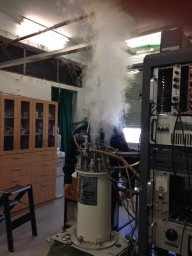 Yiannis Sanakis合作论文数Institute of Materials Science, NCSR “Demokritos”,14
 Harry W T Morgan合作论文数Univ Oxford, Dept Chem, South Parks Rd, Oxford OX1 3QR, England13
 Radovan Herchel合作论文数Faculty of Science, Palacký University13Vaida Arcisauskaite合作论文数12Dihao Zeng合作论文数10
 Michael Hayward合作论文数Department of Chemistry, University of Oxford;Somerville College, University of Oxford10Timothy Lovell合作论文数10Graham A. Heath合作论文数Research School of Chemistry, Australian National University9
 Chao Liu合作论文数8Xiao Jin合作论文数8
 Sameera W M C合作论文数Institute of Chemical Research of Catalonia (ICIQ), Av., Països Catalans 16, 43007 Tarragona, Catalonia, Spain.7
 Stuart Alan Macgregor合作论文数Institute of Chemical Sciences, School of Engineering & Physical Sciences, Heriot-Watt University7
 Christine J. McKenzie合作论文数Department of Chemistry, University of Southern Denmark7Richard J. Kilby合作论文数7Jason M. Lynam合作论文数Department of Chemistry, University of York7
 Paul Joseph Dyson合作论文数Institute of Chemical Sciences and Engineering, School of Basic Sciences, Ecole Polytechnique Federale de Lausanne7J Jaffart合作论文数6
 Karrar Al-Ameed合作论文数Dept Chem, Univ Zurich6s kano合作论文数6Cong-Cong Shu合作论文数Nankai Univ, Sch Mat Sci & Engn, Tianjin Key Lab Rare Earth Mat & Applicat, State Key Lab Elementoorgan Chem, Tianjin 300350, Peoples R China6Rosalyn L Falconer合作论文数Sch Chem, Univ Edinburgh6Laure Vendier合作论文数6Meike Reinhold合作论文数6
 Vihar Georgiev合作论文数James Watt School of Engineering, University of Glasgow;SemiWise Ltd.6
 Thomas Hooper合作论文数Dept Chem, Univ Oxford6Matthew J. Harper合作论文数5Dai Hamaguchi合作论文数5
 Ute Christmann合作论文数5Andrew J. Fensham-Smith合作论文数5thomas leman合作论文数5
 Ewald Janssens合作论文数5
 Mohammed Obies合作论文数College of Pharmacy, University of Babylon5
 Christopher Arthur合作论文数Genentech Inc, Dept Struct Biol, San Francisco, CA 94080 USA5
 John Crosby合作论文数5Emmett Edward J合作论文数5
 Paul Nanda D合作论文数Department of Inorganic Chemistry, Indian Association for the Cultivation of Science5




