We present recent developments in the Flowchart Writer (FloWr) project, where we have built a framework for imple- menting creative systems as flowcharts of processing nodes. We describe how the system has been migrated from a desk- top application to a web portal and document the various fea- tures that the portal provides to support Computational Cre- ativity research and development. This includes a node devel- opment package and automated chart development assistants. We detail how we have supplemented the online graphical platform with a web service API to enable developers to re- motely access the features of FloWr through a programming language of their choice. This encompasses developing sys- tems as flowcharts, together with running flowcharts remotely and also allows developers to publish flowcharts as web ser- vices. Importantly, the API allows Computational Creativity researchers to experiment with the automated development of creative software systems. To encourage this, we have also in- troduced simple models for automated software development into the FloWr API itself, providing a novel system for un- sophisticated users to experiment with. We demonstrate the potential benefits of using FloWr, with case studies showing how the web portal has been used for both node and chart development by novice and expert users.
The invention of fictional ideas (ideation) is often a cen- tral process in producing artefacts such as poems, music and paint- ings in a creative way. Automated fictional ideation should, there- fore, be of much interest in the study of Computational Creativity, but only a few approaches have been explored. We describe here the preliminary results of a new method for automated generation and evaluation of fictional ideas which uses ConceptNet, a semantic net- work. We evaluate the results obtained through a small study that involves participants scoring ideas via an online survey. We believe this approach constitutes a firm basis on which a more sophisticated model for automated creative ideation can be built.
The invention of fictional ideas (ideation) is often a central process in the creative production of artefacts such as poems, music and paintings, but has barely been studied in the Computational Creativity community. We present here three baseline approaches for automated fictional ideation, using methods which invert and alter facts from the ConceptNet and ReVerb databases, and perform bisociative discovery. For each method, we present a curation analysis, by calculating the proportion of ideas which pass a typicality evaluation. We further evaluate one ideation approach through a crowd- sourcing experiment in which participants were asked to rank ideas. The results from this study, and the baseline methods and methodologies presented here, constitute a firm basis on which to build more sophisticated models for automated ideation with evaluative capacity.
We describe the FloWr framework for implementing creative systems as scripts over processes and manipulated visually as flowcharts. FloWr has been specifically developed to be able to automatically optimise, alter and ultimately generate novel flowcharts, thus innovating at process level. We describe the fundamental architecture of the framework and provide examples of creative systems which have been implemented in FloWr. Via some preliminary experimentation, we demonstrate how FloWr can optimise a given system for efficiency and yield, alter input parameters to increase unexpectedness, and build novel generative systems automatically.
We investigate serendipity, or happy, accidental discoveries, in CC, and propose computational concepts related to serendipity. These include a focus-shift, a breakdown of serendipitous discovery into prepared mind, serendipity trigger, bridge and result and three dimensions of serendipity: chance, sagacity and value. We propose a definition and standards for computational serendipity and evaluate three creative systems with respect to our standards. We argue that this is an important notion in creativity and, if carefully developed and used with caution, could result in a valuable new discovery technique in CC.
In most domains, artefacts and the creativity that went into their production is judged within a context; where a context may include background information on how the creator feels about their work, what they think it expresses, how it fits in with other work done within their community, their mood before, during and after creation, and so on. We identify areas of framing information, such as motivation, intention, or the processes involved in creating a work, and consider how these areas might be applicable to the context of Computational Creativity. We suggest examples of how such framing information may be derived in existing creative systems and propose a novel dually-creative approach to framing, whereby an automated story generation system is employed, in tandem with the artefact generator, to produce suitable framing information. We outline how this method might be developed and some longer term goals.
 Simon Colton合作论文数Department of Computational Creativity, AI and Games, Queen Mary University of London5
 Maria Teresa Llano合作论文数School of Mathematical and Computer Science, Heriot-Watt University4
 Rose Hepworth合作论文数2
 Alison Pease合作论文数School of Science and Engineering, University of Dundee2
 Jeremy Gow合作论文数UCL Interaction Centre2
 Mark Granroth-Wilding合作论文数University of Helsinki1
 Stephen Clark合作论文数Quantinuum1
 Joseph Corneli合作论文数Oxford Brookes University;Hyperreal Enterprises, Ltd.1
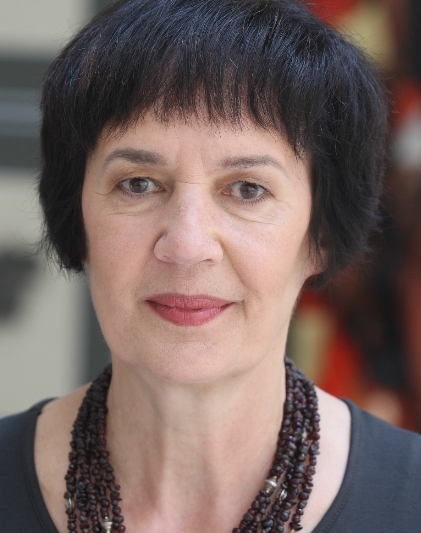 Nada Lavrač合作论文数Department of Knowledge Technologies, Jožef Stefan Institute;Jožef Stefan International Postgraduate School, University of Ljubljana;University of Nova Gorica1
 Ramin Ramezani合作论文数Department of Computing, Imperial College London1
 Matic Perovsek合作论文数Dept Knowledge Technol, Jozef Stefan Inst1Martin Žnidaršič合作论文数Department of Knowledge Technologies, Jožef Stefan Institute1




