We demonstrate a new approach to implementing automated coverage metrics including line, toggle, and finite state machine coverage. Each metric is implemented through a compiler pass with a report generator. They are decoupled from the backend simulation, emulation, or formal verification tool through a simple API designed around a single new cover primitive. Our prototype for the Chisel hardware construction language demonstrates support across three software simulators, the FPGA-accelerated FireSim simulator and a formal tool. We demonstrate collecting line coverage while booting Linux with FireSim at a target frequency of 65MHz. By construction, coverage can be trivially merged across backends.
Process technology scaling and hardware architecture specialization have vastly increased the need for chip design space exploration, while optimizing for power, performance, and area. Hammer is an open-source, reusable physical design (PD) flow generator that reduces design effort and increases portability by enforcing a separation among design-, tool-, and process technology-specific concerns with a modular software architecture. In this work, we outline Hammer's structure and highlight recent extensions that support both physical chip designers and hardware architects evaluating the merit and feasibility of their proposed designs. This is accomplished through the integration of more tools and process technologies---some open-source---and the designer-driven development of flow step generators. An evaluation of chip designs in process technologies ranging from 130nm down to 12nm across a series of RISC-V-based chips shows how Hammer-generated flows are reusable and enable efficient optimization for diverse applications.
Process technology scaling and hardware architecture specialization have vastly increased the need for chip design space exploration, while optimizing for power, performance, and area. Hammer is an open-source, reusable physical design (PD) flow generator that reduces design effort and increases portability by enforcing a separation among design-, tool-, and process technology-specific concerns with a modular software architecture. In this work, we outline Hammer's structure and highlight recent extensions that support both physical chip designers and hardware architects evaluating the merit and feasibility of their proposed designs. This is accomplished through the integration of more tools and process technologies-some open-source-and the designer-driven development of flow step generators. An evaluation of chip designs in process technologies ranging from 130nm down to 12nm across a series of RISC-V-based chips shows how Hammer-generated flows are reusable and enable efficient optimization for diverse applications.
The open-source hardware community contributes a variety of processors and accelerators, but combining them effectively into a complete System-on-Chip (SoC) remains a difficult task. We present a design flow for the seamless hardware and software integration of accelerators into a complete SoC and for its evaluation through rapid FPGA-based prototyping. By leveraging ESP, our open-source platform for agile heterogeneous SoC design, we demonstrate FPGA prototypes of various SoC designs, featuring the NVIDIA Deep Learning Accelerator and the Ariane RISC-V 64-bit processor core.
Continued improvement in computing efficiency requires functional specialization of hardware designs. We present an agile design flow for custom SoCs using the Chipyard framework, an integrated SoC research and implementation environment for custom systems. Chipyard includes configurable, composable, open-source, generator-based designs that can be used across multiple stages of the hardware development flow while maintaining design intent and integration consistency. Through cloud FPGA simulation and rapid ASIC implementation, we demonstrate an iterative agile hardware design cycle which enables continuous validation of physically-realizable customized systems.
Traditional physical design flows force users to intermix distinct information relating to logical design, physical design, technology, and tool concerns during chip implementation, leading to high design effort, costs, and time-to-market. We introduce Hammer, a physical design generator which remedies these problems via separation of concerns. Through its modular software architecture, Hammer is able to separate tool and technology concerns, while Hammer's data format separates logical and physical design concerns, enabling physical design information to be generated in sync with changes to the logical design. We evaluate Hammer's flexibility and effective software architecture by demonstrating wide-ranging reductions in time, cost, and design effort in various physical design tasks through multiple tapeouts using multiple technologies (ranging from 45nm to 16nm), tools, and design architectures.
Recent work in FPGA-accelerated simulation of ASICs has shown that much of a simulator can be automatically generated from ASIC RTL. Alas, these works rely on simple models of the outer cache hierarchy and DRAM, as mapping ASIC RTL for these components into an FPGA fabric is too complex and resource intensive. To improve FPGA simulation model accuracy, we present FASED, a parameterized generator of composable, high-fidelity, FPGA-hosted last-level-cache and DRAM models. FASED instances are highly performant, yet they maintain timing faithfulness independently of the behavior of the host-FPGA memory system. For a given scheduling policy, a single FASED instance can model nearly the entire space of realizable single-channel DDR3 memory organizations, without resynthesizing the simulator RTL. We demonstrate FASED by integrating it into a flow that automatically transforms RTL for multicore RISC-V processors into full-system simulators that execute at up to 150 target MHz on cloud-hosted FPGAs.
The problem of sampling a large number of random solutions to SAT and SMT constraints is essential for constrained-random verification and testing. However, most current sampling techniques lack a problem-specific notion of coverage, considering only general goals such as uniform distribution. We have developed a new technique for coverage-guided sampling that allows the user to specify the desired coverage points in order to shape the distribution of solutions. Our tool GUIDEDSAMPLER can efficiently generate high-quality stimuli for constrained-random verification, by sampling solutions to a SMT constraint that also cover a large number of user-defined coverage classes.
The explosive growth in the RISC-V ecosystem has brought about a multitude of open RTL SoC implementations, as well as broad software compatibility, presenting the opportunity to perform computer architecture research with direct impact using real implementations. However, putting these together in a research context with small, agile teams of developers has been challenging due to difficulty maintaining hardware compatibility with complicated software stacks, slow software RTL simulators, and poor introspection, productivity, and modeling-accuracy with FPGA prototyping. While our prior work described FireSim’s capabilities as an FPGAaccelerated cycle-exact datacenter simulation platform, in this paper, we delve into the internals of FireSim and walk through a case study simulating a novel hardware accelerator (Hwacha) that shows how a researcher would use FireSim as a tool for rapidly and cycleexactly modeling their own systems that build on a single-node RISC-V SoC. We discuss how FireSim addresses the challenges of building a reliable, reproducible, and productive RISC-V research environment, including packaging standardized releases of compatible RISC-V software and hardware, automating the process of running cycle-exact simulations on cloud FPGAs that are orders of magnitude faster than any software simulator, and providing debugging tools that allow introspection capabilities not available in FPGA prototypes.
We describe our experience developing and promoting a set of open-source tools and IP over the last 9 years, including the Chisel hardware construction language, the Rocket Chip SoC generator, and the BAG analog layout generator.
We present Golden Gate, an FPGA-based simulation tool that decouples the timing of an FPGA host platform from that of the target RTL design. In contrast to previous work in static time-multiplexing of FPGA resources, Golden Gate employs the Latency-Insensitive Bounded Dataflow Network (LI-BDN) formalism to decompose the simulator into subcomponents, each of which may be independently and automatically optimized. This structure allows Golden Gate to support a broad class of optimizations that improve resource utilization by implementing FPGA-hostile structures over multiple cycles, while the LI-BDN formalism ensures that the simulator still produces bit- and cycle-exact results. To verify that these optimizations are implemented correctly, we also present LIME, a model-checking tool that provides a push-button flow for checking whether optimized subcomponents adhere to an associated correctness specification, while also guaranteeing forward progress. Finally, we use Golden Gate to generate a cycle-exact simulator of a multi-core SoC, where we reduce LUT utilization by up to 26% by coercing multi-ported, combinationally read memories into simulation models backed by time-multiplexed block RAMs, enabling us to simulate 50% more cores on a single FPGA.
This paper demonstrates a signal analysis system-on-chip (SoC) consisting of a general-purpose RISC-V core with vector extensions and a fixed-function signal-processing accelerator. Both the application core and the accelerators are design instances produced through an agile design-space exploration process by generators that allow for a wide range of parameter configurations. The signal processing chain consists of generated instances of a time-interleaved analog-to-digital converter (ADC) followed by a digital tuner, a finite-impulse response (FIR) filter, a polyphase filter, and a fast Fourier transform (FFT) all connected to the five-stage, in-order RISC-V Rocket processor via an AXI4 bus. The generator-based design methodology is detailed, along with the agile design process of producing the fabricated design instance. The 5 mm x 5 mm chip is implemented in a 16-nm FinFET process and operates at 410 MHz at 750 mV drawing 600 mW. Presented applications show coupled functionality of the application processor and accelerator performing spectrometry and radar receive processing, and a comparison with other state-of-the-art application-specific integrated circuits (ASICs) proves that generators can produce performance-competitive designs.
This paper presents a novel runtime power modeling methodology which automatically identifies key signals for power dissipation of any RTL design. The toggle-pattern matrix is constructed with the VCD dumps from a training set, where each signal is represented as a high-dimensional point. By clustering signals showing similar switching activities, a small number of signals are automatically selected, and then the design-specific but workload-independent activity-based power model is constructed using regression against cycle-accurate power traces obtained from industry-standard CAD tools. We can also automatically instrument an FPGA-accelerated RTL simulation with runtime activity counters to obtain power traces of realistic workloads at speed. Our methodology is demonstrated with a heterogeneous processor composed of an in-order core and a custom vector accelerator, running not only microbenchmarks but also real-world machine-learning applications.
In software and hardware testing, generating multiple inputs which satisfy a given set of constraints is an important problem with applications in fuzz testing and stimulus generation. However, it is a challenge to perform the sampling efficiently, while generating a diverse set of inputs which satisfy the constraints. We developed a new algorithm QuickSampler which requires a small number of solver calls to produce millions of samples which satisfy the constraints with high probability. We evaluate QuickSampler on large real-world benchmarks and show that it can produce unique valid solutions orders of magnitude faster than other state-of-the-art sampling tools, with a distribution which is reasonably close to uniform in practice.
Designers translate DSP algorithms into application-specific hardware via primitives composed in various ways for different architectural realizations. Despite sharing underlying algorithms and hardware constructs, designs are often difficult to reuse, leading to redeveloping/reverifying conceptually similar instances. Hardware generators are attractive solutions for effectively balancing fine-grained control of implementation details with simple, retargetable hardware descriptions. This work presents ACED, a hardware library for generating DSP systems. It extends the Chisel hardware construction language and FIRRTL compiler and operates on three principles: zero-cost abstraction, unobtrusive downstream optimization/specialization promoting generator reusability, and unified, portable systems modeling and verification.
A lack of reusable physical design methodologies in ASIC design contributes to high design effort and costs. We posit that traditional flows suffer from a lack of separation between logical design, physical design, technology, and tool concerns, preventing effective re-use. We introduce Hammer, a physical design generator which remedies these problems via separation of concerns. In addition, Hammer addresses the needs of users to achieve practical re-usability using the principles of incremental adoption, system evolution, and abstraction with modularity. We elucidate how the design of Hammer separates concerns to enable usability, and walk through examples of how the principles of Hammer facilitate and contribute to open-source re-use and sharing in the domain of physical design.
Dynamic verification is widely used to increase confidence in the correctness of RTL circuits during the pre-silicon design phase. Despite numerous attempts over the last decades to automate the stimuli generation based on coverage feedback, Coverage Directed Test Generation (CDG) has not found the widespread adoption that one would expect. Based on new ideas from the software testing community around coverage-guided mutational fuzz testing, we propose a new approach to the CDG problem which requires minimal setup and takes advantage of FPGA-accelerated simulation for rapid testing. We provide test input and coverage definitions that allow fuzz testing to be applied to RTL circuit verification. In addition we propose and implement a series of transformation passes that make it feasible to reset arbitrary RTL designs quickly, a requirement for deterministic test execution. Alongside this paper we provide RFUZZ, a fully featured implementation of our testing methodology which we make available as open-source software to the research community. An empirical evaluation of RFUZZ shows promising results on archiving coverage for a wide range of different RTL designs ranging from communication IPs to an industry scale 64-bit CPU.
Stimulus generation is an essential part of hardware verification, being at the core of widely applied constrained-random verification techniques. However, as verification problems get more and more complex, so do the constraints which must be satisfied. In this context, it is a challenge to efficiently generate random stimuli which can achieve a good coverage of the design space. We developed a new technique SMTSampler which can sample random solutions from Satisfiability Modulo Theories (SMT) formulas with bit-vectors, arrays, and uninterpreted functions. The technique uses a small number of calls to a constraint solver in order to generate up to millions of stimuli. Our evaluation on a large set of complex industrial SMT benchmarks shows that SMTSampler can handle a larger class of SMT problems, outperforming state-of-the-art constraint sampling techniques in the number of samples produced and the coverage of the constraint space.
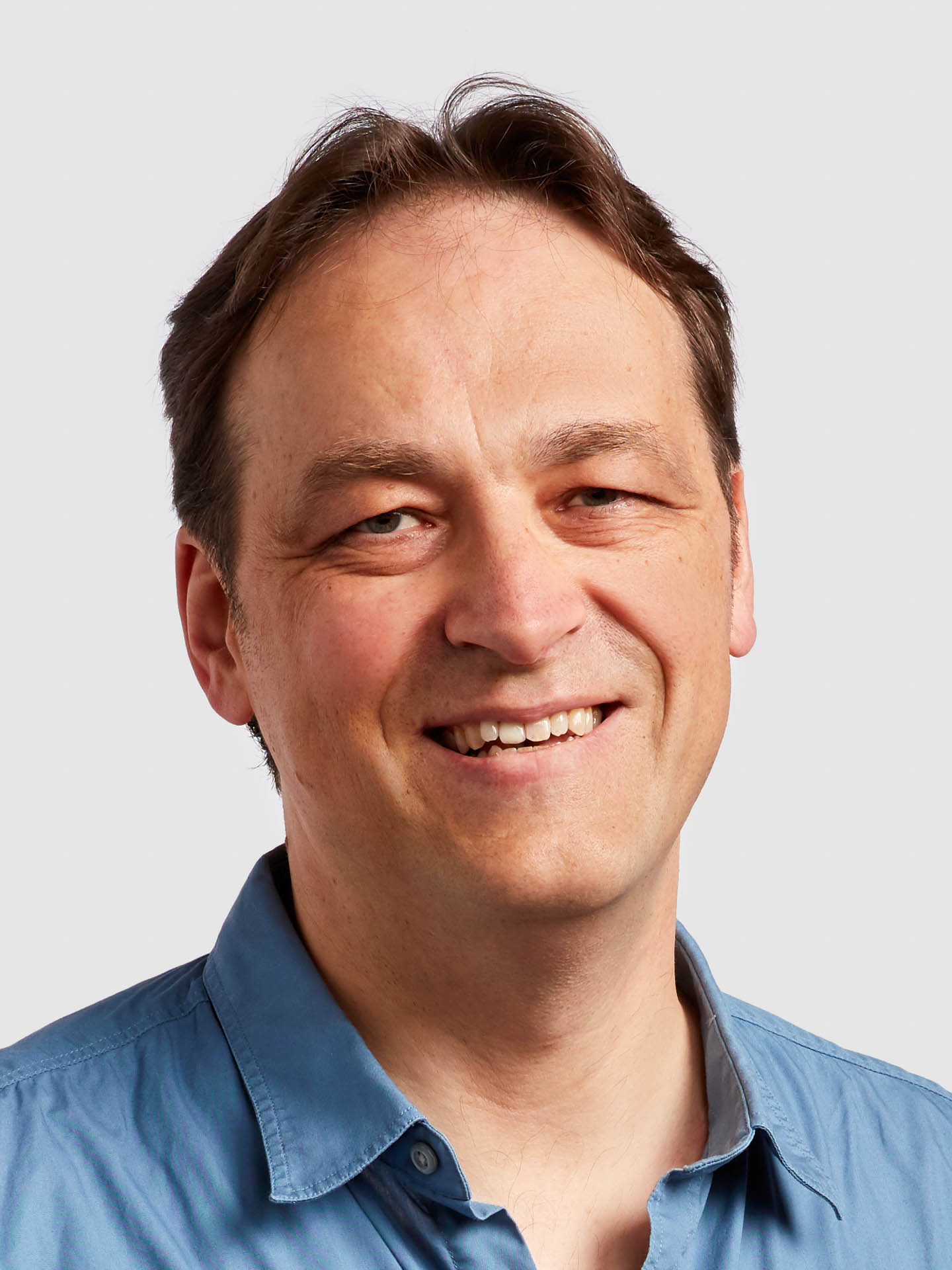 Krste Asanovic合作论文数Graduate School, Computer Science Division, EECS Department, University of California, Berkeley23
 Borivoje Nikolic合作论文数Department of Electrical Engineering and Computer Sciences, University of California at Berkeley;Berkeley Wireless Research Center, University of California at Berkeley15
 David Thomas Biancolin合作论文数SiFive14
 Jacob Beal合作论文数University of Iowa;Raytheon BBN Technologies14
 Dong Gyu Kim合作论文数Department of Neurosurgery, Seoul National University Hospital11
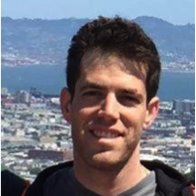 Adam M. Izraelevitz合作论文数Cornell University11
 Colin T. A. Schmidt合作论文数9
 Sagar Karandikar合作论文数Computer Science Division, University of California, Berkeley9
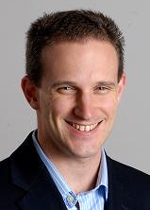 Elad Alon合作论文数Department of Electrical Engineering and Computer Sciences, University of California, Berkeley;Berkeley Wireless Research Center, University of California, Berkeley7
 Chris Celio合作论文数7
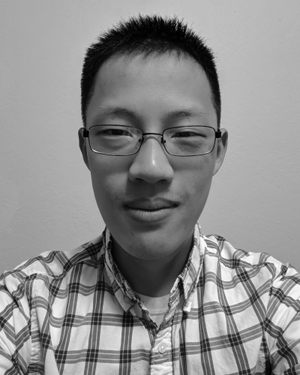 Howard Mao合作论文数Department of Electrical and Computer Engineering, University of California, Davis6Albert Magyar合作论文数University of California6
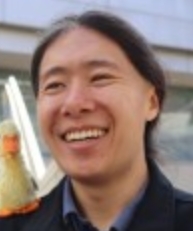 Richard Lin合作论文数University of California, Los Angeles6
 Koushik Sen合作论文数Computer Sciences Division, Department of Electrical Engineering and Computer Sciences, University of California, Berkeley6
 Saul Griffith合作论文数Rewiring America;Treau;WattzOn6Jack Koenig合作论文数Univ Calif Berkeley, Dept Elect Engn & Comp Sci, Berkeley, CA 94720 USA5
 Angie Wang合作论文数Department of Electrical Engineering and Computer Sciences, University of California5Alon Amid合作论文数University of California Berkeley5
 Chick Markley合作论文数5
 Brian C. Richards合作论文数Department of Electrical Engineering and Computer Sciences, University of California at Berkeley5
 Yunsup Lee合作论文数SiFive, Inc.5
 Kevin Laeufer合作论文数University of California at Berkeley4
 Edward Wang合作论文数UC Berkeley#TAB#4
 John Wright合作论文数Univ Calif Berkeley, Berkeley, CA 94720 USA4
 Nathan Pemberton合作论文数University of California Berkeley4Rimas Avizienis合作论文数Meyer Sound4
 Howard E. Shrobe合作论文数Computer Science and Artificial Intelligence Laboratory, Schwarzman College of Computing, Massachusetts Institute of Technology;Defense Advanced Research Projects Agency4Andrew Waterman合作论文数SiFive4
 Mark M. Tobenkin合作论文数4
 Paul Rigge合作论文数University of California Berkeley4anthony grue合作论文数3keith pasko合作论文数3
 Sam Calisch合作论文数Center for Bits and Atoms, Massachusetts Institute of Technology Cambridge3daniel benoit合作论文数3
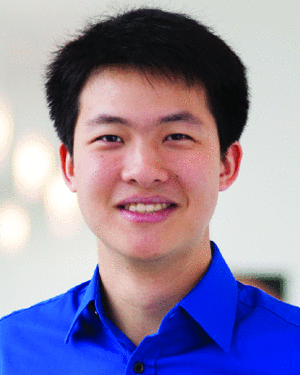 Harrison Liew合作论文数University of California at Berkeley3Rafael Dutra合作论文数Department of Electrical Engineering and Computer Sciences, University of California, Berkeley3Brian Zimmer合作论文数NVIDIA Corp3tucker gilman合作论文数3
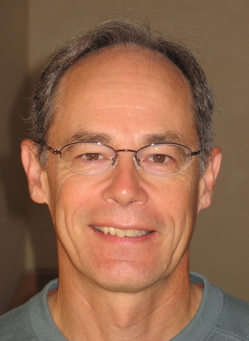 John Wawrzynek合作论文数Department of Electrical Engineering and Computer Science, University of California, Berkeley3daniel grubb合作论文数3
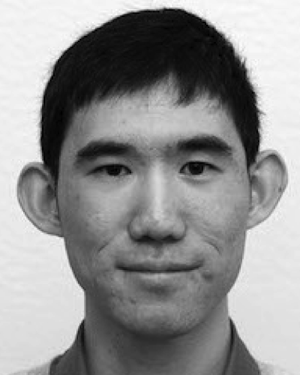 Albert Ou合作论文数3
 Geoffrey Irving合作论文数UK AI Safety Institute3
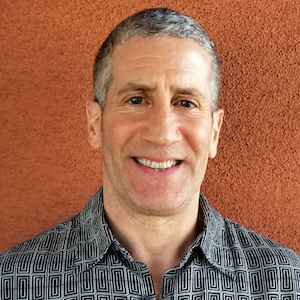 Michael C. Mozer合作论文数Institute of Cognitive Science, University of Colorado, Boulder;Google DeepMind;Department of Computer Science, College of Engineering & Applied Science, University of Colorado, Boulder3
 David A. Patterson合作论文数Department of Electrical Engineering and Computer Sciences, University of California, Berkeley;Google3Patrick S. Li合作论文数3
 Gregory Thomas Sullivan合作论文数Massachusetts Institute of Technology3
 Martin Wicke合作论文数Google Research3Kyle Kovacs合作论文数2Aditya Chopra合作论文数2