Google has a large team of machine learning (ML) developers working on a large number of ML models. ML model development suffers from long edit/validate cycles compared to traditional software development. This makes it tedious and time consuming for modeling teams to propagate ML innovations to their models. We present Heinzelmaennchen, an ML modeling automation system, which allows users to apply semantically specified modeling changes to models and evaluate them at scale. Three insights are key to creating this system: Automatic code modification allows us to mechanically apply modeling changes to a wide variety of models. Workflow automation systems are well suited to operate complex ML training machinery as if they were humans, saving significant manual effort. And finally, given a large enough model population, even imperfect automatic modeling with a lower-than-human success rate will generate significant aggregategains. In this paper, we describe the design and an implementation of our system. We also evaluate the system performance and include an empirical study to demonstrate the utility and critical impact of the system. Our system is widely used by hundreds of ML developers and it significantly accelerates model development on hundreds of production models.
In this report, we introduce the Gemini 1.5 family of models, representing the next generation of highly compute-efficient multimodal models capable of recalling and reasoning over fine-grained information from millions of tokens of context, including multiple long documents and hours of video and audio. The family includes two new models: (1) an updated Gemini 1.5 Pro, which exceeds the February version on the great majority of capabilities and benchmarks; (2) Gemini 1.5 Flash, a more lightweight variant designed for efficiency with minimal regression in quality. Gemini 1.5 models achieve near-perfect recall on long-context retrieval tasks across modalities, improve the state-of-the-art in long-document QA, long-video QA and long-context ASR, and match or surpass Gemini 1.0 Ultra's state-of-the-art performance across a broad set of benchmarks. Studying the limits of Gemini 1.5's long-context ability, we find continued improvement in next-token prediction and near-perfect retrieval (>99 as Claude 3.0 (200k) and GPT-4 Turbo (128k). Finally, we highlight real-world use cases, such as Gemini 1.5 collaborating with professionals on completing their tasks achieving 26 to 75 categories, as well as surprising new capabilities of large language models at the frontier; when given a grammar manual for Kalamang, a language with fewer than 200 speakers worldwide, the model learns to translate English to Kalamang at a similar level to a person who learned from the same content.
Recent advances in machine learning have leveraged dramatic increases in computational power, a trend expected to continue in the future. This paper introduces the first Hyperscale Hardware Optimized Neural Architecture Search (H2O-NAS) to automatically design accurate and performant machine learning models tailored to the underlying hardware architecture. H2O-NAS consists of three key components: a new massively parallel “one-shot” search algorithm with intelligent weight sharing, which can scale to search spaces of O(10280) and handle large volumes of production traffic; hardware-optimized search spaces for diverse ML models on heterogeneous hardware; and a novel two-phase hybrid performance model and a multi-objective reward function optimized for large scale deployments. H2O-NAS has been implemented around state-of-the-art machine learning models (e.g. convolutional models, vision transformers, and deep learning recommendation models) and deployed at zettaflop scale in production. Our results demonstrate significant improvements in performance (22% ∼ 56%) and energy efficiency (17% ∼25%) at same or better quality. Our solution is designed for largescale deployment, streamlining privacy and security processes and reducing manual overhead. This facilitates a smooth and automated transition from research to production.
Crown-of-Thorn Starfish (COTS) outbreaks are a major cause of coral loss on the Great Barrier Reef (GBR) and substantial surveillance and control programs are underway in an attempt to manage COTS populations to ecologically sustainable levels. We release a large-scale, annotated underwater image dataset from a COTS outbreak area on the GBR, to encourage research on Machine Learning and AI-driven technologies to improve the detection, monitoring, and management of COTS populations at reef scale. The dataset is released and hosted in a Kaggle competition that challenges the international Machine Learning community with the task of COTS detection from these underwater images.
: Deep Learning algorithms are becoming common in solving different supervised and unsupervised learning problems. Different deep learning algorithms were developed in last decade to solve different learning problems in different domains such as computer vision, speech recognition, machine translation, etc. In the research field of computer vision, it is observed that deep learning has become overwhelmingly popular. In solving computer vision related problems, we first take a CNN (Convolutional Neural Network) which is trained from scratch or some times a pre-trained model is taken and further fine-tuned based on the dataset that is available. The problem of training the model from scratch on new datasets suffers from catastrophic forgetting . Which means that when a new dataset is used to train the model, it forgets the knowledge it has obtained from an existing dataset. In other words different datasets does not help the model to increase its knowledge. The problem with the pre-trained models is that mostly CNN models are trained on open datasets, where the data set contains instances from specific regions. This results into predicting disturbing labels when the same model is used for instances of datasets collected in a different region. Therefore, there is a need to find a solution on how to reduce the gap of Geo-diversity in different computer vision problems in developing world. In this paper, we explore the problems of models that were trained from scratch along with models which are pre-trained on a large dataset, using a dataset specifically developed to understand the geo-diversity issues in open datasets. The dataset contains images of different wedding scenarios in South Asian countries. We developed a Lifelong CNN that can incrementally increase knowledge i.e., the CNN learns labels from the new dataset but includes the existing knowledge of open data sets. The proposed model demonstrates highest accuracy compared to models trained from scratch or pre-trained model. datasets
course Share on Differentiable graphics with TensorFlow 2.0 Authors: Paige Bailey View Profile , Sofien Bouaziz View Profile , Shan Carter View Profile , Josh Gordon View Profile , Christian Häne View Profile , Alexander Mordvintsev View Profile , Julien Valentin View Profile , Martin Wicke View Profile Authors Info & Claims SIGGRAPH '19: ACM SIGGRAPH 2019 CoursesJuly 2019 Article No.: 10Pages 1–211https://doi.org/10.1145/3305366.3328041Published:28 July 2019Publication History 1citation837DownloadsMetricsTotal Citations1Total Downloads837Last 12 Months39Last 6 weeks4 Get Citation AlertsNew Citation Alert added!This alert has been successfully added and will be sent to:You will be notified whenever a record that you have chosen has been cited.To manage your alert preferences, click on the button below.Manage my AlertsNew Citation Alert!Please log in to your account Save to BinderSave to BinderCreate a New BinderNameCancelCreateExport CitationPublisher SiteGet Access
We present a novel approach for unsupervised learning of depth and ego-motion from monocular video. Unsupervised learning removes the need for separate supervisory signals (depth or ego-motion ground truth, or multi-view video). Prior work in unsupervised depth learning uses pixel-wise or gradient-based losses, which only consider pixels in small local neighborhoods. Our main contribution is to explicitly consider the inferred 3D geometry of the scene, enforcing consistency of the estimated 3D point clouds and ego-motion across consecutive frames. This is a challenging task and is solved by a novel (approximate) backpropagation algorithm for aligning 3D structures. We combine this novel 3D-based loss with 2D losses based on photometric quality of frame reconstructions using estimated depth and ego-motion from adjacent frames. We also incorporate validity masks to avoid penalizing areas in which no useful information exists. We test our algorithm on the KITTI dataset and on a video dataset captured on an uncalibrated mobile phone camera. Our proposed approach consistently improves depth estimates on both datasets, and outperforms the state-of-the-art for both depth and ego-motion. Because we only require a simple video, learning depth and ego-motion on large and varied datasets becomes possible. We demonstrate this by training on the low quality uncalibrated video dataset and evaluating on KITTI, ranking among top performing prior methods which are trained on KITTI itself.
We present a novel approach for unsupervised learning of depth and ego-motion from monocular video. The idea is to explicitly consider the inferred 3D geometry of the scene, enforcing consistency of the estimated 3D point clouds and ego-motion across consecutive frames. This is a challenging task and is solved by a novel (approximate) backpropagation algorithm for aligning 3D structures. Because we only require a simple video, learning depth and ego-motion on large and varied datasets becomes possible. We demonstrate this by training on the low quality uncalibrated video dataset and evaluating on KITTI, ranking among top performing prior methods which are trained on KITTI itself. A detailed version of this abstract will appear in [5]. See also http://sites.google.com/view/vid2depth. Introduction. This paper considers unsupervised learning of depth and ego-motion from monocular RGB-only videos [6]. The only form of supervision that we use comes from assumptions about consistency and temporal coherence between consecutive frames in a monocular video. While, most supervised methods for learning depth and ego-motion require carefully calibrated setups [4], here the only required input is video and the camera focal length. Method. In order to learn depth in a completely unsupervised fashion, we rely on existence of ego-motion in the video. Given two consecutive frames from the video, a neural network produces single-view depth estimates from each frame, and an ego-motion estimate from the frame pair. Requiring that the depth and ego-motion estimates from adjacent frames are consistent serves as supervision for training the model. We propose a loss which directly penalizes inconsistencies in the estimated depth by directly comparing 3D point clouds in a common reference frame. Intuitively, assuming there is no significant object motion in the scene, one can transform the estimated point cloud for each frame into the predicted point cloud for the other frame by applying ego-motion or its inverse (Fig. 1). Unlike 2D losses that enforce local photometric consistency, the 3D loss considers the entire scene and its geometry. We show how to efficiently backpropagate through this loss [5]. Problem setup. At training time, the goal is to learn depth and ego-motion from a single monocular video stream. This problem can be formalized as follows: Given a pair of consecutive frames Xt−1 and Xt, estimate depth Dt−1 at time t−1, depth Dt at time t, and the ego-motion Tt representing the camera’s movement (position and orientation) from time t − 1 to t. Once a depth estimate Dt is available, it can be projected into a point cloud Qt (using the camera intrinsic matrix K). *This work was done while at Google Brain 1Reza Mahjourian is also with the University of Texas at Austin 2Contact author is anelia@google.com ^ ^ Frame Xt-1 Frame Xt Estimate Cloud Align with ICP Estimate Ego-motion Qt-1 Qt
We consider the problem of next frame prediction from video input. A recurrent convolutional neural network is trained to predict depth from monocular video input, which, along with the current video image and the camera trajectory, can then be used to compute the next frame. Unlike prior next-frame prediction approaches, we take advantage of the scene geometry and use the predicted depth for generating the next frame prediction. Our approach can produce rich next frame predictions which include depth information attached to each pixel. Another novel aspect of our approach is that it predicts depth from a sequence of images (e.g. in a video), rather than from a single still image. We evaluate the proposed approach on the KITTI dataset, a standard dataset for benchmarking tasks relevant to autonomous driving. The proposed method produces results which are visually and numerically superior to existing methods that directly predict the next frame. We show that the accuracy of depth prediction improves as more prior frames are considered.
Creating and maintaining a platform for reliably producing and deploying machine learning models requires careful orchestration of many components---a learner for generating models based on training data, modules for analyzing and validating both data as well as models, and finally infrastructure for serving models in production. This becomes particularly challenging when data changes over time and fresh models need to be produced continuously. Unfortunately, such orchestration is often done ad hoc using glue code and custom scripts developed by individual teams for specific use cases, leading to duplicated effort and fragile systems with high technical debt. We present TensorFlow Extended (TFX), a TensorFlow-based general-purpose machine learning platform implemented at Google. By integrating the aforementioned components into one platform, we were able to standardize the components, simplify the platform configuration, and reduce the time to production from the order of months to weeks, while providing platform stability that minimizes disruptions. We present the case study of one deployment of TFX in the Google Play app store, where the machine learning models are refreshed continuously as new data arrive. Deploying TFX led to reduced custom code, faster experiment cycles, and a 2% increase in app installs resulting from improved data and model analysis.
We present a framework for specifying, training, evaluating, and deploying machine learning models. Our focus is on simplifying cutting edge machine learning for practitioners in order to bring such technologies into production. Recognizing the fast evolution of the field of deep learning, we make no attempt to capture the design space of all possible model architectures in a domain-specific language (DSL) or similar configuration language. We allow users to write code to define their models, but provide abstractions that guide developers to write models in ways conducive to productionization. We also provide a unifying Estimator interface, making it possible to write downstream infrastructure (e.g. distributed training, hyperparameter tuning) independent of the model implementation. We balance the competing demands for flexibility and simplicity by offering APIs at different levels of abstraction, making common model architectures available out of the box, while providing a library of utilities designed to speed up experimentation with model architectures. To make out of the box models flexible and usable across a wide range of problems, these canned Estimator s are parameterized not only over traditional hyperparameters, but also using feature columns , a declarative specification describing how to interpret input data We discuss our experience in using this framework in research and production environments, and show the impact on code health, maintainability, and development speed.
TensorFlow is an interface for expressing machine learning algorithms, and an implementation for executing such algorithms. A computation expressed using TensorFlow can be executed with little or no change on a wide variety of heterogeneous systems, ranging from mobile devices such as phones and tablets up to large-scale distributed systems of hundreds of machines and thousands of computational devices such as GPU cards. The system is flexible and can be used to express a wide variety of algorithms, including training and inference algorithms for deep neural network models, and it has been used for conducting research and for deploying machine learning systems into production across more than a dozen areas of computer science and other fields, including speech recognition, computer vision, robotics, information retrieval, natural language processing, geographic information extraction, and computational drug discovery. This paper describes the TensorFlow interface and an implementation of that interface that we have built at Google. The TensorFlow API and a reference implementation were released as an open-source package under the Apache 2.0 license in November, 2015 and are available at www.tensorflow.org.
TensorFlow is a machine learning system that operates at large scale and in heterogeneous environments. Tensor-Flow uses dataflow graphs to represent computation, shared state, and the operations that mutate that state. It maps the nodes of a dataflow graph across many machines in a cluster, and within a machine across multiple computational devices, including multicore CPUs, general-purpose GPUs, and custom-designed ASICs known as Tensor Processing Units (TPUs). This architecture gives flexibility to the application developer: whereas in previous "parameter server" designs the management of shared state is built into the system, TensorFlow enables developers to experiment with novel optimizations and training algorithms. TensorFlow supports a variety of applications, with a focus on training and inference on deep neural networks. Several Google services use TensorFlow in production, we have released it as an open-source project, and it has become widely used for machine learning research. In this paper, we describe the TensorFlow dataflow model and demonstrate the compelling performance that TensorFlow achieves for several real-world applications.
 Geoffrey Irving合作论文数UK AI Safety Institute10
 Leonidas Guibas合作论文数Computer Science Department, School of Engineering, Stanford University;Department of Electrical Engineering, Stanford University8
 Michael Isard合作论文数Google DeepMind7
 Derek Murray合作论文数Google Brain7
 Sanjay Ghemawat合作论文数Google7
 Andrew Harp合作论文数6
 Pete Warden合作论文数Google Brain, Mountain View, CA 94043 USA6
 Josh Levenberg合作论文数Google6
 Benoit Steiner合作论文数Anthropic;Facebook6
 Markus Gross合作论文数Computer Graphics Laboratory, Department of Computer Science, Swiss Federal Institute of Technology Zürich;The Walt Disney Studios6
 Yuan Yu合作论文数Microsoft6
 Manjunath Kudlur合作论文数Useful Sensors Inc.6
 Paul Barham合作论文数Google DeepMind6
 Zhifeng Chen合作论文数Apple5
 Sherry Moore合作论文数Sherry Q. Moore LLC;Google Research5
 Anelia Angelova合作论文数Google DeepMind5
 Rafal Józefowicz合作论文数The D. E. Shaw Group5
 Mark Pauly合作论文数School of Computer and Communication Sciences, École polytechnique fédérale de Lausanne;Rayform SA5
 Branislav Kusy合作论文数5
 Martín Abadi合作论文数Department of Computer Science and Engineering, Baskin School of Engineering, University of California, Santa Cruz;Google5
 Fernanda Viégas合作论文数Google;Harvard John A. Paulson School of Engineering and Applied Sciences, Harvard University;Insight and Interaction Lab, Harvard University5
 Martin Wattenberg合作论文数John A. Paulson School of Engineering and Applied Sciences, Harvard University;Google Research5
 Matthieu Devin合作论文数Google Brain5
 Rajat Monga合作论文数Plaksha Technology Leaders Program5
 Oriol Vinyals合作论文数Google DeepMind5Bart Adams合作论文数Accounting & Audit Division5
 Heng-Tze Cheng合作论文数Google DeepMind5
 Vijay Vasudevan合作论文数Lutra AI5
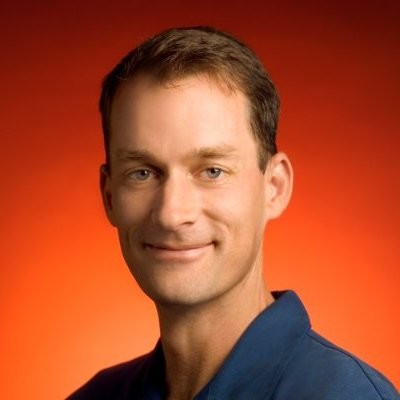 Jeff Dean合作论文数DiscoveryLoop5
 Reza Mahjourian合作论文数Waymo5
 Christopher Olah合作论文数Anthropic4
 Jonathon Shlens合作论文数Google DeepMind4Zakaria Haque合作论文数Google, Inc., Mountain View, CA, USA4Andy Davis合作论文数Google Brain, Mountain View, CA 94043 USA4
 Mustafa Ispir合作论文数Google4Clemens Mewald合作论文数4
 Eugene Brevdo合作论文数Google DeepMind;Google Brain4
 Łukasz Kaiser合作论文数OpenAI;CNRS4
 Ashish Agarwal合作论文数Department of Electrical and Computer Engineering;Boston University4
 Greg Corrado合作论文数Google4
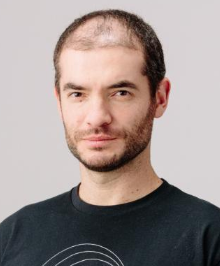 Ilya Sutskever合作论文数Safe Superintelligence Inc4
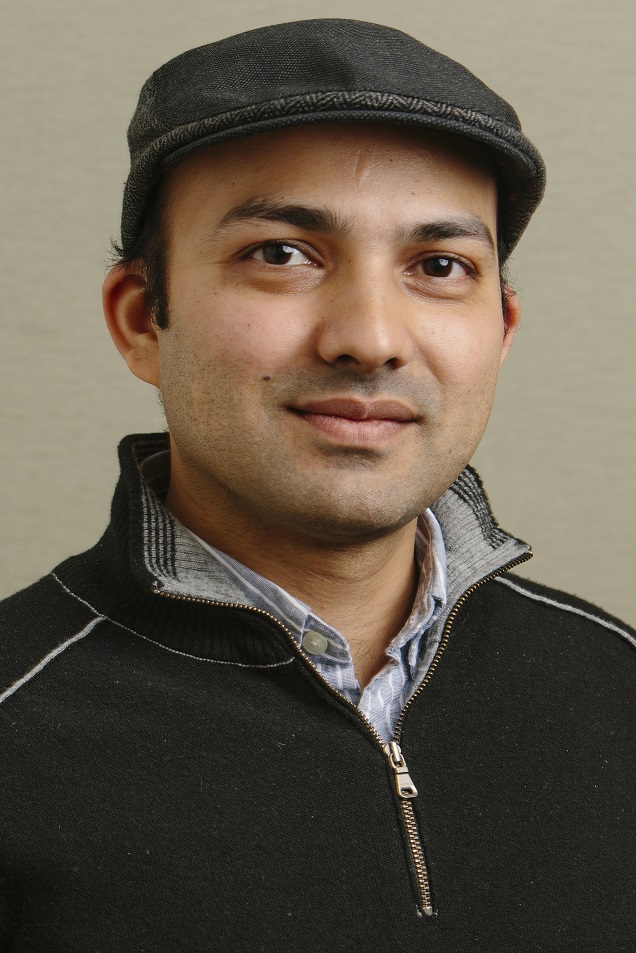 Kunal Talwar合作论文数Apple4
 Yangqing Jia (贾扬清)合作论文数NVIDIA4
 HyungJune Lee合作论文数Stanford University4
 Craig Citro合作论文数Indiana University4
 Vincent Vanhoucke合作论文数Waymo4
 Mike Schuster合作论文数Two Sigma4
 Ian Goodfellow合作论文数Stealth Startup4Dan Mané合作论文数3