The bioavailability of highly lipophilic, poorly soluble drugs can be improved effectively, when formulated in lipid-based systems. Solid lipids generally offer greater physical robustness than liquid lipids but slower release. Hot-melt extrusion (HME) and additive manufacturing (AM) enable personalized release by tailoring composition and geometry. However, the limited availability of suitable solid lipid-based materials, particularly for processing thermolabile and lipophilic drugs, restricts their application. Polyglycerol esters of fatty acids (PGFAs) represent a promising class of lipids due to their stable α-form, tunable hydrophilicity, and printability. Nevertheless, the interplay between lipid processing, solid state, and rheological behavior remains insufficiently understood for HME and AM. In this study, felodipine (Biopharmaceutics Classification System (BCS) class II drug) was incorporated into a PGFA matrix to obtain a fully dissolved system at the minimum processing temperature. Drug loading induced melting point depression, delayed crystallization, and introduced disorder in crystal packing, thereby weakening the crystal network and enhancing filament flexibility, enabling printability. Printable filaments were achieved at 95 °C, while an undetectable crystalline drug was observed at 120 °C. This work demonstrates that drug-lipid interactions can be employed to enhance processability: while low-temperature processing of PGFA was feasible, drug modifications into the lipid solid state impacted the rheological and mechanical properties essential for additive manufacturing. Beyond this specific system, this study provides a rational proof of concept for processing solid and liquid lipids via continuous melt-based technologies.
Many new drug substances exhibit poor physicochemical properties and therefore require significant time and material resources to develop into safe and efficacious medicinal products. This typically involves exploring a large amount of compositional space and may require excessive amounts of drug compounds, which may not be adequate at the early stage of drug development. Scaled-down screening methods have been used as a cost-effective approach to the early-stage formulation. However, even the most material-efficient methods used in product development require milligrams or grams of drug material, which is often not available until relatively late in the lead optimization process. Herein, we report the application of picoliter inkjet printing of drugs and polymers from solution to create addressable formulation microarrays. This allows the efficient screening of drug-polymer compositions while only requiring micrograms or less of the drug substance. A total of eight model compounds, namely, carbamazepine, griseofulvin, saccharin, theophylline, 4-aminobenzoic acid, caffeine, salicylic acid, and benzocaine, were screened against seven commonly used amorphous solid dispersion (ASD) matrix polymers at 5% w/w composition intervals in the range of 5-80% w/w, with five replicates each. Each dispensed spot contains a total of only 1 μg of material (model compound and/or polymer). Across the tested ASD formulations, we ranked the different polymers based on their ability to hinder drug recrystallization across different compositions. Also, we identified distinct physicochemical behaviors in their crystallization kinetics, such as moisture resolubilization. We expect this approach to enable the rapid time- and material-efficient development of new amorphous solid dispersion formulations in an industrial setting.
Coformulation is an approach to formulating multiple biopharmaceutical therapeutics in a single formulation, promising the benefits of both therapies in one dose. However, as molecular stability is a key consideration in traditional biopharmaceutical formulations, stability of coformulations will require extensive investigation. This study evaluated the effects of traditional formulation stabilizers, specifically surfactants, at different grades, namely, regular grade (RG) Tween 20 and Tween 80 and Super-refined Polysorbate 20 and 80. Their effects were assessed through their interactions with human serum albumin (HSA) and a glucagon-like peptide-1 (GLP-1) receptor agonist (MEDI7219). Isothermal titration calorimetry (ITC) and differential scanning calorimetry (DSC) were implemented to determine the strength of the binding interactions and thermal stability of the tertiary system. ITC confirmed that upon titration of MEDI7219 into a solution of HSA and RG, Tween 20 the binding affinity of the peptide was reduced, resulting in negatively cooperative binding. However, when the peptide was titrated into a solution of HSA and both grades of Tween 80, the binding affinity increased with positive cooperative binding. DSC established that MEDI7219 increased the thermal stability of HSA to a similar extent to the polysorbates. Combining peptide and polysorbate did not further increase the thermal stability of HSA; however, it did reduce the unfolding of HSA molecules in the absence of heat. Overall, the unique findings in this study have demonstrated that the order of addition in a ternary coformulation affects the final composition which is an important consideration for pharmaceutical development.
In the last decades, tremendous improvements have been made in enhancing the bioavailability of poorly soluble active pharmaceutical ingredients (APIs). Lately, their customisation potential has become a reality through filament-based 3D-printing (3DP). Highly loaded oral amorphous solid dispersions (ASDs) are of particular interest, since they drastically reduce the pill burden. However, such systems are limited by their high tendency of API recrystallisation, compromising the API solubility and the mechanical properties of filaments fabricated for 3DP. The following work closes this gap by developing compact 3DP tablets containing an ASD system of 70 % itraconazole in hydroxypropyl methylcellulose acetate succinate (HPMCAS). The processability via HME and 3DP processes was thoroughly investigated by considering filament properties such as solid-state, rheology and mechanical behaviour. Even after six months of storage, the ASD did not show recrystallisation and maintained a zero-order drug release for variable 3DP infill patterns, demonstrating the potential of this approach for on-demand processing at the point-of-care. A strong differentiation in release kinetics was found for different infills that can be used for further improvement of the product to allow tailored release rates. This work provides a strong basis for successful personalisation of highly loaded ASDs via 3DP.
Presented here is a dataset (PhDat) discretizing the aqueous phase behavior of 143 surfactants as a function of temperature and composition. Across the complete dataset, we classify the discretized state points into 118 distinct possible phase states, comprising both single- and two-phase regions, taking a probabilistic approach to describe phase transitions and narrow biphasic gaps. We also outline the workflow adopted to obtain the digitized phase diagrams. We anticipate this dataset will be useful for machine learning or similar applications, in the practically important field of surfactant formulation. The dataset has been designed to be extensible such that it can accommodate a wider variety of surfactant mixtures or non-surfactant molecule phase diagrams.
Hydrophobic ion pairing (HIP) can successfully increase the drug loading and control the release kinetics of ionizable hydrophilic drugs, addressing challenges that prevent these molecules from reaching the clinic. Nevertheless, polymeric nanoparticle (PNP) formulation development requires trial-and-error experimentation to meet the target product profile, which is laborious and costly. Herein, we design a preformulation framework (solid-state screening, computational approach, and solubility in PNP-forming emulsion) to understand counterion-drug-polymer interactions and accelerate the PNP formulation development for HIP systems. The HIP interactions between a small hydrophilic molecule, AZD2811, and counterions with different molecular structures were investigated. Cyclic counterions formed amorphous ion pairs with AZD2811; the 0.7 pamoic acid/1.0 AZD2811 complex had the highest glass transition temperature (Tg; 162 °C) and the greatest drug loading (22%) and remained as phase-separated amorphous nanosized domains inside the polymer matrix. Palmitic acid (linear counterion) showed negligible interactions with AZD2811 (crystalline-free drug/counterion forms), leading to a significantly lower drug loading despite having similar log P and pKa with pamoic acid. Computational calculations illustrated that cyclic counterions interact more strongly with AZD2811 than linear counterions through dispersive interactions (offset π-π interactions). Solubility data indicated that the pamoic acid/AZD2811 complex has a lower organic phase solubility than AZD2811-free base; hence, it may be expected to precipitate more rapidly in the nanodroplets, thus increasing drug loading. Our work provides a generalizable preformulation framework, complementing traditional performance-indicating parameters, to identify optimal counterions rapidly and accelerate the development of hydrophilic drug PNP formulations while achieving high drug loading without laborious trial-and-error experimentation.
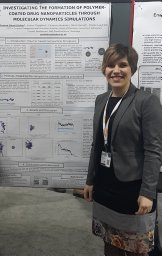
An exploratory investigation into the molecular-level determinants influencing efficient drug loading in PLGA nanoparticles using a nanoprecipitation method.
Self-assembly of surfactants into complex structures is key to the performance of many formulated products, which form a significant fraction of the world’s manufactured goods. Here we adopt the dissipative particle dynamics simulation approach to explore the self-assembly process of surfactants, with the aim of understanding what information can be obtained that may correlate with an increased zero-shear viscosity of products. To this end we experimentally measured the zero-shear viscosity of mixed micelle systems comprised of cocoamidopropyl betaine (CAPB) and sodium lauryl sarcosinate (SLSar), and characterised the early stages of self-assembly of the same systems in simulation, as a function of the CAPB / SLSar mole ratio and pH. From simulation we identify three distinct behaviors in the micellar self-assembly process (logarithmic, linear and cubic power law growth) which we find show some degree of correlation with the experimental zero-shear viscosity. Owing to the relatively short simulation times required, this may provide formulation scientists with a practical route to identify regions of interest (i. e. those with a desired zero-shear viscosity) prior to synthesising de novo (potentially natural) surfactants.
Programmable synthesis of polymer nanoparticles prepared by polymerization-induced self-assembly (PISA) mediated by reversible addition-fragmentation chain-transfer (RAFT) dispersion polymerization with specified diameter is achieved in an automated flow-reactor platform. Real-time particle size and monomer conversion is obtained via inline spatially resolved dynamic light scattering (SRDLS) and benchtop nuclear magnetic resonance (NMR) instrumentation. An initial training experiment generated a relationship between copolymer block length and particle size for the synthesis of poly(N,N-dimethylacrylamide)-b-poly(diacetone acrylamide) (PDMAm-b-PDAAm) nanoparticles. The training data was used to target the product compositions required for synthesis of nanoparticles with defined diameters of 50, 60, 70, and 80 nm, while inline NMR spectroscopy enabled rapid acquisition of kinetic data to support their scale-up. NMR and SRDLS were used during the continuous manufacture of the targeted products to monitor product consistency while an automated sampling system collected practically useful quantities of the targeted products, thus outlining the potential of the platform as a tool for discovery, development, and manufacture of polymeric nanoparticles.
The poor aqueous solubility of many active pharmaceutical ingredients (APIs) dominates much of the early drug development portfolio and poses a major challenge in pharmaceutical development. Polymer-based amorphous solid dispersions (ASDs) are becoming increasingly common and offer a promising formulation strategy to tackle the solubility and oral absorption issues of these APIs. This review discusses the design, manufacture, and utilisation of ASD formulations in preclinical drug development, with a key focus on the pre-formulation assessments and workflows employed at AstraZeneca.
Exploration of chemical composition and structural configuration space is the central problem in crystal structure prediction. Even in limiting structure space to a single structure type, many different compositions and configurations are possible. In this work, we attempt to address this problem using an extension to the existing ChemDASH code in which variable compositions can be explored. We show that ChemDASH is an efficient method for exploring a fixed-composition space of spinel structures and build upon this to include variable compositions in the Mn-Fe-Zn-O spinel phase field. This work presents the first basin-hopping crystal structure prediction method that can explore variable compositions.
Sporopollenin exine capsules (SpECs) are microcapsules derived from the outer shells (exines) of plant spore and pollen grains. This work reports the first clinical study on healthy volunteers to show enhanced bioavailability of vitamin D encapsulated in SpECs from Lycopodium clavatum L. spore grains vs vitamin D alone, and the first evidence (in vitro, ex vivo and in vivo) of mechanisms to account for the enhancement and release of the active in the small intestine. Evidence for mucoadhesion of the SpECs contributing to the mechanism of the enhancement is based on: (i) release profile over time of vitamin D in a double blind cross-over human study showing significant release in the small intestine; (ii) in vivo particle counting data in rat showing preferred retention of SpECs vs synthetic beads; (iii) ex vivo99mTc labelling and counting data using rat small intestine sections showing preferred retention of SpECs vs synthetic beads; (iv) in vitro mucoadhesion data. Triggered release by bile in the small intestine was shown in vitro using solid state NMR and HPLC.
We demonstrate how recently developed Boxed Molecular Dynamics (BXD) and kinetics [D. V. Shalashilin et al., J. Chem. Phys. 137, 165102 (2012)] can provide a kinetic description of protein pulling experiments, allowing for a connection to be made between experiment and the atomistic protein structure. BXD theory applied to atomic force microscopy unfolding is similar in spirit to the kinetic two-state model [A. Noy and R. W. Friddle, Methods 60, 142 (2013)] but with some differences. First, BXD uses a large number of boxes, and therefore, it is not a two-state model. Second, BXD rate coefficients are obtained from atomistic molecular dynamics simulations. BXD can describe the dependence of the pulling force on pulling speed. Similar to Shalashilin et al. [J. Chem. Phys. 137, 165102 (2012)], we show that BXD is able to model the experiment at a very long time scale up to seconds, which is way out of reach for standard molecular dynamics.
Talin is an intracellular protein connecting the actin cytoskeleton to the extracellular matrix via transmembrane integrin receptors. Talin consists of head domain, large α-helical rod and dimerization domain. The rod domain consists of 13 subdomains, which are formed by 4 or 5 α-helices. Mechanical stretching of talin rod regulates its function by destroying binding sites located on the molecular surface of the subdomains and exposing buried binding sites for other binding partners. The rod subdomains have varying mechanical stability, where 5-helix R9 is mechanically the strongest and 4-helix R3 is mechanically the weakest. We have studied how talin rod subdomains R9 and R3 unfold, using boxed molecular dynamics (BXD) and steered molecular dynamics (SMD) simulations. The BXD and SMD simulations are conducted using different conditions, implicit solvent and explicit water model respectively. Despite the difference in methods, analysis of unfolding pathways and free energy of unfolding showed that BXD and SMD results are in good agreement, and support a model where the subdomains unfold through stable 3-helix intermediates. The free energy of unfolding suggests that the folded conformation of the subdomains is the most favorable and the 3-helix intermediate can exist only under mechanical load.
Mechanical signals regulate functions of mechanosensitive proteins by inducing structural changes that are determinant for force-dependent interactions. Talin is a focal adhesion protein that is known to extend under mechanical load, and it has been shown to unfold via intermediate states. Here, we compared different nonequilibrium molecular dynamics (MD) simulations to study unfolding of the talin rod. We combined boxed MD (BXD), steered MD, and umbrella sampling (US) techniques and provide free energy profiles for unfolding of talin rod subdomains. We conducted BXD, steered MD, and US simulations at different detail levels and demonstrate how these different techniques can be used to study protein unfolding under tension. Unfolding free energy profiles determined by BXD suggest that the intermediate states in talin rod subdomains are stabilized by force during unfolding, and US confirmed these results.
The formulation of drug/polymer amorphous solid dispersions (ASDs) is one of the most successful strategies for improving the oral bioavailability of poorly soluble active pharmaceutical ingredients (APIs). Hot melt extrusion (HME) is one method for preparing ASDs that is growing in importance in the pharmaceutical industry, but there are still substantial gaps in our understanding regarding the dynamics of drug dissolution and dispersion in viscous polymers and the physical stability of the final formulations. Furthermore, computational models have been built in order to predict optimal processing conditions, but they are limited by the lack of experimental data for key mass transport parameters, such as the diffusion coefficient. The work presented here reports direct measurements of API diffusion in pharmaceutical polymer melts, using high-temperature pulsed-field gradient NMR. The diffusion coefficient of a model drug/polymer system (paracetamol/copovidone) was determined for different drug loadings and at temperatures relevant to the HME process. The mechanisms of the diffusion process are also explored with the Stokes-Einstein and Arrhenius models. The results show that diffusivity is linked exponentially to temperature. Furthermore, this study includes rheological characterization, DSC and 1H ssNMR T1 and T1ρ measurements to give additional insights into the physical state, phase separation, and API/polymer interactions in paracetamol/copovidone ASD formulations.
A study has been carried out to investigate controlled release performance of caplet shaped injection moulded (IM) amorphous solid dispersion (ASD) tablets based on the model drug AZD0837 and polyethylene oxide (PEO). The physical/chemical storage stability and release robustness of the IM tablets were characterized and compared to that of conventional extended release (ER) hydrophilic matrix tablets of the same raw materials and compositions manufactured via direct compression (DC). To gain an improved understanding of the release mechanisms, the dissolution of both the polymer and the drug were studied. Under conditions where the amount of dissolution media was limited, the controlled release ASD IM tablets demonstrated complete and synchronized release of both PEO and AZD0837 whereas the release of AZD0837 was found to be slower and incomplete from conventional direct compressed ER hydrophilic matrix tablets. The results clearly indicated that AZD0837 remained amorphous throughout the dissolution process and was maintained in a supersaturated state and hence kept stable with the aid of the polymeric carrier when released in a synchronized manner. In addition, it was found that the IM tablets were robust to variation in hydrodynamics of the dissolution environment and PEO molecular weight.
The problem of predicting small molecule-polymer compatibility is relevant to many areas of chemistry and pharmaceutical science but particularly drug delivery. Computational methods based on Hildebrand and Hansen solubility parameters, and the estimation of the Flory-Huggins parameter, χ, have proliferated across the literature. Focusing on the need to develop amorphous solid dispersions to improve the bioavailability of poorly soluble drug candidates, an innovative, high-throughput 2D printing method has been employed to rapidly assess the compatibility of 54 drug-polymer pairings (nine drug compounds in six polymers). In this study, the first systematic assessment of the in silico methods for this application, neither the solubility parameter approach nor the calculated χ, correctly predicted drug-polymer compatibility. The theoretical limitations of the solubility parameter approach are discussed and used to explain why this approach is fundamentally unsuitable for predicting polymer-drug interactions. Examination of the original sources describing the method for calculating χ shows that only the enthalpic contributions to the term have been included, and the corrective entropic term is absent. The development and application of new in silico techniques, that consider all parts of the free energy of mixing, are needed in order to usefully predict small molecule-polymer compatibility and to realize the ambition of a drug-polymer screening method.
An in silico computational technique for predicting peptide sequences that can be cyclized by cyanobactin macrocyclases, e.g., PatGmac, is reported. We demonstrate that the propensity for PatGmac-mediated cyclization correlates strongly with the free energy of the so-called pre-cyclization conformation (PCC), which is a fold where the cyclizing sequence C and N termini are in close proximity. This conclusion is driven by comparison of the predictions of boxed molecular dynamics (BXD) with experimental data, which have achieved an accuracy of 84%. A true blind test rather than training of the model is reported here as the in silico tool was developed before any experimental data was given, and no parameters of computations were adjusted to fit the data. The success of the blind test provides fundamental understanding of the molecular mechanism of cyclization by cyanobactin macrocyclases, suggesting that formation of PCC is the rate-determining step. PCC formation might also play a part in other processes of cyclic peptides production and on the practical side the suggested tool might become useful for finding cyclizable peptide sequences in general.
 Jonathan Burley合作论文数School of Pharmacy, Faculty of Science, The University of Nottingham9
 Kevin Edward Treacher合作论文数7
 Martin Garnett合作论文数School of Pharmacy, University of Nottingham6
 Charles Laughton合作论文数School of Psychology, Faculty of Science, The University of Nottingham5
 Taresco Vincenzo合作论文数Department of Chemistry, Sapienza University of Rome;School of Pharmacy, University of Nottingham;Sapienza University of Rome, University of Nottingham5
 Stephen A C Wren合作论文数5
 Steven Abbott合作论文数Autotype International Limited5Seishi Shimizu合作论文数5
 Dmitrii V. Shalashilin合作论文数Sch Chem, Univ Leeds5Turpin Eleanor R合作论文数School of Chemistry, University of Nottingham4James F. Mccabe合作论文数AstraZeneca R&D4Mike Claybourn合作论文数4
 Gavin K. Reynolds合作论文数Department of Chemical and Process Engineering, University of Sheffield4
 Jonathan Aylott合作论文数Nanoscale and Microscale Research Centre, Faculty of Science, The University of Nottingham3zhenyu huang合作论文数3
 Alberto Saiani合作论文数Department of Materials, School of Natural Sciences, Faculty of Science and Engineering, The University of Manchester3
 Aline Miller合作论文数Department of Chemical Engineering and Analytical Science, School of Engineering, Faculty of Science and Engineering, The University of Manchester3
 Jiraphong Suksiriworapong合作论文数3Fischer Peter M合作论文数3Hughes Leslie P合作论文数3
 Francesco Tres合作论文数3Elisabeth Vey合作论文数3Liz Meehan合作论文数2Andrew Megarry合作论文数2Sadie M E Swainson合作论文数2Rupert Austin合作论文数2Frank Gommer合作论文数2Elizabeth Meehan合作论文数2Andrew D. Campbell合作论文数2
 Ioanna Danai Styliari合作论文数Sch Life & Med Sci, Univ Hertfordshire2
 Johannes Khinast合作论文数Institute for Process and Particle Engineering, Graz University of Technology;Research Center Pharmaceutical Engineering GmbH2Andreas Eitzlmayr合作论文数2Mykuliak Vasyl V合作论文数2
 Gerold Koscher合作论文数2Shering Philip合作论文数2Hughes Les P合作论文数2
 Bin Yang合作论文数Bioproducts, Sciences & Engineering Laboratory, Department of Biological Systems Engineering, College of Agricultural, Human, and Natural Resource Sciences, Washington State University2C.D. Rodger合作论文数2Richard H. Argent合作论文数2Cameron Alexander合作论文数University of Nottingham2
 Vesa Hytönen合作论文数Faculty of Medicine and Health Technology, Tampere University;BioMediTech2Kale, L.V.合作论文数1Richard L Anderson合作论文数1Stephen L Atkin合作论文数1Edwin Raj合作论文数1
 Jamie Patient合作论文数1
 Andrew R Mcewan合作论文数1Fredrik Winge合作论文数1




