We introduce Discrete Predictor-Corrector diffusion models (DPC), extending predictor-corrector samplers in Gaussian diffusion models to the discrete case. Predictor-corrector samplers are a class of samplers for diffusion models, which improve on ancestral samplers by correcting the sampling distribution of intermediate diffusion states using MCMC methods. In DPC, the Langevin corrector, which does not have a direct counterpart in discrete space, is replaced with a discrete MCMC transition defined by a learned corrector kernel. The corrector kernel is trained to make the correction steps achieve asymptotic convergence, in distribution, to the correct marginal of the intermediate diffusion states. Equipped with DPC, we revisit recent transformer-based non-autoregressive generative models through the lens of discrete diffusion, and find that DPC can alleviate the compounding decoding error due to the parallel sampling of visual tokens. Our experiments show that DPC improves upon existing discrete latent space models for class-conditional image generation on ImageNet, and outperforms continuous diffusion models and GANs, according to standard metrics and user preference studies.
We present 3DiM, a diffusion model for 3D novel view synthesis, which is able to translate a single input view into consistent and sharp completions across many views. The core component of 3DiM is a pose-conditional image-to-image diffusion model, which takes a source view and its pose as inputs, and generates a novel view for a target pose as output. 3DiM can generate multiple views that are 3D consistent using a novel technique called stochastic conditioning. The output views are generated autoregressively, and during the generation of each novel view, one selects a random conditioning view from the set of available views at each denoising step. We demonstrate that stochastic conditioning significantly improves the 3D consistency of a naive sampler for an image-to-image diffusion model, which involves conditioning on a single fixed view. We compare 3DiM to prior work on the SRN ShapeNet dataset, demonstrating that 3DiM's generated completions from a single view achieve much higher fidelity, while being approximately 3D consistent. We also introduce a new evaluation methodology, 3D consistency scoring, to measure the 3D consistency of a generated object by training a neural field on the model's output views. 3DiM is geometry free, does not rely on hyper-networks or test-time optimization for novel view synthesis, and allows a single model to easily scale to a large number of scenes.
We present SR3, an approach to image Super-Resolution via Repeated Refinement. SR3 adapts denoising diffusion probabilistic models (Ho et al. 2020), (Sohl-Dickstein et al. 2015) to image-to-image translation, and performs super-resolution through a stochastic iterative denoising process. Output images are initialized with pure Gaussian noise and iteratively refined using a U-Net architecture that is trained on denoising at various noise levels, conditioned on a low-resolution input image. SR3 exhibits strong performance on super-resolution tasks at different magnification factors, on faces and natural images. We conduct human evaluation on a standard 8× face super-resolution task on CelebA-HQ for which SR3 achieves a fool rate close to 50%, suggesting photo-realistic outputs, while GAN baselines do not exceed a fool rate of 34%. We evaluate SR3 on a 4× super-resolution task on ImageNet, where SR3 outperforms baselines in human evaluation and classification accuracy of a ResNet-50 classifier trained on high-resolution images. We further show the effectiveness of SR3 in cascaded image generation, where a generative model is chained with super-resolution models to synthesize high-resolution images with competitive FID scores on the class-conditional 256×256 ImageNet generation challenge.
Classifier-free guided diffusion models have recently been shown to be highly effective at high-resolution image generation, and they have been widely used in large-scale diffusion frameworks including DALL.E 2, Stable Diffusion and Imagen. However, a downside of classifier-free guided diffusion models is that they are computationally expensive at inference time since they require evaluating two diffusion models, a class-conditional model and an unconditional model, tens to hundreds of times. To deal with this limitation, we propose an approach to distilling classifier-free guided diffusion models into models that are fast to sample from: Given a pre-trained classifier-free guided model, we first learn a single model to match the output of the combined conditional and unconditional models, and then we progressively distill that model to a diffusion model that requires much fewer sampling steps. For standard diffusion models trained on the pixel-space, our approach is able to generate images visually comparable to that of the original model using as few as 4 sampling steps on ImageNet $64\times 64$ and CIFAR-10, achieving FID/IS scores comparable to that of the original model while being up to 256 times faster to sample from. For diffusion models trained on the latent-space (e.g., Stable Diffusion), our approach is able to generate high-fidelity images using as few as 1 to 4 denoising steps, accelerating inference by at least 10-fold compared to existing methods on ImageNet $256\times 256$ and LAION datasets. We further demonstrate the effectiveness of our approach on text-guided image editing and inpainting, where our distilled model is able to generate high-quality results using as few as 2–4 denoising steps.
Diffusion models have recently shown great promise for generative modeling, outperforming GANs on perceptual quality and autoregressive models at density estimation. A remaining downside is their slow sampling time: generating high quality samples takes many hundreds or thousands of model evaluations. Here we make two contributions to help eliminate this downside: First, we present new parameterizations of diffusion models that provide increased stability when using few sampling steps. Second, we present a method to distill a trained deterministic diffusion sampler, using many steps, into a new diffusion model that takes half as many sampling steps. We then keep progressively applying this distillation procedure to our model, halving the number of required sampling steps each time. On standard image generation benchmarks like CIFAR-10, ImageNet, and LSUN, we start out with state-of-the-art samplers taking as many as 8192 steps, and are able to distill down to models taking as few as 4 steps without losing much perceptual quality; achieving, for example, a FID of 3.0 on CIFAR-10 in 4 steps. Finally, we show that the full progressive distillation procedure does not take more time than it takes to train the original model, thus representing an efficient solution for generative modeling using diffusion at both train and test time.
We present Imagen Video, a text-conditional video generation system based on a cascade of video diffusion models. Given a text prompt, Imagen Video generates high definition videos using a base video generation model and a sequence of interleaved spatial and temporal video super-resolution models. We describe how we scale up the system as a high definition text-to-video model including design decisions such as the choice of fully-convolutional temporal and spatial super-resolution models at certain resolutions, and the choice of the v-parameterization of diffusion models. In addition, we confirm and transfer findings from previous work on diffusion-based image generation to the video generation setting. Finally, we apply progressive distillation to our video models with classifier-free guidance for fast, high quality sampling. We find Imagen Video not only capable of generating videos of high fidelity, but also having a high degree of controllability and world knowledge, including the ability to generate diverse videos and text animations in various artistic styles and with 3D object understanding. See https://imagen.research.google/video/ for samples.
Classifier guidance is a recently introduced method to trade off mode coverage and sample fidelity in conditional diffusion models post training, in the same spirit as low temperature sampling or truncation in other types of generative models. Classifier guidance combines the score estimate of a diffusion model with the gradient of an image classifier and thereby requires training an image classifier separate from the diffusion model. It also raises the question of whether guidance can be performed without a classifier. We show that guidance can be indeed performed by a pure generative model without such a classifier: in what we call unconditional guidance, we jointly train a conditional and an unconditional diffusion model, and we combine the resulting conditional and unconditional score estimates to attain a trade-off between sample quality and diversity similar to that obtained using classifier guidance.
We present Imagen, a text-to-image diffusion model with an unprecedented degree of photorealism and a deep level of language understanding. Imagen builds on the power of large transformer language models in understanding text and hinges on the strength of diffusion models in high-fidelity image generation. Our key discovery is that generic large language models (e.g. T5), pretrained on text-only corpora, are surprisingly effective at encoding text for image synthesis: increasing the size of the language model in Imagen boosts both sample fidelity and image-text alignment much more than increasing the size of the image diffusion model. Imagen achieves a new state-of-the-art FID score of 7.27 on the COCO dataset, without ever training on COCO, and human raters find Imagen samples to be on par with the COCO data itself in image-text alignment. To assess text-to-image models in greater depth, we introduce DrawBench, a comprehensive and challenging benchmark for text-to-image models. With DrawBench, we compare Imagen with recent methods including VQ-GAN+CLIP, Latent Diffusion Models, and DALL-E 2, and find that human raters prefer Imagen over other models in side-by-side comparisons, both in terms of sample quality and image-text alignment. See https://imagen.research.google/ for an overview of the results.
We show that cascaded diffusion models are capable of generating high fidelity images on the class-conditional ImageNet generation benchmark, without any assistance from auxiliary image classifiers to boost sample quality. A cascaded diffusion model comprises a pipeline of multiple diffusion models that generate images of increasing resolution, beginning with a standard diffusion model at the lowest resolution, followed by one or more super-resolution diffusion models that successively upsample the image and add higher resolution details. We find that the sample quality of a cascading pipeline relies crucially on conditioning augmentation, our proposed method of data augmentation of the lower resolution conditioning inputs to the super-resolution models. Our experiments show that conditioning augmentation prevents compounding error during sampling in a cascaded model, helping us to train cascading pipelines achieving FID scores of 1.48 at 64x64, 3.52 at 128x128 and 4.88 at 256x256 resolutions, outperforming BigGAN-deep, and classification accuracy scores of 63.02% (top-1) and 84.06% (top-5) at 256x256, outperforming VQ-VAE-2.
Denoising Diffusion Probabilistic Models (DDPMs) have emerged as a powerful family of generative models that can yield high-fidelity samples and competitive log-likelihoods across a range of domains, including image and speech synthesis. Key advantages of DDPMs include ease of training, in contrast to generative adversarial networks, and speed of generation, in contrast to autoregressive models. However, DDPMs typically require hundreds-to-thousands of steps to generate a high fidelity sample, making them prohibitively expensive for high dimensional problems. Fortunately, DDPMs allow trading generation speed for sample quality through adjusting the number of refinement steps as a post process. Prior work has been successful in improving generation speed through handcrafting the time schedule by trial and error. We instead view the selection of the inference time schedules as an optimization problem, and introduce an exact dynamic programming algorithm that finds the optimal discrete time schedules for any pre-trained DDPM. Our method exploits the fact that ELBO can be decomposed into separate KL terms, and given any computation budget, discovers the time schedule that maximizes the training ELBO exactly. Our method is efficient, has no hyper-parameters of its own, and can be applied to any pre-trained DDPM with no retraining. We discover inference time schedules requiring as few as 32 refinement steps, while sacrificing less than 0.1 bits per dimension compared to the default 4,000 steps used on ImageNet 64x64 [Ho et al., 2020; Nichol and Dhariwal, 2021].
Diffusion models have emerged as an expressive family of generative models rivaling GANs in sample quality and autoregressive models in likelihood scores. Standard diffusion models typically require hundreds of forward passes through the model to generate a single high-fidelity sample. We introduce Differentiable Diffusion Sampler Search (DDSS): a method that optimizes fast samplers for any pre-trained diffusion model by differentiating through sample quality scores. We also present Generalized Gaussian Diffusion Models (GGDM), a family of flexible non-Markovian samplers for diffusion models. We show that optimizing the degrees of freedom of GGDM samplers by maximizing sample quality scores via gradient descent leads to improved sample quality. Our optimization procedure backpropagates through the sampling process using the reparametrization trick and gradient rematerialization. DDSS achieves strong results on unconditional image generation across various datasets (e.g., FID scores on LSUN church 128x128 of 11.6 with only 10 inference steps, and 4.82 with 20 steps, compared to 51.1 and 14.9 with strongest DDPM/DDIM baselines). Our method is compatible with any pre-trained diffusion model without fine-tuning or re-training required.
Classifier guidance is a recently introduced method to trade off mode coverage and sample fidelity in conditional diffusion models post training, in the same spirit as low temperature sampling or truncation in other types of generative models. Classifier guidance combines the score estimate of a diffusion model with the gradient of an image classifier and thereby requires training an image classifier separate from the diffusion model. It also raises the question of whether guidance can be performed without a classifier. We show that guidance can be indeed performed by a pure generative model without such a classifier: in what we call classifier-free guidance, we jointly train a conditional and an unconditional diffusion model, and we combine the resulting conditional and unconditional score estimates to attain a trade-off between sample quality and diversity similar to that obtained using classifier guidance.
Generating temporally coherent high fidelity video is an important milestone in generative modeling research. We make progress towards this milestone by proposing a diffusion model for video generation that shows very promising initial results. Our model is a natural extension of the standard image diffusion architecture, and it enables jointly training from image and video data, which we find to reduce the variance of minibatch gradients and speed up optimization. To generate long and higher resolution videos we introduce a new conditional sampling technique for spatial and temporal video extension that performs better than previously proposed methods. We present the first results on a large text-conditioned video generation task, as well as state-of-the-art results on established benchmarks for video prediction and unconditional video generation. Supplementary material is available at https://video-diffusion.github.io/
Denoising diffusion probabilistic models (DDPMs) (Ho et al. 2020) have shown impressive results on image and waveform generation in continuous state spaces. Here, we introduce Discrete Denoising Diffusion Probabilistic Models (D3PMs), diffusion-like generative models for discrete data that generalize the multinomial diffusion model of Hoogeboom et al. 2021, by going beyond corruption processes with uniform transition probabilities. This includes corruption with transition matrices that mimic Gaussian kernels in continuous space, matrices based on nearest neighbors in embedding space, and matrices that introduce absorbing states. The third allows us to draw a connection between diffusion models and autoregressive and mask-based generative models. We show that the choice of transition matrix is an important design decision that leads to improved results in image and text domains. We also introduce a new loss function that combines the variational lower bound with an auxiliary cross entropy loss. For text, this model class achieves strong results on character-level text generation while scaling to large vocabularies on LM1B. On the image dataset CIFAR-10, our models approach the sample quality and exceed the log-likelihood of the continuous-space DDPM model.
This paper develops a unified framework for image-to-image translation based on conditional diffusion models and evaluates this framework on four challenging image-to-image translation tasks, namely colorization, inpainting, uncropping, and JPEG restoration. Our simple implementation of image-to-image diffusion models outperforms strong GAN and regression baselines on all tasks, without task-specific hyper-parameter tuning, architecture customization, or any auxiliary loss or sophisticated new techniques needed. We uncover the impact of an L2 vs. L1 loss in the denoising diffusion objective on sample diversity, and demonstrate the importance of self-attention in the neural architecture through empirical studies. Importantly, we advocate a unified evaluation protocol based on ImageNet, with human evaluation and sample quality scores (FID, Inception Score, Classification Accuracy of a pre-trained ResNet-50, and Perceptual Distance against original images). We expect this standardized evaluation protocol to play a role in advancing image-to-image translation research. Finally, we show that a generalist, multi-task diffusion model performs as well or better than task-specific specialist counterparts. Check out https://diffusion-palette.github.io for an overview of the results.
Diffusion-based generative models have demonstrated a capacity for perceptually impressive synthesis, but can they also be great likelihood-based models? We answer this in the affirmative, and introduce a family of diffusion-based generative models that obtain state-of-the-art likelihoods on standard image density estimation benchmarks. Unlike other diffusion-based models, our method allows for efficient optimization of the noise schedule jointly with the rest of the model. We show that the variational lower bound (VLB) simplifies to a remarkably short expression in terms of the signal-to-noise ratio of the diffused data, thereby improving our theoretical understanding of this model class. Using this insight, we prove an equivalence between several models proposed in the literature. In addition, we show that the continuous-time VLB is invariant to the noise schedule, except for the signal-to-noise ratio at its endpoints. This enables us to learn a noise schedule that minimizes the variance of the resulting VLB estimator, leading to faster optimization. Combining these advances with architectural improvements, we obtain state-of-the-art likelihoods on image density estimation benchmarks, outperforming autoregressive models that have dominated these benchmarks for many years, with often significantly faster optimization. In addition, we show how to use the model as part of a bits-back compression scheme, and demonstrate lossless compression rates close to the theoretical optimum.
Diffusion-based generative models have demonstrated a capacity for perceptually impressive synthesis, but can they also be great likelihood-based models? We answer this in the affirmative, and introduce a family of diffusion-based generative models that obtain state-of-the-art likelihoods on standard image density estimation benchmarks. Unlike other diffusion-based models, our method allows for efficient optimization of the noise schedule jointly with the rest of the model. We show that the variational lower bound (VLB) simplifies to a remarkably short expression in terms of the signal-to-noise ratio of the diffused data, thereby improving our theoretical understanding of this model class. Using this insight, we prove an equivalence between several models proposed in the literature. In addition, we show that the continuous-time VLB is invariant to the noise schedule, except for the signal-to-noise ratio at its endpoints. This enables us to learn a noise schedule that minimizes the variance of the resulting VLB estimator, leading to faster optimization. Combining these advances with architectural improvements, we obtain state-of-the-art likelihoods on image density estimation benchmarks, outperforming autoregressive models that have dominated these benchmarks for many years, with often significantly faster optimization. In addition, we show how to use the model as part of a bits-back compression scheme, and demonstrate lossless compression rates close to the theoretical optimum.
We present high quality image synthesis results using diffusion probabilistic models, a class of latent variable models inspired by considerations from nonequilibrium thermodynamics. Our best results are obtained by training on a weighted variational bound designed according to a novel connection between diffusion probabilistic models and denoising score matching with Langevin dynamics, and our models naturally admit a progressive lossy decompression scheme that can be interpreted as a generalization of autoregressive decoding. On the unconditional CIFAR10 dataset, we obtain an Inception score of 9.46 and a state-of-the-art FID score of 3.17. On 256x256 LSUN, we obtain sample quality similar to ProgressiveGAN. Our implementation is available at https://github.com/hojonathanho/diffusion
 Tim Salimans合作论文数Anthropic16
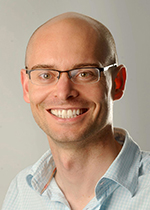 Pieter Abbeel合作论文数Department of Electrical Engineering and Computer Sciences, University of California, Berkeley;Amazon14
 William Chan (陳俊樂)合作论文数Ideogram AI9
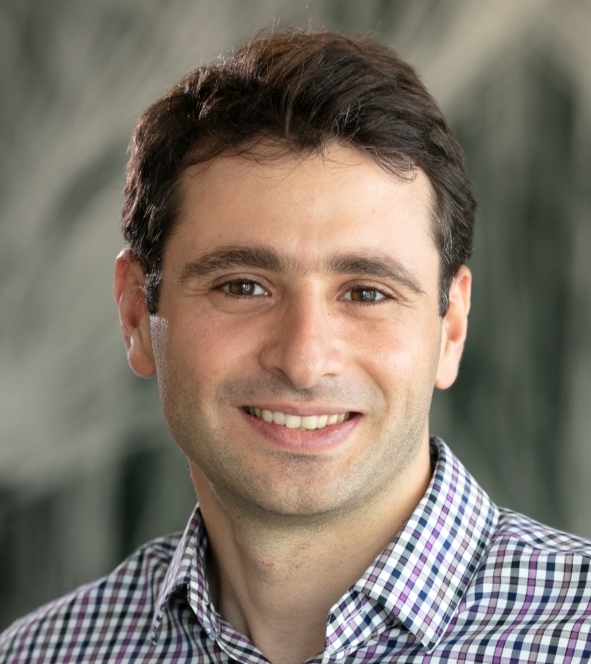 Mohammad Norouzi合作论文数Ideogram AI9
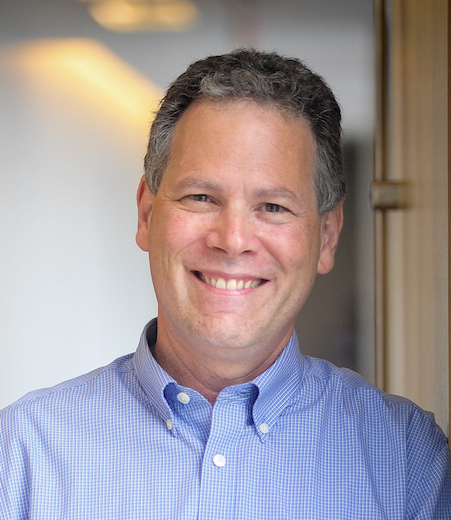 David J. Fleet合作论文数Department of Computer Science, University of Toronto;Department of Computer and Mathematical Sciences, University of Toronto Scarborough;Google Research;Vector Institute for Artificial Intelligence6
 John Schulman合作论文数Thinking Machines Lab6
 Chitwan Saharia合作论文数Ideogram5
 Stefano Ermon合作论文数Department of Computer Science, Stanford University;Woods Institute for the Environment, Stanford University;Inception4
 Durk Kingma合作论文数Anthropic4
 Alex X. Lee合作论文数Google DeepMind3
 Yan (Rocky) Duan合作论文数Amazon3
 Ben Poole合作论文数Google Brain3
 Daniel Watson合作论文数Google DeepMind3
 orson lin合作论文数2Xin Wu合作论文数2ming feng shieh合作论文数2jiewei sun合作论文数2
 Jason Lin合作论文数2
 benjamin szumin lin合作论文数Cymer Southeast Asis Ltd2Cameron Lee合作论文数2
 Yan Wang合作论文数Harbin Institute of Technology(Harbin Institute of Technology,Harbin Inst. of Technol.),Harbin,China2
 Bradly C. Stadie合作论文数Department of Statistics and Data Science, Judd A. and Marjorie Weinberg College of Arts and Sciences, Northwestern University2Yong Liu合作论文数2
 Ruiqi Gao合作论文数Google DeepMind2Huiwen Chang合作论文数2
 Dirk Weissenborn合作论文数Inceptive Inc2Ibrahim Awwal合作论文数2Henry Bradlow合作论文数2
 Nal Kalchbrenner合作论文数Google DeepMind2
 Alexey A. Gritsenko合作论文数Google DeepMind2
 Jay Whang合作论文数Google DeepMind2
 (Peter) Xi Chen合作论文数Amazon2Linyong Pang合作论文数2Evan Lohn合作论文数1Lala Li合作论文数Google DeepMind1
 Rapha Gontijo Lopes合作论文数OpenAI1
 Saurabh Saxena合作论文数Google Deepmind1
 Katie Luo合作论文数Cornell University;Department of Aeronautics and Astronautics, Stanford University1
 Wilson Yan合作论文数Google DeepMind1
 Chenlin Meng合作论文数Stanford University1
 Filip Wolski合作论文数Citadel Securities1
 Jacob Austin合作论文数Google Brain1
 Kevin Frans合作论文数Berkeley Artificial Intelligence Research, University of California, Berkeley1
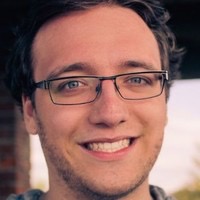 Jonas Schneider合作论文数Daedalus1
 Xiyu Zhai合作论文数University of Washington1
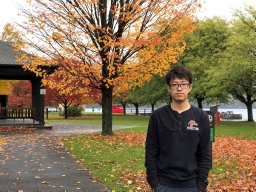 Sinong Geng合作论文数Princeton University1
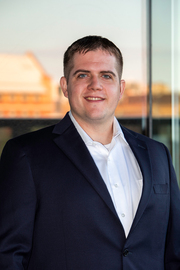 Russell Toth合作论文数School of Economics, Faculty of Arts and Social Sciences, The University of Sydney1
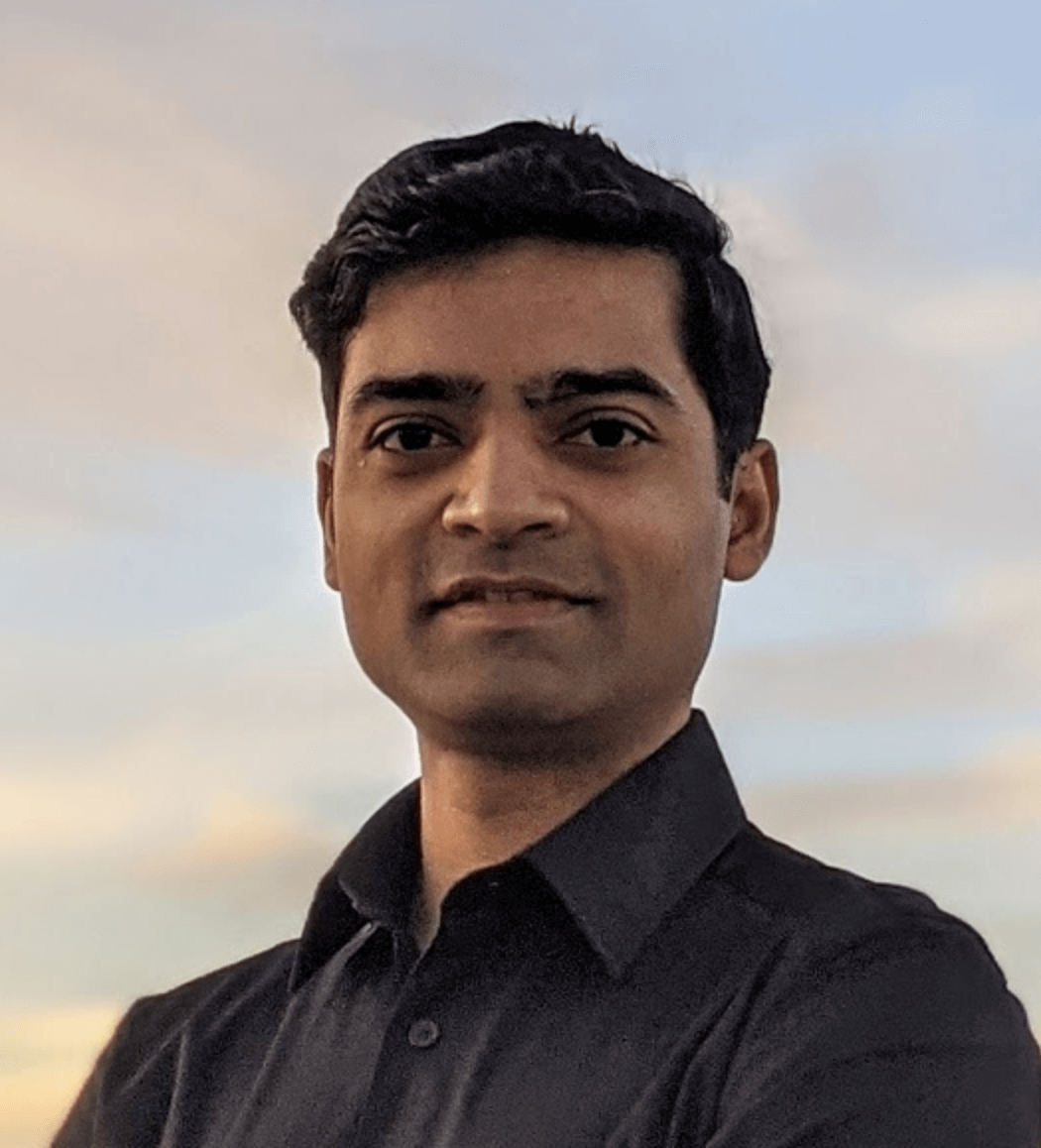 Vikash Kumar合作论文数The Robotics Institute, School of Computer Science, Carnegie Mellon University;FAIR-MetaAI1
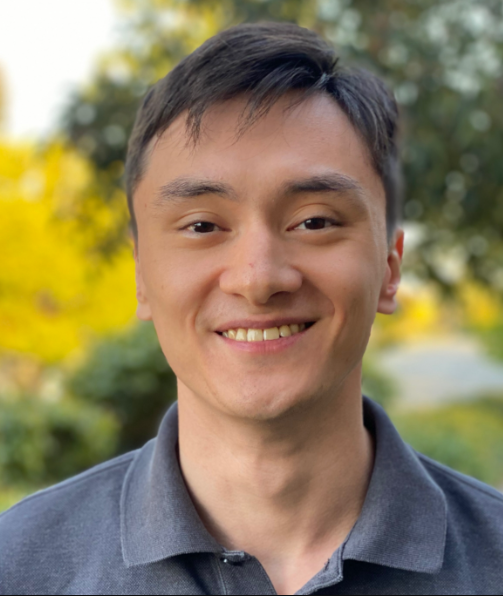 Daniel D. Johnson合作论文数University of Toronto;Brain Team, Google Research1