The advancement of speech technology has predominantly favored high-resource languages, creating a significant digital divide for speakers of most Sub-Saharan African languages. To address this gap, we introduce WAXAL, a large-scale, openly accessible speech dataset for 21 languages representing over 100 million speakers. The collection consists of two main components: an Automated Speech Recognition (ASR) dataset containing approximately 1,250 hours of transcribed, natural speech from a diverse range of speakers, and a Text-to-Speech (TTS) dataset with over 180 hours of high-quality, single-speaker recordings reading phonetically balanced scripts. This paper details our methodology for data collection, annotation, and quality control, which involved partnerships with four African academic and community organizations. We provide a detailed statistical overview of the dataset and discuss its potential limitations and ethical considerations. The WAXAL datasets are released at https://huggingface.co/datasets/google/WaxalNLP under the permissive CC-BY-4.0 license to catalyze research, enable the development of inclusive technologies, and serve as a vital resource for the digital preservation of these languages.
Despite the widespread adoption of Large language models (LLMs), their remarkable capabilities remain limited to a few high-resource languages. Additionally, many low-resource languages (e.g., African languages) are often evaluated only on basic text classification tasks due to the lack of appropriate or comprehensive benchmarks outside of high-resource languages. In this paper, we introduce IrokoBench-a human-translated benchmark dataset for 17 typologically-diverse low-resource African languages covering three tasks: natural language inference (AfriXNLI), mathematical reasoning (AfriMGSM), and multi-choice knowledge-based question answering (AfriMMLU). We use IrokoBench to evaluate zero-shot, few-shot, and translate-test settings (where test sets are translated into English) across 10 open and six proprietary LLMs. Our evaluation reveals a significant performance gap between high-resource languages (such as English and French) and low-resource African languages. We observe a significant performance gap between open and proprietary models, with the highest performing open model, Gemma 2 27B only at 63% of the best-performing proprietary model GPT-4o performance. In addition, machine translating the test set to English before evaluation helped to close the gap for larger models that are English-centric, such as Gemma 2 27B and LLaMa 3.1 70B. These findings suggest that more efforts are needed to develop and adapt LLMs for African languages.
Slot-filling and intent detection are well-established tasks in Conversational AI. However, current large-scale benchmarks for these tasks often exclude evaluations of low-resource languages and rely on translations from English benchmarks, thereby predominantly reflecting Western-centric concepts. In this paper, we introduce “INJONGO” - a multicultural, open-source benchmark dataset for 16 African languages with utterances generated by native speakers across diverse domains, including banking, travel, home, and dining. Through extensive experiments, we benchmark fine-tuning multilingual transformer models and prompting large language models (LLMs), and show the advantage of leveraging African-cultural utterances over Western-centric utterances for improving cross-lingual transfer from the English language. Experimental results reveal that current LLMs struggle with the slot-filling task, with GPT-4o achieving an average performance of 26 F1. In contrast, intent detection performance is notably better, with an average accuracy of 70.6%, though it still falls short of fine-tuning baselines. When compared to the English language, GPT-4o and fine-tuning baselines perform similarly on intent detection, achieving an accuracy of approximately 81%. Our findings suggest that LLMs performance is still behind for many low-resource African languages, and more work is needed to further improve their downstream performance.
Radio is vital for people, especially in rural areas, to share their concerns through interactive talk shows. Understanding public perceptions of pandemics is crucial because they influence people’s attitudes and health-seeking behaviours. This study used machine learning to analyze English and Luganda radio broadcast data to understand public perceptions and perspectives on the Ebola outbreak in Uganda. Our findings revealed three main speaker categories: media personalities, community guests and listeners, and government officials. The government made the most significant effort to educate the public about the Ebola outbreak. The analysis showed that the community was hesitant to use Ebola vaccines, believing that they had not been tested on other populations where the Ebola virus had originated. The community was also concerned about the effects of the lockdown measures imposed during the COVID-19 pandemic. The analysis of the radio broadcast data revealed differences in the timing and content of the conversations between male and female speakers. These experiences can inform population-specific policies for handling ongoing and future pandemics.
ABSTRACTAfrica has over 2000 languages; however, those languages are not well represented in the existing natural language processing ecosystem. African languages lack essential digital resources to effectively engage in advancing language technologies. There is a need to generate high‐quality natural language processing resources for low‐resourced African languages. Obtaining high‐quality speech and text data is expensive and tedious because it can involve manual sourcing and verification of data sources. This paper discusses the process taken to curate and annotate text and speech datasets for five East African languages: Luganda, Runyankore‐Rukiga, Acholi, Lumasaba, and Swahili. We also present results obtained from baseline models for machine translation, topic modeling and classification, sentiment classification, and automatic speech recognition tasks. Finally, we discuss the experiences, challenges, and lessons learned in creating the text and speech datasets.
In this paper, we present MasakhaPOS, the largest part-of-speech (POS) dataset for 20 typologically diverse African languages. We discuss the challenges in annotating POS for these languages using the UD (universal dependencies) guidelines. We conducted extensive POS baseline experiments using conditional random field and several multilingual pre-trained language models. We applied various cross-lingual transfer models trained with data available in UD. Evaluating on the MasakhaPOS dataset, we show that choosing the best transfer language(s) in both single-source and multi-source setups greatly improves the POS tagging performance of the target languages, in particular when combined with cross-lingual parameter-efficient fine-tuning methods. Crucially, transferring knowledge from a language that matches the language family and morphosyntactic properties seems more effective for POS tagging in unseen languages.
African languages are severely under-represented in NLP research due to lack of datasets covering several NLP tasks. While there are individual language specific datasets that are being expanded to different tasks, only a handful of NLP tasks (e.g. named entity recognition and machine translation) have standardized benchmark datasets covering several geographical and typologically-diverse African languages. In this paper, we develop MasakhaNEWS -- a new benchmark dataset for news topic classification covering 16 languages widely spoken in Africa. We provide an evaluation of baseline models by training classical machine learning models and fine-tuning several language models. Furthermore, we explore several alternatives to full fine-tuning of language models that are better suited for zero-shot and few-shot learning such as cross-lingual parameter-efficient fine-tuning (like MAD-X), pattern exploiting training (PET), prompting language models (like ChatGPT), and prompt-free sentence transformer fine-tuning (SetFit and Cohere Embedding API). Our evaluation in zero-shot setting shows the potential of prompting ChatGPT for news topic classification in low-resource African languages, achieving an average performance of 70 F1 points without leveraging additional supervision like MAD-X. In few-shot setting, we show that with as little as 10 examples per label, we achieved more than 90\% (i.e. 86.0 F1 points) of the performance of full supervised training (92.6 F1 points) leveraging the PET approach.
African languages are spoken by over a billion people, but are underrepresented in NLP research and development. The challenges impeding progress include the limited availability of annotated datasets, as well as a lack of understanding of the settings where current methods are effective. In this paper, we make progress towards solutions for these challenges, focusing on the task of named entity recognition (NER). We create the largest human-annotated NER dataset for 20 African languages, and we study the behavior of state-of-the-art cross-lingual transfer methods in an Africa-centric setting, demonstrating that the choice of source language significantly affects performance. We show that choosing the best transfer language improves zero-shot F1 scores by an average of 14 points across 20 languages compared to using English. Our results highlight the need for benchmark datasets and models that cover typologically-diverse African languages.
This dataset contains 100,000 Kiswahili sentences. For more information on how the dataset was created, please check out our paper published at AfricaNLP. We want to thank the team at the Makerere AI and Marconi Labs at Makerere University, TAVODET Youth Development (TYD) Innovation Incubator, Ai Kenya, Maseno University, United States International University-Africa (USIU-Africa), and Kabarak University who have worked tirelessly and collaboratively to source, create and prepare this Kiswahili monolingual dataset. This dataset was created with support from Lacuna Fund, an initiative cofounded by The Rockefeller Foundation, Google.org, and Canada’s International Development Research Centre; Deutsche Gesellschaft fur Internationale ¨ Zusammenarbeit (GIZ) and Mozilla.
BibleTTS is a large, high-quality, open speech dataset for ten languages spoken in Sub-Saharan Africa. The corpus contains up to 86 hours of aligned, studio quality 48kHz single speaker recordings per language, enabling the development of high-quality text-to-speech models. The ten languages represented are: Akuapem Twi, Asante Twi, Chichewa, Ewe, Hausa, Kikuyu, Lingala, Luganda, Luo, and Yoruba. This corpus is a derivative work of Bible recordings made and released by the Open.Bible project from Biblica. We have aligned, cleaned, and filtered the original recordings, and additionally hand-checked a subset of the alignments for each language. We present results for text-to-speech models with Coqui TTS. The data is released under a commercial-friendly CC-BY-SA license.
Building a usable radio monitoring automatic speech recognition (ASR) system is a challenging task for under-resourced languages and yet this is paramount in societies where radio is the main medium of public communication and discussions. Initial efforts by the United Nations in Uganda have proved how understanding the perceptions of rural people who are excluded from social media is important in national planning. However, these efforts are being challenged by the absence of transcribed speech datasets. In this paper, The Makerere Artificial Intelligence research lab releases a Luganda radio speech corpus of 155 hours. To our knowledge, this is the first publicly available radio dataset in sub-Saharan Africa. The paper describes the development of the voice corpus and presents baseline Luganda ASR performance results using Coqui STT toolkit, an open source speech recognition toolkit.
Recent advances in the pre-training of language models leverage large-scale datasets to create multilingual models. However, low-resource languages are mostly left out in these datasets. This is primarily because many widely spoken languages are not well represented on the web and therefore excluded from the large-scale crawls used to create datasets. Furthermore, downstream users of these models are restricted to the selection of languages originally chosen for pre-training. This work investigates how to optimally leverage existing pre-trained models to create low-resource translation systems for 16 African languages. We focus on two questions: 1) How can pre-trained models be used for languages not included in the initial pre-training? and 2) How can the resulting translation models effectively transfer to new domains? To answer these questions, we create a new African news corpus covering 16 languages, of which eight languages are not part of any existing evaluation dataset. We demonstrate that the most effective strategy for transferring both to additional languages and to additional domains is to fine-tune large pre-trained models on small quantities of high-quality translation data.
Reliable machine translation systems are only available for a small proportion of the world’s languages, the key limitation being a shortage of training and evaluation data. We provide a case study in the creation of such resources by NLP teams who are local to the communities in which these languages are spoken. A parallel text corpus, SALT, was created for five Ugandan languages (Luganda, Runyankole, Acholi, Lugbara and Ateso) and various methods were explored to train and evaluate translation models. The resulting models were found to be effective for practical translation applications, even for those languages with no previous NLP data available, achieving mean BLEU score of 26.2 for translations to English, and 19.9 from English. The SALT dataset and models described are publicly available at https://github.com/SunbirdAI/salt.
This dataset contains 40,037 Acoli sentences. For more information on how the dataset was created, please check out our paper published at AfricaNLP. This dataset was created with support from Lacuna Fund, an initiative cofounded by The Rockefeller Foundation, Google.org, and Canada’s International Development Research Centre; Deutsche Gesellschaft fur Internationale ¨ Zusammenarbeit (GIZ) and Mozilla.
Abstract We take a step towards addressing the under- representation of the African continent in NLP research by bringing together different stakeholders to create the first large, publicly available, high-quality dataset for named entity recognition (NER) in ten African languages. We detail the characteristics of these languages to help researchers and practitioners better understand the challenges they pose for NER tasks. We analyze our datasets and conduct an extensive empirical evaluation of state- of-the-art methods across both supervised and transfer learning settings. Finally, we release the data, code, and models to inspire future research on African NLP.1
This English-Luganda parallel sentence corpus was created by a team of researchers from AI & Data science research Lab at Makerere University with a team of Luganda teachers, students and freelancers. The collaborative work which involves generating English sentences under CC-0 and translating these sentences using a crowdsourcing, iterative and opensource approach was done using Pontoon an opensource Translation Management System built by Mozilla. Acknowledgment: This project was supported by the AI4D language dataset fellowship through K4All and Zindi Africa.
In societies with well developed internet infrastructure, social media is the leading medium of communication for various social issues especially for breaking news situations. In rural Uganda however, public community radio is still a dominant means for news dissemination. Community radio gives audience to the general public especially to individuals living in rural areas, and thus plays an important role in giving a voice to those living in the broadcast area. It is an avenue for participatory communication and a tool relevant in both economic and social development.This is supported by the rise to ubiquity of mobile phones providing access to phone-in or text-in talk shows. In this paper, we describe an approach to analysing the readily available community radio data with machine learning-based speech keyword spotting techniques. We identify the keywords of interest related to agriculture and build models to automatically identify these keywords from audio streams. Our contribution through these techniques is a cost-efficient and effective way to monitor food security concerns particularly in rural areas. Through keyword spotting and radio talk show analysis, issues such as crop diseases, pests, drought and famine can be captured and fed into an early warning system for stakeholders and policy makers.
This dataset consists of 193 agricultural keywords in English and Luganda. 64 keywords are in English and 129 keywords are in Luganda. The list of keywords was compiled by obtaining the counts of the most used agricultural words in Luganda radio discussions and online newspaper in Uganda. The keywords are categorized into crops, diseases, fertilisers, herbicides and general agriculture-related keywords. The data consists of folders containing .wav files with unique IDs as file names. The name of each folder in dataset refers to the name of the keyword. The dataset consists of 5290 keyword utterances in Luganda. These were collected from different age groups and gender.
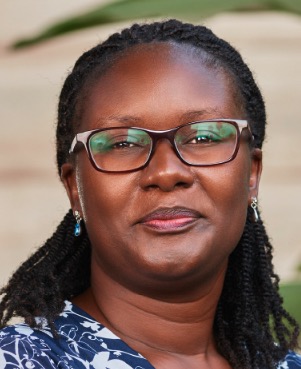 Joyce Nakatumba-Nabende合作论文数Department of Computer Science, School of Computing and Information Sciences, Makerere University College of Computing and Information Science;EmergentAI9
 Shamsuddeen Hassan Muhammad合作论文数Imperial College London8
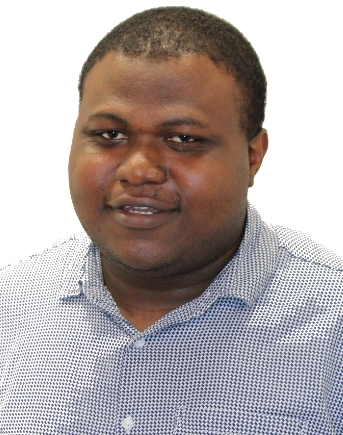 David Ifeoluwa Adelani合作论文数University College London;School of Computer Science, McGill University8
 Andrew Katumba合作论文数School of Engineering, College of Engineering, Design, Art and Technology, Makerere University;Department of Information Technology, Ghent University7
 Happy Buzaaba合作论文数6
 Blessing Sibanda合作论文数6
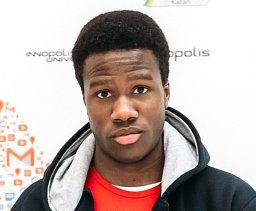 Chris Emezue合作论文数Lanfrica;Masakhane6
 Andiswa Bukula合作论文数5
 Anuoluwapo Aremu合作论文数5
 Perez Ogayo合作论文数5
 Jesujoba Oluwadara Alabi合作论文数Department of Language Science & Technology, Saarland University;Saarbrücken Graduate School of Computer Science, Saarland University4
 Israel A. Azime合作论文数Computer Graphics Lab, Universität des Saarlandes;University of South Florida4
 Claire Babirye合作论文数4
 Rooweither Mabuya合作论文数4
 Chiamaka Ijeoma Chukwuneke合作论文数Univ Lancaster4
 Derguene Mbaye合作论文数GalsenAI;Masakhane4
 Godson Koffi Kalipe合作论文数4
 Tajuddeen Gwadabe合作论文数Masakhane NLP4
 Bonaventure F. P. Dossou合作论文数4
 Salomey Osei合作论文数Research Unit DeustoTech Mobility, University of Deusto4
 Jesujoba Alabi合作论文数Bowen University4
 Dietrich Klakow合作论文数Saarland University4
 Peter Nabende合作论文数Faculty of Computing and Information Technology, Makerere University4Olanrewaju Samuel合作论文数3Tadesse Kebede Guge合作论文数3Lolwethu Ndolela合作论文数3Tobius Saul Bateesa合作论文数3
 Catherine Gitau合作论文数3
 Odu Nkiruka合作论文数African University of Science and Technology3Edwin Munkoh-Buabeng合作论文数3Victoire Memdjokam Koagne合作论文数3Eric Peter Wairagala合作论文数3
 Oreen Yousuf合作论文数3Jeremy Francis Tusubira合作论文数Makerere University3
 Idris Abdulmumin合作论文数Department of Computer Science, University of Pretoria;Department of Computer Science, Ahmadu Bello University3
 Allahsera Auguste Tapo合作论文数Department of Computer Science, Rochester Institute of Technology3Jian Yun Zhuang合作论文数2Tunde Ajayi合作论文数2
 Orevaoghene Ahia合作论文数Paul G. Allen School of Computer Science & Engineering, University of Washington;Masakhane2Tolulope Adelani合作论文数2Apelete Agbolo合作论文数2Victor Akinode合作论文数2Tebogo Macucwa合作论文数2
 Chester Palen-Michel合作论文数EBay2Jessica Ojo合作论文数2Sokhar Samb合作论文数2
 Ali Hussein合作论文数2Tatiana Moteu Ngoli合作论文数2Mmasibidi Setaka合作论文数2




