53BP1 is a DNA damage response protein recruited to sites of double strand breaks through recognition of dimethylated lysine on histone 4 by its tandem Tudor domains. Like 53BP1, BRCA-1 plays a role in the regulation of DNA repair pathways, and BRCA-1 mutations have been strongly linked to breast and ovarian cancer. Interestingly, mice null for 53BP1 and BRCA-1 genes display minimal tumor formation, suggesting that the effects of deleterious BRCA-1 mutations could be prevented with potent 53BP1 small molecule antagonists. Herein, we describe a fragment screen that was used to identify compounds that bind to the 53BP1 Tudor domain and a chemoinformatic workflow to select near-neighbor analogues and establish structure activity relationships for these binders. The marked affinity improvements of the analogues over their parent fragments highlights the developability of these series and the utility of this approach in discovering novel hit compounds for 53BP1 and other methyl-lysine reader proteins.
Many common disease-causing mutations result in loss-of-function (LOF) of the proteins in which they occur. LOF mutations have proven recalcitrant to pharmacologic intervention, presenting a challenge for the development of targeted therapeutics. Polycomb repressive complex 2 (PRC2), which contains core subunits (EZH2, EED, and SUZ12), regulates gene activity by trimethylation of histone 3 lysine 27. The dysregulation of PRC2 catalytic activity by mutations has been implicated in cancer and other diseases. Among the mutations that cause PRC2 malfunction, an I363M LOF mutation of EED has been identified in myeloid disorders, where it prevents allosteric activation of EZH2 catalysis. We describe structure-based design and computational simulations of ligands created to ameliorate this LOF. Notably, these compounds selectively stimulate the catalytic activity of PRC2-EED-I363M over wildtype-PRC2. Overall, this work demonstrates the feasibility of developing targeted therapeutics for PRC2-EED-I363M that act as allosteric agonists, potentially correcting this LOF mutant phenotype.
Nat. Chem. Biol. 13, 389–395 (2017); published online 30 January 2017; corrected after print 14 June 2017 In the version of this article initially published, the keys for the graphs in Figure 5b–e incorrectly stated GDK126 instead of GSK126. The error has been corrected in the HTML and PDF versions of the article.
The function of EED within polycomb repressive complex 2 (PRC2) is mediated by a complex network of protein-protein interactions. Allosteric activation of PRC2 by binding of methylated proteins to the embryonic ectoderm development (EED) aromatic cage is essential for full catalytic activity, but details of this regulation are not fully understood. EED's recognition of the product of PRC2 activity, histone H3 lysine 27 trimethylation (H3K27me3), stimulates PRC2 methyltransferase activity at adjacent nucleosomes leading to H3K27me3 propagation and, ultimately, gene repression. By coupling combinatorial chemistry and structure-based design, we optimized a low-affinity methylated jumonji, AT-rich interactive domain 2 (Jarid2) peptide to a smaller, more potent peptidomimetic ligand (Kd = 1.14 ± 0.14 μM) of the aromatic cage of EED. Our strategy illustrates the effectiveness of applying combinatorial chemistry to achieve both ligand potency and property optimization. Furthermore, the resulting ligands, UNC5114 and UNC5115, demonstrate that targeted disruption of EED's reader function can lead to allosteric inhibition of PRC2 catalytic activity.
 Fengling Li合作论文数Univ Toronto, Struct Genom Consortium, Toronto, ON M5G 1L7, Canada4
 Masoud Vedadi合作论文数Department of Pharmacology and Toxicology, Temerty Faculty of Medicine, University of Toronto;Ontario Institute for Cancer Research4
 Cheryl Arrowsmith合作论文数Department of Medical Biophysics, Temerty Faculty of Medicine, University of Toronto;Princess Margaret Cancer Centre4
 Peter J Brown合作论文数3Marina Pliushchev合作论文数2A M Petros合作论文数2Scott Galasinski合作论文数2Kelly L Klinge合作论文数2Sujatha Selvaraju合作论文数2Kimberly D. Barnash合作论文数2Sanjay C Panchal合作论文数2Bailin Shaw合作论文数2Ramzi F Sweis合作论文数2Haizhong Zhu合作论文数2Stephanie H Cholensky合作论文数2Mikkel Algire合作论文数2
 George Chiang合作论文数Department of Urology, School of Medicine, University of California, San Diego2Donald J. Osterling合作论文数2
 Magdalena Szewczyk合作论文数Univ Toronto, Struct Genom Consortium, Toronto, ON M5G 1L7, Canada2Yupeng He合作论文数2
 Dalia Barsyte Lovejoy合作论文数Department of Pharmacology and Toxicology, Temerty Faculty of Medicine, University of Toronto2
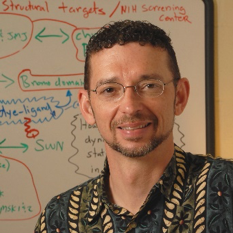 Stephen V. Frye合作论文数Lineberger Comprehensive Cancer Center, School of Medicine, The University of North Carolina at Chapel Hill;Center for Integrative Chemical Biology and Drug Discovery, University of North Carolina at Chapel Hill;Division of Chemical Biology and Medicinal Chemistry, University of North Carolina at Chapel Hill;Meryx Inc2Norris-Drouin Jacqueline合作论文数2Cheng Dong合作论文数Department of Biochemistry and Molecular Biology, Tianjin Medical University2Dietrich Justin合作论文数2Comess Kenneth M合作论文数2Kennedy Steven合作论文数2Li Huanqiu合作论文数2
 Wenqing Gao合作论文数National Institute of Biological Sciences2Bigelow Lance合作论文数2
 Evelyne Lima-Fernandes合作论文数2
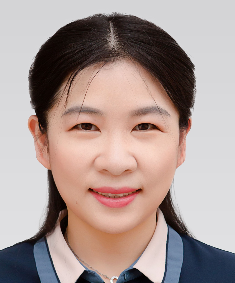 Qin Wu (吴芩)合作论文数Institute of Basic Medicine and Cancer, Chinese Academy of Science2
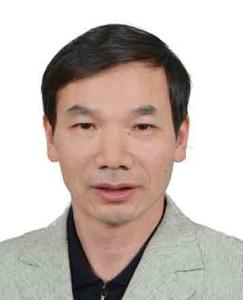 Jun Guo (郭军)合作论文数School of Artificial Intelligence, Beijing University of Posts and Telecommunications2
 Clarissa G. Jakob合作论文数2
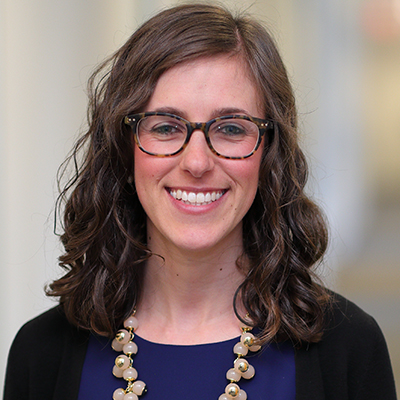 Lindsey Ingerman James合作论文数Division of Chemical Biology and Medicinal Chemistry, Eshelman School of Pharmacy, The University of North Carolina at Chapel Hil2Michael L Curtin合作论文数2
 David Lindley合作论文数2William N. Pappano合作论文数Department of Biomolecular Chemistry, University of Wisconsin Medical School2Chaohong Sun合作论文数2Fritz G Buchanan合作论文数2Maricel Torrent合作论文数2
 David Maag合作论文数Department of Biophysics and Biophysical Chemistry, Johns Hopkins University School of Medicine2
 Guillermo Senisterra合作论文数Department of Biochemistry, McMaster University2
 Tigran Abramyan合作论文数1Caroline A Foley合作论文数1
 Isabelle A Engelberg合作论文数UNC Eshelman Sch Pharm, Univ N Carolina1Jacob I Stuckey合作论文数Univ North Carolina Chapel Hill, UNC Eshelman Sch Pharm, Div Chem Biol & Med Chem, Ctr Integrat Chem Biol & Drug Discovery, Chapel Hill, NC 27599 USA1
 Hong Zeng合作论文数1
 Dmitri Kireev合作论文数University of North Carolina, University of North Carolina at Chapel Hill;Tel: (919) 843-5486.;University of North Carolina, University of North Carolina at Chapel Hill1




