Many bacteria and viruses are spreading in the air in the living environment, and high concentrations of viruses entering the human body will cause harm. This research is committed to developing a virus collector, which is used to collect influenza and coronavirus in the air. In our system, the intake fan can beget negative pressure into the water circulation channel and bring the virus into it, and then the sensor chip will obtain the electrical signal. In this study, we successfully used methylene blue to simulate viruses in the air. The result of this experiment showed that the distance between the air virus collector and the atomizer was 30 cm in height, 60 cm & 90 cm in length. The capture efficiency was respectively 1.1% and 0.8%. Also, we use lateral flow immunochromatographic assay to detect the collected samples of Influenza H1N1 Hemagglutinin Protein, and the actual limit of detection is 16.97 ng/ml. In addition, the experiments also proved that the water circulation device in this study could accumulate the methylene blue samples onto the sensor. In the future, it can be used with the sensor chip as a virus detection platform which can collect and monitor viruses simultaneously. By using this device, people can be warned and take the necessary precautions to reduce the chance of the transmission of viruses.
This paper proposes a human behavior recognition system based on a chest wearable device, which is used for the medical care of the elderly. In today’s aging society, it is very important for the quality of life and care of the elderly. Many nursing institutions seek technical support and respond to nurses. Due to insufficient manpower to control the behavior and health status of the elderly, the demand for an indoor positioning system (IPS) cannot be ignored. Using low-power Bluetooth to construct a location-based service (LBS) on a wearable device equipped with a nine-axis inertial sensor IMU and barometer can judge the posture of the wearer, including standing, walking, sitting, lying, and falling. The resultant force value is calculated by the three-axis acceleration, and the three-axis acceleration and the three-axis gyroscope are obtained through the gradient descent algorithm. The Euler angle and the altitude converted by the barometer can judge the behavior of sitting and standing up and the event of a fall. There is also an emergency button on the device, which allows the wearer to send a distress message, and monitor the wearer’s current behavior in real-time through the mobile APP and cloud, recording the wearer’s behavior and the physiological data of the bracelet and providing it for medical analysis.
Due to the needs of automation in today's industrial environment, the demand for the Internet of Things is increasing. Here, we use an innovative location-based Bluetooth MESH to provide the IoT MESH system in the factory or at home, and use the Bluetooth broadcaster function as the main wireless transmission of the network. By receiving the acknowledgement packet and the positions of the relay nodes, it provides a first-in, first-out Queue and a Fast-Scan routing method for the transmission algorithm, which can achieve one-to-one and many-to-many routing. Multiple PUB/SUB two-way communication can be transmitted through the cloud as the center or decentralized. Basically, the BLE nodes in the field can communicate with each other, and the transmission delay is in the range of tens to hundreds of milliseconds. It can monitor the physiological condition of the wearable device on the mobile users, and can also control the position of personnel, and can graft the wired sensor already installed in the factory into our BLE MESH system. One example realized is to connect the Modbus communication to our system, and in the future LE audio can also come into our system when it is officially launched on the market
A fall is one of the most devastating events that aging people can experience. Fall-related physical injuries, hospital admission, or even mortality among the elderly are all critical health issues. As the population continues to age worldwide, there is an imperative need to develop fall detection systems. We propose a system for the recognition and verification of falls based on a chest-worn wearable device, which can be used for elderly health institutions or home care. The wearable device utilizes a built-in three-axis accelerometer and gyroscope in the nine-axis inertial sensor to determine the user’s postures, such as standing, sitting, and lying down. The resultant force was obtained by calculation with three-axis acceleration. Integration of three-axis acceleration and a three-axis gyroscope can obtain a pitch angle through the gradient descent algorithm. The height value was converted from a barometer. Integration of the pitch angle with the height value can determine the behavior state including sitting down, standing up, walking, lying down, and falling. In our study, we can clearly determine the direction of the fall. Acceleration changes during the fall can determine the force of the impact. Furthermore, with the IoT (Internet of Things) and smart speakers, we can verify whether the user has fallen by asking from smart speakers. In this study, posture determination is operated directly on the wearable device through the state machine. The ability to recognize and report a fall event in real-time can help to lessen the response time of a caregiver. The family members or care provider monitor, in real-time, the user’s current posture via a mobile device app or internet webpage. All collected data supports subsequent medical evaluation and further intervention.
For a long time, image inspection has been used for surface defect inspection of memory modules. However, its inspection accuracy still does not meet the requirements of mass production, especially for defect inspection of small parts. Deep learning algorithms can improve the inspection accuracy, but they require a considerable amount of actual production defect data. Therefore, in this study, real data for 70,000 pieces of memory modules were obtained during mass production to explore data pre-processing and data augmentation that meets the algorithms' training needs. Due to limited data availability, it is necessary to collect an appropriate number of images and mark the fixed areas or features that represent the more frequently occurring defects in images. The software can learn by itself, speed up the operation, and correctly find the real defect position, effectively improving the detection accuracy so that the algorithm has the advantages of easy training and fast detection speed. The YOLOv5 algorithm has a better detection speed for smaller objects and uses the algorithm's architectural characteristics to flexibly configure models with different complexities, thereby accelerating the convergence as well as simplifying the model architecture and accelerating the calculation speed. During the verification process, the average detection accuracy of production defects can reach 97.5%. It only takes an average of 0.5 s to detect each memory module picture, the yield rate of the production line per quarter is improved by up to 0.08%, and the false positive rate is reduced by 0.12%. In addition, it can improve the efficiency of personnel operations by nearly 40% and save up to 10,000 US dollars in production and operating costs per month.
Elderly people requiring care the entire day usually depend on the availability of their family members to give assistance. However, the family members might not provide appropriate help especially in an emergent situation. The application of Internet of Things (IoT) technology with a variety of interconnected devices provides the solution. We propose an IoT-based smart healthcare system comprising wearable devices, which integrates a variety of contact sensors with location-based mesh networks (LBMN) such as Wi-Fi and Bluetooth Low Energy (BLE) connections to continuously sense various parameters of aging people. The BLE-connected devices such as wearable sensors, fixed sensors, seat cushions, pedal mats, magnetic reed switches, and mobile devices are all involved in collecting, processing, and transmitting physiological data and their locations to the cloud. Through the utilization of convenient interfaces such as software applications on smartphones and web pages on computers, it provides real time monitoring of the elderly in terms of localization, activity pattern, and health status. Thus the system enables early detection of health risks to the elderly. We used Platform as a service (PaaS) to receive and store the health data generated from the interconnected devices and to perform analysis. The essential feature of this LBMN is to generate a complete 6W(Who, What,When,Where,Why and How)big data for policy, feed it to the PaaS analysis to easily and quickly obtain more accurate data, and then develop possible health strategy or preventive measures. The proposed healthcare system detected that, out of the 20 participants recruited, 2 persons (10%) were often restless. It was also able to detect abnormal daily activity patterns with more tag positioning and the historical data from the devices. More importantly, it can help to prevent potential physical and neuropsychiatric disorders based on the real-time monitoring information and analyzed historical data for the aging people.
In recent years, the use of reinforcement learning and imitation learning to complete robot control tasks have become more popular. Demonstration and learning by experts have always been the goal of researchers. However, the lack of action data has been a significant limitation to learning by human demonstration. We propose an architecture based on a new 3D keypoint tracking model and generative adversarial imitation learning to learn from expert demonstrations. We used 3D keypoint tracking to make up for the lack of action data in simple images and then used image-to-image conversion to convert human hand demonstrations into robot images, which enabled subsequent generative adversarial imitation learning to learn smoothly. The estimation time of the 3D keypoint tracking model and the calculation time of the subsequent optimization algorithm was 30 ms. The coordinate errors of the model projected to the real 3D key point under correct detection were all within 1.8 cm. The tracking of key points did not require any sensors on the body; the operator did not need vision-related knowledge to correct the accuracy of the camera. By merely setting up a generic depth camera to track the mapping changes of key points after behavior clone training, the robot could learn human tasks by watching, including picking and placing an object and pouring water. We used pybullet to build an experimental environment to confirm our concept of the simplest behavioral cloning imitation to attest the success of the learning. The effectiveness of the proposed method was accomplished by a satisfactory performance requiring a sample efficiency of 20 sets for pick and place and 30 sets for pouring water.
The purpose of this research is dedicated to designing the care system. By using Google assistant speaker, various sensors, web page, and cloud data processing to design an Internet of Things environment combining health information and various parameters to improve the quality of the care system. We use wearable devices to transmit physiological information, then collect data through Bluetooth sensors and upload them to the database via edge devices. At the same time, it monitors unusual values at any time. Then, it notifies users through google assistant to trigger Google Home System. We carry out cloud data analysis and optimize dialogue patterns by obtaining physiological information, escorting services, recording conversations, and other forms of active questioning. Through using conversation feedbacks as data, we can also generate simple data analysis, fill out various questionnaires by using the web pages. With this complete care system, the cloud data is integrated and networked to provide a better care system for the elderly.
This study proposes a simple location-based rescue request system for use in city marathons with large numbers of athletes. Instead of using passive radio frequency identification technology, the proposed system employs initiative Bluetooth low-energy communication technology. When an athlete is injured, they can immediately transmit a rescue request that contains their estimated location and the time of the injury. Upon receiving the rescue request, medical staff can respond rapidly. This study included three parts. First, the time required for a rescue team to receive a request from an injured athlete was estimated based on past international city marathon race records. Then, a software simulation was performed to extract the simplest transfer parameter requirements for system positioning. Finally, experimental samples were produced for field verification, and the rescue notification timing system was developed. This approach was found to successfully deliver 97.4%-99.9% of the athletes' request messages within 3-4 min and maintains the error range of the rescue locations under 15 m. It is appropriate for use in city marathons owing to its simple structure, low weight, low cost, and need for only common commercial technologies that are ready for mass production.
Background: Frailty is highly prevalent among the dialysis population and recent studies suggest that frailty affects dialysis outcomes such as vascular access failure (VAF). This study aimed to explore the correlation between frailty and one year recurrent VAF among the elderly. Methods: A retrospective review enrolled the medical records for dialysis patients over 60 years of age who were first diagnosed with VAF and received angioplasty. Demographic data, arteriovenous fistula functions (vascular access blood flow) and dialysis efficiency calculated based on Kt/V calculator were analyzed. Frailty was assessed using the FRAIL scale which includes 5 components: fatigue, resistance, ambulation, illness, and weight-loss. Patients with FRAIL scale (3-5) were categorized into frail. Results: A total of 73 records for elderly patients (mean age 68.8 +/- 3.2 years; 56% male) were evaluated. The mean dialysis period for patients was 9.1 +/- 7.3 years and 20 patients (27.4%) were previously diagnosed as frail in status. After one year of enrollment 25 (34.2%) patients experienced recurrent VAF required repeated percutaneous transluminal angioplasty or thrombectomy. Multivariate regression analysis indicated that age increased the risk of recurrent VAF during one year follow up (odd ratio [OR) 1.106, 95% confidence interval 1.029-1.190, p = 0.008), fatigue increased the risk of recurrent VAF (odd ratio [OR) 7.597, 95% confidence interval 1.411-40.833, p = 0.018) and loss of weight (odd ratio [OR) 4.803, 95% confidence interval 1.164-19.805, p = 0.030). Conclusion: We assert that age, fatigue, and weight loss are useful prognostic indicators for the identification of recurrent VAF. Timely and regular assessment of frailty may allow for interventions that could mitigate potentially VAF. Copyright (C) 2020, Taiwan Society of Geriatric Emergency & Critical Care Medicine.
Collaborative robots such as Universal Robotics and KUKA are well developed and well known throughout the world. Nowadays, the manipulator structure uses a brushless motor with an RV reducer, or a harmonic reducer, and has a built-in driver to form a joint module and is composed of a connecting rod. This paper proposes a four-axis manipulator based on the novel two-stage cycloidal reducers and hub motors. The traditional two-stage cycloidal speed reducer requires two cycloidal gears through the first-stage speed reducer. Therefore, the traditional two-stage cycloidal reducer has four cycloidal gears. The novel two-stage cycloidal speed reducer simplifies this design. The design of the secondary deceleration is achieved by connecting two different numbers of cycloidal teeth and a phase difference of 180 degrees to the intermediate central disc so that the two-stage speed reduction can be achieved, and the reduction ratio is 136. Use this type of speed reducer, with a 200W hub motor, to build a four-axis manipulator and place a driver in the rod to save space. The proposed manipulator specifications: 4 degrees of freedom, the maximum payload is 18kg, the total weight is 37kg, the maximum working space is 0.7 meters, the efficiency of the reducer is 73.657% and the backlash of the reducer is 1.135°. The features of this four-axis manipulator are lightweight, low power, low cost, high-payload, and long life. This type of reducer is also a new option in addition to RV reducer and harmonic reducer for driving manipulator’s joint.
This work presents a monolithically integrated CMOS-MEMS capacitive accelerometer that uses background self-calibration in analog mode to compensate for sensor offset. Background analog calibration maintains sensor accuracy at all times, thus improving upon traditional digital calibration methods. When powered on, the calibration process automatically initiates without the need for an external controller like a microcontroller. The design requires no physical trimming techniques on the MEMS structure, and the worst zero-gram offset can be reduced to +/- 50 mg. The single-axis accelerometer was fabricated by the UMC 0.18 mu m CMOS-MEMS process. The chip area containing the sensors and the integrated circuit is 1.94 mm x 1.23 mm. Within the sensing range of +/- 8 g, the measured output noise density is around 100 mu g/rtHz. This total power consumption from the 1.8 V supply voltage is 45 mu W.
This study proposes and implements city marathon timing technology using Bluetooth Low-Energy (BLE) communication technology. This study also performs a prevalidation of the athletes’ physiological sensory data that is sent out by the same timing system—the BLE active communication technology. In order to verify the timing and positioning technology, 621 K records of static measurement of the Received Signal Strength Indicator (RSSI) were first collected. The trend of the RSSI between the location and the BLE Receiver when the runners carried a BLE Tag was analyzed. Then, the difference between the runners’ passing timestamp and the runners’ actual passing time when the runners carried a BLE Tag and ran past the BLE Receivers was dynamically recorded and analyzed. Additionally, the timing sensing rate when multiple runners ran past the BLE Receivers was verified. In order to confirm the accuracy of the time synchronization in the remote timing device, the timing error, synced by the Network Time Protocol (NTP), was analyzed. A global positioning system (GPS) signal was used to enhance the time synchronization’s accuracy. Additionally, the timing devices were separated by 15 km, and it was verified that they remained within the timing error range of 1 ms. The BLE communication technology has at least one more battery requirement than traditional passive radio frequency identification (RFID) timing devices. Therefore, the experiment also verified that the BLE Tag of this system can continue to operate for at least 48 h under normal conditions. Based on the above experimental results, it is estimated that the system can provide a timing error of under ±156 ms for each athlete. The system can also meet the scale of the biggest international city marathon event.
The mobile robot is one important element that makes factories more autonomous. With autonomous mobile robots in factories, it can increase the productivity and flexibility of the production line. In previous work, we introduced an AIV, an Autonomous Intelligent Vehicles with hub motors embedded in Mecanum wheels. This paper presents a mechanism design called AIVBOT (Autonomous Intelligent Vehicles with robot) that improves wheel idling and reduces the position error during navigation. The AIVBOT with GMT manipulator on the application layer can grab various workpieces from Processing Areas on Intelligent Manufacturing System Education Factory to the Precise Measurement Areas. With the ArUco marker and Intel Realsense d435 depth camera on the end effect, AIVBOT can precisely put the workpieces on CMM (coordinate measuring machine). The AIVBOT can handle different tasks on Intelligent Manufacturing System Education Factory and is suitable for automated production lines.
Combining magnetic sensors and capacitive sensors, we have developed an artificial skin that not only can identify magnetic conductive metal, non-magnetic conductive metal and human being but also detect normal force and shear stress. The sensor is only 13 × 13 mm in size and is equipped with 2 × 2 capacitive pressure sensors and a three-axis magnetic type force sensor. We found that sensitive magnetic type force sensors are affected by some metals and capacitive sensors are affected by human body capacitance. With the magnetic type force sensor, the 3D distance between the magnet and the magnetic sensor can be measured, which is corresponding to 3D tactile force. Combining these two sensors, we can achieve a novel composite sensing for the tactile artificial skin. That is the device determines whether the contact is a human, magnetic conductive metal or non-magnetic, and simultaneously measures the normal force and shear stress change to the sensor.
This research proposed an application about the electronic BLE tag and the electronic fence system based on Bluetooth Low Energy (BLE) Technology. Through installing several BLE signal launchers on the ground to draw a boundary fence region, the signal receiver (electronic BLE tag attached to the bike) receives the RSSI (Received Signal Strength Indication) signal which the launcher sends out, and then analyzes these RSSIs using SVM (support vector machine). Finally the SVM can judge these signals to know the bike belongs to in the fence or outside the fence.
This work presents a monolithically integrated CMOS-MEMS three-axis capacitive accelerometer with an effective and practical method to compensate the sensor offset. By using correlated double sampling (CDS) and an automatic sensor offset compensated mechanism in the interface circuit, the purposes of low noise and low zero-gravity(zero-g) offset accelerometer are achieved. The zero-g offset compensated circuit calibrates the sensor offset in each axis. All of the calibrated procedure is executed automatically by a micro-control-unit (MCU). After calibration, the worst zero-g offset is reduced to ±50 mg and background calibration is no longer needed. The three-axis accelerometer was fabricated by using a 0.18-μm CMOS-MEMS process and the chip area containing the sensors and the integrated circuit is 2 × 2 mm 2 . It achieved a ±6 g sensing range and the noise was 350 μg/rtHz for the X- and Y-axes and Z-axes was 1.5 mg/rtHz with a total current consumption of 120 μA under 1.8 V.
This study develops a three-finger robotic hand with seven degrees of freedom (DOF), which integrates the design and testing of mechanical fingers and modular force sensors. The design concept, the test data and advantages of the pressure/shear force sensor are mentioned in detail. Finally, the force sensors are embedded into several portions of the fingers which are leveraged to feedback for controlling the grasping action to adapt to more types of workpieces. In the future, we will balance the volume and sensitivity of the pressure/shear sensor and combine ROS to expand the applications of this robotic hand.
Introduction:More than one million runners have joined the marathon games since 2007 in Taiwan. There were over 150 marathon games held in Taiwan in 2018. The increase rate was 21% as compared to that of 2014. The medical encounter rate was 1.33% in 2015 and increased to 1.41% in 2017. The most common type of injury was muscle spasm. The second most common was abrasion due to falls. The treatment for muscle spasm was RICE only. Cardiac arrest of marathon runners was reported occasionally and time is critical for rescue.Aim:To shorten the rescue time of the runners in an emergency. Base on the prodromal research, BLE communication technology is further used to improve the rescue positioning communication technology in the marathon.Methods:After rescue notification devices have been set up in each 0.5 km on the runway of the marathon, the runner can send a rescue signal through the rescue notification devices in case of emergency. The rescue signal, periodically advertisement SN# with rescue mark, of the runner can be precisely located and the rescue can be started very soon.Results:In the simulation, the rescue signal can be located in 7.5 minutes, fastest in 3 seconds. The precision rate of timing is ±160ms/6σ that under IAAF accuracy requirement. The location error is less than 20 meters, and the rescue time can be shortened to one half as before.Discussion:The rescue time of runner is correlated with the quality of marathon EMS. It is critical to the runner, especially in cardiac arrest. By using BLE communication devices, the runner can be located faster and more precisely. As rescue time shortened, CPR & AED can be given sooner. The quality of marathon EMS will be improved substantially.
Kyphoplasty is an important treatment for stabilizing spine fractures due to osteoporosis. However, leakage of polymethyl-methacrylate (PMMA) bone cement during this procedure into the spinal canal has been reported to cause many adverse effects. In this study, we prepared an implantable membrane to serve as a barrier that avoids PMMA cement leakage during kyphoplasty procedures through a hybrid composite made of poly-l-lactic acid (PLLA) and tricalcium silicate (C3S), with the addition of C3S into PLLA matrix, showing enhanced mechanical and anti-degradation properties while keeping good cytocompatibility when compared to PLLA alone and most importantly, when this material design was applied under standardized PMMA cement injection conditions, no posterior wall leakage was observed after the kyphoplasty procedure in pig lumbar vertebral bone models. Testing results assess its effectiveness for clinical practice.
 Hou-Jun Hsu合作论文数111Pen-Shan Chao合作论文数100Chung-Yi Lin合作论文数87Alok Govil合作论文数83Gabriela Juárez-Martı́nez合作论文数83Nathan Doble合作论文数83Graham Bratzel合作论文数83Alessandro Chiolerio合作论文数83
 Robert Barchfeld合作论文数83ryan m pocratsky合作论文数Mech Engn Dept, CMU83Tad S. Whiteside合作论文数83Mitsumasa Iwamoto合作论文数83Youngmin Shin合作论文数83Shawn Litster合作论文数83Bradley J. Nelson合作论文数83
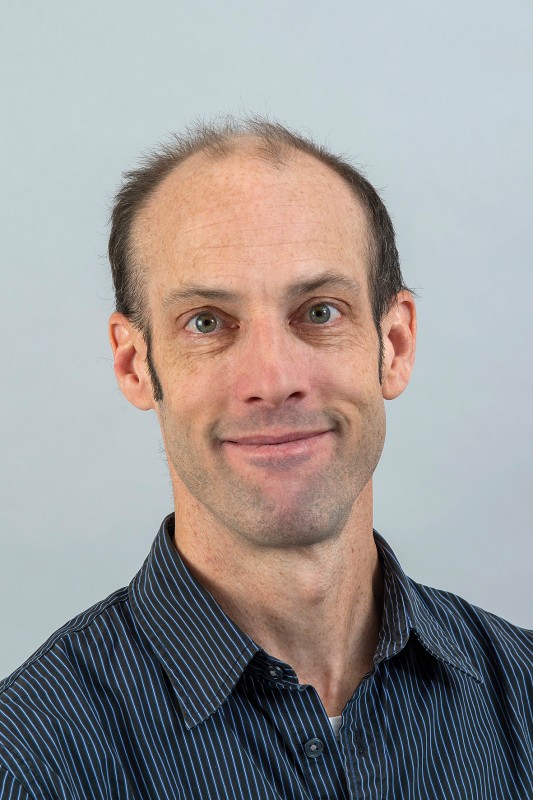 Christian L. Degen合作论文数Department of Physics, Eidgenössische Technische Hochschule Zürich83Paolo Maria Eugenio Icilio Allia合作论文数83
 Melissa Pasquinelli合作论文数The Laboratory of Multiscale Modeling from the Nanoscale, College of Natural Resources, North Carolina State University83
 Diana Gamzina合作论文数UC Davis, University of California83
 Darren M. Bagnall合作论文数Microelectronics Group, University of Southampton83
 Donald P. Butler合作论文数83
 Murat Okandan合作论文数Sandia National Laboratories83Clifford W. Padgett合作论文数83
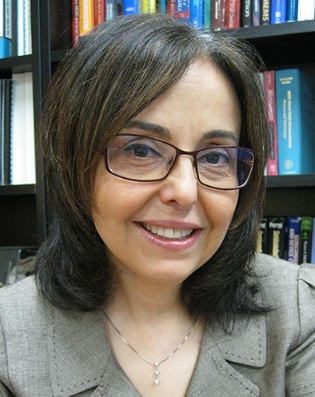 Zeynep Celik合作论文数Nanotechnology Research and Teaching Center, Electrical Engineering Department, College of Engineering, University of Texas at Arlington83
 Bongsang Kim合作论文数Stanford University;Departments of Electrical and Mechanical Engineering;Departments of Electrical and Mechanical Engineering, Stanford University83
 Ashwini Gopal合作论文数Department of Biomedical Engineering;University of Texas at Austin;Department of Biomedical Engineering, University of Texas at Austin83Ion Bita合作论文数83
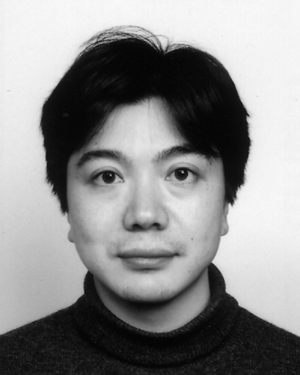 Kazunori Hoshino合作论文数Department of Biomedical Engineering;University of Texas at Austin;Department of Biomedical Engineering, University of Texas at Austin83
 M. Poggio合作论文数IBM Research Division;Almaden Research Center;IBM Research Division, Almaden Research Center83Aloke Kumar合作论文数School of Mechanical Engineering;Purdue University;School of Mechanical Engineering, Purdue University83
 Anisullah Baig合作论文数Department of Applied Science, University of California-Davis83Larry R. Barnett合作论文数83
 Soichiro Tsuda合作论文数School of Electronics and Computer Science, University of Southampton83Seonghwan Kim合作论文数82Rita E. Serda合作论文数82
 Jinfeng Zhao合作论文数82
 Craig Snoeyink合作论文数Department of Mechanical Engineering, Texas Tech University82
 Stuart Boden合作论文数School of Electronics and Computer Science, Faculty of Engineering and Physical Sciences, University of Southampton82
 Steven T. Wereley合作论文数ME 1077, BRK 2019
School of Mechanical Engineering
Purdue University
585 Purdue Mall
West Lafayette, IN 47907-208882Neville C. Luhmann合作论文数82Calvin Domier合作论文数81Maarten P. Boer合作论文数81Luigi Preziosi合作论文数81Mauro Ferrari合作论文数81Yunfeng Shi合作论文数80Woo-Tae Park合作论文数80pablo gurman合作论文数79Yitzhak Rosen合作论文数79Yaroslava G. Yingling合作论文数78
Steven T. Wereley合作论文数ME 1077, BRK 2019
School of Mechanical Engineering
Purdue University
585 Purdue Mall
West Lafayette, IN 47907-208882Neville C. Luhmann合作论文数82Calvin Domier合作论文数81Maarten P. Boer合作论文数81Luigi Preziosi合作论文数81Mauro Ferrari合作论文数81Yunfeng Shi合作论文数80Woo-Tae Park合作论文数80pablo gurman合作论文数79Yitzhak Rosen合作论文数79Yaroslava G. Yingling合作论文数78




