With the success of 2D diffusion models, 2D AIGC content has already transformed our lives. Recently, this success has been extended to 3D AIGC, with state-of-the-art methods generating textured 3D models from single images or text. However, we argue that current 3D AIGC methods still do not fully unleash human creativity. We often imagine 3D content made from multimodal inputs, such as what it would look like if my pet bunny were eating a doughnut on the table. In this paper, we explore a novel 3D AIGC approach: generating 3D content from IDEAs. An IDEA is a multimodal input composed of text, image, and 3D models. To our knowledge, this challenging and exciting 3D AIGC setting has not been studied before. We propose the new framework Idea23D, which combines three agents based on large multimodal models (LMMs) and existing algorithmic tools. These three LMM-based agents are tasked with prompt generation, model selection, and feedback reflection. They collaborate and critique each other in a fully automated loop, without human intervention. The framework then generates a text prompt to create 3D models that align closely with the input IDEAs. We demonstrate impressive 3D AIGC results that surpass previous methods. To comprehensively assess the 3D AIGC capabilities of Idea23D, we introduce the Eval3DAIGC-198 dataset, containing 198 multimodal inputs for 3D generation tasks. This dataset evaluates the alignment between generated 3D content and input IDEAs. Our user study and quantitative results show that Idea23D significantly improves the success rate and accuracy of 3D generation, with excellent compatibility across various LMM, Text-to-Image, and Image-to-3D models. Code and dataset are available at .
With the rapid advancements in large language model technology and the emergence of bioinformatics-specific language models (BioLMs), there is a growing need for a comprehensive analysis of the current landscape, computational characteristics, and diverse applications. This survey aims to address this need by providing a thorough review of BioLMs, focusing on their evolution, classification, and distinguishing features, alongside a detailed examination of training methodologies, datasets, and evaluation frameworks. We explore the wide-ranging applications of BioLMs in critical areas such as disease diagnosis, drug discovery, and vaccine development, highlighting their impact and transformative potential in bioinformatics. We identify key challenges and limitations inherent in BioLMs, including data privacy and security concerns, interpretability issues, biases in training data and model outputs, and domain adaptation complexities. Finally, we highlight emerging trends and future directions, offering valuable insights to guide researchers and clinicians toward advancing BioLMs for increasingly sophisticated biological and clinical applications.
Neuromorphic computing has emerged as a promising energy-efficient alternative to traditional artificial neural networks (ANNs), predominantly utilizing spiking neural networks (SNNs) implemented on neuromorphic hardware. SNNs are more energy-efficient and excel at processing spatio-temporal data than ANNs. Significant advancements have been made in SNN-based convolutional neural networks (CNNs) and Transformer architectures. However, neuromorphic computing for the medical imaging domain remains underexplored. In this study, we introduce EG-SpikeFormer, an SNN architecture tailored for clinical tasks that incorporates eye-gaze data to guide the model's attention to the diagnostically relevant regions in medical images. Our developed approach effectively addresses shortcut learning issues commonly observed in conventional models, especially in scenarios with limited clinical data and high demands for model reliability, generalizability, and transparency. Our EG-SpikeFormer not only demonstrates superior energy efficiency and performance in medical image prediction tasks but also enhances clinical relevance through multi-modal information alignment. By incorporating eye-gaze data, the model improves interpretability and generalization, opening new directions for applying neuromorphic computing in medical image analysis.
This position and survey paper identifies the emerging convergence of neuroscience, artificial general intelligence (AGI), and neuromorphic computing toward a unified research paradigm. Using a framework grounded in brain physiology, we highlight how synaptic plasticity, sparse spike-based communication, and multimodal association provide design principles for next-generation AGI systems that potentially combine both human and machine intelligences. The review traces this evolution from early connectionist models to state-of-the-art large language models, demonstrating how key innovations like transformer attention, foundation-model pre-training, and multi-agent architectures mirror neurobiological processes like cortical mechanisms, working memory, and episodic consolidation. We then discuss emerging physical substrates capable of breaking the von Neumann bottleneck to achieve brain-scale efficiency in silicon: memristive crossbars, in-memory compute arrays, and emerging quantum and photonic devices. There are four critical challenges at this intersection: 1) integrating spiking dynamics with foundation models, 2) maintaining lifelong plasticity without catastrophic forgetting, 3) unifying language with sensorimotor learning in embodied agents, and 4) enforcing ethical safeguards in advanced neuromorphic autonomous systems. This combined perspective across neuroscience, computation, and hardware offers an integrative agenda for in each of these fields.
Due to the remarkable capabilities and growing impact of large language models (LLMs), they have been deeply integrated into many aspects of society. Thus, ensuring their alignment with human values and intentions has emerged as a critical challenge. This survey provides a comprehensive overview of practical alignment techniques, training protocols, and empirical findings in LLM alignment. We analyze the development of alignment methods across diverse paradigms, characterizing the fundamental trade-offs between core alignment objectives. Our analysis shows that while supervised fine-tuning enables basic instruction-following, preference-based methods offer more flexibility for aligning with nuanced human intent. We discuss state-of-the-art techniques, including Direct Preference Optimization (DPO), Constitutional AI, brain-inspired methods, and alignment uncertainty quantification (AUQ), highlighting their approaches to balancing quality and efficiency. We review existing evaluation frameworks and benchmarking datasets, emphasizing limitations such as reward misspecification, distributional robustness, and scalable oversight. We summarize strategies adopted by leading AI labs to illustrate the current state of practice. We conclude by outlining open problems in oversight, value pluralism, robustness, and continuous alignment. This survey aims to inform both researchers and practitioners navigating the evolving landscape of LLM alignment.
In recent years, Large Language Models (LLMs) like ChatGPT have seen considerable advancements and have been applied in diverse fields. Built on the Transformer architecture, these models are trained on extensive datasets, enabling them to understand and generate human language effectively. In the financial domain, the deployment of LLMs is gaining momentum. These models are being utilized for automating financial report generation, forecasting market trends, analyzing investor sentiment, and offering personalized financial advice. Leveraging their natural language processing capabilities, LLMs can distill key insights from vast financial data, aiding institutions in making informed investment choices and enhancing both operational efficiency and customer satisfaction. In this study, we provide a comprehensive overview of the emerging integration of LLMs into various financial tasks. Additionally, we conducted holistic tests on multiple financial tasks through the combination of natural language instructions. Our findings show that GPT-4 effectively follow prompt instructions across various financial tasks. This survey and evaluation of LLMs in the financial domain aim to deepen the understanding of LLMs' current role in finance for both financial practitioners and LLM researchers, identify new research and application prospects, and highlight how these technologies can be leveraged to solve practical challenges in the finance industry.
Oracle bone script (OBS), as China's earliest mature writing system, present significant challenges in automatic recognition due to their complex pictographic structures and divergence from modern Chinese characters. We introduce OracleSage, a novel cross-modal framework that integrates hierarchical visual understanding with graph-based semantic reasoning. Specifically, we propose (1) a Hierarchical Visual-Semantic Understanding module that enables multi-granularity feature extraction through progressive fine-tuning of LLaVA's visual backbone, (2) a Graph-based Semantic Reasoning Framework that captures relationships between visual components and semantic concepts through dynamic message passing, and (3) OracleSem, a semantically enriched OBS dataset with comprehensive pictographic and semantic annotations. Experimental results demonstrate that OracleSage significantly outperforms state-of-the-art vision-language models. This research establishes a new paradigm for ancient text interpretation while providing valuable technical support for archaeological studies.
Large Language Models (LLMs) have demonstrated remarkable success across a wide range of tasks and domains. However, their performance in low-resource language translation, particularly when translating into these languages, remains underexplored. This gap poses significant challenges, as linguistic barriers hinder the cultural preservation and development of minority communities. To address this issue, this paper introduces a novel retrieval-based method that enhances translation quality for low-resource languages by focusing on key terms, which involves translating keywords and retrieving corresponding examples from existing data. To evaluate the effectiveness of this method, we conducted experiments translating from English into three low-resource languages: Cherokee, a critically endangered indigenous language of North America; Tibetan, a historically and culturally significant language in Asia; and Manchu, a language with few remaining speakers. Our comparison with the zero-shot performance of GPT-4o and LLaMA 3.1 405B, highlights the significant challenges these models face when translating into low-resource languages. In contrast, our retrieval-based method shows promise in improving both word-level accuracy and overall semantic understanding by leveraging existing resources more effectively.
Recent studies show that large language models (LLMs) are powerful tools for working with natural language, bringing advances in many areas of computational linguistics. However, these models face challenges when applied to low-resource languages due to limited training data and difficulty in understanding cultural nuances. In this paper, we propose QueEn, a novel approach for Quechua-English translation that combines Retrieval-Augmented Generation (RAG) with parameter-efficient fine-tuning techniques. Our method leverages external linguistic resources through RAG and uses Low-Rank Adaptation (LoRA) for efficient model adaptation. Experimental results show that our approach substantially exceeds baseline models, with a BLEU score of 17.6 compared to 1.5 for standard GPT models. The integration of RAG with fine-tuning allows our system to address the challenges of low-resource language translation while maintaining computational efficiency. This work contributes to the broader goal of preserving endangered languages through advanced language technologies.
Artificial Intelligence (AI) has become essential in modern healthcare, with large language models (LLMs) offering promising advances in clinical decision-making. Traditional model-based approaches, including those leveraging in-context demonstrations and those with specialized medical fine-tuning, have demonstrated strong performance in medical language processing but struggle with real-time adaptability, multi-step reasoning, and handling complex medical tasks. Agent-based AI systems address these limitations by incorporating reasoning traces, tool selection based on context, knowledge retrieval, and both short- and long-term memory. These additional features enable the medical AI agent to handle complex medical scenarios where decision-making should be built on real-time interaction with the environment. Therefore, unlike conventional model-based approaches that treat medical queries as isolated questions, medical AI agents approach them as complex tasks and behave more like human doctors. In this paper, we study the choice of the backbone LLM for medical AI agents, which is the foundation for the agent's overall reasoning and action generation. In particular, we consider the emergent o1 model and examine its impact on agents' reasoning, tool-use adaptability, and real-time information retrieval across diverse clinical scenarios, including high-stakes settings such as intensive care units (ICUs). Our findings demonstrate o1's ability to enhance diagnostic accuracy and consistency, paving the way for smarter, more responsive AI tools that support better patient outcomes and decision-making efficacy in clinical practice.
This comprehensive study evaluates the performance of OpenAI's o1-preview large language model across a diverse array of complex reasoning tasks, spanning multiple domains, including computer science, mathematics, natural sciences, medicine, linguistics, and social sciences. Through rigorous testing, o1-preview demonstrated remarkable capabilities, often achieving human-level or superior performance in areas ranging from coding challenges to scientific reasoning and from language processing to creative problem-solving. Key findings include: -83.3 -Superior ability in generating coherent and accurate radiology reports, outperforming other evaluated models. -100 -Advanced natural language inference capabilities across general and specialized domains like medicine. -Impressive performance in chip design tasks, outperforming specialized models in areas such as EDA script generation and bug analysis. -Remarkable proficiency in anthropology and geology, demonstrating deep understanding and reasoning in these specialized fields. -Strong capabilities in quantitative investing. O1 has comprehensive financial knowledge and statistical modeling skills. -Effective performance in social media analysis, including sentiment analysis and emotion recognition. The model excelled particularly in tasks requiring intricate reasoning and knowledge integration across various fields. While some limitations were observed, including occasional errors on simpler problems and challenges with certain highly specialized concepts, the overall results indicate significant progress towards artificial general intelligence.
Low-resource languages serve as invaluable repositories of human history, embodying cultural evolution and intellectual diversity. Despite their significance, these languages face critical challenges, including data scarcity and technological limitations, which hinder their comprehensive study and preservation. Recent advancements in large language models (LLMs) offer transformative opportunities for addressing these challenges, enabling innovative methodologies in linguistic, historical, and cultural research. This study systematically evaluates the applications of LLMs in low-resource language research, encompassing linguistic variation, historical documentation, cultural expressions, and literary analysis. By analyzing technical frameworks, current methodologies, and ethical considerations, this paper identifies key challenges such as data accessibility, model adaptability, and cultural sensitivity. Given the cultural, historical, and linguistic richness inherent in low-resource languages, this work emphasizes interdisciplinary collaboration and the development of customized models as promising avenues for advancing research in this domain. By underscoring the potential of integrating artificial intelligence with the humanities to preserve and study humanity's linguistic and cultural heritage, this study fosters global efforts towards safeguarding intellectual diversity.
In this paper, we review legal testing methods based on Large Language Models (LLMs), using the OPENAI o1 model as a case study to evaluate the performance of large models in applying legal provisions. We compare current state-of-the-art LLMs, including open-source, closed-source, and legal-specific models trained specifically for the legal domain. Systematic tests are conducted on English and Chinese legal cases, and the results are analyzed in depth. Through systematic testing of legal cases from common law systems and China, this paper explores the strengths and weaknesses of LLMs in understanding and applying legal texts, reasoning through legal issues, and predicting judgments. The experimental results highlight both the potential and limitations of LLMs in legal applications, particularly in terms of challenges related to the interpretation of legal language and the accuracy of legal reasoning. Finally, the paper provides a comprehensive analysis of the advantages and disadvantages of various types of models, offering valuable insights and references for the future application of AI in the legal field.
Audio recognition in specialized areas such as birdsong and submarine acoustics faces challenges in large-scale pre-training due to the limitations in available samples imposed by sampling environments and specificity requirements. While the Transformer model excels in audio recognition, its dependence on vast amounts of data becomes restrictive in resource-limited settings. Addressing this, we introduce the Audio Spectrogram Convolution Attention (ASCA) based on CoAtNet, integrating a Transformer-convolution hybrid architecture, novel network design, and attention techniques, further augmented with data enhancement and regularization strategies. On the BirdCLEF2023 and AudioSet(Balanced), ASCA achieved accuracies of 81.2% and 35.1%, respectively, significantly outperforming competing methods. The unique structure of our model enriches output, enabling generalization across various audio detection tasks. Our code can be found at https://github.com/LeeCiang/ASCA.
Image style transfer occupies an important place in both computer graphics and computer vision. However, most current methods require reference to stylized images and cannot individually stylize specific objects. To overcome this limitation, we propose the "Soulstyler" framework, which allows users to guide the stylization of specific objects in an image through simple textual descriptions. We introduce a large language model to parse the text and identify stylization goals and specific styles. Combined with a CLIP-based semantic visual embedding encoder, the model understands and matches text and image content. We also introduce a novel localized text-image block matching loss that ensures that style transfer is performed only on specified target objects, while non-target regions remain in their original style. Experimental results demonstrate that our model is able to accurately perform style transfer on target objects according to textual descriptions without affecting the style of background regions. Our code will be available at https://github.com/yisuanwang/Soulstyler.
A traffic accident severity prediction study is an estimation of the expected future traffic accidents in combination with available data. One of the core objectives of this study is to predict the number and severity of possible traffic accidents so that optimal solutions can be taken in case of accidents. In this study, we propose a research method for traffic accident severity prediction based on BP neural network. Firstly, we perform principal component analysis on accident causative factors to determine the input and output factors of BP neural network; then we analyze the principle of neural network based on the composition structure, operation mechanism and learning method of BP neural network model. In the experimental part, a traffic accident dataset of Guangzhou city from 2009 to 2016 is used as an example sample for validation and the prediction results are analyzed. The results show that the prediction value of the model is accurate between 87%-91% compared with the true value, and the prediction accuracy is high, which can effectively predict the severity of traffic accidents and has certain theoretical guidance and practical significance for the prediction of the severity of future road traffic accidents.
In this paper, FBLS is used as the base model and Grasshopper optimization Algorithm algorithm(GOA) is used to find the optimal initial weight of Fuzzy Broad Learning System(FBLS). On the basis of finding the initial center of membership function, K-means algorithm is improved by using local density and local probability theory to find the optimal initial clustering center, so that the algorithm can be more accurate. According to the disadvantage that Grasshopper optimization Algorithm(GOA) is not easy to converge and jump out of the global optimization, the algorithm is improved by using the sine cosine theory, and the algorithm search is more comprehensive by improving the parameter Rl. The experimental simulation shows that the error of the improved SC-GOA-FBLS is significantly lower than that of GOA-FBLS,PSO-BP and FBLS.
 Zhengliang Liu合作论文数Casium12
 Tianming Liu合作论文数Department of Computer Science, School of Computing, University of Georgia12
 Hanqi Jiang合作论文数11Yi Pan (潘毅)合作论文数11Yiwei Li合作论文数10Huaqin Zhao合作论文数8Peng Shu合作论文数8
 Zihao Wu (吴子豪)合作论文数School of Computing, University of Georgia7
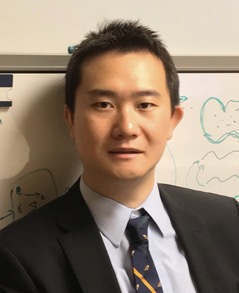 Xiang Li合作论文数Department of Radiology, Massachusetts General Hospital;Department of Radiology, Harvard Medical School7Tianyang Zhong合作论文数5
 Wei Zhang合作论文数Department of Radiology and Biomedical Imaging, University of California at San Francisco5
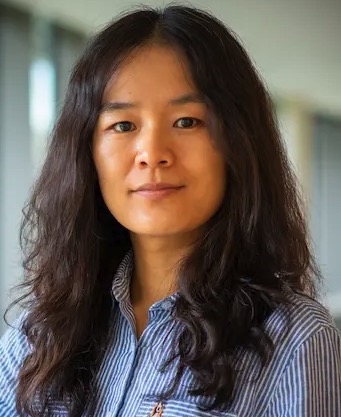 Lu Zhang (张璐)合作论文数Department of Computer Science, Luddy School of Informatics, Computing, and Engineering, Indiana University Indianapolis5
 Lin Zhao (赵林)合作论文数School of Computer Science and Engineering, Nanjing University of Science & Technology5
 Dajiang Zhu合作论文数Department of Computer Science and Engineering, University of Texas at Arlington5Peilong Wang合作论文数3Shaochen Xu合作论文数3
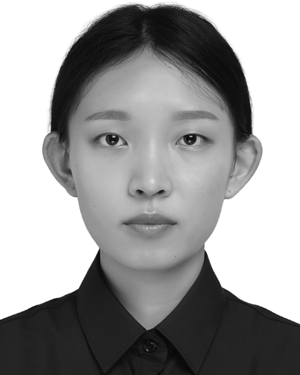 Ruidong Zhang合作论文数College of Communication Engineering, Jilin University, Changchun, China3
 Andrea Sikora Newsome合作论文数Coll Pharm, Univ Georgia3
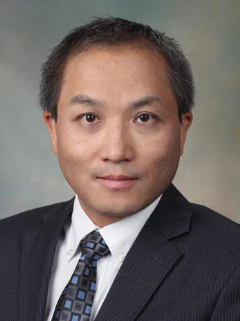 Wei Liu合作论文数Department of Radiation Oncology, Mayo Clinic;Division of Medical Physics, Mayo Clinic3Jiaxi Li合作论文数2Shizhe Liang合作论文数2Yutong Zhang合作论文数2
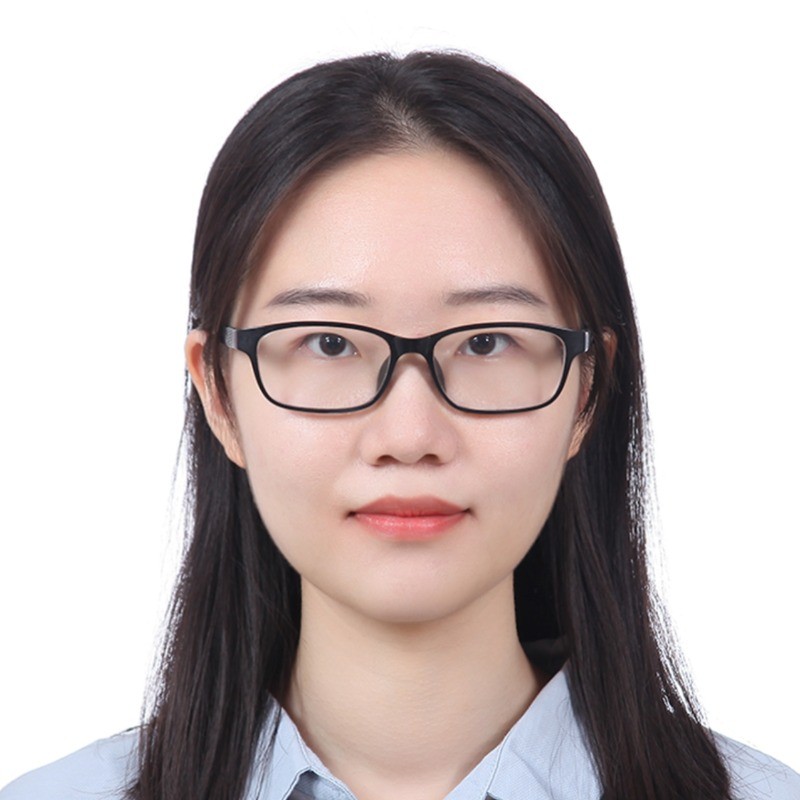 Luyang Fang合作论文数Department of Statistics, Franklin College of Arts and Sciences, University of Georgia2Tianze Yang合作论文数2Yanjun Lyu合作论文数2
 Yiheng Liu合作论文数2
 Haixing Dai合作论文数Department of Computer Science, University of Georgia, Athens, GA 30602, USA.2Xiaowei Yu合作论文数2
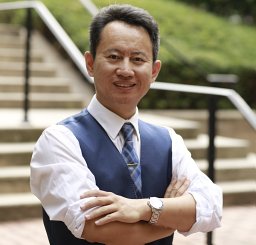 Xiaoming Zhai合作论文数Univ Georgia, Dept Math & Sci Educ, Athens, GA 30602 USA2
 Shu Zhang (张枢)合作论文数School of Computer Science, Northwestern Polytechnical University2
 Huan Zhao (赵欢)合作论文数College of Computer Science and Electronic Engineering, Hunan University2
 Rongjie (RJ) Liu合作论文数Department of Statistics, University of Georgia2Chao Li合作论文数Baidu2
 Jingyuan Chen合作论文数Alibaba DAMO Academy, Alibaba Group2
 Xi Jiang (蒋希)合作论文数School of Life Science and Technology, University of Electronic Science and Technology of China2
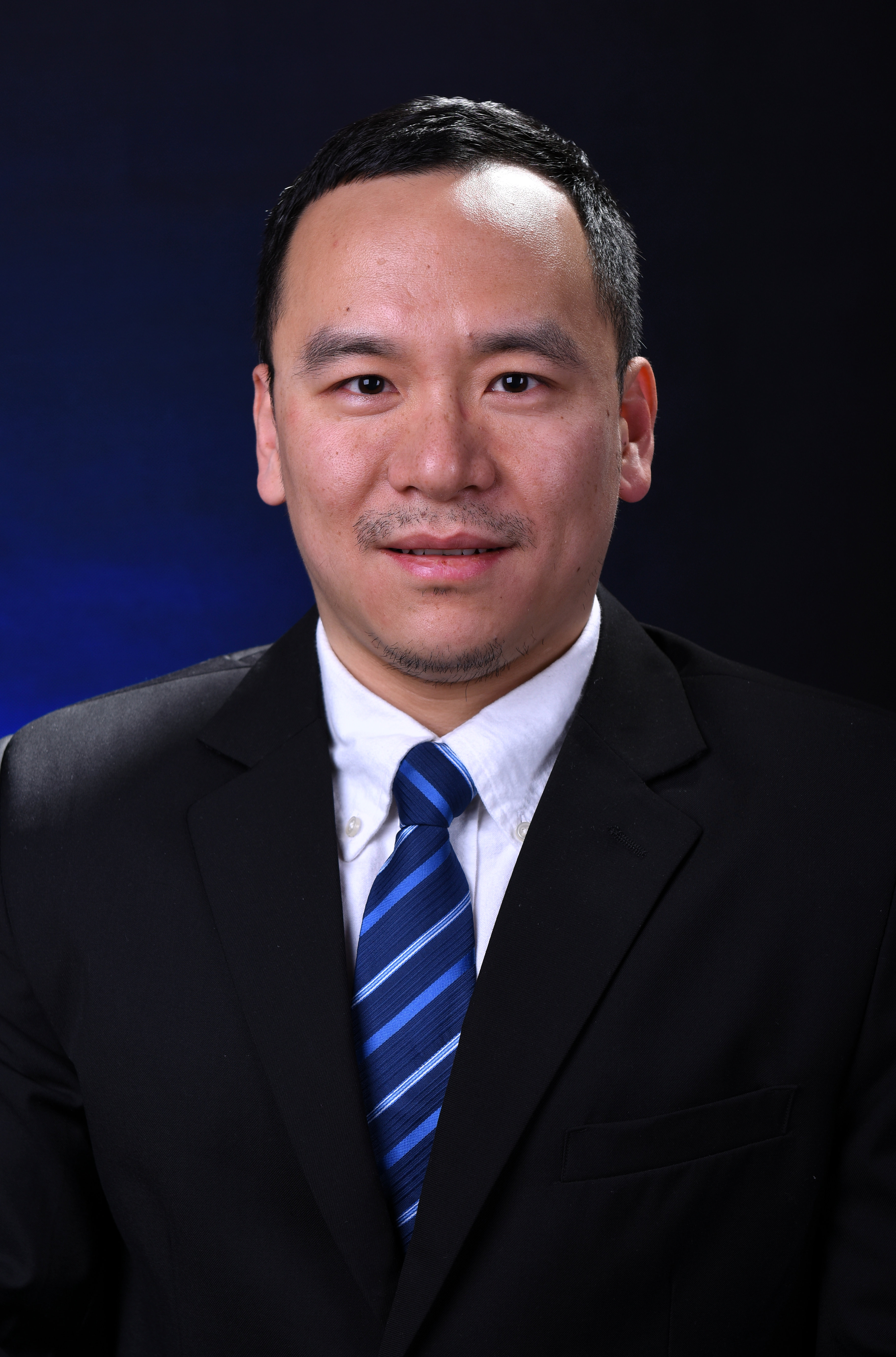 Tuo Zhang (张拓)合作论文数School of Automation, Northwestern Polytechnical University2
 Jiaqi Wang (王佳琦)合作论文数Shanghai AI Laboratory2
 Yudan Ren (任玉丹)合作论文数School of Information Science and Technology, Northwest University2Tao Wang合作论文数ByteDance AI Lab2
 Zhong Wenxuan合作论文数Department of Statistics, University of Georgia2
 Ping Ma合作论文数Department of Statistics, Franklin College of Arts and Sciences, University of Georgia2
 Quanzheng Li合作论文数Harvard Medical School;Center for Advanced Medical Computing and Analysis;Massachusetts General Hospital2
 Ninghao Liu (刘宁昊)合作论文数Department of Computing, Faculty of Computer and Mathematical Sciences, The Hong Kong Polytechnic University2
 Xianqiao Wang合作论文数College of Engineering, University of Georgia2
 Haidong Xin (辛海东)合作论文数Northeastern University1
 Xin Zhang (张鑫)合作论文数Harbin Institute of Technology, Shenzhen;The Hong Kong Polytechnic University1
 Jason Holmes合作论文数1
 Guoyu Lu合作论文数School of Computing, Binghamton University, State University of New York1Qi Gan合作论文数1




