Vision-and-Language Navigation in continuous environments (VLN-CE) requires an embodied robot to navigate the target destination following the natural language instruction. Most existing methods use panoramic RGB-D cameras for 360° observation of environments. However, these methods struggle in real-world applications because of the higher cost of panoramic RGB-D cameras. This paper studies a low-cost and practical VLN-CE setting, e.g., using monocular cameras of limited field of view, which means “Look Less” for visual observations and environment semantics. In this paper, we propose a ThinkMatter framework for monocular VLN-CE, where we motivate monocular robots to “Think More” by 1) generating novel views and 2) integrating instruction semantics. Specifically, we achieve the former by the proposed 3DGS-based panoramic generation to render novel views at each step, based on past observation collections. We achieve the latter by the proposed enhancement of the occupancy-instruction semantics, which integrates the spatial semantics of occupancy maps with the textual semantics of language instructions. These operations promote monocular robots with wider environment perceptions as well as transparent semantic connections with the instruction. Both extensive experiments in the simulators and real-world environments demonstrate the effectiveness of ThinkMatter, providing a promising practice for real-world navigation.
3D editing is a fundamental capability for scalable 3D content creation. While image editing has rapidly evolved toward large-scale feedforward generative paradigms, 3D AI generation remains dominated by training-free editing pipelines. A central challenge of feedforward 3D editing lies in the lack of high-quality paired supervision. Editable 3D assets require simultaneous preservation of geometry, multi-view consistency, structural coherence, and localized edit controllability. Existing 3D editing datasets often rely on independently generated assets, image-mediated reconstruction or narrow edit taxonomies, leading to inaccurate localization, weak preservation, blurred edit boundaries, and limited semantic consistency. In this work, we introduce a new perspective: scalable feedforward 3D editing should be learned from semantic-part transformations. Based on this insight, we propose Pxform, a high-quality 3D editing dataset with over 100K consistent before/after editing pairs across seven edit types. Instead of treating objects as unstructured shapes, our pipeline grounds edits directly in semantic 3D parts. Built upon Pxform, we further propose PartFlow, a feedforward 3D editing network that injects source-aware latent control into pretrained 3D generative priors. PartFlow introduces mask-aware velocity preservation and render-space consistency supervision to jointly improve edit fidelity and source preservation, while requiring no 3D edit mask during inference. Extensive experiments demonstrate that high-quality semantic-part supervision substantially improves scalable 3D editing, enabling PartFlow to achieve state-of-the-art performance on both geometric and appearance editing benchmarks.
End-to-end (E2E) driving has become a cornerstone of both industry deployment and academic research, offering a single learnable pipeline that maps multi-sensor inputs to actions while avoiding hand-engineered modules. However, the reliability of such pipelines strongly depends on how well they handle uncertainty: sensors are noisy, semantics can be ambiguous, and interaction with other road users is inherently stochastic. Uncertainty also appears in multiple forms: classification vs. localization, and, crucially, in both static map elements and dynamic agents. Existing E2E approaches model only static-map uncertainty, leaving planning vulnerable to overconfident and unreliable inputs. We present UniUncer, the first lightweight, unified uncertainty framework that jointly estimates and uses uncertainty for both static and dynamic scene elements inside an E2E planner. Concretely: (1) we convert deterministic heads to probabilistic Laplace regressors that output per-vertex location and scale for vectorized static and dynamic entities; (2) we introduce an uncertainty-fusion module that encodes these parameters and injects them into object/map queries to form uncertainty-aware queries; and (3) we design an uncertainty-aware gate that adaptively modulates reliance on historical inputs (ego status or temporal perception queries) based on current uncertainty levels. The design adds minimal overhead and drops throughput by only ~0.5 FPS while remaining plug-and-play for common E2E backbones. On nuScenes (open-loop), UniUncer reduces average L2 trajectory error by 7%. On NavsimV2 (pseudo closed-loop), it improves overall EPDMS by 10.8% and achieve notable Stage-2 gains in challenging, interaction-heavy scenes. Ablations confirm that dynamic-agent uncertainty and the uncertainty-aware gate are both necessary.
Traffic elements such as traffic lights and road signs play a fundamental role in human driving decisions and should naturally influence end-to-end driving performance. However, existing end-to-end driving research predominantly focuses on dynamic road participants (e.g., vehicles and pedestrians), while the role of traffic elements remains largely unexplored. The community still lacks a systematic study quantifying their impact, largely because public datasets rarely provide structured traffic-element annotations and modern driving systems vary widely in architecture and training paradigm. In this work, we present the first systematic investigation of traffic element awareness for end-to-end autonomous driving. We construct a unified research infrastructure by augmenting multiple public driving datasets with comprehensive traffic-element annotations. To support diverse model families, we adopt a minimal and universal integration design that incorporates traffic-element signals into existing pipelines in a plug-and-play manner with negligible architectural modification. We evaluate this design across modern paradigms, including perception-prediction-planning pipelines, vision-language-action models (VLA), regression-based planners, diffusion-based policies, and trajectory-scoring frameworks, on nuScenes, NAVSIM-v1, NAVSIM-v2, and Bench2Drive. Across all paradigms and datasets, this simple integration consistently improves driving performance, demonstrating that traffic element awareness provides a robust and generalizable signal for end-to-end driving systems. Notably, on the challenging NAVSIM-v2 benchmark, our approach significantly improves state-of-the-art architectures and data pipelines, establishing a new state of the art.
With the success of 2D diffusion models, 2D AIGC content has already transformed our lives. Recently, this success has been extended to 3D AIGC, with state-of-the-art methods generating textured 3D models from single images or text. However, we argue that current 3D AIGC methods still do not fully unleash human creativity. We often imagine 3D content made from multimodal inputs, such as what it would look like if my pet bunny were eating a doughnut on the table. In this paper, we explore a novel 3D AIGC approach: generating 3D content from IDEAs. An IDEA is a multimodal input composed of text, image, and 3D models. To our knowledge, this challenging and exciting 3D AIGC setting has not been studied before. We propose the new framework Idea23D, which combines three agents based on large multimodal models (LMMs) and existing algorithmic tools. These three LMM-based agents are tasked with prompt generation, model selection, and feedback reflection. They collaborate and critique each other in a fully automated loop, without human intervention. The framework then generates a text prompt to create 3D models that align closely with the input IDEAs. We demonstrate impressive 3D AIGC results that surpass previous methods. To comprehensively assess the 3D AIGC capabilities of Idea23D, we introduce the Eval3DAIGC-198 dataset, containing 198 multimodal inputs for 3D generation tasks. This dataset evaluates the alignment between generated 3D content and input IDEAs. Our user study and quantitative results show that Idea23D significantly improves the success rate and accuracy of 3D generation, with excellent compatibility across various LMM, Text-to-Image, and Image-to-3D models. Code and dataset are available at .
Autonomous driving world models are expected to work effectively across three core dimensions: state, action, and reward. However, existing methods are typically restricted to fragmented modality modeling, short-horizon drift, and imprecise action control, while lacking intrinsic mechanisms for policy evaluation. In this paper, we introduce OmniNWM, an Omniscient panoramic Navigation World Model that addresses all three dimensions within a consistent probabilistic framework. For State, OmniNWM generates panoramic videos of RGB, semantics, metric depth, and 3D occupancy, ensuring pixel-level alignment across modalities with joint distribution modeling. To mitigate autoregressive exposure bias, we propose a structured panoramic forcing strategy to stabilize long-horizon generation via stochastic manifold thickening. For Action, we introduce canonical geometric action encoding with normalized panoramic Plücker ray-maps. This representation decouples motion dynamics from sensor intrinsics, enabling precise, zero-shot trajectory control across heterogeneous datasets and camera configurations. For Reward, we derive intrinsic occupancy-grounded dense rewards directly from generated 3D volumes, establishing a reliable closed-loop simulation cycle for evaluating diverse planning agents. Extensive experiments demonstrate that OmniNWM achieves SOTA performance in generation fidelity and control precision, with remarkable zero-shot robustness to novel scenes on NuPlan and in-house datasets with distinct camera rigs. Project page is available at https://arlo0o.github.io/OmniNWM/.
Traffic accidents present complex challenges for autonomous driving, often featuring unpredictable scenarios that hinder accurate system interpretation and responses.Nonetheless, prevailing methodologies fall short in elucidating the causes of accidents and proposing preventive measures due to the paucity of training data specific to accident scenarios.In this work, we introduce AVD2 (Accident Video Diffusion for Accident Video Description), a novel framework that enhances accident scene understanding by generating accident videos that aligned with detailed natural language descriptions and reasoning, resulting in the contributed EMM-AU (Enhanced Multi-Modal Accident Video Understanding) dataset. Empirical results reveal that the integration of the EMM-AU dataset establishes state-of-the-art performance across both automated metrics and human evaluations, markedly advancing the domains of accident analysis and prevention. Project resources are available at https://an-answer-tree.github.io
Localized neural implicit representation methods have recently been proven effective for shape reconstruction. However, while some recent neural implicit representation-based approaches have investigated part awareness, there is still room for improvement in leveraging the rich geometry information contained in parts, which is crucial for accurate reconstruction. This study aims to enhance the accuracy of shape reconstruction by incorporating part awareness. This principle faces a fundamental technical challenge: manually defining parts across various categories is ambiguous and expensive. To address it, we propose a new self-supervised learning paradigm that automatically discovers meaningful parts. Our proposed paradigm has several prominent advantages as compared with the prior arts: 1) It allows masked part modeling that scales well with available data; 2) It is a flexible formulation that allows a variable number of parts; 3) It allows the fusion of multi-scale (global-level and part-level) features at an arbitrarily given coordinate; 4) The semantic consistency of learned parts leads to transferable features. Extensive experiments validate our approach, named Masked PaCONet, showcasing its superiority in qualitative and quantitative results on public benchmarks, even under challenging settings. Codes and models will be released.
Lane topology extraction involves detecting lanes and traffic elements and determining their relationships, a key perception task for mapless autonomous driving. This task requires complex reasoning, such as determining whether it is possible to turn left into a specific lane. To address this challenge, we introduce neuro-symbolic methods powered by vision-language foundation models (VLMs). Existing approaches have notable limitations: (1) Dense visual prompting with VLMs can achieve strong performance but is costly in terms of both financial resources and carbon footprint, making it impractical for robotics applications. (2) Neuro-symbolic reasoning methods for 3D scene understanding fail to integrate visual inputs when synthesizing programs, making them ineffective in handling complex corner cases. To this end, we propose a fast-slow neuro-symbolic lane topology extraction algorithm, named Chameleon, which alternates between a fast system that directly reasons over detected instances using synthesized programs and a slow system that utilizes a VLM with a chain-of-thought design to handle corner cases. Chameleon leverages the strengths of both approaches, providing an affordable solution while maintaining high performance. We evaluate the method on the OpenLane-V2 dataset, showing consistent improvements across various baseline detectors. Our code, data, and models are publicly available at https://github.com/XR-Lee/neural-symbolic
Recently, language foundation models have revolutionized many fields and how they could enable smarter and safer autonomous vehicles remains elusive. We believe one major obstacle is the lack of a comprehensive and standard middleware representation that links perception and planning. We rethink the limitations of existing middleware (e.g., 3D boxes or occupancy) and propose 3\textbf{D} d\textbf{e}n\textbf{s}e capt\textbf{i}onin\textbf{g} beyond \textbf{n}ouns (or abbreviated as DESIGN). For each input scenario, DESIGN refers to a set of 3D bounding boxes with a language description for each. Notably, the \textbf{comprehensive} description involves not only what the box is (noun) but also its attribute (adjective), location (preposition) and moving status (adverb). We design a scalable rule-based auto-labelling methodology to generate DESIGN ground truth, guaranteeing that the middleware is \textbf{standard}. Using this methodology, we construct a large-scale dataset nuDesign based upon nuScenes, which consists of an unprecedented number of 2300k sentences. We also present an extensive benchmarking on nuDesign, featuring a model named DESIGN-former that takes multi-modal inputs and predicts reliable DESIGN outputs. Through qualitative visualizations, we demonstrate that DEISGN, as a novel 3D scene understanding middleware, has good interpretability. We release our code, data and models, hoping this middleware could trigger better autonomous driving algorithms and systems that benefit from the power of language foundation models.
Vision-and-Language Navigation (VLN), where an agent follows instructions to reach a target destination, has recently seen significant advancements. In contrast to navigation in discrete environments with predefined trajectories, VLN in Continuous Environments (VLN-CE) presents greater challenges, as the agent is free to navigate any unobstructed location and is more vulnerable to visual occlusions or blind spots. Recent approaches have attempted to address this by imagining future environments, either through predicted future visual images or semantic features, rather than relying solely on current observations. However, these RGB-based and feature-based methods lack intuitive appearance-level information or high-level semantic complexity crucial for effective navigation. To overcome these limitations, we introduce a novel, generalizable 3DGS-based pre-training paradigm, called UnitedVLN, which enables agents to better explore future environments by unitedly rendering high-fidelity 360 visual images and semantic features. UnitedVLN employs two key schemes: search-then-query sampling and separate-then-united rendering, which facilitate efficient exploitation of neural primitives, helping to integrate both appearance and semantic information for more robust navigation. Extensive experiments demonstrate that UnitedVLN outperforms state-of-the-art methods on existing VLN-CE benchmarks.
We introduce a NeRF-based active mapping system that enables efficient and robust exploration of large-scale indoor environments. The key to our approach is the extraction of a generalized Voronoi graph (GVG) from the continually updated neural map, leading to the synergistic integration of scene geometry, appearance, topology, and uncertainty. Anchoring uncertain areas induced by the neural map to the vertices of GVG allows the exploration to undergo adaptive granularity along a safe path that traverses unknown areas efficiently. Harnessing a modern hybrid NeRF representation, the proposed system achieves competitive results in terms of reconstruction accuracy, coverage completeness, and exploration efficiency even when scaling up to large indoor environments. Extensive results at different scales validate the efficacy of the proposed system.
Recently it is shown that learning radiance fields with depth rendering and depth supervision can effectively promote the view synthesis quality and convergence. But this paradigm requires input RGB-D sequences to be synchronized, hindering its usage in the UAV city modeling scenario. To this end, we propose to jointly learn large-scale depth-regularized radiance fields and calibrate the mismatch between RGB-D frames. Although this joint learning problem can be simply addressed by adding new variables, we exploit the prior that RGB-D frames are actually sampled from the same physical trajectory. As such, we propose a novel time-pose function, which is an implicit network that maps timestamps to SE(3) elements. Our algorithm is designed in an alternative way consisting of three steps: (1) time-pose function fitting; (2) radiance field bootstrapping; (3) joint pose error compensation and radiance field refinement. In order to systematically evaluate under this new problem setting, we propose a large synthetic dataset with diverse controlled mismatch and ground truth. Through extensive experiments, we demonstrate that our method outperforms strong baselines. We also show qualitatively improved results on a real-world asynchronous RGB-D sequence captured by drones. Codes, data, and models will be made publicly available.
 Guyue Zhou (周谷越)合作论文数Distributed Collaborative Vision and Exponential Robotics Lab, Institute for AI Industry Research, Tsinghua University3
 Zongzheng Zhang合作论文数Institute for AI Industry Research, Tsinghua University2
 Guangzhao Dai (代广昭)合作论文数2
 Chao Li合作论文数Baidu2
 Xiangbo Shu (舒祥波)合作论文数School of Computer Science and Engineering, Nanjing University of Science and Technology;Qian Xuesen College, Nanjing University of Science and Technology2Chonghao Zhong (仲崇昊)合作论文数Beijing Institute of Technology;Hong Kong University of Science and Technology1Zhuang, Mingqiao合作论文数1Wang, Yu合作论文数1Liu, Tong合作论文数1Zhou, Keyuan合作论文数1Wang, LeiChen合作论文数1Zheng, Guantian合作论文数1Wang, Guoliang合作论文数1Qiu, Xuchong合作论文数1Li, Siqi合作论文数1Chi, Guoxuan合作论文数1Zou, Sizhe合作论文数1Li, Xinrun合作论文数1Cheng Li合作论文数Institute for AI Industry Research, Tsinghua University;Academy of Interdisciplinary Studies, the Hong Kong University of Science and Technology1Sujie Hu合作论文数1
 Bohan Li (李博涵)合作论文数Shanghai Jiao Tong University;Eastern Institute for Advanced Study1
 Yupeng Zheng合作论文数Institute for AI Industry Research, Tsinghua University1
 Runyi Yang (杨润一)合作论文数1
 Zirui Wu合作论文数Wangxuan Institute of Computer Technology, Peking University;Kuaishou Technology1
 Zhijie Yan合作论文数AIR, THU;SMEA, Beihang University1
 Huan-ang Gao (高焕昂)合作论文数Department of Computer Science and Technology, Tsinghua University;Institute for AI Industry Research, Tsinghua University;Lumina-Embodied.AI1Bu Jin合作论文数1
 Yuhang Zheng (郑宇航)合作论文数School of Computing, National University of Singapore1Yuantao Chen合作论文数1Junhao Chen合作论文数1Zhenxin Zhu合作论文数1Chao Hou合作论文数1
 Shuo Wang合作论文数1
 Pengfei Li合作论文数Institute for AI Industry Research, Tsinghua University;Institute of Intelligent Industry, Tsinghua University1
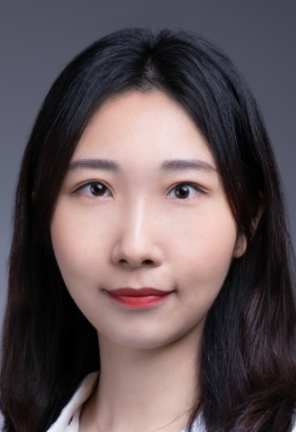 Yueming Jin合作论文数Department of Biomedical Engineering, National University of Singapore;Department of Electrical and Computer Engineering, College of Design and Engineering, National University of Singapore1Jinwei Zhu合作论文数School of Aerospace Engineering, Tsinghua University1
 Yongliang Shi合作论文数Beijing Inst Technol, Sch Mechatron Engn, Beijing 100081, Peoples R China1
 Zheng Zhu (朱政)合作论文数GigaAI1
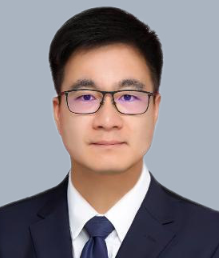 Jian Zhao (赵健)合作论文数School of Artificial Intelligence, Optics and Electronics, Northwestern Polytechnical University;Evolutionary Visione+x Oriented Learning Lab, TeleAI of China Telecom1
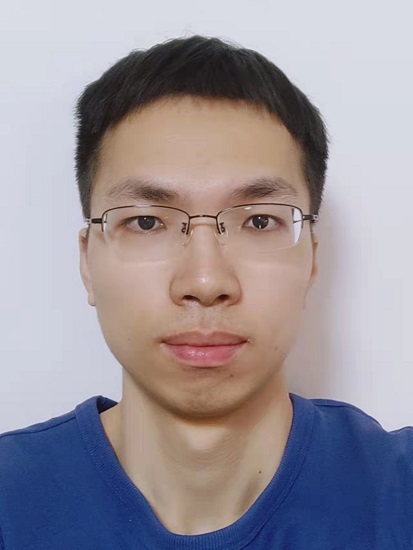 Yilun Chen合作论文数Shanghai Artificial Intelligence Laboratory1
 Bin Zhu (朱斌)合作论文数School of Computing and Information Systems, Singapore Management University1
 Guo-Sen Xie合作论文数Nanjing University of Science and Technology1
 Hang Zhao (赵行)合作论文数MARS Lab, Institute for Interdisciplinary Information Sciences, Tsinghua University1
 Xin Jin (金鑫)合作论文数College of Info Science & Technology, Eastern Institute of Technology, Ningbo;Ningbo Institute of Digital Twin, Eastern Institute of Technology, Ningbo1Dalong Du (都大龙)合作论文数1
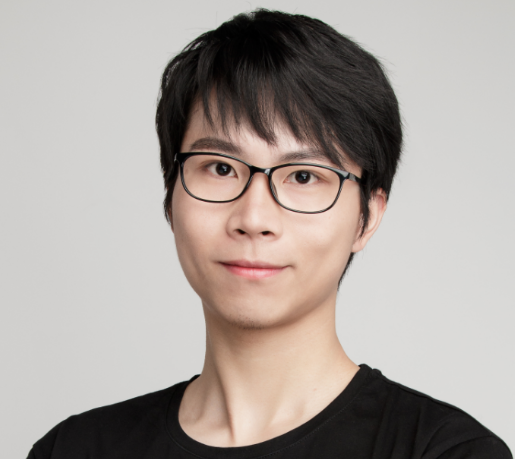 Xiang Li (李翔)合作论文数College of Computer Science, Nankai University1
 Yazhou Yao (姚亚洲)合作论文数School of Computer Science and Engineering, Nanjing University of Science and Technolog;Intelligent Information Processing and System1
 Jason Zhaoxin Fan (范肇心)合作论文数School of Artificial Intelligence, Beihang University1




