The KV cache is a dominant memory bottleneck for LLM inference. While 4-bit KV quantization preserves accuracy, 2-bit often degrades it, especially on long-context reasoning. We close this gap via an algorithm-system co-design for mixed-precision KV caching: Kitty. On the algorithm side, extensive experiments show that Dynamic Channel-wise Precision Boost – which ranks Key-cache channels by sensitivity and keeps only a small fraction at higher precision – maintains near-zero loss in accuracy drop while approaching 2-bit memory. The main challenge is handling dynamic 4-bit channel boosts while keeping the page layout coalesced and the dequantization uniform, with no scattered reads or hard-coded masks. Kitty addresses these issues by decompose each mixed-precision Key page into two tensors with unified 2-bit precision. Based on this, Kitty provides a page-centric KV layout, Triton-compatible page dequantization kernels, and a lightweight runtime pipeline that preserves coalescing and avoids divergence. Across seven tasks and two model families (Qwen3, LLaMA3), Kitty cuts KV memory by nearly 8x with negligible accuracy loss, enabling up to 8x larger batches and 2.1x-4.1x higher throughput under the same memory budget. We release the full implementation of Kitty at https://github.com/Summer-Summer/Kitty.
Policy gradient (PG) methods in reinforcement learning frequently utilize deep neural networks (DNNs) to learn a shared backbone of feature representations used to compute likelihoods in an action selection layer. Numerous studies have been conducted on the convergence and global optima of policy networks, but few have analyzed representational structures of those underlying networks. While training an optimal policy DNN, we observed that under certain constraints, a gentle structure resembling neural collapse, which we refer to as Action Collapse (AC), emerges. This suggests that 1) the state-action activations (i.e. last-layer features) sharing the same optimal actions collapse towards those optimal actions respective mean activations; 2) the variability of activations sharing the same optimal actions converges to zero; 3) the weights of action selection layer and the mean activations collapse to a simplex equiangular tight frame (ETF). Our early work showed those aforementioned constraints to be necessary for these observations. Since the collapsed ETF of optimal policy DNNs maximally separates the pair-wise angles of all actions in the state-action space, we naturally raise a question: can we learn an optimal policy using an ETF structure as a (fixed) target configuration in the action selection layer? Our analytical proof shows that learning activations with a fixed ETF as action selection layer naturally leads to the AC. We thus propose the Action Collapse Policy Gradient (ACPG) method, which accordingly affixes a synthetic ETF as our action selection layer. ACPG induces the policy DNN to produce such an ideal configuration in the action selection layer while remaining optimal. Our experiments across various OpenAI Gym environments demonstrate that our technique can be integrated into any discrete PG methods and lead to favorable reward improvements more quickly and robustly.
Large language models (LLMs) face significant computational and memory challenges, making extremely low-bit quantization crucial for their efficient deployment. In this work, we introduce SDQ-LLM: Sigma-Delta Quantization for 1-bit LLMs of any size, a novel framework that enables extremely low-bit quantization of LLMs while preserving their linguistic reasoning capabilities. A distinctive feature of SDQ-LLM is the continuous adjustability of the Over-Sampling Ratio (OSR), enabling dynamic adaptation to memory or VRAM constraints by selecting fractional OSR (e.g., 2.5x) for an optimal trade-off between model size and accuracy. SDQLLM uses upsampling combined with Sigma-Delta Quantizer to binarize or ternarize LLMs' weights, encoding high-precision parameters into 1-bit or 1.58-bit representations, replacing the multiplication operations within linear layers with addition. This approach significantly enhances inference efficiency under extremely low-bit quantization. To further reduce the loss of quantization precision, we incorporate Hadamard-based weight smoothing prior to quantization, improving the stability and robustness of the weight representations. Furthermore, to fully leverage the continuity of the OSR and reduce precision loss, recognizing the correlation between quantization sensitivity and weight variance, we propose a fine-grained, layer- and linear-wise OSR allocation strategy, MultiOSR. This strategy distributes OSR both across layers and within each layer, based on weight variance and parameter scale. Finally, extensive experiments on OPT and LLaMA model families demonstrate that SDQLLM achieves a more efficient and high-precision performance even under highly aggressive low-OSR settings. Our code is available at https://github.com/Dreamlittlecat/LLM-Quant-Factory.
Six-hit quantization (FP6) can effectively reduce the size of large language models (LLMS) and preserve the model quality consistently across varied applications. However, existing systems do not provide Tensor Core support for FP6 quantization and struggle to achieve practical performance improvements during LLM inference, It is challenging to support FP6 quantization on GPUs due to (1) unfriendly memory access of model weights with non-power-of-two hit-width and (2) high runtime overhead of weight de-quantization. To address these problems, we propose TC-FPx, the first full-stack CPU kernel design scheme with unified Tensor Core support of 6-bit and arbitrary hit-width quantization (5-hit, etc.). We integrate TC-FPx kernel into an existing inference system, providing new end-to-end support (called Quant-LLM) for quantized LLM inference, where better trade-offs between inference cost and model quality are achieved with 6-bit quantization. Experiments show that Quant-LLM enables the inference of LLaMA-70b using only a single GPU, achieving 1.69x-2.65 x higher normalized inference throughput than the FP16 baseline, The source code is publicly available at https://githuLooTIusyd-fsalab/fp6_11m.
In this work, we reveal that the kernel-by-kernel execution scheme in the existing machine learning optimizing compilers is no longer effective in fully utilizing hardware resources provided by the advances of modern GPU architectures. Specifically, such scheme suffers from severe non-computation overhead and off-chip memory traffic, making the optimization efforts from the state-of-the-art compiler techniques greatly attenuated on the newer generations of GPUs. To address this emerging challenge, we propose MonoNN, the first machine learning optimizing compiler that enables a new monolithic design and optimization space for common static neural network (NN) inference tasks on a single GPU. MonoNN can accommodate an entire neural network into a single GPU kernel, drastically reducing non-computation overhead and providing further fine-grained optimization opportunities from the newly formed monolithic optimization space. Most importantly, MonoNN identifies the resource incompatibility issue between various NN operators as the key design bottleneck for creating such a monolithic optimization space. Then MonoNN effectively tackles it by systematically exploring and exploiting the parallelism compensation strategy and resource trade-offs across different types of NN computations, and by proposing a novel schedule-independent group tuning technique to significantly shrink the extremely large tuning space. Finally, MonoNN provides a compiler implementation that incorporates our proposed optimizations and automatically generates highly efficient kernel code. Extensive evaluation on a set of popular production inference tasks demonstrates that MonoNN achieves an average speedup of 2.01x over the state-of-the-art frameworks and compilers. Specifically, MonoNN outperforms TVM, TensorRT, XLA, and AStitch by up to 7.3x, 5.9x, 1.7x and 2.9x in terms of end-to-end inference performance, respectively. MonoNN source code is publicly available at https://github.com/AlibabaResearch/mononn. [GRAPHICS] .
Six-bit quantization (FP6) can effectively reduce the size of large language models (LLMs) and preserve the model quality consistently across varied applications. However, existing systems do not provide Tensor Core support for FP6 quantization and struggle to achieve practical performance improvements during LLM inference. It is challenging to support FP6 quantization on GPUs due to (1) unfriendly memory access of model weights with irregular bit-width and (2) high runtime overhead of weight de-quantization. To address these problems, we propose TC-FPx, the first full-stack GPU kernel design scheme with unified Tensor Core support of float-point weights for various quantization bit-width. We integrate TC-FPx kernel into an existing inference system, providing new end-to-end support (called FP6-LLM) for quantized LLM inference, where better trade-offs between inference cost and model quality are achieved. Experiments show that FP6-LLM enables the inference of LLaMA-70b using only a single GPU, achieving 1.69x-2.65x higher normalized inference throughput than the FP16 baseline. The source code will be publicly available soon.
With the fast growth of parameter size, it becomes increasingly challenging to deploy large generative models as they typically require large GPU memory consumption and massive computation. Unstructured model pruning has been a common approach to reduce both GPU memory footprint and the overall computation while retaining good model accuracy. However, the existing solutions do not provide an efficient support for handling unstructured sparsity on modern GPUs, especially on the highly-structured tensor core hardware. Therefore, we propose Flash-LLM for enabling low-cost and highly efficient large generative model inference with the sophisticated support of unstructured sparsity on high-performance but highly restrictive tensor cores. Based on our key observation that the main bottleneck of generative model inference is the several skinny matrix multiplications for which tensor cores would be significantly under-utilized due to low computational intensity, we propose a general Load-as-Sparse and Compute-as-Dense methodology for unstructured sparse matrix multiplication (SpMM). The basic insight is to address the significant memory bandwidth bottleneck while tolerating redundant computations that are not critical for end-to-end performance on tensor cores. Based on this, we design an effective software framework for tensor core based unstructured SpMM, leveraging on-chip resources for efficient sparse data extraction and computation/memory-access overlapping. Extensive evaluations demonstrate that (1) at SpMM kernel level, Flash-LLM significantly outperforms the state-of-the-art library, i.e., Sputnik and SparTA by an average of 2.9X and 1.5X, respectively.(2) At end-to-end framework level on OPT-30B/66B/175B models, for tokens per GPU-second , Flash-LLM achieves up to 3.8X and 3.6X improvement over DeepSpeed and FasterTransformer, respectively, with significantly lower inference cost.
Growing pattern matching applications are employing finite automata as their basic processing model. These applications match tens to thousands of patterns on a large amount of data, which brings a great challenge to conventional processors. Therefore hardware-based solutions have emerged frequently and achieved high throuphput automata processing. However, existing methods are generally difficult to achieve both processing speed and storage efficiency, and are often too heavy to be integrated into a small chip and have to rely on off-chip DRAMs or other high capacity memories even on some simple data sets, leading to the potential area and power consumption issues. In this paper, we focus on building a more lightweight automata processing engine, hoping to store the whole automata model into on-chip memory and run effectively and independently. We propose LAP, a lightweight automata processing engine. Powered with a novel automata model (A-DFA) and efficient packing algorithms, extremely high storage efficiency compared with traditional DFA is achieved in LAP. Meanwhile, we identify the key parallelization factors in the A-DFA model and then propose a specialized microarchitecture with novel instructions to further accelerate the state transition process. As a result, LAP can obtain more effective trade-off between processing speed and storage efficiency. Evaluation results show that LAP achieves extremely high storage efficiency on simple data sets, exceeding IBM's RegX by 8×, and achieves significant improvements in processing speed ranging from 1.32× to 1.91× compared with previous lightweight hardware implementations. Moreover, LAP has good scalability in hardware architecture. It is easy to build an acceleration system with higher throughput by increasing the number of cores. We prototype a 16-core system into Xilinx ZC702 FPGA and a 64-core system into Xilinx ZCU102 FPGA respectively. The prototype system on ZC702 on average achieves 3.5 GB/s throughput on simple data sets, and the prototype system on ZCU102 can obtain higher throughput and compute density values on part of large datasets in ANMLZoo compared with modern in-memory NFA-based solutions.
This study examines 4-bit quantization methods like GPTQ in large language models (LLMs), highlighting GPTQ's overfitting and limited enhancement in Zero-Shot tasks. While prior works merely focusing on zero-shot measurement, we extend task scope to more generative categories such as code generation and abstractive summarization, in which we found that INT4 quantization can significantly underperform. However, simply shifting to higher precision formats like FP6 has been particularly challenging, thus overlooked, due to poor performance caused by the lack of sophisticated integration and system acceleration strategies on current AI hardware. Our results show that FP6, even with a coarse-grain quantization scheme, performs robustly across various algorithms and tasks, demonstrating its superiority in accuracy and versatility. Notably, with the FP6 quantization, \codestar-15B model performs comparably to its FP16 counterpart in code generation, and for smaller models like the 406M it closely matches their baselines in summarization. Neither can be achieved by INT4. To better accommodate various AI hardware and achieve the best system performance, we propose a novel 4+2 design for FP6 to achieve similar latency to the state-of-the-art INT4 fine-grain quantization. With our design, FP6 can become a promising solution to the current 4-bit quantization methods used in LLMs.
Recently, the recurrent neural network, or its most popular type—the Long Short Term Memory (LSTM) network— has achieved great success in a broad spectrum of real-world application domains, such as autonomous driving, natural language processing, sentiment analysis, and epidemiology. Due to the complex features of the real-world tasks, current LSTM models become increasingly bigger and more complicated for enhancing the learning ability and prediction accuracy. However, through our in-depth characterization on the state-of-the-art general-purpose deep-learning accelerators, we observe that the LSTM training execution grows inefficient in terms of storage, performance, and energy consumption, under an increasing model size. With further algorithmic and architectural analysis, we identify the root cause for large LSTM training inefficiency: massive intermediate variables. To enable a highly-efficient LSTM training solution for the ever-growing model size, we exploit some unique memory-saving and performance improvement opportunities from the LSTM training procedure, and leverage them to propose the first cross-stack training solution, η-LSTM, for large LSTM models. η-LSTM comprises both software-level and hardware-level innovations that effectively lower the memory footprint upper-bound and excessive data movements during large LSTM training, while also drastically improving training performance and energy efficiency. Experimental results on six real-world large LSTM training benchmarks demonstrate that η-LSTM reduces the required memory footprint by an average of 57.5% (up to 75.8%) and brings down the data movements for weight matrices, activation data, and intermediate variables by 40.9%, 32.9%, and 80.0%, respectively. Furthermore, it outperforms the state-of-the-art GPU implementation for LSTM training by an average of 3.99× (up to 5.73×) on performance and 2.75× (up to 4.25) on energy. We hope this work can shed some light on how to design high logic utilization for future NPUs.
Growing applications are employing finite automata as their basic computational model. These applications match tens to thousands of patterns on a large amount of data, which brings great challenges to conventional processors. Hardware-based solutions have achieved high throughputs automata processing. However, they are too heavy to be integrated into small chips. Besides, they have to rely on DRAMs or other high capacity memories to store their underlying automata models. We focus on building a more lightweight automata processor, which can store the whole automata model into SRAMs with limited size and run independently. We propose LAP, a lightweight automata processor. Extremely high storage efficiency is achieved in LAP, leveraging a novel automata model (ADFA) and efficient packing algorithms. Besides, we exploit software-hardware co-design to achieve faster processing speed. We observe that ADFA's traversal algorithm is parallelizable. Thus, we propose novel hardware instructions to parallel the additional memory accesses in ADFA model and hide their access overhead. LAP is organized into a four-stage pipeline and prototyped into Xilinx Artix-7 FPGA at 263 MHz frequency. Evaluations show that LAP achieves extremely high storage efficiency, exceeding IBM's RegX and Micron's AP by 8×. Besides, LAP achieves significant improvements in processing speed ranging from 32% to 91% compared with previous lightweight implementations. As a result, a low-power CPU equipped with five LAP cores can achieve 9.5 Gbps processing throughput matching 400 patterns simultaneously.
Bayesian Neural Networks (BNNs) that possess a property of uncertainty estimation have been increasingly adopted in a wide range of safety-critical AI applications which demand reliable and robust decision making, e.g., self-driving, rescue robots, medical image diagnosis. The training procedure of a probabilistic BNN model involves training an ensemble of sampled DNN models, which induces orders of magnitude larger volume of data movement than training a single DNN model. In this paper, we reveal that the root cause for BNN training inefficiency originates from the massive off-chip data transfer by Gaussian Random Variables (GRVs). To tackle this challenge, we propose a novel design that eliminates all the off-chip data transfer by GRVs through the reversed shifting of Linear Feedback Shift Registers (LFSRs) without incurring any training accuracy loss. To efficiently support our LFSR reversion strategy at the hardware level, we explore the design space of the current DNN accelerators and identify the optimal computation mapping scheme to best accommodate our strategy. By leveraging this finding, we design and prototype the first highly efficient BNN training accelerator, named Shift-BNN, that is low-cost and scalable. Extensive evaluation on five representative BNN models demonstrates that Shift-BNN achieves an average of 4.9x (up to 10.8x) boost in energy efficiency and 1.6x (up to 2.8x) speedup over the baseline DNN training accelerator.
 Shuaiwen Leon Song合作论文数Together AI9
 Zhen Zheng (郑祯)合作论文数Microsoft AI6
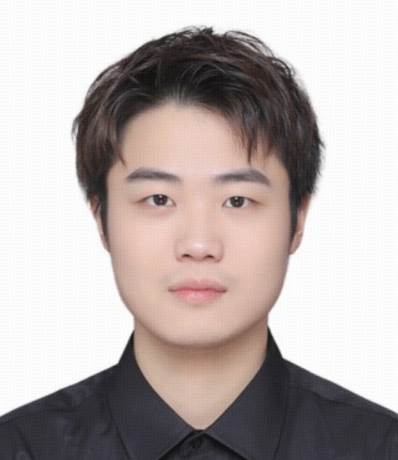 Zhongzhu Zhou合作论文数Together AI5
 Donglin Zhuang合作论文数The University of Sydney5
 Xiaoxia Wu (吴晓霞)合作论文数Microsoft5
 Michael Wyatt合作论文数3Arash Bakhtiari合作论文数3Stephen Youn合作论文数3Shiyang Chen合作论文数Stevens Inst Technol3
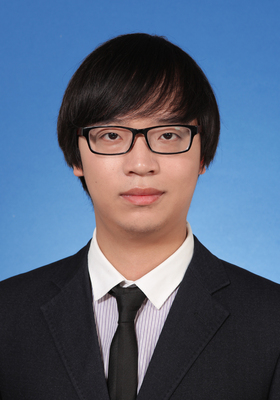 Zhewei Yao合作论文数Snowflake3
 Yuxiong He合作论文数Snowflake3
 Olatunji (Tunji) Ruwase合作论文数Snowflake3Xiafei Qiu合作论文数2
 Xingyao Zhang合作论文数Univ Houston, ECE Dept, ECOMS Lab, Houston, TX 77004 USA2
 Chao Wang (王超)合作论文数School of Computer Science and Technology, University of Science and Technology of China;School of Software Engineering, University of Science and Technology of China2
 Xuehai Zhou (周学海)合作论文数School of Computer Science and Technology, University of Science and Technology of China;School of Software Engineering, University of Science and Technology of China2
 Lei Gong (宫磊)合作论文数School of Computer Science and Technology, University of Science and Technology of China2
 Wei Lin (林伟)合作论文数Alibaba Group2
 Xin Fu合作论文数Efficient Computer Systems Lab, Department of Electrical and Computer Engineering, Cullen College of Engineering, University of Houston2
 Xianglan Chen (陈香兰)合作论文数School of Computer Science and Technology, University of Science and Technology of China,Hefei2
 Ben Athiwaratkun合作论文数AWS AI Labs, Amazon Web Services2
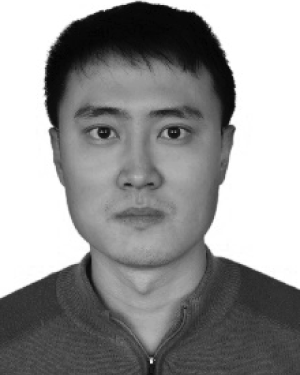 Lening Wang合作论文数1Hao Sun合作论文数1
 Xiujun Zhang合作论文数1
 Michael Bedford Taylor合作论文数University of Washington1
 Junjie Bai合作论文数NVIDIA1
 Qiyu Wan合作论文数University of Houston1
 Reza Yazdani Aminabadi合作论文数Snowflake1
 Yong Li (李勇)合作论文数School of Computer Science and Engineering, Southeast University1
 Yibo Yang合作论文数Image and Video Understanding Lab, King Abdullah University of Science and Technology1Yuchao Li合作论文数Alibaba Group1Ming Zhao (赵明)合作论文数1Limin Xiao (肖立民)合作论文数1
 Xi Li (李曦)合作论文数School of Cyber Science and Technology, University of Science and Technology of China1
 Bernard Ghanem合作论文数Computer, Electrical and Mathematical Sciences and Engineering Division, King Abdullah University of Science and Technology;Center of Excellence for Generative AI, King Abdullah University of Science and Technology;CAMEL-AI.org;Thya Technology1




