Inspired by text prompts in large language models, visual prompts have been explored to enhance the perceptual capabilities of large vision-language models (LVLMs). However, performance tends to saturate under single visual prompt designs, making further prompt engineering increasingly ineffective. To address this limitation, we shift from prompt engineering to prompt retrieval and propose AutoV, a lightweight framework for instance-adaptive visual prompt identification. Given an input image and a textual query, AutoV automatically locates the most suitable visual prompt from a diverse candidate pool. Training such a retrieval framework requires prompt-level supervision, yet prompt quality is inherently ambiguous and difficult to assess reliably, even for humans. To enable automatic supervision, we evaluate visual prompts using a pre-trained LVLM and label them according to their prediction losses. Using the loss-oriented ranking as a robust training signal, AutoV learns to retrieve the query-aware optimal prompt for each instance without manual annotation. Experiments indicate that AutoV enhances the performance of various LVLMs on image understanding, captioning, grounding, and classification tasks. For example, AutoV improves LLaVA-OV by 10.2% on VizWiz and boosts Qwen2.5-VL by 3.8% on MMMU, respectively.
[This corrects the article DOI: 10.3389/fonc.2024.1417862.].
Visual question answer (VQA) grounding, aimed at locating the visual evidence associated with the answers while answering questions, has attracted increasing research interest. To locate the evidence, most existing methods extract attention maps in an unsupervised manner from pretrained VQA models. As only the text-related objective is considered during training, the attention map coarsely depicts the grounding region, resulting in poor interpretability. A straightforward solution for improving grounding accuracy is leveraging pixel-wise masks as strong supervision. However, precise per-pixel annotation is time-consuming and labor-intensive. To address above issues, this paper presents the weakly-supervised grounding for VQA, which learns an end-to-end Dual Visual-Linguistic Interaction (DaVi) network in a unified architecture with various low-cost annotations, such as click-, scribble- and box-level grounding labels. Specifically, to enable the visual mask prediction, DaVi proposes a language-based visual decoder that extends the previous VQA network. Since the visual decoder is guided with weak labels, we also present a Pseudo Grounding Refinement Module (PGRM) to refine the relatively coarse predictions as an additional constraint. Extensive experiments demonstrate that our weakly supervised DaVi significantly improves grounding performance even under the click-level supervision with one pixel annotation. Scribble-level supervision achieves 92% performance at a dramatically reduced annotation cost compared to its fully supervised counterpart. More essentially, weak visual grounding usually boosts the accuracy of text answers despite using inaccurate supervision.
IntroductionColorectal cancer (CRC) is one of the main causes of deaths worldwide. Early detection and diagnosis of its precursor lesion, the polyp, is key to reduce its mortality and to improve procedure efficiency. During the last two decades, several computational methods have been proposed to assist clinicians in detection, segmentation and classification tasks but the lack of a common public validation framework makes it difficult to determine which of them is ready to be deployed in the exploration room.MethodsThis study presents a complete validation framework and we compare several methodologies for each of the polyp characterization tasks.ResultsResults show that the majority of the approaches are able to provide good performance for the detection and segmentation task, but that there is room for improvement regarding polyp classification.DiscussionWhile studied show promising results in the assistance of polyp detection and segmentation tasks, further research should be done in classification task to obtain reliable results to assist the clinicians during the procedure. The presented framework provides a standarized method for evaluating and comparing different approaches, which could facilitate the identification of clinically prepared assisting methods.
Adversarial-based adaptation has dominated the area of domain adaptive detection over the past few years. Despite their general efficacy for various tasks, the learned representations may not capture the intrinsic topological structures of the whole images and thus are vulnerable to distributional shifts especially in real-world applications, such as geometric distortions across imaging devices in medical images. In this case, forcefully matching data distributions across domains cannot ensure precise knowledge transfer and are prone to result in the negative transfer. In this paper, we explore the problem of domain adaptive lesion detection from the perspective of relational reasoning, and propose a Graph-Structured Knowledge Transfer (GraphSKT) framework to perform hierarchical reasoning by modeling both the intra- and inter-domain topological structures. To be specific, we utilize cross-domain correspondence to mine meaningful foreground regions for representing graph nodes and explicitly endow each node with contextual information. Then, the intra- and inter-domain graphs are built on the top of instance-level features to achieve a high-level understanding of the lesion and whole medical image, and transfer the structured knowledge from source to target domains. The contextual and semantic information is propagated through graph nodes methodically, enhancing the expressive power of learned features for the lesion detection tasks. Extensive experiments on two types of challenging datasets demonstrate that the proposed GraphSKT significantly outperforms the state-of-the-art approaches for detection of polyps in colonoscopy images and of mass in mammographic images.
Answer grounding aims to reveal the visual evidence for visual question answering (VQA), which entails highlighting relevant positions in the image when answering questions about images. Previous attempts typically tackle this problem using pretrained object detectors, but without the flexibility for objects not in the predefined vocabulary. However, these black-box methods solely concentrate on the linguistic generation, ignoring the visual interpretability. In this paper, we propose Dual Visual-Linguistic Interaction (DaVI), a novel unified end-to-end framework with the capability for both linguistic answering and visual grounding. DaVI innovatively introduces two visual-linguistic interaction mechanisms: 1) visual-based linguistic encoder that understands questions incorporated with visual features and produces linguistic-oriented evidence for further answer decoding, and 2) linguistic-based visual decoder that focuses visual features on the evidence-related regions for answer grounding. This way, our approach ranked the 1st place in the answer grounding track of 2022 VizWiz Grand Challenge.
Due to the lack of expertise for medical image annotation, the investigation of label-efficient methodology for medical image segmentation becomes a heated topic. Recent progresses focus on the efficient utilization of weak annotations together with few strongly-annotated labels so as to achieve comparable segmentation performance in many unprofessional scenarios. However, these approaches only concentrate on the supervision inconsistency between strongly- and weakly-annotated instances but ignore the instance inconsistency inside the weakly-annotated instances, which inevitably leads to performance degradation. To address this problem, we propose a novel label-efficient hybrid-supervised framework, which considers each weakly-annotated instance individually and learns its weight guided by the gradient direction of the strongly-annotated instances, so that the high-quality prior in the strongly-annotated instances is better exploited and the weakly-annotated instances are depicted more precisely. Specially, our designed dynamic instance indicator (DII) realizes the above objectives, and is adapted to our dynamic co-regularization (DCR) framework further to alleviate the erroneous accumulation from distortions of weak annotations. Extensive experiments on two hybrid-supervised medical segmentation datasets demonstrate that with only 10% strong labels, the proposed framework can leverage the weak labels efficiently and achieve competitive performance against the 100% strong-label supervised scenario.
Medical image classification has been widely adopted in medical image analysis. However, due to the difficulty of collecting and labeling data in the medical area, medical image datasets are usually highly-imbalanced. To address this problem, previous works utilized class samples as prior for re-weighting or re-sampling but the feature representation is usually still not discriminative enough. In this paper, we adopt the contrastive learning to tackle the long-tailed medical imbalance problem. Specifically, we first propose the category prototype and adversarial proto-instance to generate representative contrastive pairs. Then, the prototype recalibration strategy is proposed to address the highly imbalanced data distribution. Finally, a unified proto-loss is designed to train our framework. The overall framework, namely as Pro totype-aware Co ntrastive learning ( ProCo ), is unified as a single-stage pipeline in an end-to-end manner to alleviate the imbalanced problem in medical image classification, which is also a distinct progress than existing works as they follow the traditional two-stage pipeline. Extensive experiments on two highly-imbalanced medical image classification datasets demonstrate that our method outperforms the existing state-of-the-art methods by a large margin. Our source codes are available at https://github.com/skyz215/ProCo .
Due to the lack of expertise for medical image annotation, the investigation of label-efficient methodology for medical image segmentation becomes a heated topic. Recent progresses focus on the efficient utilization of weak annotations together with few strongly-annotated labels so as to achieve comparable segmentation performance in many unprofessional scenarios. However, these approaches only concentrate on the supervision inconsistency between strongly- and weakly-annotated instances but ignore the instance inconsistency inside the weakly-annotated instances, which inevitably leads to performance degradation. To address this problem, we propose a novel label-efficient hybrid-supervised framework, which considers each weakly-annotated instance individually and learns its weight guided by the gradient direction of the strongly-annotated instances, so that the high-quality prior in the strongly-annotated instances is better exploited and the weakly-annotated instances are depicted more precisely. Specially, our designed dynamic instance indicator (DII) realizes the above objectives, and is adapted to our dynamic co-regularization (DCR) framework further to alleviate the erroneous accumulation from distortions of weak annotations. Extensive experiments on two hybrid-supervised medical segmentation datasets demonstrate that with only 10% strong labels, the proposed framework can leverage the weak labels efficiently and achieve competitive performance against the 100% strong-label supervised scenario.
The number of international benchmarking competitions is steadily increasing in various fields of machine learning (ML) research and practice. So far, however, little is known about the common practice as well as bottlenecks faced by the community in tackling the research questions posed. To shed light on the status quo of algorithm development in the specific field of biomedical imaging analysis, we designed an international survey that was issued to all participants of challenges conducted in conjunction with the IEEE ISBI 2021 and MICCAI 2021 conferences (80 competitions in total). The survey covered participants' expertise and working environments, their chosen strategies, as well as algorithm characteristics. A median of 72% challenge participants took part in the survey. According to our results, knowledge exchange was the primary incentive (70%) for participation, while the reception of prize money played only a minor role (16%). While a median of 80 working hours was spent on method development, a large portion of participants stated that they did not have enough time for method development (32%). 25% perceived the infrastructure to be a bottleneck. Overall, 94% of all solutions were deep learning-based. Of these, 84% were based on standard architectures. 43% of the respondents reported that the data samples (e.g., images) were too large to be processed at once. This was most commonly addressed by patch-based training (69%), downsampling (37%), and solving 3D analysis tasks as a series of 2D tasks. K-fold cross-validation on the training set was performed by only 37% of the participants and only 50% of the participants performed ensembling based on multiple identical models (61%) or heterogeneous models (39%). 48% of the respondents applied postprocessing steps.
Medical image classification has been widely adopted in medical image analysis. However, due to the difficulty of collecting and labeling data in the medical area, medical image datasets are usually highly-imbalanced. To address this problem, previous works utilized class samples as prior for re-weighting or re-sampling but the feature representation is usually still not discriminative enough. In this paper, we adopt the contrastive learning to tackle the long-tailed medical imbalance problem. Specifically, we first propose the category prototype and adversarial proto-instance to generate representative contrastive pairs. Then, the prototype recalibration strategy is proposed to address the highly imbalanced data distribution. Finally, a unified proto-loss is designed to train our framework. The overall framework, namely as Prototype-aware Contrastive learning (ProCo), is unified as a single-stage pipeline in an end-to-end manner to alleviate the imbalanced problem in medical image classification, which is also a distinct progress than existing works as they follow the traditional two-stage pipeline. Extensive experiments on two highly-imbalanced medical image classification datasets demonstrate that our method outperforms the existing state-of-the-art methods by a large margin.
Semantic segmentation with limited annotations, such as weakly supervised semantic segmentation (WSSS) and semi-supervised semantic segmentation (SSSS), is a challenging task that has attracted much attention recently. Most leading WSSS methods employ a sophisticated multi-stage training strategy to estimate pseudo-labels as precise as possible, but they suffer from high model complexity. In contrast, there exists another research line that trains a single network with image-level labels in one training cycle. However, such a single-stage strategy often performs poorly because of the compounding effect caused by inaccurate pseudo-label estimation. To address this issue, this paper presents a Self-supervised Low-Rank Network (SLRNet) for single-stage WSSS and SSSS. The SLRNet uses cross-view self-supervision, that is, it simultaneously predicts several complementary attentive LR representations from different views of an image to learn precise pseudo-labels. Specifically, we reformulate the LR representation learning as a collective matrix factorization problem and optimize it jointly with the network learning in an end-to-end manner. The resulting LR representation deprecates noisy information while capturing stable semantics across different views, making it robust to the input variations, thereby reducing overfitting to self-supervision errors. The SLRNet can provide a unified single-stage framework for various label-efficient semantic segmentation settings: (1) WSSS with image-level labeled data, (2) SSSS with a few pixel-level labeled data, and (3) SSSS with a few pixel-level labeled data and many image-level labeled data. Extensive experiments on the Pascal VOC 2012, COCO, and L2ID datasets demonstrate that our SLRNet outperforms both state-of-the-art WSSS and SSSS methods with a variety of different settings, proving its good generalizability and efficacy.
In recent years, as the Transformer has performed increasingly well on NLP tasks, many researchers have ported the Transformer structure to vision tasks ,bridging the gap between NLP and CV tasks. In this work, we evaluate some deep learning network for the detection track. Because the ground truth is mask, so we can try both the current detection and segmentation method. We select the DETR as our baseline through experiment. Besides, we modify the train strategy to fit the dataset.
Animated Graphics Interchange Formats (GIFS) are low-bandwidth short image sequences that can continuously display multiple frames without sound. In this paper, we focus on a new content classification task that is important in real-world applications. A key problem for this task is that some frames in an animated GF are irrelevant to the label, which may drastically reduce the classification performance. To this end, we first collect a new dataset of Web animated GIFS (WGF) that includes some typical samples in which only several key-frames are relevant to the ground truth. Then, an attention-based method is designed to learn to produce importance scores of the frames, and subsequently multi-frame predicted scores are merged to obtain the final prediction. Besides, an additional entropy loss is also used to sharpen the attention results to further emphasize the key-frames. Experimental results on WGF show that the proposed approach significantly outperforms various baseline methods.
Crowd counting on the drone platform is an interesting topic in computer vision, which brings new challenges such as small object inference, background clutter and wide viewpoint. However, there are few algorithms focusing on crowd counting on the drone-captured data due to the lack of comprehensive datasets. To this end, we collect a large-scale dataset and organize the Vision Meets Drone Crowd Counting Challenge (VisDrone-CC2020) in conjunction with the 16th European Conference on Computer Vision (ECCV 2020) to promote the developments in the related fields. The collected dataset is formed by 3, 360 images, including 2, 460 images for training, and 900 images for testing. Specifically, we manually annotate persons with points in each video frame. There are 14 algorithms from 15 institutes submitted to the VisDrone-CC2020 Challenge. We provide a detailed analysis of the evaluation results and conclude the challenge. More information can be found at the website: http://www.aiskyeye.com/ .
The Vision Meets Drone (VisDrone2020) Multiple Object Tracking (MOT) is the third annual UAV MOT tracking evaluation activity organized by the VisDrone team, in conjunction with European Conference on Computer Vision (ECCV 2020). The VisDrone-MOT2020 consists of 79 challenging video sequences, including 56 videos ( ∼ 24K frames) for training, 7 videos ( ∼ 3K frames) for validation and 17 videos ( ∼ 6K frames) for evaluation. All frames in these sequences are manually annotated with high-quality bounding boxes. Results of 12 participating MOT algorithms are presented and analyzed in detail. The challenging results, video sequences as well as the evaluation toolkit are made available at http://aiskyeye.com/ . By holding VisDrone-MOT2020 challenge, we hope to facilitate future research and applications of MOT algorithms on drone videos.
The Vision Meets Drone Object Detection in Image Challenge (VisDrone-DET 2020) is the third annual object detector benchmarking activity. Compared with the previous VisDrone-DET 2018 and VisDrone-DET 2019 challenges, many submitted object detectors exceed the recent state-of-the-art detectors. Based on the selected 29 robust detection methods, we discuss the experimental results comprehensively, which shows the effectiveness of ensemble learning and data augmentation in drone captured object detection. The full challenge results are publicly available at the website http://aiskyeye.com/leaderboard/ .
Crowding counting research evolves quickly by the lever-age of development in deep learning. Many researchers put their efforts into crowd counting tasks and have achieved many significant improvements. However, current datasets still barely satisfy this evolution and high quality evaluation data is urgent. Motivated by high quality and quantity study in crowding counting, we collect a drone-captured dataset formed by 5,468 images(images in RGB and thermal appear in pairs and 2,734 respectively). There are 1,807 pairs of images for training, and 927 pairs for testing. We manually annotate persons with points in each frame. Based on this dataset, we organized the Vision Meets Drone Crowd Counting Challenge(Visdrone-CC2021) in conjunction with the International Conference on Computer Vision (ICCV 2021). Our challenge attracts many researchers to join, which pave the road of speed up the milestone in crowding counting. To summarize the competition, we select the most remarkable algorithms from participants' sub-missions and provide a detailed analysis of the evaluation results. More information can be found at the website: http://www.aiskyeye.com/.
Purpose Quantification of body tissue composition is important for research and clinical purposes, given the association between the presence and severity of several disease conditions, such as the incidence of cardiovascular and metabolic disorders, survival after chemotherapy, etc., with the quantity and quality of body tissue composition. In this work, we aim to automatically segment four key body tissues of interest, namely subcutaneous adipose tissue, visceral adipose tissue, skeletal muscle, and skeletal structures from body‐torso‐wide low‐dose computed tomography (CT) images. Method Based on the idea of residual Encoder–Decoder architecture, a novel neural network design named ABCNet is proposed. The proposed system makes full use of multiscale features from four resolution levels to improve the segmentation accuracy. This network is built on a uniform convolutional unit and its derived units, which makes the ABCNet easy to implement. Several parameter compression methods, including Bottleneck, linear increasing feature maps in Dense Blocks, and memory‐efficient techniques, are employed to lighten the network while making it deeper. The strategy of dynamic soft Dice loss is introduced to optimize the network in coarse‐to‐fine tuning. The proposed segmentation algorithm is accurate, robust, and very efficient in terms of both time and memory. Results A dataset composed of 38 low‐dose unenhanced CT images, with 25 male and 13 female subjects in the age range 31–83 yr and ranging from normal to overweight to obese, is utilized to evaluate ABCNet. We compare four state‐of‐the‐art methods including DeepMedic, 3D U‐Net, V‐Net, Dense V‐Net, against ABCNet on this dataset. We employ a shuffle‐split fivefold cross‐validation strategy: In each experimental group, 18, 5, and 15 CT images are randomly selected out of 38 CT image sets for training, validation, and testing, respectively. The commonly used evaluation metrics — precision, recall, and F1‐score (or Dice) — are employed to measure the segmentation quality. The results show that ABCNet achieves superior performance in accuracy of segmenting body tissues from body‐torso‐wide low‐dose CT images compared to other state‐of‐the‐art methods, reaching 92–98% in common accuracy metrics such as F1‐score. ABCNet is also time‐efficient and memory‐efficient. It costs about 18 h to train and an average of 12 sec to segment four tissue components from a body‐torso‐wide CT image, on an ordinary desktop with a single ordinary GPU. Conclusions Motivated by applications in body tissue composition quantification on large population groups, our goal in this paper was to create an efficient and accurate body tissue segmentation method for use on body‐torso‐wide CT images. The proposed ABCNet achieves peak performance in both accuracy and efficiency that seems hard to improve any more. The experiments performed demonstrate that ABCNet can be run on an ordinary desktop with a single ordinary GPU, with practical times for both training and testing, and achieves superior accuracy compared to other state‐of‐the‐art segmentation methods for the task of body tissue composition analysis from low‐dose CT images.
 Pengfei Zhu (朱鹏飞)合作论文数Lab of Machine Learning and Data Mining, School of Artificial Intelligence, College of Intelligence and Computing, Tianjin University9
 Cheng Bian (边成)合作论文数Bytedance7
 Qinghua Hu (胡清华)合作论文数School of Artificial Intelligence, College of Intelligence and Computing, Tianjin University6
 Yanzhan Yang合作论文数4Xiaozhou Shi合作论文数3
 Adrian Krenzer合作论文数Internal Medicine II, University Hospital Würzburg3Yuehan Yao合作论文数3
 Heng Fan (樊恒)合作论文数Department of Computer Science and Engineering, College of Engineering, University of North Texas3
 Adrian Galdran合作论文数Universitat Pompeu Fabra;Laboratoire d'imagerie, de vision et d'intelligence artificielle3
 Bernal Jorge合作论文数3
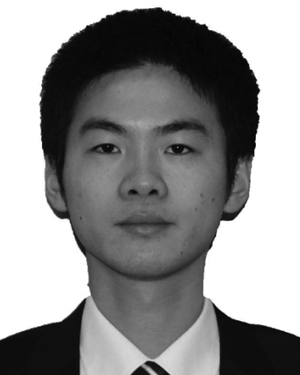 Zhipeng Luo合作论文数DeepBlue Technology (Shanghai) Company, Ltd;Shenyan Technology (Beijing) Co.Ltd3Bin Dong合作论文数MEGVII Technology3
 Mubarak Shah合作论文数Center for Research in Computer Vision, University of Central Florida;Department of Computer Science, College of Engineering and Computer Science, University of Central Florida3
 Dawei Du合作论文数ByteDance, Inc.3
 Longyin Wen合作论文数ByteDance3
 Haibin Ling (凌海滨)合作论文数Westlake Intelligent Computing and Application Lab, Department of Artificial Intelligence, School of Engineering, Westlake University3Zhenyu Xu (徐振宇)合作论文数深兰科技3
 ZhichengZhang合作论文数JancsiLab2
 Zhicheng Zhang (张志诚)合作论文数2
 Zhao Jiexing合作论文数2Amine Yamlahi合作论文数2Sai Wang合作论文数2Yael Tudela合作论文数2Kerr Fitzgerald合作论文数University of Central Lancashire2
 Guanlin Chen合作论文数2Binyu Zhang合作论文数Beijing University of Posts and Telecommunications2
 Dingkang Liang (梁定康)合作论文数Huazhong University of Science and Technology2
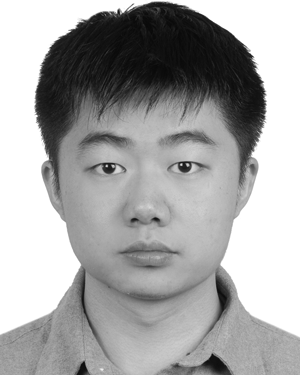 Wei Xu合作论文数Chongqing Univ Posts & Telecommun, Sch Comp Sci & Technol, Chongqing 400065, Peoples R China2Daniel Stadler合作论文数Vision and Fusion Lab Karlsruhe Institute of Technology2Ting Sun (孙婷)合作论文数2
 Yixuan Yuan (袁奕萱)合作论文数Department of Electronic Engineering, The Chinese University of Hong Kong2
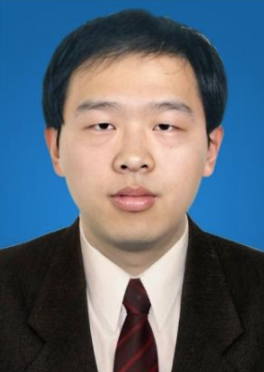 Dingwen Zhang (张鼎文)合作论文数School of Automation, Northwestern Polytechnical University2
 Zhiwei Wei合作论文数Beijing University of Posts and Telecommunications, Beijing Univ. of Posts and Telecom.2
 Yu Wang (王煜)合作论文数College of Intelligence and Computing, Tianjin University;Tianjin Key Laboratory of Machine Learning, School of Artificial Intelligence, Tianjin University;School of Computer Science and Technology, Tianjin University2
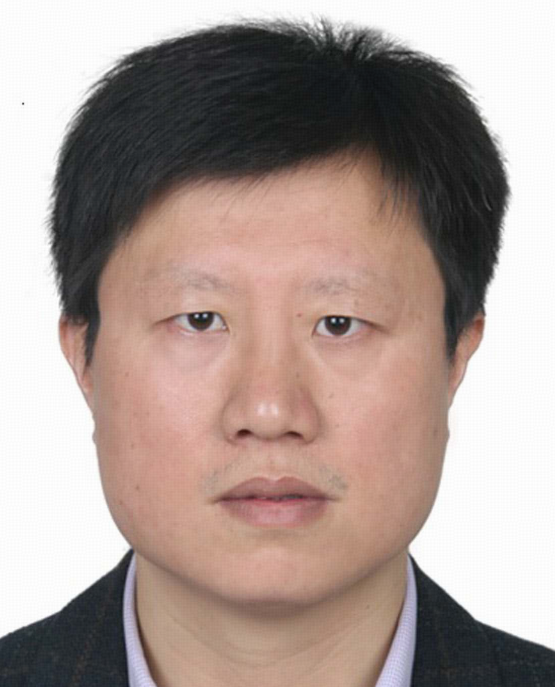 Junwei Han (韩军伟)合作论文数School of Automation, Northwestern Polytechnical University2
 Yanyun Zhao (赵衍运)合作论文数School of Artificial Intelligence, Beijing University of Posts and Telecommunications2
 Hongyu Zhou合作论文数Department of Computer Science, The University of Hong Kong2
 Zhiguo Cao (曹治国)合作论文数School of Artificial Intelligence and Automation, Huazhong University of Science and Technology2
 Bogdan J. Matuszewski合作论文数university of central lancashire2
 Xiang Bai (白翔)合作论文数School of Artificial Intelligence and Automation, Huazhong University of Science and Technology;School of Software Engineering, Huazhong University of Science and Technology2
 Lars Sommer合作论文数Fraunhofer IOSB2
 Arne Schumann合作论文数Video Exploitation Systems Department, Fraunhofer Institute of Optronics, System Technologies and Image Exploitation2
 Aymeric Histace合作论文数ETIS UMR CNRS 8051, ENSEA-University of Cergy-Pontoise2Jiexiang Wang (王杰祥)合作论文数厦门大学2
 Chengxin Liu合作论文数Korea Advanced Institute of Science and Technology1
 Changlin Li合作论文数Department of Urology, Stanford University1Mingyu Liu合作论文数1Biao Cheng合作论文数1Ping Zhu合作论文数1




