The year 2025 saw an accelerated artificial intelligence (AI) adoption in every foreseeable and unforeseeable facet of human life and profession. The next year will see increased pervasive adoption of physical AI.
The year 2024 was a prolific year for computer science and engineering standards activity: the IEEE Computer Society had more than 40 new standards solidified and approved, and another 75+ project authorization requests surfaced.
The IEEE Computer Society, along with the IEEE Standards Association and IEEE Reliability Society, is at the forefront of global standardization initiatives in reliable technologies, including predictive maintenance, as illustrated by IEEE P2851.1 and IEEE 1856-2017.
The past year was marked by an accelerated artificial intelligence (AI) megatrend, fueling three other megatrends marking the future to come: health care, robotics, and space.
At the intersection of the physical and digital worlds, the metaverse is driving a new technological revolution across industrial applications, entertainment and gaming, transportation, and numerous other sectors.
Silicon Lifecycle Management (SLM) has emerged as a strategic solution to address the challenges on meeting increasing silicon production quality and in-field dependability requirements. In this Innovation Practices track, we invited industry experts to discuss the advances in silicon lifecycle reliability, safety and security domains, respectively.
Semiconductor design, manufacturing, and system deployment are being challenged on many fronts owing to technology scaling, process variability, device aging effects, ever increasing performance expectations, and the continued reduction in time with respect to volume. Data centers and applications have stringent reliability, availability, and serviceability (RAS) requirements straining under the massive scale of compute today. Silent data corruption (SDC) has become a problem for all semiconductor suppliers in large-scale compute. Automotive OEMs (original equipment manufacturers) are accelerating adoption of advanced process nodes to address the compute required for fully autonomous transportation while still meeting the stringent functional safety (FuSa) requirements. In this paper, we describe the challenges, potential causes, and mitigation techniques to address modern RAS requirements including SDC. Silicon Lifecycle Management (SLM) will be explained which involves the insertion of in-chip monitors, Electronic Design Automation (EDA) tools, and data analytics solutions on the cloud, edge and embedded in the SoC. SLM monitors, collects, and stores device data throughout a system's life and it provides insights through purpose-built analytics for production data through the mission mode of operation.
Engaging professionals from all areas of computing, the IEEE Computer Society sets the standard for education and engagement that fuels global technological advancement.Through conferences, publications, and programs, IEEE CS empowers, guides, and shapes the future of its members, and the greater industry, enabling new opportunities to better serve our world.
As the 2024 President of the IEEE Computer Society, Jyotika Athavale’s passion for diversity, equity, and inclusion and inspiration for students and young professionals is evident in the countless initiatives that she spearheads across the global engineering community.
IEEE Computer Society President, Jyotika Athavale, kicks off the New Year with an overview of the Society’s priorities, and encourages members to make connections by engaging with the Society’s many activities and offerings.
Digital twins provide living digital models of physical systems that enable data-driven analysis and application of artificial intelligence to better manage selective aspects of the data center and drive efficiency for sustainability.
The widespread use of artificial intelligence (AI)-based systems has raised several concerns about their deployment in safety-critical systems. Industry standards, such as ISO26262 for automotive, require detecting hardware faults during the mission of the device. Similarly, new standards are being released concerning the functional safety of AI systems (e.g., ISO/IEC CD TR 5469). Hardware solutions have been proposed for the infield testing of the hardware executing AI applications; however, when used in applications such as Convolutional Neural Networks (CNNs) in image processing tasks, their usage may increase the hardware cost and affect the application performances. In this paper, for the very first time, a methodology to develop high-quality test images, to be interleaved with the normal inference process of the CNN application is proposed. An Image Test Library (ITL) is developed targeting the on-line test of GPU functional units. The proposed approach does not require changing the actual CNN (thus incurring in costly memory loading operations) since it is able to exploit the actual CNN structure. Experimental results show that a 6-image ITL is able to achieve about 95% of stuck-at test coverage on the floating-point multipliers in a GPU. The obtained ITL requires a very low test application time, as well as a very low memory space for storing the test images and the golden test responses.
The Functional Safety Standards Committee (FSSC) turned one year old. This article describes the FSSC results both in terms of sponsorship of IEEE Computer Society safety-related standards (for example, IEEE P2851) and of nurturing new initiatives.
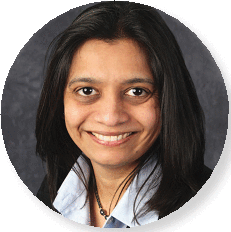 Nita Patel合作论文数8
 Riccardo Mariani合作论文数YOGITECH SpA8
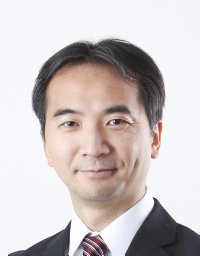 Hironori Washizaki合作论文数Waseda University7
 Grace Lewis合作论文数Software Engineering Institute7William Gropp合作论文数6
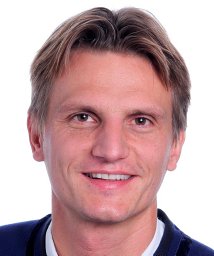 Michael Paulitsch合作论文数EADS Innovation Works, Munich, Germany6Melissa Russell合作论文数5
 Leila De Floriani合作论文数Department of Geographical Sciences, College of Behavioral & Social Sciences, University of Maryland;Center for Automation Research, Institute for Advanced Computer Studies, University of Maryland5
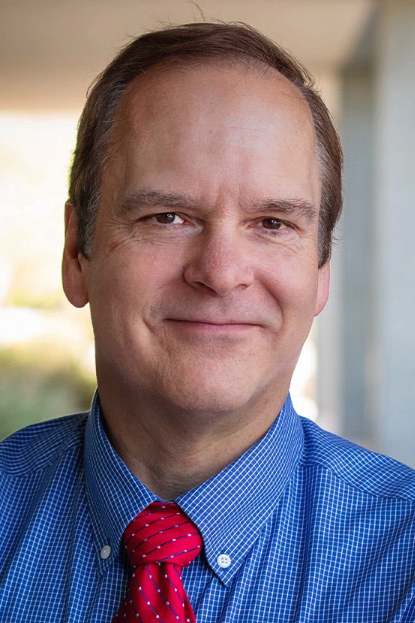 David Ebert合作论文数Department of Electrical & Computer Engineering, College of Engineering, University of Arizona5
 Andrea Baldovin合作论文数University of Padua5Christina Schober合作论文数4André Oboler合作论文数4
 Carolyn Mcgregor合作论文数4
 Cecilia Metra合作论文数Dipartimento di Ingegneria dell'Energia Elettrica e dell'Informazione "Guglielmo Marconi", Università di Bologna4Saeid Past合作论文数3Eddie Past合作论文数3Gina Tang合作论文数3J Rpi合作论文数3
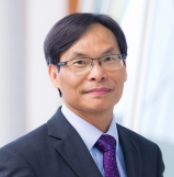 Sam Tak Wu Kwong (鄺得互)合作论文数School of Graduate Studies, Lingnan University;Division of Artificial Intelligence, Lingnan University3
 Tom Gedeon合作论文数School of Computing, College of Engineering and Computer Science, The Australian National University;Curtin University;University of ÓBuda3
 Forrest Shull合作论文数Office of the Under Secretary of Defense for Research and Engineering3
 Dejan Milojicic合作论文数Hewlett Packard Labs, Hewlett Packard Enterprise3
 Terry Benzel合作论文数Networking Cybersecurity Research Division, Information Sciences Institute, University of Southern California3
 Mike Hinchey合作论文数Lero Irish Software Engn Res Ctr, Univ Limerick3Enrique Herrera‐Viedma合作论文数2Michelle Tubb合作论文数2Anne Kelly合作论文数2Eric Berkowitz合作论文数2Sumit Kacker合作论文数2Saifur Rahman合作论文数2Silvia Ceballos合作论文数2
 Ralf Graefe合作论文数2Shixia Liu合作论文数2
 Nils Aschenbruck合作论文数Universität Osnabrück
Institut für Informatik2Joaquim Armando Pires Jorge合作论文数Instituto Superior Tecnico
Departamento de Engenharia Informatica2
Nils Aschenbruck合作论文数Universität Osnabrück
Institut für Informatik2Joaquim Armando Pires Jorge合作论文数Instituto Superior Tecnico
Departamento de Engenharia Informatica2 Rick Kazman合作论文数Department of Information Technology Management, Shidler College of Business, University of Hawaii2
 Daniel S. Katz合作论文数University of Illinois Urbana-Champaign, University of Illinois Urbana-Champaign;School of Information Sciences, University of Illinois Urbana-Champaign2James C. Matthews合作论文数Department of Animal and Food Sciences, University of Kentucky2
 Saurabh Bagchi合作论文数School of Electrical and Computer Engineering, Purdue University;Department of Computer Science, Purdue University;Dependable Computing Systems Laboratory, Purdue University;KeyByte LLC2Rafael Rosales合作论文数University of Erlangen-Nuremberg2
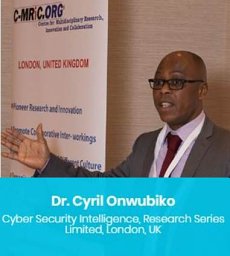 Cyril Onwubiko合作论文数Faculty of Computing, Information Systems and Mathematics, Kingston University2Matthias Maiterth合作论文数1David Koehler合作论文数1Susan Kathy合作论文数1Sergio Benedetto合作论文数1Mary Randall合作论文数1Bruno Meyer合作论文数1Andrea Matteucci合作论文数1
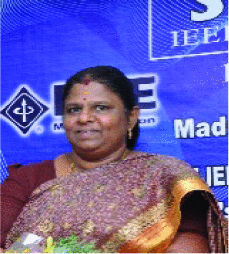 Ramalatha Marimuthu合作论文数1




