We report a measurement of the ratio of the bottom quark production cross section in antiproton-proton collisions at 630 GeV to 1800 GeV using bottom quarks with transverse momenta greater than 10.75 GeV identified through their semileptonic decays and long lifetimes. The measured ratio sigma(630)/sigma(1800) = 0.171 +/- .024 +/- .012 is in good agreement with next-to-leading order (NLO) quantum chromodynamics (QCD).
We present the first measurement of associated direct photon + muon production in hadronic collisions, from a sample of 1.8 TeV pp collisions recorded with the Collider Detector at Fermilab.Quantum chromodynamics (QCD) predicts that these events are primarily from the Compton scattering process cg → cγ, with the final state charm quark producing a muon.Hence this measurement is sensitive to the charm quark content of the proton.The measured cross section of 29±9 pb is compared to a leadingorder QCD parton shower model as well as a next-to-leading-order QCD calculation.
We report a measurement of the fraction of dijet events with a rapidity gap between jets produced by color-singlet exchange in p¯p collisions at s=630GeV at the Fermilab Tevatron. In events with two jets of transverse energy ETjet>8GeV, pseudorapidity in the range 1.8<|ηjet|<3.5 and η1η2<0, the color-singlet exchange fraction is found to be R=[2.7±0.7(stat)±0.6(syst)]%. Comparisons are made with results obtained at s=1800GeV and with theoretical expectations.Received 17 August 1998DOI:https://doi.org/10.1103/PhysRevLett.81.5278©1998 American Physical Society
We present the first general measurements (invariant-mass, transverse-energy, and angular distributions) of the process, ¯p→pγ+2 jets+X, using data collected by the CDF at Fermilab. We compare the data with predictions from a tree-level QCD calculation and the PYTHIA shower Monte Carlo program. Our data sample is particularly sensitive to contributions from initial- and final-state radiation of photons and jets. Using the PYTHIA Monte Carlo program, we contrast the kinematical distributions for direct photon production with those for initial- and final-state photon radiation (bremsstrahlung). Based on the angular distributions, we find that our data favor a mixture of bremsstrahlung and direct photon production, as predicted, over either process alone.Received 24 April 1997DOI:https://doi.org/10.1103/PhysRevD.57.67©1998 American Physical Society
We present the first general measurements (invariant-mass, transverse-energy, and angular distributions) of the process, (p) over bar p-->gamma+2 jets + X, using data collected by the CDF at Fermilab. We compare the data with predictions from a tree-level QCD calculation and the PYTHIA shower Monte Carlo program. Our data sample is particularly sensitive to contributions from initial-and final-state radiation of photons and jets. Using the PYTHIA Monte Carlo program, we contrast the kinematical distributions for direct photon production with those for initial-and final-state photon radiation (bremsstrahlung). Based on the angular distributions, we find that our data favor a mixture of bremsstrahlung and direct photon production, as predicted, over either process alone. [S0556-2821(97)01623-8].
We present measurements of correlated b¯b cross sections, μ−μ correlations, the average B0¯B0 mixing parameter ¯χ, and a limit on the CP-violating parameter εB. For these measurements, we use muon pairs from b¯b double semileptonic decays. The data used in this analysis were taken with the Collider Detector at Fermilab and represent an integrated luminosity of 17.4±0.6 pb−1. The results concerning b¯b production correlations are compared to predictions of next-to-leading order QCD computations.Received 12 August 1996DOI:https://doi.org/10.1103/PhysRevD.55.2546©1997 American Physical Society
We present a study of $J/\ensuremath{\psi}$ and $\ensuremath{\psi}(2S)$ production in $p\overline{p}$ collisions, at $\sqrt{s}\phantom{\rule{0ex}{0ex}}=\phantom{\rule{0ex}{0ex}}1.8\mathrm{TeV}$ with the CDF detector at Fermilab. The $J/\ensuremath{\psi}$ and $\ensuremath{\psi}(2S)$ mesons are reconstructed using their ${\ensuremath{\mu}}^{+}{\ensuremath{\mu}}^{\ensuremath{-}}$ decay modes. We have measured the inclusive production cross section for both mesons as a function of their transverse momentum in the central region, $|\ensuremath{\eta}|l0.6$. We also measure the fraction of these events originating from $b$ hadrons. We thus extract individual cross sections for $J/\ensuremath{\psi}$ and $\ensuremath{\psi}(2S)$ mesons from $b$-quark decays and prompt production. We find a large excess (approximately a factor of 50) of direct $\ensuremath{\psi}(2S)$ production compared with predictions from the color singlet model.
We present the results of a search for third generation leptoquark (LQ) pairs in $110\ifmmode\pm\else\textpm\fi{}8{\mathrm{pb}}^{\ensuremath{-}1}$of $\overline{p}p$ collisions at $\sqrt{s}\phantom{\rule{0ex}{0ex}}=\phantom{\rule{0ex}{0ex}}1.8\mathrm{TeV}$ recorded by the Collider Detector at Fermilab. We assume third generation leptoquarks decay to a $\ensuremath{\tau}$ lepton and a $b$ quark with branching ratio $\ensuremath{\beta}$. We observe one candidate event, consistent with standard model background expectations. We place upper limits on $\ensuremath{\sigma}(\overline{p}p\ensuremath{\rightarrow}\mathrm{LQ}\overline{\mathrm{LQ}})\ifmmode \dot{}\else \.{}\fi{}{\ensuremath{\beta}}^{2}$ as a function of the leptoquark mass ${M}_{\mathrm{LQ}}$. We exclude at 95% confidence level scalar leptoquarks with ${M}_{\mathrm{LQ}}<99\mathrm{GeV}{/c}^{2}$, gauge vector leptoquarks with ${M}_{\mathrm{LQ}}<225\mathrm{GeV}{/c}^{2}$, and nongauge vector leptoquarks with ${M}_{\mathrm{LQ}}<170\mathrm{GeV}{/c}^{2}$ for $\ensuremath{\beta}\phantom{\rule{0ex}{0ex}}=\phantom{\rule{0ex}{0ex}}1$.
A strong signal for double parton scattering (DP) is observed in a $16\mathrm{pb}{}^{\ensuremath{-}1}$ sample of $\overline{p}p\ensuremath{\rightarrow}\ensuremath{\gamma}+3\mathrm{jets}+X$ data from the CDF experiment at the Fermilab Tevatron. The process-independent DP parameter, ${\ensuremath{\sigma}}_{\mathrm{eff}}$, is obtained without reference to theoretical calculations by comparing observed DP events to events with hard scatterings at separate $\overline{p}p$ collisions. The result, ${\ensuremath{\sigma}}_{\mathrm{eff}}\phantom{\rule{0ex}{0ex}}=\phantom{\rule{0ex}{0ex}}(14.5\ifmmode\pm\else\textpm\fi{}{1.7}_{\ensuremath{-}2.3}^{+1.7})\mathrm{mb}$, represents a significant improvement over previous measurements. For the first time, the Feynman $x$ dependence of the ${\ensuremath{\sigma}}_{\mathrm{eff}}$ parameter is investigated, and no dependence is seen.
We present a study of J/ψ and ψ(2S) production in p¯p collisions, at √s=1.8TeV with the CDF detector at Fermilab. The J/ψ and ψ(2S) mesons are reconstructed using their μ+μ− decay modes. We have measured the inclusive production cross section for both mesons as a function of their transverse momentum in the central region, |η|<0.6. We also measure the fraction of these events originating from b hadrons. We thus extract individual cross sections for J/ψ and ψ(2S) mesons from b-quark decays and prompt production. We find a large excess (approximately a factor of 50) of direct ψ(2S) production compared with predictions from the color singlet model.Received 3 February 1997DOI:https://doi.org/10.1103/PhysRevLett.79.572©1997 American Physical Society
We present a search for dilepton events from $t\overline{t}$ production with one electron or muon and one hadronically decaying $\ensuremath{\tau}$ lepton from the decay $t\overline{t}\ensuremath{\rightarrow}(\ensuremath{\ell}{\ensuremath{\nu}}_{\ensuremath{\ell}})(\ensuremath{\tau}{\ensuremath{\nu}}_{\ensuremath{\tau}})b\overline{b}$, $(\ensuremath{\ell}\phantom{\rule{0ex}{0ex}}=\phantom{\rule{0ex}{0ex}}e,\ensuremath{\mu})$, using the Collider Detector at Fermilab. In a $109{\mathrm{pb}}^{\ensuremath{-}1}$ data sample of $p\overline{p}$ collisions at $\sqrt{s}\phantom{\rule{0ex}{0ex}}=\phantom{\rule{0ex}{0ex}}1.8\mathrm{TeV}$ we expect $\ensuremath{\sim}1$ signal event and a total background of $\ensuremath{\sim}2$ events; we observe 4 candidate events ( $2e\ensuremath{\tau}$ and $2\ensuremath{\mu}\ensuremath{\tau}$). Three of these events have jets identified as $b$ candidates, compared to an estimated background of $0.28\ifmmode\pm\else\textpm\fi{}0.02$ events.
The decay Lambda(b)(0) --> J/psi Lambda is observed in 110 pb(-1) of p (p) over bar collisions taken at root s = 1.8 TeV. These data are used to measure a Lambda(b)(0) mass of 5621+/-4(stat)+/-3(syst) MeV/c(2), and a mass difference between the Lambda(b)(0) and the B-0 of 340+/-5(stat)+/-1(syst) MeV/c(2). The production cross-section times branching fraction for the decay Lambda(b)(0) --> J/psi Lambda relative to that for the decay B-0 --> J/psi K-S(0) has been measured to be 0.27+/-0.12(stat)+/-0.05(syst).
We have searched for heavy neutral gauge bosons (Z′) in dielectron and dimuon decay modes using 110pb−1 of ¯pp collisions at √s=1.8TeV collected with the Collider Detector at Fermilab. We present a limit on the production cross section times branching ratio of a Z′ boson decaying into dileptons as a function of Z′ mass. For mass MZ′>600GeV/c2, the upper limit is 40 fb at 95% confidence level. We set the lower mass limits of 690, 590, 620, 595, 565, 630, and 600GeV/c2 for Z′SM, Zψ, Zη, Zχ, ZI, ZLR, and ZALRM, respectively.Received 6 May 1997DOI:https://doi.org/10.1103/PhysRevLett.79.2192©1997 American Physical Society
Properties of photon plus two-jet events inp̄p collisions at As51.8 TeV F. Abe, H. Akimoto, A. Akopian, M. G. Albrow, S. R. Amendolia, 27 D. Amidei, J. Antos, 33 S. Aota, 36 G. Apollinari, T. Asakawa, 36 W. Ashmanskas, 18 M. Atac, F. Azfar, P. Azzi-Bacchetta, 25 N. Bacchetta, 25 W. Badgett, 20 S. Bagdasarov, 31 M. W. Bailey, J. Bao, 39 P. de Barbaro, 30 A. Barbaro-Galtieri, 18 V. E. Barnes, 29 B. A. Barnett, 15 M. Barone, 9 E. Barzi, G. Bauer, 19 T. Baumann, 11 F. Bedeschi, 27 S. Behrends, 3 S. Belforte, 27 G. Bellettini, J. Bellinger, 38 D. Benjamin, 35 J. Benlloch, 19 J. Bensinger, 3 D. Benton, 26 A. Beretvas, 7 J. P. Berge, 7 J. Berryhill, S. Bertolucci, 9 B. Bevensee, 26 A. Bhatti, K. Biery, M. Binkley, D. Bisello, R. E. Blair, C. Blocker, 3 A. Bodek, W. Bokhari, V. Bolognesi, 2 G. Bolla, D. Bortoletto, 29 J. Boudreau, 28 L. Breccia, 2 C. Bromberg, 21 N. Bruner, 22 E. Buckley-Geer, 7 H. S. Budd, 30 K. Burkett, G. Busetto, 25 A. Byon-Wagner, 7 K. L. Byrum, J. Cammerata, 15 C. Campagnari, 7 M. Campbell, 20 A. Caner, 27 W. Carithers, 18 D. Carlsmith, 38 A. Castro, 25 D. Cauz, 27 Y. Cen, F. Cervelli, P. S. Chang, 33 P. T. Chang, 33 H. Y. Chao, 33 J. Chapman, 20 M.-T. Cheng, 33 G. Chiarelli, T. Chikamatsu, 36 C. N. Chiou, 33 L. Christofek, 13 S. Cihangir, 7 A. G. Clark, M. Cobal, E. Cocca, 27 M. Contreras, 5 J. Conway, 32 J. Cooper, 7 M. Cordelli, C. Couyoumtzelis, 10 D. Crane, 1 D. Cronin-Hennessy, 6 R. Culbertson, 5 T. Daniels, 19 F. DeJongh, 7 S. Delchamps, 7 S. Dell’Agnello, M. Dell’Orso, R. Demina, 7 L. Demortier, 31 M. Deninno, 2 P. F. Derwent, 7 T. Devlin, J. R. Dittmann, 6 S. Donati, 27 J. Done, 34 T. Dorigo, A. Dunn, N. Eddy, K. Einsweiler, 18 J. E. Elias, 7 R. Ely, E. Engels, Jr., 28 D. Errede, 13 S. Errede, 13 Q. Fan, 30 G. Feild, C. Ferretti, 27 I. Fiori, B. Flaugher, 7 G. W. Foster, 7 M. Franklin, M. Frautschi, 35 J. Freeman, 7 J. Friedman, 19 H. Frisch, 5 Y. Fukui, S. Funaki, 36 S. Galeotti, 27 M. Gallinaro, O. Ganel, 35 M. Garcia-Sciveres, 18 A. F. Garfinkel, 29 C. Gay, 11 S. Geer, 7 D. W. Gerdes, 15 P. Giannetti, 27 N. Giokaris, 31 P. Giromini, G. Giusti, L. Gladney, 26 D. Glenzinski, 15 M. Gold, J. Gonzalez, 26 A. Gordon, 11 A. T. Goshaw, 6 Y. Gotra, K. Goulianos, 31 H. Grassmann, 27 L. Groer, C. Grosso-Pilcher, 5 G. Guillian, R. S. Guo, 33 C. Haber, 18 E. Hafen, 19 S. R. Hahn, 7 R. Hamilton, 11 R. Handler, 38 R. M. Hans, 39 F. Happacher, 9 K. Hara, A. D. Hardman, 29 B. Harral, R. M. Harris, S. A. Hauger, 6 J. Hauser, 4 C. Hawk, E. Hayashi, 36 J. Heinrich, 26 B. Hinrichsen, 14 K. D. Hoffman, M. Hohlmann, 5 C. Holck, R. Hollebeek, 26 L. Holloway, S. Hong, 20 G. Houk, P. Hu, B. T. Huffman, R. Hughes, 23 J. Huston, 21 J. Huth, 11 J. Hylen, 7 H. Ikeda, 36 M. Incagli, J. Incandela, 7 G. Introzzi, J. Iwai, Y. Iwata, H. Jensen, 7 U. Joshi, 7 R. W. Kadel, 18 E. Kajfasz, 25 H. Kambara, 10 T. Kamon, 34 T. Kaneko, 36 K. Karr, H. Kasha, 39 Y. Kato, T. A. Keaffaber, 29 K. Kelley, R. D. Kennedy, 7 R. Kephart, 7 P. Kesten, 18 D. Kestenbaum, 11 H. Keutelian, 7 F. Keyvan, 4 B. Kharadia, 13 B. J. Kim, D. H. Kim,* H. S. Kim, S. B. Kim, S. H. Kim, Y. K. Kim, L. Kirsch, P. Koehn, 23 K. Kondo, J. Konigsberg, 8 S. Kopp, 5 K. Kordas, 14 A. Korytov, W. Koska, 7 E. Kovacs, 7,* W. Kowald, M. Krasberg, 20 J. Kroll, M. Kruse, T. Kuwabara, 36 S. E. Kuhlmann, 1 E. Kuns, 32 A. T. Laasanen, 29 S. Lami, S. Lammel, 7 J. I. Lamoureux, 3 M. Lancaster, 18 T. LeCompte, 1 S. Leone, 27 J. D. Lewis, 7 P. Limon, M. Lindgren, T. M. Liss, J. B. Liu, Y. C. Liu, N. Lockyer, O. Long, C. Loomis, 32 M. Loreti, J. Lu, D. Lucchesi, 27 P. Lukens, 7 S. Lusin, 38 J. Lys, K. Maeshima, 7 A. Maghakian, 31 P. Maksimovic, 19 M. Mangano, 27 J. Mansour, 21 M. Mariotti, J. P. Marriner, 7 A. Martin, J. A. J. Matthews, 22 R. Mattingly, P. McIntyre, 34 P. Melese, 31 A. Menzione, 27 E. Meschi, 27 S. Metzler, 26 C. Miao, T. Miao, G. Michail, R. Miller, H. Minato, S. Miscetti, 9 M. Mishina, H. Mitsushio, 36 T. Miyamoto, S. Miyashita, 36 N. Moggi, Y. Morita, A. Mukherjee, 7 T. Muller, P. Murat, 27 H. Nakada, 36 I. Nakano, 36 C. Nelson, 7 D. Neuberger, 16 C. Newman-Holmes, 7 C-Y. P. Ngan, 19 M. Ninomiya, L. Nodulman, 1 S. H. Oh, 6 K. E. Ohl, T. Ohmoto, 12 T. Ohsugi, 12 R. Oishi, M. Okabe, 36 T. Okusawa, 24 R. Oliveira, J. Olsen, 38 C. Pagliarone, 27 R. Paoletti, 27 V. Papadimitriou, 35 S. P. Pappas, 39 N. Parashar, 27 S. Park, 7 A. Parri, J. Patrick, 7 G. Pauletta, 27 M. Paulini, A. Perazzo, 27 L. Pescara, 25 M. D. Peters, 18 T. J. Phillips, 6 G. Piacentino, 27 M. Pillai, K. T. Pitts, R. Plunkett, 7 L. Pondrom, 38 J. Proudfoot, 1 F. Ptohos, 11 G. Punzi, 27 K. Ragan, 14 D. Reher, 18 A. Ribon, F. Rimondi, L. Ristori, W. J. Robertson, 6 T. Rodrigo, 27 S. Rolli, J. Romano, 5 L. Rosenson, 19 R. Roser, 13 T. Saab, 14 W. K. Sakumoto, 30 D. Saltzberg, 5 A. Sansoni, 9 L. Santi, H. Sato, 36 P. Schlabach, 7 E. E. Schmidt, 7 M. P. Schmidt, 39 A. Scribano, 27 S. Segler, 7 S. Seidel, 22 Y. Seiya, 36 G. Sganos, 14 M. D. Shapiro, 18 N. M. Shaw, 29 Q. Shen, 29 P. F. Shepard, 28 M. Shimojima, M. Shochet, 5 J. Siegrist, 18 A. Sill, P. Sinervo, 14 P. Singh, 28 J. Skarha, 15 K. Sliwa, F. D. Snider, 15 T. Song, 20 J. Spalding, 7 T. Speer, 10 P. Sphicas, 19 F. Spinella, 27 M. Spiropulu, 11 L. Spiegel, 7 L. Stanco, 25 J. Steele, 38 A. Stefanini, 27 K. Strahl, J. Strait, 7 R. Ströhmer,* D. Stuart, 7 G. Sullivan, 5 K. Sumorok, 19 J. Suzuki, 36 T. Takada, 36 T. Takahashi, 24 T. Takano, 36 K. Takikawa, 36 N. Tamura, 12 B. Tannenbaum, 22 F. Tartarelli, 27 W. Taylor, P. K. Teng, 33 Y. Teramoto, 24 S. Tether, 19 D. Theriot, T. L. Thomas, 22 R. Thun, 20 R. Thurman-Keup, 1 M. Timko, P. Tipton, 30 A. Titov, S. Tkaczyk, 7 D. Toback, 5 K. Tollefson, A. Tollestrup, 7 H. Toyoda, 24 W. Trischuk, 14 J. F. de Troconiz, 11 S. Truitt, J. Tseng, 19 N. Turini, T. Uchida, 36 N. Uemura, 36 F. Ukegawa, 26 G. Unal, J. Valls,* S. C. van den Brink, 28 S. Vejcik III, G. Velev, R. Vidal, R. Vilar,* M. Vondracek, 13 D. Vucinic, R. G. Wagner, 1 R. L. Wagner, 7 J. Wahl, 5 N. B. Wallace, 27 A. M. Walsh, C. Wang, 6 C. H. Wang, 33 J. Wang, 5 M. J. Wang, 33 Q. F. Wang, 31 A. Warburton, 14 T. Watts, 32 R. Webb, 34 C. Wei, H. Wenzel, 16 W. C. Wester III, 7 A. B. Wicklund, E. Wicklund, R. Wilkinson, H. H. Williams, P. Wilson, 5 B. L. Winer, D. Winn, D. Wolinski, J. Wolinski, S. Worm, 22 X. Wu, J. Wyss, 25 A. Yagil, W. Yao, K. Yasuoka, 36 Y. Ye, G. P. Yeh, 7 P. Yeh, 33 M. Yin, J. Yoh, C. Yosef, 21 T. Yoshida, 24 D. Yovanovitch, 7 I. Yu, L. Yu, J. C. Yun, 7 A. Zanetti, F. Zetti, L. Zhang, 38 W. Zhang, 26 and S. Zucchelli 2
A strong signal for double parton (DP) scattering is observed in a 16 pb(-1) sample of <(p)over bar p> --> gamma/pi(0) + 3 jets + X data from the CDF experiment at the Fermilab Tevatron. In DP events, two separate hard scatterings take place in a single <(p)over bar p> collision. We isolate a large sample of data (similar to 14 000 events) of which 53% are found to be DP. The process-independent parameter of double parton scattering, sigma(eff), is obtained without reference to theoretical calculations by comparing observed DP events to events with hard scatterings in separate <(p)over bar p> collisions. The result sigma(eff) = (14.5 +/- 1.7(-2.3)(+1.7)) mb represents a significant improvement over previous measurements, and is used to constrain simple models of parton spatial density. The Feynman x dependence of sigma(eff) is investigated and none is apparent. Further, no evidence is found for kinematic correlations between the two scatterings in DP events.
 H. Kasha合作论文数72Mp Schmidt合作论文数69R. E. Blair合作论文数University of Bologna50
 Paul Derwent合作论文数RF Department, Fermilab50
 Dante Amidei合作论文数Department of Physics, College of Literature, Science, and the Arts, University of Michigan50
 Howard S. Budd合作论文数Department of Physics and Astronomy, School of Arts & Sciences, University of Rochester50
 Karen Byrum合作论文数Argonne National Laboratory;Kavli Institute for Cosmological Physics, University of Chicago50
 Morris Binkley合作论文数Collider Detector Facility Department, Fermi National Accelerator Laboratory50
 Nicola Bacchetta合作论文数Fermi National Accelerator Laboratory;European Organization for Nuclear Research50
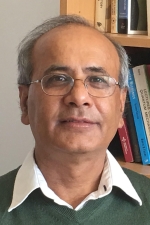 Anwar Bhatti合作论文数Department of Physics, College of Computer, Mathematical, & Natural Sciences, University of Maryland50S. Geer合作论文数49Franco Bedeschi合作论文数Istituto Nazionale di Fisica Nucleare Sezione di Pisa49M. Shimojima合作论文数49Y. Seiya合作论文数49Mw Bailey合作论文数49Jp Berge合作论文数49Af Garfinkel合作论文数49
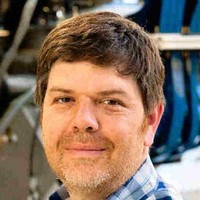 William C. Wester合作论文数National Science Foundation49D. Neuberger合作论文数49
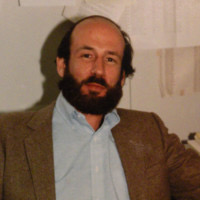 Arthur Wicklund合作论文数Argonne National Laboratory49Alvin Laasanen合作论文数Purdue University49P. Giannetti合作论文数INFN Sezione di Pisa49S. Belforte合作论文数49
 Giorgio Chiarelli合作论文数Istituto Nazionale di Fisica Nucleare49T. J. Phillips合作论文数49C. Blocker合作论文数49
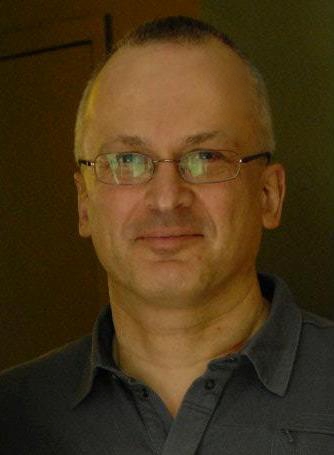 Luc Demortier合作论文数Laboratory of Experimental High Energy Physics, The Rockefeller University49G. Busetto合作论文数Universita degli Studi49
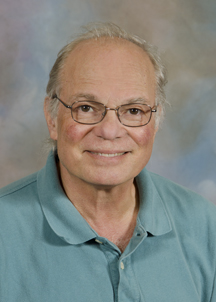 Arie Bodek合作论文数Department of Physics and Astronomy, School of Arts & Sciences, University of Rochester49Gabriela L Piacentino合作论文数49
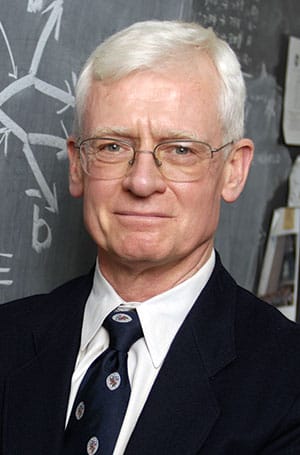 Bruce Barnett合作论文数William H. Miller III Department of Physics and Astronomy, Krieger School of Arts and Sciences, Johns Hopkins University49S. Segler合作论文数49Leon M Rosenson合作论文数49
 Pawel De Barbaro合作论文数Department of Physics and Astronomy, School of Arts and Sciences, University of Rochester;CERN49A. Caner合作论文数49
 Patrick Lukens合作论文数Particle Physics Division, Fermi National Accelerator Laboratory49Toru Okusawa合作论文数49Michele Loreti合作论文数49
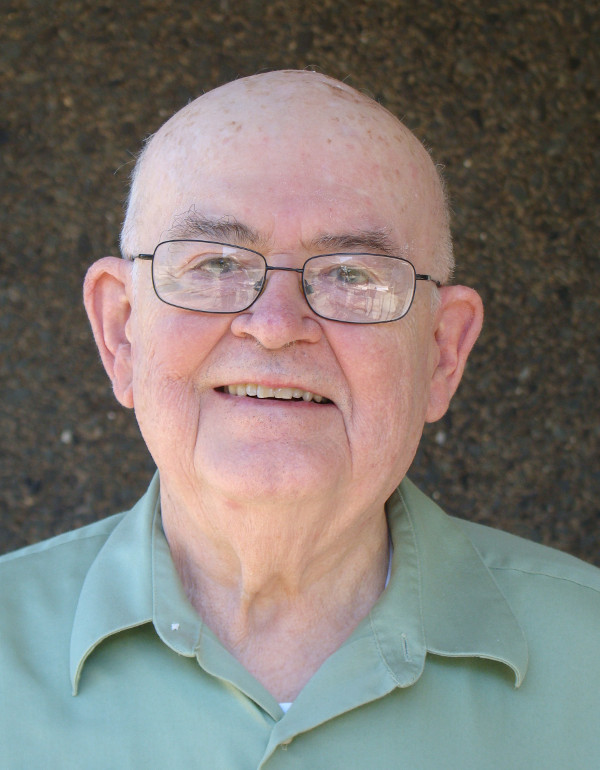 Thomas J. Devlin合作论文数Department of Physics and Astronomy, School of Arts and Sciences, Rutgers University49G. Bellettini合作论文数48K. Burkett合作论文数48J. Wolinski合作论文数48k biery合作论文数48F. Zetti合作论文数48E. Kuns合作论文数48S. Behrends合作论文数48Ji Lamoureux合作论文数48
 William F. Badgett Jr.合作论文数Fermi National Accelerator Laboratory48
 Dario Bisello合作论文数Department of Physics and Astronomy "Galileo Galilei", University of Padova48




