The determination of the direction of a stellar core collapse via its neutrino emission is crucial for the identification of the progenitor for a multimessenger follow-up. A highly effective method of reconstructing supernova directions within the Deep Underground Neutrino Experiment (DUNE) is introduced. The supernova neutrino pointing resolution is studied by simulating and reconstructing electron-neutrino charged-current absorption on Ar-40 and elastic scattering of neutrinos on electrons. Procedures to reconstruct individual interactions, including a newly developed technique called "brems flipping," as well as the burst direction from an ensemble of interactions are described. Performance of the burst direction reconstruction is evaluated for supernovae happening at a distance of 10 kpc for a specific supernova burst flux model. The pointing resolution is found to be 3.4 degrees at 68% coverage for a perfect interaction-channel classification and a fiducial mass of 40 kton, and 6.6 degrees for a 10 kton fiducial mass respectively. Assuming a 4% rate of charged-current interactions being misidentified as elastic scattering, DUNE's burst pointing resolution is found to be 4.3 degrees (8.7 degrees) at 68% coverage.
The Module-0 Demonstrator is a single-phase 600 kg liquid argon time projection chamber operated as a prototype for the DUNE liquid argon near detector. Based on the ArgonCube design concept, Module-0 features a novel 80k-channel pixelated charge readout and advanced high-coverage photon detection system. In this paper, we present an analysis of an eight-day data set consisting of 25 million cosmic ray events collected in the spring of 2021. We use this sample to demonstrate the imaging performance of the charge and light readout systems as well as the signal correlations between the two. We also report argon purity and detector uniformity measurements, and provide comparisons to detector simulations.
ProtoDUNE Single-Phase (ProtoDUNE-SP) is a 770-ton liquid argon time projection chamber that operated in a hadron test beam at the CERN Neutrino Platform in 2018. We present a measurement of the total inelastic cross section of charged kaons on argon as a function of kaon energy using 6 and 7 GeV/$c$ beam momentum settings. The flux-weighted average of the extracted inelastic cross section at each beam momentum setting was measured to be 380$\pm$26 mbarns for the 6 GeV/$c$ setting and 379$\pm$35 mbarns for the 7 GeV/$c$ setting.
DUNE is an international experiment dedicated to addressing some of the questions at the forefront of particle physics and astrophysics, including the mystifying preponderance of matter over antimatter in the early universe. The dual-site experiment will employ an intense neutrino beam focused on a near and a far detector as it aims to determine the neutrino mass hierarchy and to make high-precision measurements of the PMNS matrix parameters, including the CP-violating phase. It will also stand ready to observe supernova neutrino bursts, and seeks to observe nucleon decay as a signature of a grand unified theory underlying the standard model. The DUNE far detector implements liquid argon time-projection chamber (LArTPC) technology, and combines the many tens-of-kiloton fiducial mass necessary for rare event searches with the sub-centimeter spatial resolution required to image those events with high precision. The addition of a photon detection system enhances physics capabilities for all DUNE physics drivers and opens prospects for further physics explorations. Given its size, the far detector will be implemented as a set of modules, with LArTPC designs that differ from one another as newer technologies arise. In the vertical drift LArTPC design, a horizontal cathode bisects the detector, creating two stacked drift volumes in which ionization charges drift towards anodes at either the top or bottom. The anodes are composed of perforated PCB layers with conductive strips, enabling reconstruction in 3D. Light-trap-style photon detection modules are placed both on the cryostat's side walls and on the central cathode where they are optically powered. This Technical Design Report describes in detail the technical implementations of each subsystem of this LArTPC that, together with the other far detector modules and the near detector, will enable DUNE to achieve its physics goals.
The international collaboration designing and constructing the Deep Underground Neutrino Experiment (DUNE) at the Long-Baseline Neutrino Facility (LBNF) has developed a two-phase strategy toward the implementation of this leading-edge, large-scale science project. The 2023 report of the US Particle Physics Project Prioritization Panel (P5) reaffirmed this vision and strongly endorsed DUNE Phase I and Phase II, as did the European Strategy for Particle Physics. While the construction of the DUNE Phase I is well underway, this White Paper focuses on DUNE Phase II planning. DUNE Phase-II consists of a third and fourth far detector (FD) module, an upgraded near detector complex, and an enhanced 2.1 MW beam. The fourth FD module is conceived as a "Module of Opportunity", aimed at expanding the physics opportunities, in addition to supporting the core DUNE science program, with more advanced technologies. This document highlights the increased science opportunities offered by the DUNE Phase II near and far detectors, including long-baseline neutrino oscillation physics, neutrino astrophysics, and physics beyond the standard model. It describes the DUNE Phase II near and far detector technologies and detector design concepts that are currently under consideration. A summary of key R&D goals and prototyping phases needed to realize the Phase II detector technical designs is also provided. DUNE's Phase II detectors, along with the increased beam power, will complete the full scope of DUNE, enabling a multi-decadal program of groundbreaking science with neutrinos.
Doping of liquid argon TPCs (LArTPCs) with a small concentration of xenon is a technique for light-shifting and facilitates the detection of the liquid argon scintillation light. In this paper, we present the results of the first doping test ever performed in a kiloton-scale LArTPC. From February to May 2020, we carried out this special run in the single-phase DUNE Far Detector prototype (ProtoDUNE-SP) at CERN, featuring 720 t of total liquid argon mass with 410 t of fiducial mass. A 5.4 ppm nitrogen contamination was present during the xenon doping campaign. The goal of the run was to measure the light and charge response of the detector to the addition of xenon, up to a concentration of 18.8 ppm. The main purpose was to test the possibility for reduction of non-uniformities in light collection, caused by deployment of photon detectors only within the anode planes. Light collection was analysed as a function of the xenon concentration, by using the pre-existing photon detection system (PDS) of ProtoDUNE-SP and an additional smaller set-up installed specifically for this run. In this paper we first summarize our current understanding of the argon-xenon energy transfer process and the impact of the presence of nitrogen in argon with and without xenon dopant. We then describe the key elements of ProtoDUNE-SP and the injection method deployed. Two dedicated photon detectors were able to collect the light produced by xenon and the total light. The ratio of these components was measured to be about 0.65 as 18.8 ppm of xenon were injected. We performed studies of the collection efficiency as a function of the distance between tracks and light detectors, demonstrating enhanced uniformity of response for the anode-mounted PDS. We also show that xenon doping can substantially recover light losses due to contamination of the liquid argon by nitrogen.
The rapid development of general-purpose computing on graphics processing units (GPGPU) is allowing the implementation of highly-parallelized Monte Carlo simulation chains for particle physics experiments. This technique is particularly suitable for the simulation of a pixelated charge readout for time projection chambers, given the large number of channels that this technology employs. Here we present the first implementation of a full microphysical simulator of a liquid argon time projection chamber (LArTPC) equipped with light readout and pixelated charge readout, developed for the DUNE Near Detector. The software is implemented with an end-to-end set of GPU-optimized algorithms. The algorithms have been written in Python and translated into CUDA kernels using Numba, a just-in-time compiler for a subset of Python and NumPy instructions. The GPU implementation achieves a speed up of four orders of magnitude compared with the equivalent CPU version. The simulation of the current induced on 10^3 pixels takes around 1 ms on the GPU, compared with approximately 10 s on the CPU. The results of the simulation are compared against data from a pixel-readout LArTPC prototype.
Measurements of electrons from $\nu_e$ interactions are crucial for the Deep Underground Neutrino Experiment (DUNE) neutrino oscillation program, as well as searches for physics beyond the standard model, supernova neutrino detection, and solar neutrino measurements. This article describes the selection and reconstruction of low-energy (Michel) electrons in the ProtoDUNE-SP detector. ProtoDUNE-SP is one of the prototypes for the DUNE far detector, built and operated at CERN as a charged particle test beam experiment. A sample of low-energy electrons produced by the decay of cosmic muons is selected with a purity of 95%. This sample is used to calibrate the low-energy electron energy scale with two techniques. An electron energy calibration based on a cosmic ray muon sample uses calibration constants derived from measured and simulated cosmic ray muon events. Another calibration technique makes use of the theoretically well-understood Michel electron energy spectrum to convert reconstructed charge to electron energy. In addition, the effects of detector response to low-energy electron energy scale and its resolution including readout electronics threshold effects are quantified. Finally, the relation between the theoretical and reconstructed low-energy electron energy spectrum is derived and the energy resolution is characterized. The low-energy electron selection presented here accounts for about 75% of the total electron deposited energy. After the addition of lost energy using a Monte Carlo simulation, the energy resolution improves from about 40% to 25% at 50~MeV. These results are used to validate the expected capabilities of the DUNE far detector to reconstruct low-energy electrons.
A primary goal of the upcoming Deep Underground Neutrino Experiment (DUNE) is to measure the $\mathcal{O}(10)$ MeV neutrinos produced by a Galactic core-collapse supernova if one should occur during the lifetime of the experiment. The liquid-argon-based detectors planned for DUNE are expected to be uniquely sensitive to the $\nu_e$ component of the supernova flux, enabling a wide variety of physics and astrophysics measurements. A key requirement for a correct interpretation of these measurements is a good understanding of the energy-dependent total cross section $\sigma(E_\nu)$ for charged-current $\nu_e$ absorption on argon. In the context of a simulated extraction of supernova $\nu_e$ spectral parameters from a toy analysis, we investigate the impact of $\sigma(E_\nu)$ modeling uncertainties on DUNE's supernova neutrino physics sensitivity for the first time. We find that the currently large theoretical uncertainties on $\sigma(E_\nu)$ must be substantially reduced before the $\nu_e$ flux parameters can be extracted reliably: in the absence of external constraints, a measurement of the integrated neutrino luminosity with less than 10\% bias with DUNE requires $\sigma(E_\nu)$ to be known to about 5%. The neutrino spectral shape parameters can be known to better than 10% for a 20% uncertainty on the cross-section scale, although they will be sensitive to uncertainties on the shape of $\sigma(E_\nu)$. A direct measurement of low-energy $\nu_e$-argon scattering would be invaluable for improving the theoretical precision to the needed level.
The Mu2e experiment at Fermilab will search for the neutrinoless μ−→e− conversion in the field of an aluminum nucleus. The Mu2e data-taking plan assumes two running periods, Run I and Run II, separated by an approximately two-year-long shutdown. This paper presents an estimate of the expected Mu2e Run I search sensitivity and includes a detailed discussion of the background sources, uncertainties of their prediction, analysis procedures, and the optimization of the experimental sensitivity. The expected Run I 5σ discovery sensitivity is Rμe=1.2×10⁻¹⁵, with a total expected background of 0.11±0.03 events. In the absence of a signal, the expected upper limit is Rμe<6.2×10⁻¹⁶ at 90% CL. This represents a three order of magnitude improvement over the current experimental limit of Rμe<7×10⁻¹³ at 90% CL set by the SINDRUM II experiment.
The Pandora Software Development Kit and algorithm libraries provide pattern-recognition logic essential to the reconstruction of particle interactions in liquid argon time projection chamber detectors. Pandora is the primary event reconstruction software used at ProtoDUNE-SP, a prototype for the Deep Underground Neutrino Experiment far detector. ProtoDUNE-SP, located at CERN, is exposed to a charged-particle test beam. This paper gives an overview of the Pandora reconstruction algorithms and how they have been tailored for use at ProtoDUNE-SP. In complex events with numerous cosmic-ray and beam background particles, the simulated reconstruction and identification efficiency for triggered test-beam particles is above 80% for the majority of particle type and beam momentum combinations. Specifically, simulated 1 GeV/$c$ charged pions and protons are correctly reconstructed and identified with efficiencies of 86.1$\pm0.6$% and 84.1$\pm0.6$%, respectively. The efficiencies measured for test-beam data are shown to be within 5% of those predicted by the simulation.
The Deep Underground Neutrino Experiment (DUNE) is a next-generation long-baseline neutrino oscillation experiment with a primary physics goal of observing neutrino and antineutrino oscillation patterns to precisely measure the parameters governing long-baseline neutrino oscillation in a single experiment, and to test the three-flavor paradigm. DUNE's design has been developed by a large, international collaboration of scientists and engineers to have unique capability to measure neutrino oscillation as a function of energy in a broadband beam, to resolve degeneracy among oscillation parameters, and to control systematic uncertainty using the exquisite imaging capability of massive LArTPC far detector modules and an argon-based near detector. DUNE's neutrino oscillation measurements will unambiguously resolve the neutrino mass ordering and provide the sensitivity to discover CP violation in neutrinos for a wide range of possible values of $\delta_{CP}$. DUNE is also uniquely sensitive to electron neutrinos from a galactic supernova burst, and to a broad range of physics beyond the Standard Model (BSM), including nucleon decays. DUNE is anticipated to begin collecting physics data with Phase I, an initial experiment configuration consisting of two far detector modules and a minimal suite of near detector components, with a 1.2 MW proton beam. To realize its extensive, world-leading physics potential requires the full scope of DUNE be completed in Phase II. The three Phase II upgrades are all necessary to achieve DUNE's physics goals: (1) addition of far detector modules three and four for a total FD fiducial mass of at least 40 kt, (2) upgrade of the proton beam power from 1.2 MW to 2.4 MW, and (3) replacement of the near detector's temporary muon spectrometer with a magnetized, high-pressure gaseous argon TPC and calorimeter.
We present a measurement of the W boson mass in W-->e(nu) decays using 1 fb-1 of data collected with the D0 detector during Run II of the Fermilab Tevatron collider. With a sample of 499830 W-->e(nu) candidate events, we measure M(W)=80.401+/-0.043 GeV. This is the most precise measurement from a single experiment.
Liquid argon time projection chamber detector technology provides high spatial and calorimetric resolutions on the charged particles traversing liquid argon. As a result, the technology has been used in a number of recent neutrino experiments, and is the technology of choice for the Deep Underground Neutrino Experiment (DUNE). In order to perform high precision measurements of neutrinos in the detector, final state particles need to be effectively identified, and their energy accurately reconstructed. This article proposes an algorithm based on a convolutional neural network to perform the classification of energy deposits and reconstructed particles as track-like or arising from electromagnetic cascades. Results from testing the algorithm on experimental data from ProtoDUNE-SP, a prototype of the DUNE far detector, are presented. The network identifies track- and shower-like particles, as well as Michel electrons, with high efficiency. The performance of the algorithm is consistent between experimental data and simulation.
The ProtoDUNE-SP detector is a single-phase liquid argon time projection chamber (LArTPC) that was constructed and operated in the CERN North Area at the end of the H4 beamline. This detector is a prototype for the first far detector module of the Deep Underground Neutrino Experiment (DUNE), which will be constructed at the Sandford Underground Research Facility (SURF) in Lead, South Dakota, USA. The ProtoDUNE-SP detector incorporates full-size components as designed for DUNE and has an active volume of 7× 6× 7.2 m^3. The H4 beam delivers incident particles with well-measured momenta and high-purity particle identification. ProtoDUNE-SP's successful operation between 2018 and 2020 demonstrates the effectiveness of the single-phase far detector design. This paper describes the design, construction, assembly and operation of the detector components.
This document presents the concept and physics case for a magnetized gaseous argon-based detector system (ND-GAr) for the Deep Underground Neutrino Experiment (DUNE) Near Detector. This detector system is required in order for DUNE to reach its full physics potential in the measurement of CP violation and in delivering precision measurements of oscillation parameters. In addition to its critical role in the long-baseline oscillation program, ND-GAr will extend the overall physics program of DUNE. The LBNF high-intensity proton beam will provide a large flux of neutrinos that is sampled by ND-GAr, enabling DUNE to discover new particles and search for new interactions and symmetries beyond those predicted in the Standard Model.
The Deep Underground Neutrino Experiment (DUNE) will produce world-leading neutrino oscillation measurements over the lifetime of the experiment. In this work, we explore DUNE's sensitivity to observe charge-parity violation (CPV) in the neutrino sector, and to resolve the mass ordering, for exposures of up to 100 kiloton-megawatt-years (kt-MW-yr). The analysis includes detailed uncertainties on the flux prediction, the neutrino interaction model, and detector effects. We demonstrate that DUNE will be able to unambiguously resolve the neutrino mass ordering at a 3$\sigma$ (5$\sigma$) level, with a 66 (100) kt-MW-yr far detector exposure, and has the ability to make strong statements at significantly shorter exposures depending on the true value of other oscillation parameters. We also show that DUNE has the potential to make a robust measurement of CPV at a 3$\sigma$ level with a 100 kt-MW-yr exposure for the maximally CP-violating values $\delta_{\rm CP}} = \pm\pi/2$. Additionally, the dependence of DUNE's sensitivity on the exposure taken in neutrino-enhanced and antineutrino-enhanced running is discussed. An equal fraction of exposure taken in each beam mode is found to be close to optimal when considered over the entire space of interest.
The Deep Underground Neutrino Experiment (DUNE) is a leading-edge experiment for long-baseline neutrino oscillation studies, neutrino astrophysics and nucleon decay searches. ProtoDUNE-Dual Phase (DP) is a 6x6x6 m$^3$ liquid argon time-projection-chamber (LArTPC) operated at the CERN Neutrino Platform in 2019-2020 as a prototype of the DUNE Far Detector. In ProtoDUNE-DP, the scintillation and electroluminescence light produced by cosmic muons in the LArTPC is collected by photomultiplier tubes placed up to 7 m away from the ionizing track. In this paper, we present the performance of the ProtoDUNE-DP photon detection system, comparing different wavelength-shifting techniques and the use of xenon-doped LAr as a promising option for future large LArTPCs. The scintillation light production and propagation processes are analyzed and compared to simulations, improving understanding of the liquid argon properties.
The mass of the W boson, a mediator of the weak force between elementary particles, is tightly constrained by the symmetries of the standard model of particle physics. The Higgs boson was the last missing component of the model. After observation of the Higgs boson, a measurement of the W boson mass provides a stringent test of the model. We measure the W boson mass, M W , using data corresponding to 8.8 inverse femtobarns of integrated luminosity collected in proton-antiproton collisions at a 1.96 tera–electron volt center-of-mass energy with the CDF II detector at the Fermilab Tevatron collider. A sample of approximately 4 million W boson candidates is used to obtain M W = 80 , 433.5 ± 6.4 stat ± 6.9 syst = 80 , 433.5 ± 9.4 MeV / c 2 , the precision of which exceeds that of all previous measurements combined (stat, statistical uncertainty; syst, systematic uncertainty; MeV, mega–electron volts; c , speed of light in a vacuum). This measurement is in significant tension with the standard model expectation.
The Deep Underground Neutrino Experiment (DUNE), a 40-kton underground liquid argon time projection chamber experiment, will be sensitive to the electron-neutrino flavor component of the burst of neutrinos expected from the next Galactic core-collapse supernova. Such an observation will bring unique insight into the astrophysics of core collapse as well as into the properties of neutrinos. The general capabilities of DUNE for neutrino detection in the relevant few- to few-tens-of-MeV neutrino energy range will be described. As an example, DUNE's ability to constrain the $\nu_e$ spectral parameters of the neutrino burst will be considered.
 Dante Amidei合作论文数Department of Physics, College of Literature, Science, and the Arts, University of Michigan1037
 Andrew Beretvas合作论文数1028
 Giorgio Apollinari合作论文数Fermi National Accelerator Laboratory1019
 Giorgio Chiarelli合作论文数Istituto Nazionale di Fisica Nucleare1013Franco Bedeschi合作论文数Istituto Nazionale di Fisica Nucleare Sezione di Pisa1002
 Arie Bodek合作论文数Department of Physics and Astronomy, School of Arts & Sciences, University of Rochester999
 Bruce Barnett合作论文数William H. Miller III Department of Physics and Astronomy, Krieger School of Arts and Sciences, Johns Hopkins University989G. Busetto合作论文数Universita degli Studi988
 Steven Errede合作论文数Department of Physics, The Grainger College of Engineering, University of Illinois Urbana-Champaign977
 Duncan Carlsmith合作论文数Department of Physics, College of Letters & Science, University of Wisconsin-Madison971
 Melissa Franklin合作论文数Department of Physics, Harvard University964
 Luc Demortier合作论文数Laboratory of Experimental High Energy Physics, The Rockefeller University964K. Goulianos合作论文数960
 C. Bromberg合作论文数Michigan State University, USA955C. Grosso-Pilcher合作论文数953Alvin Laasanen合作论文数Purdue University946
 Michael S. Gold合作论文数Department of Physics and Astronomy, The University of New Mexico944
 Daniela Bortoletto合作论文数Department of Physics, University of Oxford941V. E. Barnes合作论文数934
 Pawel De Barbaro合作论文数Department of Physics and Astronomy, School of Arts and Sciences, University of Rochester;CERN933
 Jacobo Konigsberg合作论文数Institute for High Energy Physics and Astrophysics, University of Florida;Department of Physics, College of Liberal Arts and Sciences, University of Florida905
 Anwar Bhatti合作论文数Department of Physics, College of Computer, Mathematical, & Natural Sciences, University of Maryland905
 Bill Ashmanskas合作论文数Department of Physics & Astronomy, College of Arts & Sciences, University of Pennsylvania904
 Patrick Lukens合作论文数Particle Physics Division, Fermi National Accelerator Laboratory898M. A. Ciocci合作论文数896S. Leone合作论文数889James Bellinger合作论文数Department of Physics, University of Wisconsin–Madison886Paolo Giromini合作论文数880
 Dario Bisello合作论文数Department of Physics and Astronomy "Galileo Galilei", University of Padova878
 Ray Culbertson合作论文数Fermi National Accelerator Laboratory878
 Joey W Huston合作论文数Department of Physics & Astronomy, College of Natural Science, Michigan State University878P. Giannetti合作论文数INFN Sezione di Pisa873
 Morris Binkley合作论文数Collider Detector Facility Department, Fermi National Accelerator Laboratory873
 John S. Conway合作论文数Department of Physics and Astronomy, University of California, Davis856Af Garfinkel合作论文数849
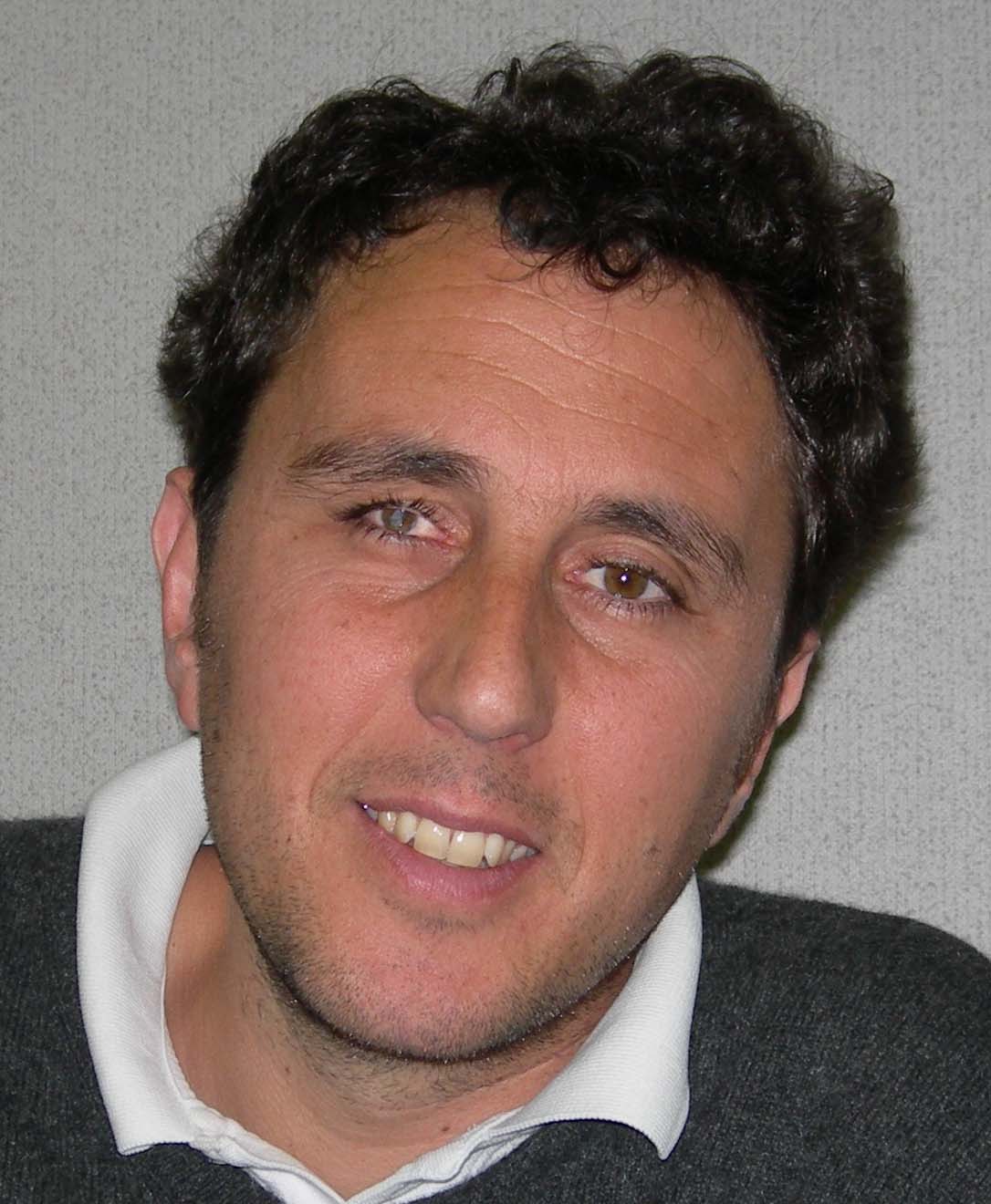 Fabio Happacher合作论文数Istituto Nazionale di Fisica Nucleare844
 Lee G. Pondrom合作论文数Department of Physics, University of Wisconsin–Madison842
 Gianluca Introzzi合作论文数Department of Physics, University of Pavia841
 Jay R. Dittmann合作论文数Department of Physics, College of Arts and Sciences, Baylor University840
 Niccolò Moggi合作论文数Department of Industrial Engineering, University of Bologna840K. Burkett合作论文数839D. Benjamin合作论文数836
 Angela Barbaro-Galtieri合作论文数Physics Division, Lawrence Berkeley National Laboratory834D. Lucchesi合作论文数833
 Joseph Boudreau合作论文数Department of Physics and Astronomy, University of Pittsburgh832
 Howard S. Budd合作论文数Department of Physics and Astronomy, School of Arts & Sciences, University of Rochester830Marco Cordelli合作论文数Laboratori Nazionali di Frascati, Istituto Nazionale di Fisica Nucleare827F. Rimondi合作论文数825
 William F. Badgett Jr.合作论文数Fermi National Accelerator Laboratory824




