Abstract Commercial archaeology is the model through which most archaeological work is undertaken around the world. The chapter provides an overview of the history of this model, establishing that until the 1960s, there was neither opportunity nor reason for archaeological services to be delivered on a commercial basis. The chapter discusses how, following major political and social changes in the late 1960s, the field of Cultural Resource Management emerged in the United States, whereby private and public clients would pay commercial archaeology companies to undertake work on their behalf, principally to ensure compliance with regulations controlling construction and development. Founded on the principles of sustainable development and relying on the concept of “the polluter pays” as a funding model, commercial archaeology became the mechanism by which the overwhelming majority of archaeological investigation in the United States has been undertaken in the twenty-first century. This pattern was mirrored (but not directly replicated) in the United Kingdom, where the publication in 1990 of the government policy known as PPG 16 led to the rapid expansion and commercialization of professional archaeological services in the United Kingdom.
'Big Data' is a misunderstood but technically definable concept; it is large volume, unstructured, heterogenous information, that is being generated at a high velocity - which normally means it is being constantly updated in real time. And, in many situations, this is very difficult to work with; an analogy might be to compare the curated content of Netflix, which is a (very) large but structured data set, with the unending chaos of YouTube content, which is Big Data. The first part of this paper considers big data, and how it is defined and used, with the second part considering how large amounts of small data can be used in sociology as applied to archaeology.
The COVID-19 pandemic had serious effects on the delivery of commercial archaeology in the United Kingdom during 2020 and 2021. This article presents a contemporary history of two years of practice and political developments. Because of commercial archaeology’s place within the broader construction sector, it became a ‘protected’ industry, resulting in a massive increase in the amount of work undertaken. Archaeology adapted remarkably well to the difficult and dangerous conditions of the pandemic, while encountering new challenges in staff recruitment.
Key to the success of archaeological projects and the provision of public benefit as a result is partnership working, whether between archaeological practices, consultants or departments within larger organisations, commercial clients or regulatory bodies. This paper presents case studies from each of these as examples of successful public benefit from development-led archaeology and outlines the move away from the 'polluter pays' principle towards a more nuanced understanding of what archaeology can provide. A Postscript refers to the Planning White Paper in the UK, which could have significant implications for how archaeology is treated within the planning system.
Bisher fehlten im deutschen Sprachraum probate Mittel zur Dokumentation praktisch erworbener archaologischer Fahigkeiten. Die nunmehr vorliegende Adaption des in Grosbritannien bereits breit in Verwendung stehenden „Archaeology Skills Passport“ fur den deutschen Sprachraum versucht ein solches Mittel zu bieten. Der Pass ist einfach anzuwenden und ist – wenn er vollstandig ausgefulltist – mit einer handlichen Sammlung von jeweils vier voneinander unabhangigen Miniatur-Referenzschreiben uber die Kompetenz des Passinhabers in den im Pass enthaltenen praktischen archaologischen Fertigkeiten vergleichbar. Als solches erlaubt er Passinhabern selbst, ihre Kompetenz in den jeweiligen Fertigkeiten besser einzuschatzen, allfallige Fehlstellen bzw. Kompetenzmangel besser zu erkennen und strategisch ihre eigene praktische archaologische Fortbildung zu planen. Potenziellen Arbeitgebern erlaubt er hingegen eine verlasslichere Einschatzung der tatsachlichen Kompetenz der jeweils konkret fur eine Mitarbeit in archaologischen Feldforschungen in Betracht gezogenen Person und damit eine bessere Planung ihres Betriebes und/oder ihrer archaologischen Grabungs- bzw. Feldforschungsprojekte. Auf diesem Weg soll eine Verbesserung der Dokumentation und des Erwerbs archaologischer Kompetenzen erreicht und durch gleichzeitige internationale Standardisierung die innerstaatliche und transnationale Mobilitat archaologischer Arbeitskrafte gefordert werden.
Over one generation of professional practice, archaeology has become a service delivered by the private sector. Traditional sources of grant and benefactor funding have declined in importance as archaeological funds. A private marketplace driven by legal compliance now provides the vast majority of archaeological financing. While heritage practitioners are still motivated by their professional values, the ability to successfully run for‐profit business that return both stakeholder and shareholder value is now a prerequisite for fulfilling these professional values. To gain business and marketing knowledge, some universities and private businesses are beginning to offer business education and training to heritage professionals. Archaeologists must have an understanding of the marketing process in order to compete in a for‐profit marketplace, attract funding for research projects, and sell the services they can provide.
While the U.K.'s departure from the European Union will make a big difference to archaeology in the U.K., its effect on archaeological practice in mainland Europe will be minimal. Archaeological traditions of practice and funding will not be affected. The changes in the U.K., particularly regarding the potential loss of freedom of movement between states, will seriously reduce employers' access to, and opportunities for, a skilled workforce of European archaeologists seeking to work in the U.K.
Click to increase image sizeClick to decrease image size ORCIDKenneth Aitchison http://orcid.org/0000-0001-6594-1408
Discovering the Archaeologists of Europe 2014 has shown that measuring archaeologists’ capabilities is a tool that can be used to plan for the development of the profession, development that is necessary to enhance to protection and interpretation of the global archaeological resource.
Icon is delivering a National Conservation Education and Skills Strategy to shape the future provision of conservation education, training and research in the United Kingdom. It has undertaken research into the skills needs of the workforce, and is prioritising initiatives to improve training and qualifications, and is now seeking to re-engage with the discussion about what is needed to become a European professional conservator.
Archaeological practice in the UK produces considerable amounts of reportage that is never intended for formal publication. This grey literature forms a resource which has, historically, been poorly used by academic archaeologists, and problems of access have been blamed for this. This paper argues that this problem does not lie with accessing the resource, but has been of awareness, attitude, and understanding. Structures are now in place which can allow the comprehensive interpretation and reinterpretation of fieldwork results by any archaeologists who choose to do so.
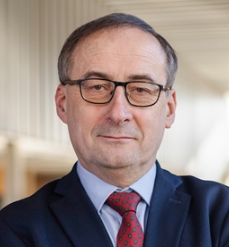 Arkadiusz Marciniak合作论文数Institute of Prehistory;University of Poznan4
 Nathan Schlanger合作论文数3
 Eva Parga-Dans合作论文数Instituto de Productos Naturales y Agrobiología, IPNA-CSIC3
 Alessandro Pintucci合作论文数2Asya Engovatova合作论文数2Katharina Möller合作论文数2
 Michał Pawleta合作论文数Fac Archaeol, Adam Mickiewicz Univ2
 Pál Raczky合作论文数Inst Archaeol Sci, Eotvos Lorand Univ2
 Anthony GM Sinclair合作论文数Mech Ind Engn, Univ Toronto2Kai Salas Rossenbach合作论文数2
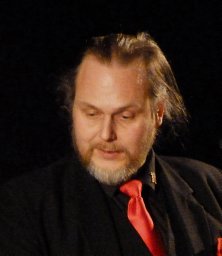 Raimund Karl合作论文数University of Wales;Department of History and Welsh;Department of History and Welsh, University of Wales2
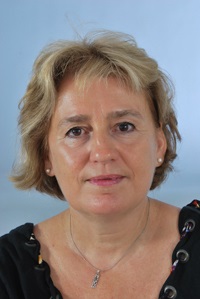 Eszter Banffy合作论文数HUN-REN RCH Institute of Archaeology, Centre of Excellence, Hungarian Academy of Sc.iences;European Association of Archaeologists2paul damian合作论文数1cidalia duarte合作论文数1Heleen Van Londen合作论文数1Elisa Cella合作论文数1Elena S. Prokopiou合作论文数1rocio varelapousa合作论文数1carolina grilo合作论文数1karin scharringhausen合作论文数1dries van den m h合作论文数1Jo Compton合作论文数1
 Tanja Trausmuth-Wallner合作论文数Ludwig Boltzmann Institute for Archaeological Prospection and Virtual Archaeology1
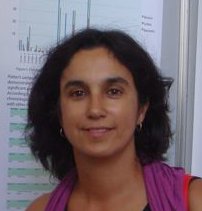 catarina viegas合作论文数Uniarq, Univ Lisbon1
 Irena Lazar合作论文数Univ Primorska1kerri cleary合作论文数1Mariana Diniz合作论文数UNIARQ-Centro de Arqueologia da Universidade de Lisboa, Universidade de Lisboa1Monique H. van den Dries合作论文数1
 Claudia Costa合作论文数Archaeological Research Unit of Era Arqueologia S.A.1McCullagh Niamh合作论文数1
 J. Raposo合作论文数Centro de Arqueologia de Almada1Simon Davis合作论文数1Joep Hendriks合作论文数1Damien Séris合作论文数1Melissa Highton合作论文数1Antoine Maillier合作论文数1Jean-Paul Demoule合作论文数1Olivier Dorighel合作论文数1Karin Ridderbos合作论文数1Georg R. Schilcher合作论文数1Dieuwertje Smal合作论文数1Mark Spanjer合作论文数1Dorian Pasquier合作论文数1Rebecca Boyd合作论文数1Peter Jud合作论文数1Christian Gal合作论文数1David Maynard合作论文数1
 Magali Garcia合作论文数Assumpcio Tolido i Mur1Katharina Heigl合作论文数1




