Understanding patient-specific factors that influence postoperative outcomes and failure rates following rotator cuff repair is crucial for surgeons to tailor individualized treatments. The purpose of this umbrella review was to identify preoperatively measurable factors that influence the risk of retear and functional outcomes following rotator cuff repair (RCR). Additionally, the study aimed to evaluate the quality of evidence from systematic reviews and meta-analyses to provide a comprehensive understanding of these predictive factors. A systematic search of the MEDLINE database via PubMed was conducted to identify systematic reviews and meta-analyses reporting preoperatively measurable factors affecting functional outcomes and failure rates following arthroscopic rotator cuff repair. The methodological quality of included reviews was assessed using the AMSTAR checklist. Data synthesis summarized key risk factors, quantified study overlap via Corrected Covered Area (CCA), and examined heterogeneity and publication bias when reported in the reviews. Twenty-three systematic reviews, including 11 meta-analyses, met the inclusion criteria, yielding a CCA of 0.403, which reflects moderate overlap. The average AMSTAR score was 7.57, indicating moderate methodological quality. However, only a few reviews included analyses of heterogeneity or publication bias, and the evidence presented was often contradictory. Meta-analyses revealed statistically significant associations between higher retear rates and factors such as advanced age, reduced bone mineral density, elevated body mass index, diabetes, shorter acromiohumeral interval, increased critical shoulder angle, involvement of multiple tendons, greater tendon retraction, longer symptom duration, larger tear size, poor tissue quality, and greater distance from the musculotendinous junction to the glenoid. Genetic analyses provided moderate to strong evidence linking healing failure to mutations in the matrix metallopeptidase 3 (MMP3) and Tenascin C (TNC) genes, as well as a single nucleotide polymorphism (SNP) in the Estrogen Related Receptor β (ESRRβ) gene. Improved tendon healing was associated with the upregulation of the growth factor Bone Morphogenetic Protein 5 (BMP5) and increased expression of collagen type III (COL3). High preoperative expectations consistently correlated with better functional outcomes, whereas other psychological factors, such as concerns and fear avoidance, were associated with poorer outcomes. Evidence synthesized in this review underscores the importance of patient age, expectations, and the extent of the rotator cuff tear in influencing outcomes following rotator cuff repair. These factors should be carefully considered in treatment planning for patients undergoing rotator cuff repair.
Treatment options for acute acromioclavicular joint (ACJ) instability include several surgical and non-surgical approaches. Recent trends indicate a shift towards nonoperative treatment, even for severe Rockwood type V injuries, which traditionally required surgery. Despite this shift, some patients may still benefit from surgical stabilisation, particularly if significant pain and disability persist. Modern surgical techniques focus on cortical button systems and restoration of the coracoclavicular ligaments, emphasising the importance of the posterosuperior acromioclavicular capsuloligamentous complex in managing horizontal instability. Clavicular hook plates offer rigid stability but present risks, such as damage to the subacromial structures and acromial erosion. Although anatomical repair techniques have gained prominence due to their biomechanical advantages and have been endorsed by international societies, non-anatomic methods may also provide acceptable outcomes with lower costs. The use of tendon grafts in chronic ACJ instability has shown promise, although evidence for their use in acute cases remains limited. This review discusses various treatment strategies, including operative and nonoperative management, focusing on patient outcomes, complication rates, and return-to-sport scenarios. Ultimately, the choice between surgical and non-surgical treatment must consider individual patient needs and the potential for long-term recovery. Level of Evidence: Not applicable.
There is currently no consensus on which rehabilitation regimen is preferable for which patients after rotator cuff repair (RCR). The aim of this study was to evaluate which preoperatively measurable factors are considered relevant by experts of the German, Austrian and Swiss Shoulder and Elbow Society (DVSE) in choosing a rehabilitation plan after RCR. Members of the DVSE who had gained expert status in the society were queried via an online questionnaire. The survey consisted of 23 preoperatively measurable sociodemographic, patient-specific, and shoulder-specific factors that had been identified in a previous literature review. The experts were asked to assess each factor as either relevant in favor of choosing a progressive rehabilitation plan, relevant in favor of choosing a regressive rehabilitation plan, or irrelevant in their decision-making process. A total of 61 experts completed the entire survey. Active smoking status, older age, diabetes mellitus, pseudoparalysis, increased tendon retraction, greater tear size, high degree of fatty infiltration, tendon delamination, and involvement of more than one tendon were selected by the majority of the participants as relevant in favor of a regressive rehabilitation protocol. Shoulder stiffness was the only factor selected by the majority as relevant in favor of a progressive rehabilitation protocol. Active smoking status, older age, diabetes mellitus, pseudoparalysis, increased tendon retraction, greater tear size, high degree of fatty infiltration, tendon delamination, and involvement of more than one tendon were viewed as relevant factors in favor of a regressive rehabilitation protocol, while shoulder stiffness was viewed as the only relevant factor in favor of a progressive rehabilitation protocol. Shoulder surgeons should consider these factors when deciding on rehabilitation after RCR.
Die inverse Schultertotalendoprothese („reverse shoulder arthroplasty“, RSA) hat sich zunehmend als Behandlungsmethode bei irreparablen Rotatorenmanschettenrupturen etabliert, die aufgrund ihrer hohen Häufigkeit und komplexen Pathophysiologie eine therapeutische Herausforderung darstellen. Sie kompensiert den Verlust der Rotatorenmanschette, indem sie die Funktion des Deltamuskels nutzt, was zu einer signifikanten Verbesserung der Schulterfunktion und einer Schmerzlinderung führt – besonders bei älteren Patienten mit eingeschränkter Heilungsfähigkeit. Zahlreiche Studien belegen signifikante funktionelle Verbesserungen und eine hohe Patientenzufriedenheit. Trotz potenzieller Risiken wie Notching oder Lockerung bietet die RSA bei geeigneter Patientenauswahl und chirurgischer Expertise eine zuverlässige Lösung. Fortschritte in der Technologie tragen weiterhin dazu bei, die Langzeitergebnisse und die Haltbarkeit der Implantate zu verbessern.
Background Elbow stiffness poses a significant challenge for surgeons as well as physiotherapists during and after surgery. To date, there is no consensus regarding the subsequent rehabilitation after surgical release of the stiff elbow. Objective The aim is to evaluate the most important therapeutic strategies following open or arthroscopic release of the stiff elbow based on a comprehensive literature review, and to develop a consensus for or against specific therapeutic methods with the help of a survey among elbow experts of the D-A-CH Association for Shoulder and Elbow Surgery (DVSE). Methods Literature search was performed based on guidelines, the “health technology assessments”, systematic reviews and clinical studies that examined rehabilitation after osteocapsular release of the stiff elbow. The databases of the “Guidelines International Network”, various national guidelines, PubMed, the “Cochrane Central Register of Controlled Trials”, the “Cochrane Database of Systematic Reviews”, and the “Physiotherapy Evidence Database” were scanned, each for the period from January 1989 to December 2019. As part of an online survey, all active members of the DVSE were asked about their strategies in immediate aftercare and rehabilitation after elbow arthrolysis. Results A total of 5 reviews and 55 articles could be identified from 107 articles since 1989, which served as the basis for the preparation of an evidence-based aftercare recommendation. By reviewing all the mentioned paper and evaluation of the survery of DVSE members, a basic concept could be finalized.
Background There is no consensus concerning the rehabilitation protocol following reverse shoulder arthroplasty. Several patients are expecting to be able to use their arms for sports or recreation shortly after their operation. Methods This review was designed as an intervention systematic review with narrative analysis. Authors searched English literature in PubMed and Embase databases from 1/1/1989 until July 2022. Controlled studies comparing rehabilitation protocols for patients undergoing reverse shoulder arthroplasty were included. Data quality was examined with the Cochrane risk of a bias assessment tool for randomized trials, the Methodological Index for Non-Randomized studies (MINORS) tool, as well as the Grading of Recommendations Assessment Development and Evaluation (GRADE) approach. Results Three studies were finally analyzed. At 3 months post-op, forward flexion was found to be significantly higher in the early rehabilitation group (140.5, 95% confidence intervals (CIs): 135.10–145.89; the delayed rehabilitation group mean was 131.24, 95% CI: 125.73–136.74; p = 0.019). Twelve months post-op, no significant difference in any clinical or patient-reported outcome was shown. More complications were reported in the 6 weeks-delayed rehabilitation group. Discussion Newer regimes permit immediate shoulder mobilization but may not be applied to every patient. The lack of strong evidence warrants the need for future controlled studies; subsequently, postoperative rehabilitation should be individualized.
Within the framework of the general endeavors towards outpatient treatment aiming at more efficiency and cost reduction within the healthcare system, surgical interventions are performed increasingly more as outpatient procedures. This endeavor is also evident for shoulder arthroplasty. The published literature has already demonstrated the basic feasibility; however, there are still immanent problems with the system, which explains the still low acceptance of patients within the European healthcare system.
 Andreas B. Imhoff合作论文数School of Medicine, Technical University of Munich160
 Mazzocca Augustus D合作论文数91
 Mark Coté合作论文数Department of Digital Humanities, Faculty of Arts & Humanities, King’s College London;Computing Education Research Centre, King’s College London58
 Robert A. Arciero合作论文数Department of Orthopedic Surgery, UConn Health39
 Elifho Obopilwe合作论文数36
 Felix G.E. Dyrna合作论文数35Elke Klein合作论文数34Knut Stamer合作论文数34
 Stefan Buchmann合作论文数33
 Mary-Beth Mccarthy合作论文数Department of Orthopaedic Surgery, University of Connecticut Health Center30
 Daniel P. Berthold合作论文数26
 Lukas N. Munch合作论文数26Apostolakos John合作论文数23Florian B Imhoff合作论文数Univ Zurich, Balgrist Univ Hosp22Bastian Scheiderer合作论文数22David M Chowaniec合作论文数18
 Andrea Achtnich合作论文数17Andreas Voss合作论文数16Otto Alexander合作论文数16
 Sepp Braun合作论文数16
 Julian Mehl合作论文数15
 Ryan Russell合作论文数Orthopaedic Surgery, University of Connecticut Health Center14
 Philip B Schottle合作论文数11
 Cameron Kia合作论文数Department of Orthopaedic Surgery, University of Connecticut Health Center10
 Jonas Pogorzelski合作论文数10Schwirtz Ansgar合作论文数10
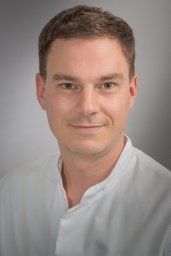 Feucht Matthias J合作论文数Department of Orthopaedic Sports Medicine, Technical University Munich8
 Matthias Cotic合作论文数8Peter U. Brucker合作论文数8
 Marco-Christopher Rupp合作论文数7
 Daichi Morikawa合作论文数7A. Voss合作论文数7
 James P Bradley合作论文数7Michael Nowak合作论文数7
 Frieder Mauch合作论文数6Solovyova Olga合作论文数6Anthony A. Romeo合作论文数6
 Sebastian Siebenlist合作论文数6
 Christian Schoch合作论文数6
 Wolfgang Seiberl合作论文数Faculty of Sport Science Connollystr., Technical University of Munich6
 Lucca Lacheta合作论文数5Jeremiah D Johnson合作论文数5Brendan Comer合作论文数5
 Hardeep Singh合作论文数5
 Elmar Herbst合作论文数5Baldino Joshua B合作论文数5Grim C合作论文数5Petersen Wolf合作论文数5Pauzenberger Leo合作论文数5




