Norenzayan et al. propose that religious beliefs with incidental prosocial effects propagated via a long-term process of cultural evolution. Applying their model, I explore a possible candidate target of cultural selection: the teleological view - often culturally elaborated as a belief in karma or fate - that life events occur to punish or reward individuals' moral behavior.
Do children believe in karma - the notion that life events occur to punish or reward our moral behavior? In three experiments, we investigate 4-6-year-old children's willingness to endorse and engage in the practice of performing good acts in order to secure an unrelated future desired outcome, so-called `karmic bargaining'. Most children agreed that performing a morally good social behavior, but not a morally negative or morally neutral non-social behavior, would increase the chances that future desired outcomes would occur, in both first-party and third-party contexts. About half of children also engaged in karmic bargaining behavior themselves. We conclude that a belief in karma may therefore reflect a broad, early-emerging teleological bias to interpret life events in terms of agency, purpose, and design.
Between 500 BCE and 300 BCE, religions worldwide underwent a dramatic shift, emphasizing morality and asceticism for the first time. A new study suggests that the emergence of this new type of religion can be explained by increases in prosperity.
Richard A. Abrams Daniel Acheson Wendy Jo Adams Christian Agrillo Woo-Kyoung Ahn Denis Alamargot Mark Alfano Nilufa Ali Martha W. Alibali Adam Alter Ben Ambridge Michael C. Anderson Brian August Anderson Michael Andres Glenda Andrews Ulrich Ansorge Coren Lee Apicella Mark Aronoff Sudha Arunachalam Nathaniel Ashby Mark H. Ashcraft Alp Aslan Chris Asplund Anthony Paul Atkinson joseph Austerweil Alessio Avenanti Marios Avraamides Edward Awh Harald Baayen Molly Babel Patric Bach Bahador Bahrami Wilma Bainbridge Daniel Hart Baker Chris Baker Benjamin Balas Konika Banerjee Sarah Barber David Barner Andrew Baron Jonathan Baron Simon Baron-Cohen Arthur J. Baroody Dale J. Barr Pierre Barrouillet Daniel Merrill Bartels Hilary Barth Benjamin M. Basile Miriam Bassok Peter Battaglia Jean-Yves Baudouin Karl-Heinz T. Bauml Cristina Baus Andrew Bayliss Vanessa Beanland Cristina Becchio Jacob Beck Rachael Bedford Tristan Bekinschtein Andrea Bender Christopher Philip Benton Michael J. Beran Yoella Bereby-Meyer Elika Bergelson Benjamin Bergen Philippe Bernard Marco Bertamini Julie Bertels Bennett I. Bertenthal Mireille Besson Tilmann Betsch Ellen Bialystok Klinton Bicknell Ann Bigelow Erik Bijleveld Geoffrey Bird Elina Birmingham Szilvia Biro Caroline Blais Peter Blake Isabelle Blanchette Fernando Blanco Kevin L. Blankenship Susan Bobb Anne Böckler Cari Anne Bogulski Julie E. Boland Luca Lorenzo Bonatti Claudia Bonfiglioli Patrick Bonin Amy Booth Anna M. Borghi Lera Boroditsky Arielle Borovsky Heather Bortfeld Janet Boseovski Jeffrey Bowers Pascal Boyer Sarah Till Boysen Timothy F. Brady Charles Brainerd Amanda C. Brandone Holly Branigan Marcel Brass Mara Breen J. Gavin Bremner Allison Anne Brennan Arndt Bröder Neon Brooks Sarah Frances Brosnan Patricia E. Brosseau-Liard Alan Brown Heather Brown Sarah Brown-Schmidt Tad Brunye Marc Brysbaert Adam Buchwald Roger Buehler Marc Jens Buehner Christopher Burke Denis Burnham Katherine Burson Mike Burton
Across 3 experiments, we found evidence that information about who owns an artifact influenced 5- to 10-year-old children's and adults' judgments about that artifact's primary function. Children's and adults' use of ownership information was underpinned by their inference that owners are typically familiar with owned artifacts and are therefore likely to know their primary functions. Accordingly, when this inference was undermined-when an artifact's owner was said to be unfamiliar with the owned artifact-ownership was no longer used as a privileged heuristic cue to artifact function. These experiments also revealed age-related differences in how ownership information was prioritized relative to another well-studied source of information known to influence artifact cognition, namely, information about an artifact's original designer-intended function. Specifically, older children and adults were more likely than younger children to prioritize design information over ownership information. Our results suggest that children and adults differ in how they weight the relative importance of these 2 sources of function-relevant information-likely reflecting age-related changes in children's and adults' sensitivity to ownership and design information across development. (PsycINFO Database Record
People often believe that significant life events happen for a reason. In three studies, we examined evidence for the view that teleological beliefs reflect a general cognitive bias to view the world in terms of agency, purpose, and design. Consistent with this hypothesis, we found that individual differences in mentalizing ability predicted both the tendency to believe in fate (Study 1) and to infer purposeful causes of one's own life events (Study 2). In addition, people's perception of purpose in life events was correlated with their teleological beliefs about nature, but this relationship was driven primarily by individuals' explicit religious and paranormal beliefs (Study 3). Across all three studies, we found that while people who believe in God hold stronger teleological beliefs than those who do not, there is nonetheless evidence of teleological beliefs among non-believers, confirming that the perception of purpose in life events does not rely on theistic belief. These findings suggest that the tendency to perceive design and purpose in life events-while moderated by theistic belief-is not solely a consequence of culturally transmitted religious ideas. Rather, this teleological bias has its roots in certain more general social propensities.
Do children believe that "everything happens for a reason?" That is, do children endorse purpose-based, teleological explanations for significant life events, as they do for social behavior, artifacts, biological properties, and natural kinds? Across three experiments, 5- to 7-year-olds (N = 80), 8- to 10-year-olds (N = 72), and adults (N = 91) chose between teleological and nonteleological accounts of significant life events and judged how helpful those accounts were for understanding an event's cause. Five- to 7-year-olds favored teleological explanations, but this preference diminished with age. Five- to 7-year-olds and 8- to 10-year-olds also found teleological explanations more helpful than did adults. Perceiving purpose in life events may therefore have roots in childhood, potentially reflecting a more general sensitivity to purpose in the social and natural worlds.
Previous research with adults suggests that a catalog of minimally counterintuitive concepts, which underlies supernatural or religious concepts, may constitute a cognitive optimum and is therefore cognitively encoded and culturally transmitted more successfully than either entirely intuitive concepts or maximally counterintuitive concepts. This study examines whether children's concept recall similarly is sensitive to the degree of conceptual counterintuitiveness (operationalized as a concept's number of ontological domain violations) for items presented in the context of a fictional narrative. Seven- to nine-year-old children who listened to a story including both intuitive and counterintuitive concepts recalled the counterintuitive concepts containing one (Experiment 1) or two (Experiment 2), but not three (Experiment 3), violations of intuitive ontological expectations significantly more and in greater detail than the intuitive concepts, both immediately after hearing the story and 1 week later. We conclude that one or two violations of expectation may be a cognitive optimum for children: They are more inferentially rich and therefore more memorable, whereas three or more violations diminish memorability for target concepts. These results suggest that the cognitive bias for minimally counterintuitive ideas is present and active early in human development, near the start of formal religious instruction. This finding supports a growing literature suggesting that diverse, early-emerging, evolved psychological biases predispose humans to hold and perform religious beliefs and practices whose primary form and content is not derived from arbitrary custom or the social environment alone.
Would someone raised without exposure to religious views nonetheless come to believe in the existence of God, an afterlife, and the intentional creation of humans and other animals? Many scholars would answer yes, proposing that universal cognitive biases generate religious ideas anew within each individual mind. Drawing on evidence from developmental psychology, we argue here that the answer is no: children lack spontaneous theistic views and the emergence of religion is crucially dependent on culture.
Research on moral psychology has frequently appealed to three, apparently consistent patterns: (1) Males are more likely to engage in transgressions involving harm than females; (2) educated people are likely to be more thorough in their moral deliberations because they have better resources for rationally navigating and evaluating complex information; (3) political affiliations and religious ideologies are an important source of our moral principles. Here, we provide a test of how four factors - gender, education, politics and religion - affect intuitive moral judgments in unfamiliar situations. Using a large- scale sample of participants (n= 8778) who voluntarily logged on to the internet- based Moral Sense Test (available online at http://moral.wjh.harvard. edu), we analyzed responses to 145 unique moral and conventional scenarios that varied widely in content. Although each demographic or cultural factor sometimes yielded a statistically significant difference in the predicted direction (e.g., men giving more utilitarian judgments than women; religious individuals giving more deontological/rule-based judgments than atheists), these differences were consistently associated with extremely small effect sizes. We conclude that gender, education, politics and religion are likely to be relatively insignificant for moral judgments of unfamiliar scenarios. We discuss these results in light of current debates concerning the mechanisms underlying our moral judgments and, especially, the idea that we share a universal moral sense that constrains the range of cross- cultural variation.
Background Individual differences in human cognitive abilities show consistently positive correlations across diverse domains, providing the basis for the trait of “general intelligence” (g). At present, little is known about the evolution of g, in part because most comparative studies focus on rodents or on differences across higher-level taxa. What is needed, therefore, are experiments targeting nonhuman primates, focusing on individual differences within a single species, using a broad battery of tasks. To this end, we administered a large battery of tasks, representing a broad range of cognitive domains, to a population of captive cotton-top tamarin monkeys (Saguinus oedipus). Methodology and Results Using a Bayesian latent variable model, we show that the pattern of correlations among tasks is consistent with the existence of a general factor accounting for a small but significant proportion of the variance in each task (the lower bounds of 95% Bayesian credibility intervals for correlations between g and task performance all exceed 0.12). Conclusion Individual differences in cognitive abilities within at least one other primate species can be characterized by a general intelligence factor, supporting the hypothesis that important aspects of human cognitive function most likely evolved from ancient neural substrates.
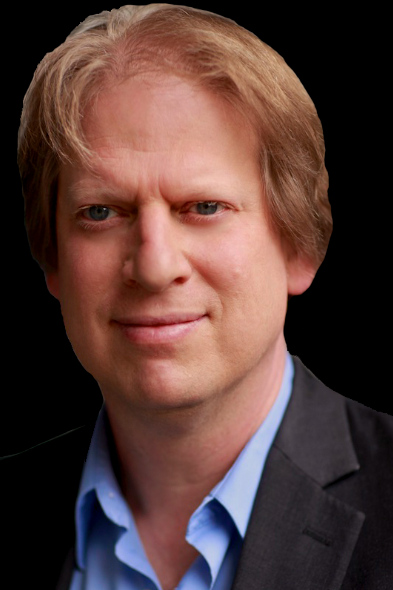 Paul Bloom合作论文数University of Toronto;Yale University5
 Marc Hauser合作论文数Risk-Eraser, LLC;Fletcher & Company;International Children's Aid Network2
 Madhawee Fernando合作论文数1
 Sudha Arunachalam合作论文数Department of Linguistics, College of Arts & Science, New York University1
 Wilma Bainbridge合作论文数Department of Psychology, The University of Chicago1
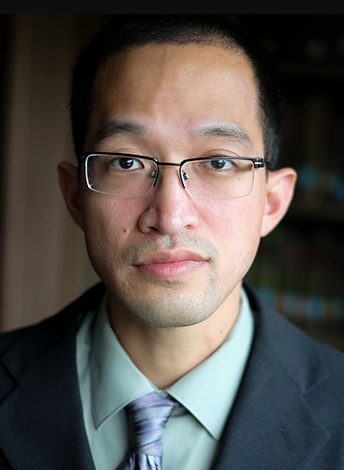 James Lee合作论文数College of Liberal Arts, University of Minnesota1
 Hilary Barth合作论文数Department of Psychology, Wesleyan University1
 Simon Baron-Cohen合作论文数Department of Psychology, University of Cambridge;Autism Research Centre, Department of Psychiatry, University of Cambridge1
 Elizabeth Spelke合作论文数Laboratory for Developmental Studies, Harvard University;Department of Psychology, Harvard University1
 Valen Johnson合作论文数Department of Statistics, College of Arts & Sciences, Texas A&M University1
 Christopher F. Chabris合作论文数Department of Psychology;Harvard University;Department of Psychology, Harvard University1
 Jonathan F Kominsky合作论文数1
 Patric Bach合作论文数School of Psychology, University of Wales1
 Alp Aslan合作论文数Department of Experimental Psychology, Regensburg University1
 Omar Sultan Haque合作论文数1
 Fritz Tsao合作论文数1
 Nilufa Ali合作论文数Department of Psychology, Anglia Ruskin University1
 Bryce Huebner合作论文数Department of Philosophy, Georgetown University1Andrew Scott Baron合作论文数Harvard University1
 Frank Keil合作论文数Department of Psychology, Yale University;Cognition and Development Lab, Yale University1




