The Editor-in-Chief of Critical Care Medicine thanks the following physicians and healthcare professionals for contributing their time and expertise to the review of the manuscripts submitted to Critical Care Medicine from the previous year. Peer review is one of the most important cornerstones assuring the publication of the highest quality science and medical research. We sincerely appreciate the enormous amount of time and effort expended in 2011 by our outstanding reviewers.
The purpose of this study was to determine the physiological and biomechanical effects of four seat position/handlebar configurations at a race-simulated workrate and duration. Six trained, male cyclists (mean age 22.17 yr, 19-26 age range) volunteered to participate in this study. Subjects performed a 60 minute simulated time trial in their normal cycling position to determine the cadence and workload to be used during their position tests. The position tests consisted of the cyclists' normal seat position with drop style handlebars (ND), normal seat position with aerodynamic handlebars (NA), forward seat position with drop handlebars (FD), and forward seat position with aero' handlebars (FA). Oxygen consumption (VO2), respiratory rate (RR), minute ventilation (VE), torque applied to the instrumented left crank arm of the cycle ergometer, and the position of the crank arm were collected every ten minutes for one hour. Gross mechanical efficiency (GME), peak maximum(MaxT) and minimum torque (MinT) values, the location of peak maximum torque(LMaxT) during the crank revolution, and the net propulsive impulse (NI) were calculated from the data. A two-way repeated measures ANOVA with planned comparisons between ND and the other positions was performed. The following variables were determined to be significant (p<.0027): RR was less for ND than NA at 30min, and FA at 10 and 30min: VE was less for ND than NA at 40 and 60min: MaxT was higher for NA than ND, FD, and FA: MinT was the least for ND and NA:NI was greater for NA than ND: LMaxT occurred later in the crank revolution during FD and FA. VO2 and GME were not significantly different between positions. In conclusion, maintaining an aerodynamic cycling posture with a forward seat position alters physiological and biomechanical responses during long duration exercise at a race-simulated workrate.
A DNA clone of HIV-1 containing the full-length infectious viral sequence was cleaved at a unique Nco I restriction site within the viral genome, and DNA fragments containing the 5' and 3' portions of the HIV genome were subcloned into separate plasmid vectors. The 5' 'half-virus' construct was further modified by incorporating a class IIS restriction site, Esp3I, near the 3' end of the protease gene of HIV. This site, in combination with a natural ApaI site near the 5' end of the protease gene, creates a convenient cassette shuttle vector in which the protease coding region can be easily replaced. Recombinant viruses containing protease genes either altered by site-directed mutagenesis or amplified from clinical or laboratory isolates can be reconstructed. The DNA fragment containing the protease gene is first subcloned into the 5' half-virus shuttle vector plasmid. Infectious recombinant virus is subsequently recovered by cotransfecting 5' and 3' half-virus plasmids linearized at their common Nco I sites into mammalian cells. This method was successfully applied to constructing viruses containing various substitutions in protease.
Partial exchange transfusions are performed in sickle cell patients for a variety of reasons. An algorithm to plan a nonautomated exchange in patients with sickle cell syndromes was developed and validated by a study of 40 such procedures. Formulas that can be used to explore alternatives, by assessing at any point during the exchange the current concentration of sickleable cells and the hematocrit, were devised: a computer program in BASIC is available for maximum versatility. The two most important determinants of the exchange are the patient's initial hematocrit and the desired final concentration of sickleable cells; the rate and type of exchange (continuous or discontinuous) are not important. The final hematocrit depends on the type of blood product used. An exchange can be performed with packed red blood cells (PRBC), whole blood (or its equivalent, PRBC reconstituted with albumin), or it can be started with PRBC and continued with whole blood. Whole blood decreases the concentration of sickeleable cells rapidly and increases the hematocrit slowly; it does not markedly increase the viscosity. PRBCs decrease the concentration of sickleable cells more slowly and increase the hematocrit faster; thus, they may increase the blood viscosity to dangerous levels.
Simple transfusion in sickle cell syndromes raises the hematocrit (Hct), while still large proportions of cells with sickling potential are in the circulation, with a dangerous increase in blood viscosity. In certain life-threatening situations, exchange transfusion is the only means to rapidly decrease the circulating sickle cells. Computations of the amount and type of blood to be used are often needed with great urgency. We have developed an algorithm for computer analysis of the various factors to be considered: patient's Hct, desired amount of remaining sickle cells, type of blood needed and rate of exchange. When the Hct is < 19%, exchange transfusion can be performed with packed RBCs; when the Hct is 19%-33%, an initial exchange with packed RBCs has to be followed by transfusion with packed cells diluted to a Hct of 40% with saline. In those rare patients with Hct > 33% it is also necessary to reduce the Hct by removing 8% of the blood volume. Using these measures, an exchange transfusion can be performed to reduce the concentration of sickle cells to any level, without raising the Hct above a set limit (usually 41%). We have also derived through differential analysis, simple formulas to determine the amount and type of blood to be used, with good approximation, using a hand-held calculator. The assumptions of these models were verified in 8 patients with sickle cell syndrome who were exchange-transfused in the last few months. This appears to be a needed and useful tool in the management of patients with sickle cell syndromes in life-threatening situations.
AbstractDie nach bekannten Methoden aus 3‐Phenyl‐phthalid dargestellten Phthalide (I) liegen in Lösung [z. B. Propanol‐(2)] bei Raumtemperatur in Form der Lac tone vor, die als Hydrobromide isoliert werden.
It was shown that 3-phenyl-3-(2-aminoethyl)phthalide (6, R = H) and its N-methyl analog (6, R = CH3) existed in the amino lactone form in solution at room temperature. In the absence of solvents, however, these compounds underwent a spontaneous transformation into the 5-phenyl-2,3,4,5-tetrahydro-1H-2-benzazepin-1-ones (8, R = H, CH3) which suffered dehydration in sulfuric acid with the formation of 5-phenyl-2,3-dihydro-1H-2-benzazepin-1-ones (9, R = H, CH3).This benzazepine synthesis can be considered to be analogous to the known (12–15) conversion of 1-aminomethylphthalides (11) to 4-hydroxy-3,4-dihydroisocarbostyrils (13).
 C SEAMAN合作论文数4S Piomelli合作论文数3Francine Blei合作论文数2D. E. HORNING合作论文数2G. Albaiceta合作论文数1R Agbeko合作论文数1Elizabeth D. Anton合作论文数1RA HORLICK合作论文数1Rj Tritch合作论文数1J Anderson合作论文数1Lt Bacheler合作论文数1
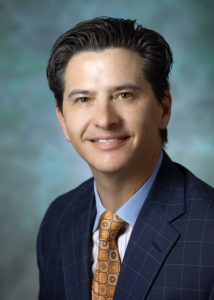 Sean M. Berenholtz合作论文数Department of Anesthesiology and Critical Care Medicine, School of Medicine, Johns Hopkins University1
 Neeraj Badjatia合作论文数Department of Neurology, University of Maryland School of Medicine1Andrew Bersten合作论文数College of Medicine and Public Health, Flinders University1
 Amber Barnato合作论文数School of Medicine, The Dartmouth Institute for Health;Policy & Clinical Practice;Geisel School of Medicine;Dartmouth-Hitchcock Norris Cotton;Cancer Center1Barochia Amisha V合作论文数1
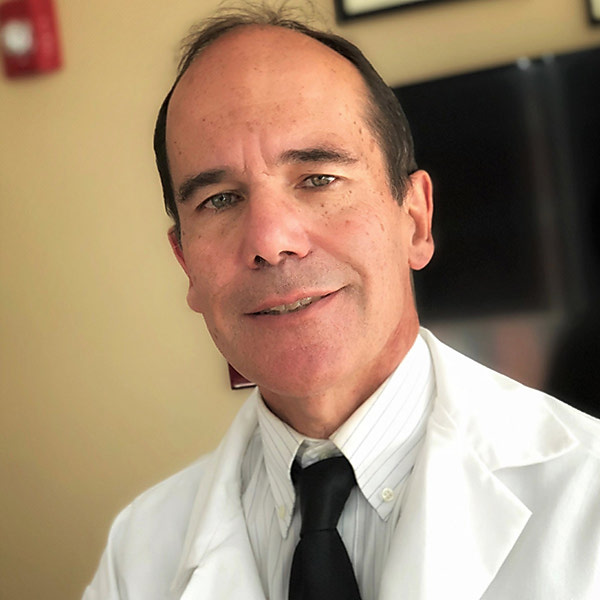 Joshua A. Boyce合作论文数Division of Allergy and Clinical Immunology, Brigham and Women’s Hospital;Harvard Medical School;Jeff and Penny Vinik Center for Allergic Disease Research1Anders Lundequist合作论文数1Emily Cozzi合作论文数1Avdalovic Mark V合作论文数UCDMC, UC Davis School of Medicine1
 Earnest Alexander合作论文数1Sergio Piomelli合作论文数Pediatric Hematology Laboratory, College of Physicians & Surgeons, Columbia University1
 Sean Bagshaw合作论文数General Systems Intensive Care Unit, Department of Critical Care Medicine, Faculty of Medicine & Dentistry, University of Alberta;Critical Care Strategic Clinical Network, Alberta Health Services1H. Scarnati合作论文数1Simon V. Baudouin合作论文数1
 Lorenzo Appendini合作论文数Fondazione Salvatore Maugeri;Istituto Scientifico di Veruno;Divisione di Pneumologia;Fondazione Salvatore Maugeri, Istituto Scientifico di Veruno1Jamil Assreuy合作论文数Depto.Farmacologia, Instituto Ciências Biológicas Universidade Federal do Rio de Janeiro1
 Olivier Axler合作论文数1
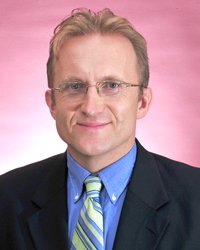 Andriy I. Batchinsky合作论文数U.S. Army Institute of Surgical Research1
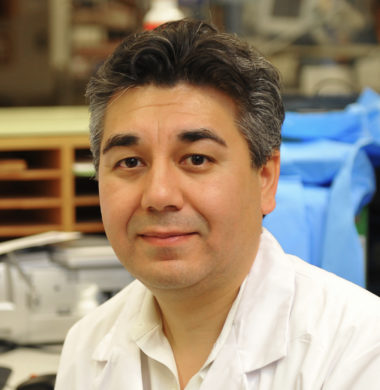 Najib T. Ayas合作论文数Department of Medicine, Faculty of Medicine, The University of British Columbia1
 Gregory Beilman合作论文数Department of Surgery, Medical School, University of Minnesota1Ronald G Knowlton合作论文数1Hans Ackerman合作论文数1
 Bruno Baudin合作论文数1John H. Beigel合作论文数1Wissam Abouzgheib合作论文数1P. De Vita合作论文数1Subramanian Appavu合作论文数1William R. Andrews合作论文数1
 Motier Daniel Becque合作论文数1Iyad M. Ayoub合作论文数1
 Philip S Barie合作论文数Department of Surgery, Weill Cornell Medicine College, Cornell University1
 Andrew Argent合作论文数Department of Paediatrics and Child Health, University of Cape Town1
 Jamal A Alhashemi合作论文数1Shahar Bar-Yosef合作论文数1
 Philip N. Ainslie合作论文数Centre for Heart, Lung & Vascular Health, School of Health and Exercise Sciences, Faculty of Health and Social Development, University of British Columbia Okanagan1Douglas A. Arenberg合作论文数1Ednan Bajwa合作论文数1




