While neutrinos are often treated as a background for many dark matter experiments, these particles offer a new avenue for physics: the detection of core-collapse supernovae. Supernovae are extremely energetic, violent and complex events that mark the death of massive stars. During their collapse stars emit a large number of neutrinos in a short burst. These neutrinos carry 99% of the emitted energy which makes their detection fundamental in understanding supernovae. This paper illustrates how COSINUS (Cryogenic Observatory for SIgnatures seen in Next-generation Underground Searches), a sodium iodide (NaI) based dark matter search, will be sensitive to the next galactic core-collapse supernova. The experiment is composed of two separate detectors which will respond to far away and nearby supernovae. The inner core of the experiment will consist of NaI crystals operating as scintillating calorimeters. These crystals will mainly be sensitive to the Coherent Elastic Neutrino-Nucleus Scattering (CE ν NS) against Na and I nuclei. The low mass of the cryogenic detectors enables the experiment to identify close supernovae within 1 kpc without pileup. The crystals will see up to hundreds of CE ν NS events from a supernova happening at 200 pc. They reside at the center of a large cylindrical 230 T water tank, instrumented with 30 photomultiplier tubes. This tank acts simultaneously as a passive and active shield able to detect the Cherenkov radiation induced by impinging charged particles from ambient and cosmogenic radioactivity. A supernova near the Milky Way Center (10 kpc) will be easily detected inducing ∼60 measurable events, and the water tank will have a 3 σ sensitivity to supernovae up to 22 kpc, seeing ∼10 events. This paper shows how, even without dedicated optimization, modern dark matter experiments will also be able to play their part in the multi-messenger effort to detect the next galactic core-collapse supernova.
Cryogenic Observatory for SIgnatures seen in Next-generation Underground Searches (COSINUS) will use cryogenic sodium iodide (NaI) calorimeters to search for dark matter. Recently, the construction of an underground facility at Laboratori Nazionali del Gran Sasso (LNGS) for COSINUS has been completed. The features of the COSINUS facility allow for a low background environment for rare event searches. This facility will house a dry dilution refrigerator, which will sit in a drywell inside a water tank. The water tank will be instrumented with photomultiplier tubes and serve as an active muon veto as well as a passive shield.
In the last years, the COSINUS (Cryogenic Observatory for SIgnals seen in Next generation Underground Searches) experiment has made significant progress both in the construction of its facility and in pursuing its physics goals: At Laboratori Nazionali del Gran Sasso (LNGS) in Italy, an underground facility was constructed, which will house experimental detectors for dark matter direct detection in a dry dilution cryostat. Construction of the main structures at the COSINUS site is finished, including the control building, the cryostat access level, and the water tank which will serve as a Cherenkov muon veto around the cryostat. With a nuclear recoil threshold of 4 keV, the latest COSINUS detector prototype approaches the design goal of 1 keV, and particle discrimination on event-by-event basis has been demonstrated. This contribution gives a brief overview on the status of COSINUS.
Diamond operated as a cryogenic calorimeter is an excellent target for direct detection of low-mass dark matter candidates. Following the realization of the first low-threshold cryogenic detector that uses diamond as absorber for astroparticle physics applications, we now present the resulting exclusion limits on the elastic spin-independent interaction cross-section of dark matter with diamond. We measured two 0.175 g CVD (Chemical Vapor Deposition) diamond samples, each instrumented with a Transition Edge Sensor made of Tungsten (W-TES). Thanks to the energy threshold of just 16.8 eV of one of the two detectors, we set exclusion limits on the elastic spin-independent interaction of dark matter particles with carbon nuclei down to dark matter masses as low as 0.122 GeV/c ^2 . This work shows the scientific potential of cryogenic detectors made from diamond and lays the foundation for the use of this material as target for direct detection dark matter experiments.
Sodium iodide (NaI)-based cryogenic scintillating calorimeters using quantum sensors for signal readout have shown promising first results toward a model-independent test of the annually modulating signal detected by the DAMA/LIBRA dark matter experiment. The COSINUS Collaboration has previously reported on the first above-ground measurements using a dual-channel readout of phonons and light based on transition edge sensors (TESs) that allows for particle discrimination on an event-by-event basis. In this article, we outline the first underground measurement of a NaI cryogenic calorimeter readout via the novel remoTES scheme. A 3.67 g NaI absorber with an improved silicon light detector design was operated at the Laboratori Nazionali del Gran Sasso, Italy. A significant improvement in the discrimination power of e−/γ events to nuclear recoils was observed with a fivefold improvement in the nuclear recoil baseline resolution, achieving σ=441 eV. Furthermore, we present a limit on the spin-independent dark matter nucleon elastic scattering cross section, achieving a sensitivity of O(pb) with an exposure of only 11.6 g d. Published by the American Physical Society 2024
CRESST is an experiment for the direct detection of dark matter, capable of detecting nuclear recoils down to 10 eV, which results in an impressive sensitivity for sub-GeV dark matter particles. For a better understanding of the measured background a background model is developed. The background components are considered via Geant4 simulations. At the current state, the CRESST background model only considers bulk contaminations and treats all detector surfaces as perfect plains. This contribution presents potential effects of a surface contamination with radiogenic nuclides, in combination with the influence of the crystals surface roughness. Nuclide decays near the crystal surface may lead to partial energy deposition inside the detector, potentially causing MeV energy events to influence the background in the keV energy range. Since default Geant4 is not capable of simulating a rough surface, a new extension for simulating a rough surface is developed and the impact of different roughness configurations is studied.
The main goal of the CRESST-III experiment is the direct detection of dark matter particles via their scattering off target nuclei in cryogenic detectors. In this work we present the results of a silicon-onsapphire (SOS) detector with a mass of 0.6 g and an energy threshold of (6.7 + 0.2) eV with a baseline energy resolution of (1.0 + 0.2) eV. This allowed for a calibration via the detection of single luminescence photons in the eV-range, which could be observed in CRESST for the first time. We present new exclusion limits on the spin-independent and spin-dependent dark matter-nucleon cross section that extend to dark matter particle masses of less than 100 MeV/c2.
Using CaWO$_4$ crystals as cryogenic calorimeters, the CRESST experiment searches for nuclear recoils caused by the scattering of potential Dark Matter particles. A reliable identification of a potential signal crucially depends on an accurate background model. In this work we introduce an improved normalisation method for CRESST's model of the electromagnetic backgrounds. Spectral templates, based on Geant4 simulations, are normalised via a Bayesian likelihood fit to experimental background data. Contrary to our previous work, no assumption of partial secular equilibrium is required, which results in a more robust and versatile applicability. Furthermore, considering the correlation between all background components allows us to explain 82.7% of the experimental background within [1 keV, 40 keV], an improvement of 18.6% compared to our previous method.
In recent times, the sensitivity of low-mass direct dark matter searches has been limited by unknown low energy backgrounds close to the energy threshold of the experiments known as the low energy excess (LEE). The CRESST experiment utilises advanced cryogenic detectors constructed with different types of crystals equipped with Transition Edge Sensors (TESs) to measure signals of nuclear recoils induced by the scattering of dark matter particles in the detector. In CRESST, this low energy background manifests itself as a steeply rising population of events below 200 eV. A novel detector design named doubleTES using two identical TESs on the target crystal was studied to investigate the hypothesis that the events are sensor-related. We present the first results from two such modules, demonstrating their ability to differentiate between events originating from the crystal's bulk and those occurring in the sensor or in its close proximity.
Cryogenic phonon detectors with transition-edge sensors achieve the best sensitivity to light dark matter-nucleus scattering in current direct detection dark matter searches. In such devices, the temperature of the thermometer and the bias current in its readout circuit need careful optimization to achieve optimal detector performance. This task is not trivial and is typically done manually by an expert. In our work, we automated the procedure with reinforcement learning in two settings. First, we trained on a simulation of the response of three CRESST detectors used as a virtual reinforcement learning environment. Second, we trained live on the same detectors operated in the CRESST underground setup. In both cases, we were able to optimize a standard detector as fast and with comparable results as human experts. Our method enables the tuning of large-scale cryogenic detector setups with minimal manual interventions.
COSINUS is a new cryogenic observatory for rare event searches located in the Laboratori Nazionali del Gran Sasso in Italy. COSINUS’s first goal is to clarify whether the signal detected by the DAMA/LIBRA experiment originates from dark matter particle interactions or has a different nature. To this aim, sodium iodide (NaI) cryogenic scintillating calorimeters read out by transition edge sensors (TESs) are developed. To preserve the NaI crystal from the TES fabrication process, COSINUS implemented a novel design, the remoTES, where the TES is deposited on a separate wafer and coupled to the absorber through a Au-bonding wire and a Au-phonon collector. This design has reached baseline resolutions below 100 eV for Si, 200 eV for TeO_2 and 400 eV for NaI absorbers. These results show that the remoTES not only brings COSINUS close to its performance goal of 1 keV energy threshold, but also offers the possibility to employ delicate crystals previously excluded for cryogenic applications as absorbers and to avoid the exposure of the absorbers to the TES fabrication process. It therefore extends the choice of target materials of the rare event searches using TES. In this work, we will provide a detailed description of the remoTES design and present the results of the latest prototypes.
Recently low-mass dark matter direct searches have been hindered by a low energy background, drastically reducing the physics reach of the experiments. In the CRESST-III experiment, this signal is characterised by a significant increase of events below 200 eV. As the origin of this background is still unknown, it became necessary to develop new detector designs to reach a better understanding of the observations. Within the CRESST collaboration, three new different detector layouts have been developed and they are presented in this contribution.
COSINUS is a dark matter (DM) direct search experiment that uses sodium iodide (NaI) crystals as cryogenic calorimeters. Thanks to the low nuclear recoil energy threshold and event-by-event discrimination capability, COSINUS will address the long-standing DM claim made by the DAMA/LIBRA collaboration. The experiment is currently under construction at the Laboratori Nazionali del Gran Sasso, Italy, and employs a large cylindrical water tank as a passive shield to meet the required background rate. However, muon-induced neutrons can mimic a DM signal therefore requiring an active veto system, which is achieved by instrumenting the water tank with an array of photomultiplier tubes (PMTs). This study optimizes the number, arrangement, and trigger conditions of the PMTs as well as the size of an optically invisible region. The objective was to maximize the muon veto efficiency while minimizing the accidental trigger rate due to the ambient and instrumental background. The final configuration predicts a veto efficiency of 99.63 $\pm$ 0.16 $\%$ and 44.4 $\pm$ $5.6\%$ in the tagging of muon events and showers of secondary particles, respectively. The active veto will reduce the cosmogenic neutron background rate to 0.11 $\pm$ 0.02 cts$\cdot$kg$^{-1}$$\cdot$year$^{-1}$, corresponding to less than one background event in the region of interest for the whole COSINUS-1$\pi$ exposure of 1000 kg$\cdot$days.
Lambda-Cold Dark Matter (Lambda CDM) has been successful at explaining the large-scale structures in the universe but faces severe issues on smaller scales when compared to observations. Introducing self-interactions between dark matter particles claims to provide a solution to the small-scale issues in the Lambda CDM simulations while being consistent with the observations at large scales. The existence of the energy region in which these self-interactions between dark matter particles come close to saturating the S-wave unitarity bound can result in the formation of dark matter bound states called darkonium. In this scenario, all the low energy scattering properties are determined by a single parameter, the inverse scattering length gamma. In this work, we set bounds on gamma by studying the impact of darkonium on the observations at direct detection experiments using data from CRESST-III and XENON1T. The exclusion limits on gamma are then subsequently converted to exclusion limits on the self-interaction cross-section and compared with the constraints from astrophysics and N-body simulations.
The Cryogenic Rare Event Search with Superconducting Thermometers (CRESST) experiment employs scintillating crystals at extremely low temperatures (O 10mK) to search for nuclear recoils from hypothetical dark matter (DM) particles. CRESST has achieved thresholds below 100 eV with a wide range of target materials including CaWO4, LiAlO2, Al2O3, and Si. However, at these energies, the ability to discriminate between potential DM signals and electromagnetic background is insufficient. A detailed Geant4-based electromagnetic background model was developed for CRESST and is being continuously adapted to CRESST's current inventory of detector modules. We use a high-dimensional Bayesian likelihood fit of spectral templates to the measured spectrum to infer activities of various background sources. A template for the calibration source used to calculate the energy scale will be included in the likelihood fit. We present the status of CRESST's background model, and results from the simulation of the energy calibration. Our future plans of improving the background model are also discussed.
COSINUS will be among the first underground experiments to operate Transition Edge Sensors in a dry dilution refrigerator, measuring temperature changes on the order of μ K. A pulse tube cryocooler is used to cool down to 3K, trading simplified handling, by not using liquid noble gases, for an increased vibration noise level in the acoustic frequency range. As the signals measured with a TES are in the same frequency region, it is necessary to decouple the detectors from all possible noise sources. In COSINUS, a two-level passive decoupling system was developed and tested using piezo-based accelerometers. At the first level, the refrigerator is mechanically isolated from all external noise sources. For the second level an internal spring-based system was developed and tested on a mockup system. On the first level a reduction of the vibrational background up to a factor 4 below 10 Hz could be measured. On the second level a resonance frequency of 1.2 Hz with damping of higher frequencies was achieved.
The COSINUS direct dark matter experiment situated at Laboratori Nazionali del Gran Sasso in Italy is set to investigate the nature of the annually modulating signal detected by the DAMA/LIBRA experiment. COSINUS has already demonstrated that sodium iodide crystals can be operated at mK temperature as cryogenic scintillating calorimeters using transition edge sensors, despite the complication of handling a hygroscopic and low melting point material. With results from a new COSINUS prototype, we show that particle discrimination on an event-by-event basis in NaI is feasible using the dual-channel readout of both phonons and scintillation light. The detector was mounted in the novel remoTES design and operated in an above-ground facility for 9.06 g$\cdot$d of exposure. With a 3.7 g NaI crystal, e$^-$/$\gamma$ events could be clearly distinguished from nuclear recoils down to the nuclear recoil energy threshold of 15 keV.
Cryogenic scintillating calorimeters are ultrasensitive particle detectors for rare event searches, particularly for the search for dark matter and the measurement of neutrino properties. These detectors are made from scintillating target crystals generating two signals for each particle interaction. The phonon (heat) signal precisely measures the deposited energy independent of the type of interacting particle. The scintillation light signal yields particle discrimination on an event-by-event basis. This paper presents a likelihood framework modeling backgrounds and a potential dark matter signal in the two-dimensional plane spanned by phonon and scintillation light energies. We apply the framework to data from CaWO$_4$-based detectors operated in the CRESST dark matter search. For the first time, a single likelihood framework is used in CRESST to model the data and extract results on dark matter in one step by using a profile likelihood ratio test. Our framework simultaneously fits (neutron) calibration data and physics (background) data and allows combining data from multiple detectors. Although tailored to CaWO$_4$-targets and the CRESST experiment, the framework can easily be expanded to other materials and experiments using scintillating cryogenic calorimeters for dark matter search and neutrino physics.
In recent years, high sensitivity, low-threshold detectors employing transition edge sensor (TES) read out technology have garnered significant interest in the field of rare-event searches. Numerous experiments have incorporated these detectors for direct dark matter detection and coherent elastic neutrino-nucleus scattering (CE.NS) studies. As these experiments scale up and operate larger arrays, a key challenge is to enhance the reproducibility among detectors while promoting modularity in terms of both the choice of absorber and sensor. COSINUS (Cryogenic Observatory for SIgnals seen in Next-generation Underground Searches) has experimentally demonstrated that a novel cryogenic detector scheme, known as remoTES, can address these challenges. This contribution outlines findings from a systematic study of Si prototypes, highlighting ongoing optimization efforts to achieve better detector performance.
New-generation direct searches for low mass dark matter feature detection thresholds at energies well below 100 eV, much lower than the energies of commonly used X-ray calibration sources. This requires new calibration sources with sub-keV energies. When searching for nuclear recoil signals, the calibration source should ideally cause mono-energetic nuclear recoils in the relevant energy range. Recently, a new calibration method based on the radiative neutron capture on ^182W with subsequent de-excitation via single γ-emission leading to a nuclear recoil peak at 112 eV was proposed. The CRESST-III dark matter search operated several CaWO_4-based detector modules with detection thresholds below 100 eV in the past years. We report the observation of a peak around the expected energy of 112 eV in the data of three different detector modules recorded while irradiated with neutrons from different AmBe calibration sources. We compare the properties of the observed peaks with Geant-4 simulations and assess the prospects of using this for the energy calibration of CRESST-III detectors.
 S. Fichtinger合作论文数30Schwertner C.合作论文数30
 Felix Wagner合作论文数Institut für Hochenergiephysik, Österreichischen Akademie der Wissenschaften30Godehard Angloher合作论文数30Federica Petricca合作论文数MPI für Physik30
 M. Mancuso合作论文数Department of General Surgery;Medical School Hospital;University " Federico II;Medical School Hospital, University " Federico II30V. Zema合作论文数29M. Stahlberg合作论文数29
 Florian Reindl合作论文数29A. Garai合作论文数22Luigi Canonica合作论文数Istituto di Chimica Organica, Università Centro Naz. Chim. Sost. Org. Nat. del C.N.R.22D. Schmiedmayer合作论文数21J. Schieck合作论文数Fakultat fur Physik, Ludwig-Maximilians-Universitat Munchen21A. Bento合作论文数21S. Di Lorenzo合作论文数20M. Kaznacheeva合作论文数20F. Pucci合作论文数20I. Usherov合作论文数20Ortmann T.合作论文数20Angelina Kinast合作论文数20j jochum合作论文数20R. Strauss合作论文数20J. Rothe合作论文数20C. Strandhagen合作论文数20M. Olmi合作论文数20
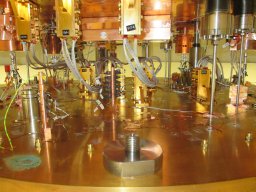 Antonio D'Addabbo合作论文数Lab Nazl Gran Sasso, INFN20H. Kluck合作论文数20
 Pavel Povinec合作论文数Department of Nuclear Physics and Biophysics, Faculty of Mathematics, Physics and Informatics, Comenius University20
 Giovanni Benato合作论文数University of Zürich, Universität Zürich20
 Miroslav Jeskovsky合作论文数Comenius University, Comenius University20
 Carmine Elvezio Pagliarone合作论文数Department of Civil and Mechanical Engineering, Università degli Studi di Cassino e del Lazio Meridionale20Leo Stodolsky合作论文数20
 Carlo Bucci合作论文数Laboratori Nazionali del Gran Sasso, Istituto Nazionale di Fisica Nucleare20
 V. M. Mokina合作论文数20Walter Potzel合作论文数20
 Hans Kraus合作论文数Department of Physics, University of Oxford20Barry D. Fuchs合作论文数20Dieter Hauff合作论文数20
 Andreas Erb合作论文数20
 R. Breier合作论文数Faculty of Mathematics, Physics and Informatics, Comenius University20Paolo Gorla合作论文数Laboratorio de Fisica Nuclear;Universidad de Zaragoza;Laboratorio de Fisica Nuclear, Universidad de Zaragoza20
 Luigi Pattavina合作论文数Sez. INFN di Mi-Bicocca20S. Gupta合作论文数19L. Marini合作论文数19Franz Probst合作论文数19
 Vasile Mihai Ghete合作论文数Institute of High Energy Physics, Austrian Academy of Sciences18S. Banik合作论文数17
 Karoline Schaffner合作论文数17M. Willers合作论文数16




