In this article, a novel framework that fuses the posture data taken by a drone (or unmanned aerial vehicle, UAV) camera and the wearable sensors data recorded by smartwatches is proposed. The framework is designed for continuously tracking persons in a drone view by analyzing location-independent human posture features and correctly tagging smartwatch identities (IDs) and personal profiles to video human objects, thus conquering the former work in requiring ground markers. Person detection, ID assignment, and pose estimation are integrated into our framework to obtain recognized human postures. These recognized postures are then paired with those from the wearable sensors. Through fusing common postures, such as standing, walking, jumping, and falling down, person tracking accuracy by UAV up to 95.36% can be attained in our testing scenarios.
This paper considers the emergency behavior detection problem inside an elevator. As elevators come in different shapes and emergency behavior data are scarce, we propose a skeleton-based view-invariant framework to tackle the camera view angle variation issue and the data collection issue. The proposed emergency fall detection model only needs to be trained for a target camera, which is deployed in an elevator at a manufacture’s lab, from which a large amount of training data can be collected. The deployment of a source camera, which is in a customer-side elevator, hence can be customized and almost no training effort is needed. Our framework works in four stages. First, a 2D RGB input image is taken from the source camera and a 2D human skeleton is obtained by 2D pose estimation (AlphaPose). Second, the 2D skeleton is converted to a 3D human skeleton by 3D pose estimation (3D pose baseline). Third, a pre-trained rotation-translation (RT) transform (Procrustes analysis (PA)) aligns the 3D pose representations to the target camera view. Finally, a dual 3D pose baseline deep neural networks (D3PBDNN) model for human fall detection is proposed to perform the recognition task. We gather a human fall detection dataset inside different elevators from various view angles and validate our proposal. Experimental results successfully attain almost equivalent accuracy to that of a source camera-trained model.
In this paper, we present accuracy-time efficient hyperparameter optimization (HPO) using advantage actor-critic (A2C)-based reinforcement learning (RL) and early stopping in OpenAI Gym environment. The A2C RL can improve the hyperparameter selection such that the resulting accuracy of machine learning (ML) algorithms including XGBoost, support vector classifier (SVC), random forest shows comparable. According to the specified accuracy of the ML algorithms, the early stopping scheme can save the computation cost. Ten standard datasets are used to valid the accuracy-time efficient HPO. Experimental results show that the presented accuracy-efficient HPO architecture can improve 0.77% accuracy on average compared with default hyperparameter for random forest. The early stopping can save 64% computation cost on average compared to without early stopping for random forest.
In this paper, an edge-computed and controlled outdoor autonomous UA V system is proposed to monitor the safety helmet wearing of workers in construction sites. Detection and counting of the workers with safety helmets of specified colors and those without safety helmets is the main focus of this work. Five standard safety helmet colors including blue, orange, red, white, and yellow are considered. The novelties of the work are 1) the design of a modularized software architecture running on an Android smartphone as an edge device for outdoor autonomous UA V navigation, 2) the implementation of realtime colorwise detection and counting of workers with and without safety helmets from UAV's first-person view (FPV), 3) the implementation of a simple upper-side cropping and hue, saturation, value (HSV) filtering method for color decision. The resulting average safety helmet detection accuracy for 10 different cases is 81.02%.
Inter-vehicle communication is being developed continuously in order to accomplish a better driving experience. Through the exchange of information between vehicles and Road Side Unit (RSU), number of accidents can be reduced by notifying the driver through the facts obtained. In general, broadcast information for vehicles is sent in an ad hoc manner. However, unfiltered information may be useless and wasted for most vehicles. Thus, a raised question is whether precise information can be delivered only to the target vehicles without interfering with other non-target vehicles. A computer vision (CV) and sensor fusion-based transmission system are exchanged by RSU and Vehicle On-board Unit (OBU) is developed to attain this objective. In order to correctly transmit the specific information to the target vehicles, we propose a data fusion driven lane-level precision data transmission system that utilizes three kinds of sensory inputs: Road Side Camera (RSC), GPS, and magnetometer. By combining common features from these sensory inputs, our system is able to select the receiver of specific information on the road. Our system focuses on the scenario where a message can be transmitted to the target vehicles located in a certain lane. The experimental evaluation shows a recognition rate of 87.34% and the generated messages have a total delay less than 72 ms.
Drones have been applied to a wide range of security and surveillance applications recently. With drones, Internet of Things are extending to 3D space. An interesting question is: Can we conduct person identification (PID) in a drone view? Traditional PID technologies such as RFID and fingerprint/iris/face recognition have their limitations or require close contact to specific devices. Hence, these traditional technologies can not be easily deployed to drones due to dynamic change of view angle and height. In this work, we demonstrate how to retrieve IoT data from users’ wearables and correctly tag them on the human objects captured by a drone camera to identify and track ground human objects. First, we retrieve human objects from videos and conduct coordination transformation to handle the change of drone positions. Second, a fusion algorithm is applied to measure the correlation of video data and inertial data based on the extracted human motion features. Finally, we can couple human objects with their wearable IoT devices, achieving our goal of tagging wearable device data (such as personal profiles) on human objects in a drone view. Our experimental evaluation shows a recognition rate of 99.5% for varying walking paths, and 98.6% when the drone’s camera angle is within 37°. To the best of our knowledge, this is the first work integrating videos from drone cameras and IoT data from inertial sensors.
In this paper, we propose an energy-saving elevator scheduling algorithm to reduce the car moving steps to achieve motor energy saving and green wireless communications. The proposed algorithm consisting of six procedures can attain fewer Internet of Things (IoT) message exchanges (i.e. communication transmissions) between the Scheduler subsystem and the Car subsystem via the core function AssignCar(r). The function AssignCar(r) is capable of assigning a request to the nearest car through car search globally. From the emulation results for four cars, this work shows that the proposed algorithm outperforms the previous work named as aggressive car scheduling with initial car distribution (ACSICD) algorithm with energy consumption reductions by 49.43%, 47.68%, 37.89%, and 47.65% for up-peak, inter-floor, downpeak, and all-day request patterns, respectively.
In this paper, we propose an energy-saving elevator scheduling algorithm to reduce the car moving steps to achieve motor energy saving and green wireless communications. The proposed algorithm consisting of six procedures can attain fewer Internet of Things (IoT) message exchanges (i.e. communication transmissions) between the Scheduler subsystem and the Car subsystem via the core function AssignCar(r). The function AssignCar(r) is capable of assigning a request to the nearest car through car search globally. From the emulation results for four cars, this work shows that the proposed algorithm outperforms the previous work named as aggressive car scheduling with initial car distribution (ACSICD) algorithm with energy consumption reductions by 49.43%, 47.68%, 37.89%, and 47.65% for up-peak, inter-floor, downpeak, and all-day request patterns, respectively. INDEX TERMS Car moving step, car scheduling, communication transmissions, elevator system, energy saving, green communications, internet of things (IoT), sensor, waiting/journey time.
This paper proposes ElevatorTalk, an elevator development and management system based on the Internet of Things (IoT) approach called IoTtalk. This system modularizes the software into elevator components so that we can develop flexible and scalable car scheduling algorithms. ElevatorTalk consists of three subsystems: cars, scheduler, and the elevator car operating (ECO) panel. The first two subsystems are used to develop the elevator systems, and the third subsystem is used to receive requests issued by the passengers. These three subsystems work in parallel, and communicate with each other through sending and receiving messages. ElevatorTalk can connect to a real elevator system to serve as the elevator management center. It can also emulate the existing elevator systems with different car scheduling algorithms. We propose an intelligent aggressive car scheduling with initial car distribution (ACSICD) algorithm in ElevatorTalk. Our paper indicates that ACSICD has better waiting/travel/journey time performance and/or accuracy than the previous proposed algorithms. We also show that in our approach, the car scheduling decision can be quickly made with 0.2010 ms, and therefore good performance in the time complexity is achieved.
This paper proposes an IoT-based intelligent hydroponic plant factory solution called PlantTalk. The novelty of our approach is that the PlantTalk intelligence can be built through an arbitrary smartphone. We show that PlantTalk can flexibly configure the connections of various plant sensors and actuators through a smartphone. One can also conveniently write Python programs for plant-care intelligence through the smart phone. The developed plant-care intelligence includes automatic LED lighting, water spray, water pump and so on. As an example, we show that the PlantTalk intelligence effectively lowers the CO2 concentration, and the reduction speed is 53% faster than a traditional plant system. PlantTalk has been extended for a plant factory called AgriTalk.
In this paper, Type-4 two-dimensional (2-D) separable denominator IIR filter architecture is studied. This structure has a critical path of one multiplication and three additions. Using this Type-4 2-D separable denominator IIR filter architecture, three new 2-D IIR filter structures with diagonal and four-fold rotational symmetries are given. These structures have a critical path of one multiplication and four additions. Further, using a different coefficient constraint, a new Type-3 2-D diagonal symmetry IIR filter architecture with a critical path of one multiplication and two additions is obtained. In all, four different 2-D IIR filter architectures with diagonal and four-fold rotational symmetries are presented.
Queuing recognition is a recently new raised research topic, which uses sensors of smartphones to automatically recognize human queuing behaviors. However, existing collaborative approaches need to exchange sensor data among nearby smartphones, causing extra communication overheads and even delay. In view of this, this work proposes a new framework called Qnalyzer for queuing recognition using accelerometer and Wi-Fi signals. It consists of three tiers. The first tier is run by each individual smartphone to identify each user's context without exchanging data with nearby smartphones. A new algorithm called QCF (Queuer and non-queuer ClassiFier) is proposed, which considers mixture features of accelerometer and Wi-Fi signals to effectively identify whether the user is queuing or not. The second tier is an algorithm called QCT (Queuers ClusTering) running at the server side to effectively identify which queuers belong to which queues based on users' movement features. The third tier is an estimation model called QPE (Queue Property Estimation) for measuring waiting time, service time, and queue lengths. The Qnalyzer prototype on Android smartphones and the corresponding performance evaluations under real-life queuing scenarios are implemented. The extensive experiment results show that Qnalyzer achieves good performance with high accuracy.
Detecting students’ attention in class provides key information to teachers to capture and retain students’ attention. Traditionally, such information is collected manually by human observers. Wearable devices, which have received a lot of attention recently, are rarely discussed in this field. In view of this, we propose a multimodal system which integrates a headmotion module, a pen-motion module, and a visual-focus module to accurately analyze students’ attention levels in class. These modules collect information via cameras, accelerometers, and gyroscopes integrated in wearable devices to recognize students’ behaviors. From these behaviors, attention levels are inferred for various time periods using a rule-based approach and a datadriven approach. The former infers a student’s attention states using user-defined rules, while the latter relies on hidden relationships in the data. Extensive experimental results show that the proposed system has excellent performance and high accuracy. To the best of our knowledge, this is the first study on attention level inference in class using wearable devices. The outcome of this research has the potential of greatly increasing teaching and learning efficiency in class. Keywords—Activity Recognition; Attention Sensing; Body-Area Network; Machine Learning; Wearable Computing
In this paper, we propose a low-cost high-speed Type-3 two-dimensional (2-D) multimode symmetry IIR filter architecture including four different operation modes: diagonal symmetry mode (DSM), fourfold rotational symmetry mode (FRSM), quadrantal symmetry mode (QSM), and octagonal symmetry mode (OSM). For multimode purpose, the Type-3 transfer function is applied and the interconnections to achieve corresponding four symmetry filter architectures are proposed. The proposed 2-D IIR filter structure has lower number of adders and shorter critical path than the published Type-1 IIR filter structure without sacrificing multipliers. Furthermore, the theoretical error analysis of 2-D IIR filter architectures with diagonal symmetry and four-fold rotational symmetry is studied.
This paper presents Intelligent Plant Care Hydroponic Box (IPCH-Box) that exercises environment driven control methods through an Internet-of-Things (IoT) management tool called IoTtalk. IoTtalk provides a scalable and configurable software for users to easily and quickly add/remove/exchange the sensors and actuators, and program their interactions. From the experimental measurement results of IPCH-Box, the developed environment driven control methods include LED lighting, water spray and water pump which can effectively lower the CO 2 concentration, the temperature and increase water level, respectively. Specifically, the time of CO 2 concentration reduction in IPCH-Box is 38.54% faster than that with the plant system without our mechanism.
In this work, a multiple stopping criteria and high-precision empirical mode decomposition (EMD) hardware architecture implementation is proposed for Hilbert-Huang transform (HHT) in biomedical signal processing. The proposed architecture can support multiple stopping criteria including the constant criteria, the SD criteria and the ratio criteria. The 38-bit floating point precision is adopted in this work to support 10 IMF components with enough accuracy. The off-chip memory architecture is adopted to increase the processing capacity. By the pipelined cubic spline coefficient unit (PCSCU), the computation time can be reduced. The proposed EMD hardware architecture is implemented in TSMC 90 nm CMOS process with the core area of 4.47 mm2 at the operating frequency of 40 MHz. The post-layout simulation result shows that our work with the constant criterion can speed up the performance 50.4 times compared to the software computation on a single core of ARM11 for 2K data size breathing signals.
In the intensive care unit (ICU), the situations of the critical patients vary rapidly. To give the patient the necessary medical treatment, the medical staffs need to response in no time. However, making the diagnosis is not easy since there is tremendous information to be processed in ICU. In this paper, a prototype human-centric graphical user interface (GUI) based on ecological interface design (EID) is implemented by C# that is compatible with Microsoft Windows system. The human-centric GUI integrates the necessary information and will help the medical staffs to interpret them efficiently. The waveforms of artificial vital signs are displayed to show the variations of those signs instantly. Besides, the GUI can display the heart/lung/kidney indicators in radar charts to assist medical staffs aware of abnormal indicators in a visual way.
In this paper, a power-area efficient geometry engine (GE) using a low-complexity three-level subdivision algorithm is presented. The proposed subdivision algorithm and architecture is capable of providing low complexity, high power-area efficiency, scalable and near-Phong shading quality. The forward difference, edge function recovery, dual space subdivision, triangle filtering, and triangle setup coefficient sharing schemes are employed to alleviate the redundant computation for the proposed algorithm. According to the low-complexity subdivision algorithm, one reconfigurable datapath is proposed to save the area since the same set of processing elements (PE) is reused for different operations of GE. Compared with the conventional subdivision algorithm, the proposed subdivision algorithm reduces the number of memory/register accesses for subdivision by 40% and 60.32% for level-1 and level-2 subdivision, respectively. In terms of the number of multiplications for transforms, the reduction can be attained by 27.5% and 60.27% for level-1 and level-2 subdivision, respectively. From the implementation results, the proposed GE can achieve the power-area efficiency of 518.8 Kvertices/(s·mW·mm 2 ) for level-1 subdivision.
This paper presents an energy-efficient fast independent component analysis (FastICA) implementation with an early determination scheme for eight-channel electroencephalogram (EEG) signal separation. The main contributions are as follows: 1) energy-efficient FastICA using the proposed early determination scheme and the corresponding architecture; 2) cost-effective FastICA using the proposed preprocessing unit architecture with one coordinate rotation digital computer-based eigenvalue decomposition processor and the proposed one-unit architecture with the hardware reuse scheme; and 3) low-computation-time FastICA using the four parallel one-units architecture. The resulting power dissipation of the FastICA implementation for eight-channel EEG signal separation is 16.35 mW at 100 MHz at 1.0 V. Compared with the design without early determination, the proposed FastICA architecture implemented in united microelectronics corporation 90 nm 1P9M complementary metal-oxide-semiconductor process with a core area of 1.221 × 1.218 mm 2 can achieve average energy reduction by 47.63%. From the post-layout simulation results, the maximum computation time is 0.29 s.
In this paper, we propose a pipelined reconfigurable fixed-width Baugh-Wooley multiplier design framework that provides four configuration modes (CMs): n × n fixed-width multiplier, two n/2 × n/2 fixed-width multipliers, n/2 × n/2 full-precision multiplier, and two n/A × n/A full-precision multipliers. Furthermore, low-power schemes including gated clock and zero input techniques are employed to achieve the power-efficient pipelined reconfigurable design. The presented power-efficient pipelined reconfigurable fixed-width multiplier design not only generates a family of widely used multipliers but also leads to 10.59, 21.7, 28.84, and 31.58 percent power saving, on average, for n = 8,16,24, and 32, respectively, compared with that of the pipelined reconfigurable fixed-width multiplier without using the low-power schemes. On the other hand, compared with non-reconfigurable pipelined multiplier, we can save 0.81, 12.46, 17.93, and 23.2 percent power consumption, respectively, for n = 8,16,24, and 32.
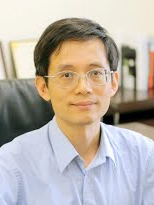 Yu-Chee Tseng (曾煜棋)合作论文数College of Artificial Intelligence, National Yang Ming Chiao Tung University;Department of Computer Science, National Yang Ming Chiao Tung University8
 Chin-Teng Lin合作论文数School of Computer Science, University Of Technology Sydney;Australian AI Institute, University Of Technology Sydney;GrapheneX-UTS Human-Centric AI Centre, University Of Technology Sydney;Computational Intelligence and Brain Computer Interface Lab, University Of Technology Sydney6
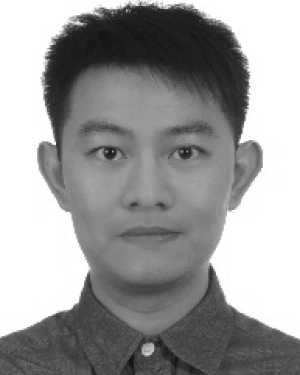 Tsung-Han Wu合作论文数5
 YU Yuan-Chu合作论文数4
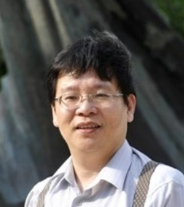 Jason Lin (林一平)合作论文数Tung Hai University;Academia Sinica;Providence University;Chung Hua University;Department of Computer Science, National Yang Ming Chiao Tung University;Miin Wu School of Computing, National Cheng Kung University;College of Artificial Intelligence, National Yang Ming Chiao Tung University4
 Tsung-Che Lu合作论文数3Chun-Hao Chang合作论文数National Chiao Tung University, Hsinchu, Taiwan Roc3
 Chun-Ming Huang合作论文数3
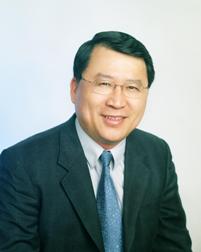 Sy-Yen Kuo (郭斯彥)合作论文数Department of Electrical Engineering, National Taiwan University3Jen-Feng Chung合作论文数2Sw Feng合作论文数2
 Susanta Sharma合作论文数2Tc Shing合作论文数2
 Tzu-Hsiang Chao合作论文数2
 Albert Budi Christian合作论文数Department of Computer Science and Information Engineering, Chang Gung University2
 Yun-Wei Lin合作论文数2
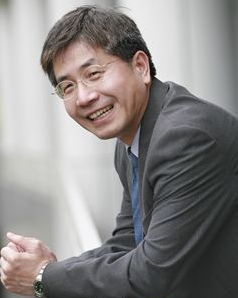 Jing-Yang Jou (周景揚)合作论文数Department of Electronic Engineering, National Yang Ming Chiao Tung University;National Chiao Tung University2
 Chengwei Wu (吴承伟)合作论文数National Cheng Kung University, Taiwan2
 Di-You Wu合作论文数2
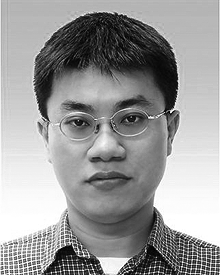 Chih-Chyau Yang合作论文数2Chih-Yu Lin合作论文数Department of Electrical Engineering, National Taiwan University of Science and Technology, Taipei, Taiwan2
 Peichen Yu合作论文数2
 Hari C. Reddy合作论文数california state university2
 Kuen-Jong Lee (李昆忠)合作论文数Department of Electrical Engineering, National Cheng Kung University2
 Wu-Shiung Feng合作论文数Department of Electronic Engineering, Chang Gung University2Chia-Hsuan Yu合作论文数1Js Wang合作论文数1S. Tenqchen合作论文数1Kit-Lun Tong合作论文数1
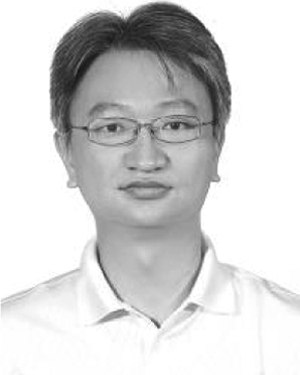 Hsin-Fu Luo合作论文数1Allumallu Veera Venkata Susmitha合作论文数1Lin-Hang Kao合作论文数1
 Lingyan Zhang (张凌燕)合作论文数School of Computer Science and Engineering, Central South University1Shih-Wei Yeh合作论文数1Sing-Jia Tzeng合作论文数1
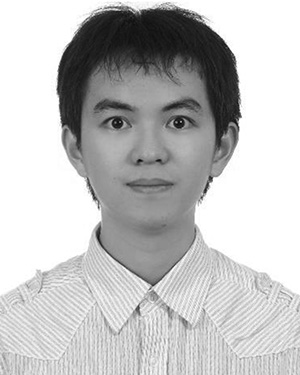 Kun-Ru Wu合作论文数1
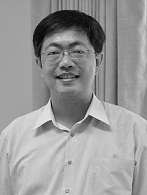 Chih-Wen Hsueh (薛智文)合作论文数Department of Computer Science and Information Engineering College of Electrical Engineering and Computer Science National Taiwan University1Pei-Yu Chen合作论文数National Taiwan University Hospital1
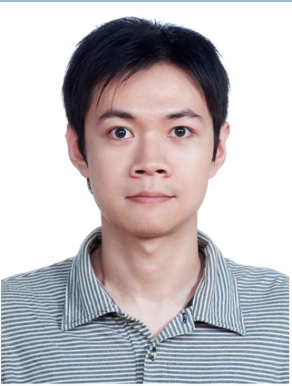 Cheng-Ming Huang合作论文数Department of Electrical Engineering, National Taiwan University of Science and Technology1
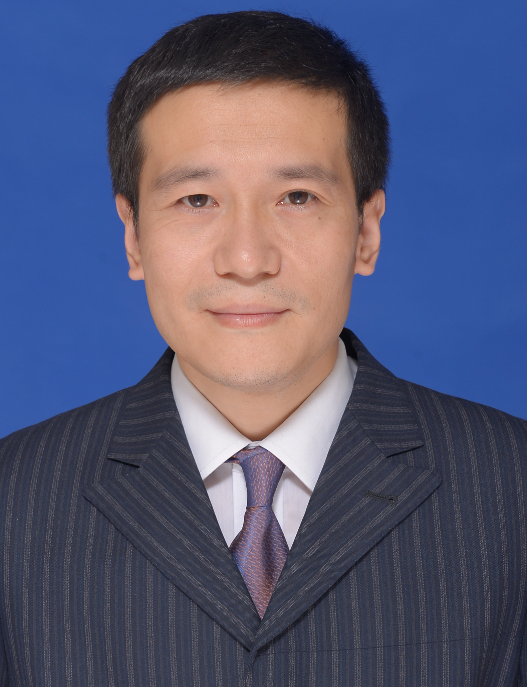 Chuncheng Yang (杨春成)合作论文数School of Materials Science and Engineering, Jilin University1
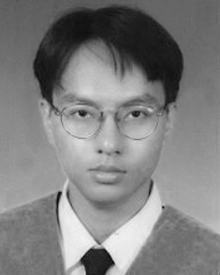 Chien-Ming Wu合作论文数1
 Hen-Wai Tsao (曹恆偉)合作论文数Department of Electrical Engineering, National Taiwan University;Graduate Institute of Electronics Engineering, National Taiwan University1
 Philippe Fournier-Viger合作论文数Big Data Institute, College of Computer Science and Software Engineering, Shenzhen University1Wan-Hsun Hu合作论文数1
 Wen-Hsiang Hu合作论文数1Min-An Song合作论文数1
 Shang-Hwa Hsu合作论文数1
 Chao-Tsung Huang (黃朝宗)合作论文数Department of Electrical Engineering, National Tsing Hua University1




