Systematically integrating climate risk considerations into development planning remains a persistent challenge, particularly where a lot of information needs to be gathered and practical, accessible tools and databases are lacking. Existing climate risk assessment approaches are often complex, resource-intensive, or not designed for specific sectoral contexts. To address this gap, the Climate Risk Planning and Managing Tool (CRISP), a web-based platform designed to structure and present existing climate risk knowledge in a format accessible to practitioners for early-stage project design and decision-making was developed. CRISP is centred on a modular Impact Chain framework that visually plots how climate Hazards interact with Exposure and Vulnerability factors leading to cascading Impacts mitigated by Adaptation Options. Covering 23 agri-food systems, these expert-validated Impact Chains are embedded in a flexible, transparent and interactive platform designed for usability. Rather than generating new data, CRISP curates and organises dispersed information from scientific and policy sources, guiding users in formulating context-specific adaptation strategies. The platform provides end users with interactive Impact Chain visualisations, featuring content selection, automated report generation, and embedded instructions, as well as a searchable repository of over 1200 additional resources for climate risk screening. In addition, the platform offers programmatic access to Impact Chain data through a CRISP knowledge graph built leveraging semantic technologies. This graph is structured according to the conceptual design, data structuring methodology, and technical architecture of CRISP illustrating how Impact Chains can serve as a bridge between high-level climate risk concepts and concrete planning needs. By improving access to structured climate risk knowledge, CRISP supports evidence-based and practicable climate adaptation planning in the agricultural sector.
This study presents a framework for assessing the scalability of innovations aimed at achieving low-emission development, using a case study of Nandi County, Kenya. Food system emissions make up a significant portion of Kenya's total greenhouse gas emissions. Reducing these emissions is crucial for lowering the country's overall emissions, supporting Kenya's commitment to the Paris Agreement. To achieve this, Kenya must scale innovations that can transform the food system toward low emissions while meeting national development targets. The framework was thus tested, in the scope of two participatory workshops, on three CGIAR innovations with relevance to Nandi County: Improved Livestock Breeds and Feeds (ILBF), Integrated Aquaculture Practices (IAP), and Biogas Technology (BT). Stakeholders evaluated these innovations in a two-day participatory workshop using a multi-criteria scoring process. Based on established criteria, the participants developed scores that reflected an innovations' potential for scaling. ILBF scored 24 out of 33 points (75%), IAP scored 27 (81%), and BT scored 26 (76%). The results indicate varying potential for scaling among the innovations, highlighting the importance of context-specific and systemic enabling factors, beyond technical performance. These include institutional, social, and biophysical contexts, adoption barriers, market potential, costs of innovation, financial opportunities for scaling, environmental and social co-benefits and trade-offs as well as economic benefits, all of which are critical in creating an enabling environment for scaling. The framework serves as a support tool for evaluating potential opportunities, barriers, bottlenecks, and trade-offs to inform scaling strategies in a more systematic and responsible manner. Beyond its empirical findings, the study contributes methodologically by illustrating how participatory multi-criteria assessment can strengthen strategic decision-making for Agricultural Research for Development programs.
East African livestock systems, which support many livelihoods, are suffering from climate change but also contribute a large portion of national greenhouse gas emissions. There are various ways to frame livestock and climate change problems and solutions. We use data from interviews, policy documents and participant observations of science-policy interfaces in Ethiopia, Kenya and Uganda to answer: (1) How do frames used by scientists and policymakers affect discussions about climate change and livestock keeping in East Africa? and (2) What framing interaction strategies are employed to deal with ambiguity in science-policy interfaces? Findings show emphasis is given to framings describing livestock and climate change problems and less to response framings. While adaptation and mitigation are both used as issue frames in general discussions, funding availability to address climate issues draws attention to the need for measurement, reporting and verification systems, leading to more concrete discussions on mitigation-related response options and less attention on adaptation. Actors use different interactional framing strategies to co-construct meaning around problems and response options. The findings highlight the need for governments and partners to co-create knowledge on how livestock interventions can address adaptation and mitigation simultaneously to move away from the adaptation-mitigation divide in response framings.
Agriculture and food systems research and international development work will not proceed at the necessary speed without clear attention to the role of knowledge brokers within science-policy-practice interfaces. For research to be taken up and incorporated in policy frameworks, knowledge brokering is essential. Scaling of research for development findings will happen through other impact pathways as well, such as development of business models with the private sector, but development and implementation of robust and coherent policies informed by credible evidence is necessary for institutionalizing the work of agriculture and food systems research. Such policies are needed at multiple levels, and knowledge brokers are needed at these different levels as well. Examples of the importance of knowledge brokers in agricultural research for development from the livestock sector and its interaction with the climate change arena are used to illustrate this call for more attention to knowledge brokering.
Scenario-guided foresight processes are increasingly used to engage a broad range of stakeholders in sharing knowledge, reflecting, and setting priorities to respond to present and future climate change related dynamics. They are particularly useful to inform agricultural policies and planning in the face of a changing climate. Such participatory approaches are key to integrating multidisciplinary expertise, perspectives, and viewpoints, and ensuring that the multi-faceted vulnerabilities and the development needs of diverse groups are addressed in the design, planning, and implementation of climate adaptation policy. However, in practice, ensuring meaningful participation in the policy process is far from straightforward. In this paper, we examine the integration of gender and social inclusion considerations in 15 scenario-guided foresight use cases across Africa, Latin America, and Southeast Asia to determine the ways in which gender and social inclusion dynamics were considered and integrated at different stages of scenario-guided planning processes. To inform the analysis, we use qualitative data from key informant interviews, interviewing scenario coordinators and a gender and social inclusion expert who was engaged in one of the cases; we also review associated reports and outputs. The results suggest that few scenario-guided planning processes centred gender and social inclusion considerations from an early stage and consistently throughout the interventions, translating often into low diversity of stakeholders and insufficient depth reached in the content produced. A number of common challenges are reported including time, budget, and human resource constraints, as well as existing power and institutional dynamics. The latter includes, for instance, low women's representation in technical organizations or important hierarchical social norms structuring discussions. While the focus on the future can disrupt established modes of doing, the complexity of foresight methods can also undermine effective participation leading to important trade-offs. Innovations in the modes of engagement and parallel processes with diverse groups can be important leverage points for inclusion within policymaking processes. Gender and social inclusion should be prioritized from the onset and integrated at different stages of scenario-guided planning processes, notably by allocating more time, human, and financial resources to ensure inclusiveness.Parallel consultations among diverse organizations and groups can provide effective spaces for often-sidelined or marginalized groups' interests and needs to be integrated into policy decision-making given the existing power structures that regulate access to many workshops and related discussions. Multi-scale engagements with different networks also help deepen understanding and reconcile gaps across scales of decision-making (e.g. from local level to national level).Practitioners should further their use of foresight processes and development of tools and methods for integrating gender and social inclusion in these as part of the policy process, as well as strengthen the capacities, expertise, and role of conveners.Promotion and dissemination of existing gender and social inclusion research and documentation as well as support for learning and reflection to refine identified leverage points can lead to improved success.
Livestock production is affected by climate change, but also contributes to climate change through greenhouse gas emissions. This leads to ambiguity in how livestock are framed in climate and development policy processes. We use the Multiple Streams Framework (MSF) to investigate the role of knowledge brokers in Kenyan livestock and climate change policy processes. We analyse how knowledge brokers deal with ambiguity from different problem and response framings within science-policy interfaces using the case of a project that seeks to inform Kenyan policies relevant to livestock and climate change. We identify ambiguity within the problem stream where actors recognise adaptation and mitigation as dual challenges of livestock and climate change. This ambiguity creates tension between actors but can be strategically deployed to help match the problem and policy streams. Actors use the terms ‘climate smart’ and ‘co-benefits’ to link the dual adaptation and mitigation needs. In the political stream, nationally defined priorities and external funding possibilities influence the political will and motivation to adopt identified response options. There are opportunities for knowledge brokers to address the ambiguities and translate knowledge during windows of opportunity when the streams are being coupled, but challenges exist, resulting in slow and inadequate development of policies. This paper makes two contributions to the MSF literature. First, we further refine the concept of knowledge brokers and establish their role across all three streams. Second, we apply the MSF in a lower income country and demonstrate that international organizations must be among the actors considered.
CGIAR consists of a network of international publicly funded agricultural research for development institutes. Over five decades it has worked to increase food abundance, reduce hunger and poverty rates, and lower the geographical footprint of agriculture in lower- and middle-income countries. CGIAR's first formalised research program on climate change was set up in 2009. Here we report on an analysis of 300 outcomes generated over the lifetime of this program, which ran until 2021. Outcomes were characterised in relation to the climate objective, geography, thematic scope, and contribution to global goals. More than half of the outcomes analysed were related to policies for agriculture development under climate change. Twenty-six percent of outcomes related to climate, information and financial services, and 22 percent were related to organisational programming. Most outcomes analysed were at an early stage of maturity, focusing on design and planning stages of policies, strategies, and investments. Fewer than five percent of outcomes had evidence of impact at scale. Outcomes were facilitated by a wide network of partners and contributed to more than ten Sustainable Development Goals. The results of the analysis show the value of outcome-oriented science in being able to harness diversity, balance strategy with opportunism, plan flexibly, work across multiple vulnerability contexts, and allocate resources towards outcomes. These elements have played a significant role in fostering change across contexts, in adjusting research to emerging needs and context changes, in creating conditions for spillovers, and in ensuring global relevance. To transform the food system, the research for development agenda needs to be bolder. It will require more outcomes of various types, achieved through diverse partnerships, spanning a diversity of geographies, vulnerable contexts, and priorities. Significant and intentional investments in strengthening monitoring, evaluation, reporting and learning capacity will be required to further realize the potential for outcome-oriented research.
Global food systems are currently facing unprecedented challenges with respect to production and nutritional targets, inclusivity and environmental footprint. Several recent reports highlight the need for major, rapid reconfiguration of our food systems as a result. International publicly funded agricultural research for development will play an increasingly vital role in support of such goals as reducing poverty, improving food and nutrition security, and improving natural resources and ecosystem services. Here we take stock of the work over the last decade of CGIAR, one of the major players in the agricultural research for development arena, from the perspective of published, peer-reviewed science. We do this with respect to several elements of its vision as set out in 2011, elements that are shared by many other organisations that are also working towards achieving the Sustainable Development Goals. Overall, we found a strong association between number of CGIAR publications and countries with large numbers of rural poor and high child stunting prevalence. At the same time several countries were identified that are anomalous, being either relatively over- or under-represented in the peer-reviewed literature in relation to numbers of rural poor and stunting prevalence. On average, 30% of the calories consumed in national food baskets come from food sources that are not currently the commodity focus of CGIAR research, such as fruit and vegetables. We identify possible ways in which the alignment between the strategic objectives of an agricultural research for development organisation such as CGIAR and its publicly funded science outputs might be further strengthened, for maximum impact in the nine years that are left for the world to achieve the Sustainable Development Goals.
IntroductionWith the rapid increase in climate shocks and hazards, policies governing climate change have proliferated while the integration of gender considerations to address gender-differentiated needs and impacts has remained a challenge. Stakeholder engagement is touted as a critical ingredient in climate change decisions and governance at different levels to achieve equitable outcomes. However, effective methods and outcomes of gender-responsive stakeholder engagement processes for climate change policy development are rarely published.MethodsWe apply the framework of 10 principles for effective agricultural research for development programs to analyze the stakeholder engagement processes in the context of the CGIAR's Research Program on Climate Change, Agriculture and Food Security gender and climate change policy projects. We analyze both primary and secondary data to understand the categories of stakeholders engaged, methods of engagement, the outcomes and lessons learned across five regions.Results and discussionOur results show that analysis of the existing policies and programs is a very critical entry point for identifying the points of leverage, the types of stakeholders to engage and how to engage them in the processes that focus on integrating gender in climate policies. Co-learning and co-development of knowledge products cultivate interest and commitment among stakeholders to address gender dynamics, although systematic monitoring and evaluation remains a challenge. This has implications for effective stakeholder engagement in mainstreaming gender in climate policies and evidence-based policy formulation for sustainable agriculture and food systems. Working with influential stakeholders, with the capacity and interest to address gender considerations yields more positive results. Mechanisms to address power relations need to be in place for gender considerations to be voiced and integrated and include women in decision-making processes.
Agricultural adaptation to climate change is critical for ensuring future food security. Social capital is important for climate change adaptation, but institutions and social networks at multiple scales (e.g., household, community, and institution) have been overlooked in studying agricultural climate change adaptation. We combine data from 13 sites in 11 low-income countries in East Africa, West Africa, and South Asia to explore how multiple scales of social capital relate to household food security outcomes among smallholder farmers. Using social network theory, we define three community organizational social network types (fragmented defined by lack of coordination, brokered defined as having a strong central actor, or shared defined by high coordination) and examine household social capital through group memberships. We find community and household social capital are positively related, with higher household group membership more likely in brokered and shared networks. Household group membership is associated with more than a 10% reduction in average months of food insecurity, an effect moderated by community social network type. In communities with fragmented and shared organizational networks, additional household group memberships is associated with consistent decreases in food insecurity, in some cases up to two months; whereas in brokered networks, reductions in food insecurity are only associated with membership in credit groups. These effects are confirmed by hierarchical random effects models, which control for demographic factors. This suggests that multiple scales of social capital-both within and outside the household-are correlated with household food security. This social capital may both be bridging (across groups) and bonding (within groups) with different implications for how social capital structure affects food security. Efforts to improve food security could recognize the potential for both household and community level social networks and collaboration, which further research can capture by analyzing multiple scales of social capital data.
Participatory foresight has proliferated rapidly in response to unprecedented global uncertainty and the need to transform to more sustainable societies. However, the link from foresight to action is often underresearched; and understanding how foresight can be used for the realization of transformative ambitions has proven particularly difficult. In this paper, we reflect on a unique case: a project that spans eleven years of scenario-guided participatory policy formulation processes for food security and agriculture under climate change across seven global regions. Many of the policy formulation processes in these regions have led to changed policies and plans as a result of participatory scenario analysis. The length, scope, and level of policy engagement that characterizes this case offers unique opportunities for learning about impactful foresight. In addition, lessons from the project have proliferated into a range of other initiatives that have often been able to complement the original project strategies with new approaches that have in turn yielded more insights. We provide core insights from the successes and failures in this unique global case for connecting foresight to action by examining interactions between 1) institutional contexts and knowledge systems; 2) relationships with the future; 3) imaginaries; 4) participation cultures; 5) process designs and participants; and 6) futures methodology. We then go on to discuss how such best practices can be ‘scaled deep’; ‘scaled out’; and ‘scaled up’ for transformative change.
Climate change poses a growing threat to the achievement of optimal nutritional status, both directly through affecting food production and indirectly through altering social and economic influences in people's lives. These adverse nutrition outcomes are not evenly distributed across the world, and vulnerable populations are the most impacted. Understanding how different forms of inequity interact with climate change and adverse nutritional outcomes is a novel area of research in today's challenging environment of increased climate change pressures. This article presents the results of a systematic literature search undertaken to identify the connections, trends and pathways between climate change, inequity and nutrition outcomes. Forty-six peer-reviewed studies are identified that explore these complex interactions with a specific focus on the extent to which equity is a fundamental component of climate change and nutrition research. The pathways captured in this body of evidence are mapped to current framework thinking to identify trends and gaps. While there is a trend for studies to acknowledge an unfair distribution of vulnerability to adverse nutrition outcomes, there is less attention given to the (lack of) recognition of the social situations which increase these groups' vulnerability and the absence of representation or inclusion of these groups as vital decision-makers. Studies that do incorporate these core dimensions of equity take mixed-method and qualitative approaches. This highlights an inherent value in stepping outside the usual scope of empirical climate change research, one that incorporates the voices of those most affected. This article is categorized under: Climate and Development > Sustainability and Human Well-Being
Formalised knowledge systems, including universities and research institutes, are important for contemporary societies. They are, however, also arguably failing humanity when their impact is measured against the level of progress being made in stimulating the societal changes needed to address challenges like climate change. In this research we used a novel futures-oriented and participatory approach that asked what future envisioned knowledge systems might need to look like and how we might get there. Findings suggest that envisioned future systems will need to be much more collaborative, open, diverse, egalitarian, and able to work with values and systemic issues. They will also need to go beyond producing knowledge about our world to generating wisdom about how to act within it. To get to envisioned systems we will need to rapidly scale methodological innovations, connect innovators, and creatively accelerate learning about working with intractable challenges. We will also need to create new funding schemes, a global knowledge commons, and challenge deeply held assumptions. To genuinely be a creative force in supporting longevity of human and non-human life on our planet, the shift in knowledge systems will probably need to be at the scale of the enlightenment and speed of the scientific and technological revolution accompanying the second World War. This will require bold and strategic action from governments, scientists, civic society and sustained transformational intent.
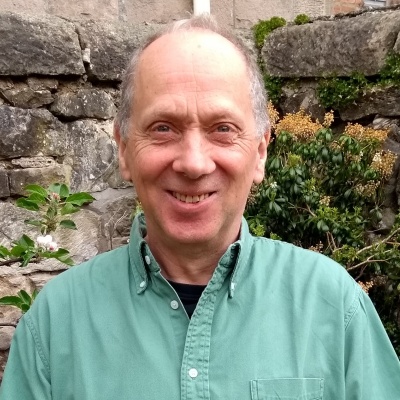 Philip Thornton合作论文数International Livestock Research Institute21
 Wiebke Forch合作论文数GIZ7
 Carlos Barahona合作论文数Statistical Services Centre, Reading, UK7
 Todd A. Crane合作论文数International Livestock Research Institute5
 Dhanush Dinesh合作论文数Copernicus Inst Sustainable Dev, Univ Utrecht4
 Patti Kristjanson合作论文数International Livestock Research Institute4Tonya Schuetz合作论文数3
 Prosper Houessionon合作论文数Int Crops Res Inst Semi Arid Trop, CGIAR Res Program Climate Change Agr & Food Secur3
 Mathieu Ouedraogo合作论文数Int Crops Res Inst Semi Arid Trop, CGIAR Res Program Climate Change Agr & Food Secur3
 Lindsey Jones合作论文数3
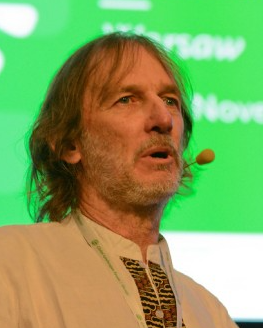 Bruce Morgan Campbell合作论文数Clim-Eat;Global Center on Adaptation;University of Copenhagen3
 Samuel T. Partey合作论文数Faculty of Life Sciences, University of Manchester3Marieke Veeger合作论文数2Clara Champalle合作论文数Climate Change Adaptat Programme, Okapi Environm Consulting Inc2
 Leah Salm合作论文数Inst Dev Studies, Univ Sussex2
 Jessica Rudnick合作论文数2Sabrina Chesterman合作论文数2
 Andreea Nowak合作论文数Center for International Forestry Research-World Agroforestry (CIFOR-ICRAF), Bogota, Colombia2
 Laura Pereira合作论文数Centre for Sustainability Transitions, Stellenbosch University2
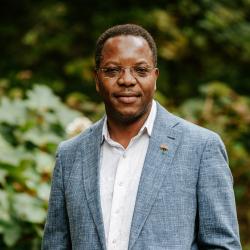 Edward Mabaya合作论文数Department of Global Development, College of Agriculture and Life Sciences, Cornell University2
 Sonja Vermeulen合作论文数CGIAR Research Program on Climate Change, Agriculture, and Food Security, University of Copenhagen2
 E. Charles Sykes合作论文数Department of Chemistry, School of Arts and Sciences, Tufts University2
 Mario Herrero合作论文数Department of Global Development, Cornell University;Cornell Atkinson Center for Sustainability, Cornell University2
 Alcade C. Segnon合作论文数Faculty of Agronomic Sciences, University of Abomey-Calavi2
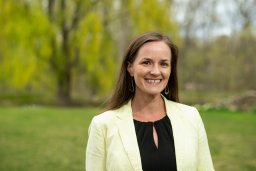 Meredith T. Niles合作论文数2
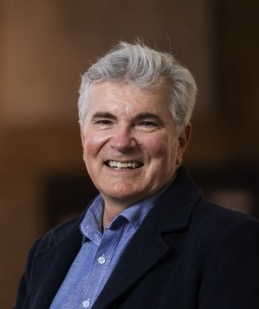 Mark Howden合作论文数Institute for Climate, Energy & Disaster Solutions, Australian National University2
 Mark N. Lubell合作论文数Department of Environmental Science and Policy, University of California, Davis2
 Siri Hallstrom Eriksen合作论文数Noragric, Norwegian University of Life Sciences2Sophia Huyer合作论文数2
 Stuart Gillespie合作论文数Department of English Literature, University of Glasgow2Nicholas Nisbett合作论文数2
 Robert B. Zougmoré合作论文数Alliance of Bioversity International and CIAT2
 Arpj Dewulf (Art)合作论文数Public Administration and Policy Group, Department of Social Sciences, Wageningen University and Research2
 Karen O'Brien合作论文数Department of Sociology and Human Geography, Faculty of Social Sciences, University of Oslo1Patricia Kristjanson合作论文数1Ruth Wolstenholme合作论文数1t schuetz合作论文数1c garlick合作论文数1w foerch合作论文数1
 Subhakanta Mohapatra合作论文数1
 Iokine Rodriguez合作论文数1Klaey Andreas合作论文数1Maliha Muzammil合作论文数1Megan E. McGlinchy合作论文数1Mitchell Morey合作论文数1
 Glenn Page合作论文数1Almendra Cremaschi合作论文数1
 Jackie Malcolm合作论文数1
 Ian Wight合作论文数1




