Robert M. Sellers, PhD, most known for his influential and highly cited Multidimensional Model of Racial Identity (MMRI), is one of the most prolific and foundational Black scholars in psychology. From racial identity theory development and measurement to conceptual and methodological innovations in studying the lived experiences of Black people, Sellers' scholarship centers on the lives of Black communities. Sellers' mentorship and contributions to the professional development of scholars and professionals of color have supported and catalyzed new intergenerational knowledge building by these scholars, ensuring a perpetuating and far-reaching legacy in psychology. In this article, we: (a) celebrate Sellers' enduring contribution to the racial identity literature and its profound impact on psychology as a discipline as well as numerous subfields of psychology, (b) outline his contributions to the racial socialization literature, (c) describe methodological innovations in racial identity and racial socialization research advanced through his scholarship, and (d) summarize his contributions in professional development and mentorship and his leadership roles. Sellers' scholarly contributions and mentorship have transformed the discipline of psychology and the social sciences broadly speaking, making him one of the most influential psychologists in the modern era. (PsycInfo Database Record (c) 2023 APA, all rights reserved).
The Daily Life Experiences - Frequency scale (DLE-F) measures the frequency of 18 racial discrimination experiences. Bifactor exploratory and confirmatory analyses indicated that the DLE-F is a unidimensional scale that yields valid and reliable scores. The DLE-F also showed evidence of measurement invariance by gender, convergent evidence, and criterion-related validity.
To better understand the moderating effect of coping mechanisms (distraction and rumination) and internal assets (hope) on the relationship between perceived discrimination and depressive symptoms, a sample of 363 African American students (65.3% female; mean age = 20.25 years; SD = 2.39) from two large Midwestern universities were surveyed using self-report measures. Hierarchical multiple regressions were used to explore the relationships among the variables and depressive symptoms. Results indicated that discrimination (B = 0.10, p < .001) and ruminative coping (B = 1.05, p < .001) were positively related to depressive symptoms, while hope was negatively related to depression (B = −0.33, p < .001). Further, the relationship between discrimination and depressive symptoms was moderated by hope (B = 0.01, p = .02). The interaction between discrimination and depressive symptoms suggested that participants who reported low levels of hope also reported more depressive symptoms regardless of level of discrimination, compared with those who reported high hope. For these African American emerging adults, the results bring to light the potential of an internal asset that aids in reduction of depressive symptoms in response to constant, potential harm such as racial discrimination.
Abstract This chapter provides an overview of Latino mental health with an emphasis on the relationship between acculturation and mental illness. The problematic pattern of limited mental health literacy and access to care (e.g., via insurance) resulting in limited care is underscored, as is needed attention to trauma-informed care and major depression. Effective socioculturally responsive mental health care is reviewed, including integrated behavioral health care (IBHC), and culturally adapted evidence-based practice. The chapter also demonstrates that promotores de salud [community health care workers] represent an especially effective cultural resource capable of supporting and leading mental health interventions within Latino communities.
This article draws principally from the work of preeminent sociologist Alejandro Portes on the rise of Miami as a global city (segmented assimilation as well as the institutional bases for social cohesion amid diversity) to propose a blueprint for reducing social inequality in Greater Miami. Employing key insights from psychology and sociology, we bring together data and research on macro-level structural changes, meso-level dynamics of city politics and institutions, and micro-level dimensions of interactions and attitudes to highlight prospects for promoting ethnoracial interdependence. The diversity and transience that characterize Miami create a major opportunity to disrupt ethnoracial social and economic inequality. Strong public coordinating institutions are required, guided by necessary conditions that facilitate the closing of group-based social distance. We propose three caseschildren-targeted programming, emerging prospects in health care, and diversity focused planning in education and housingas offering opportunities to place Miami 2030 on the path toward cohesive and egalitarian diversity.
Aggression is an important correlate of violence, depression, coping, and suicide among emerging young African American males. Yet most researchers treat aggression deterministically, fail to address cultural factors, or consider the potential for individual characteristics to exert an intersectional influence on this psychosocial outcome. Addressing this gap, we consider the moderating effect of coping on the relationship between masculine and racial identity and aggressive ideation among African American males (N = 128) drawn from 2 large Midwestern universities. Using the phenomenological variant of ecological systems theory and person-centered methodology as a guide, hierarchical cluster analysis grouped participants into profile groups based on their responses to both a measure of racial identity and a measure of masculine identity. Results from the cluster analysis revealed 3 distinct identity clusters: Identity Ambivalent, Identity Appraising, and Identity Consolidated. Although these cluster groups did not differ with regard to coping, significant differences were observed between cluster groups in relation to aggressive ideation. Further, a full model with identity profile clusters, coping, and aggressive ideation indicates that cluster membership significantly moderates the relationship between coping and aggressive ideation. The implications of these data for intersecting identities of African American men, and the association of identity and outcomes related to risk for mental health and violence, are discussed.
The present study was a prospective, naturalistic, longitudinal investigation of the two year course of posttraumatic stress disorder (PTSD) in a sample of African Americans with anxiety disorders. The study objectives were to examine the two year course of PTSD and to evaluate differences between African Americans with PTSD and anxiety disorders and African Americans with anxiety disorders but no PTSD with regard to comorbidity, psychosocial impairment, physical and emotional functioning, and treatment participation. The participants were 67 African Americans with PTSD and 98 African Americans without PTSD (mean age 41.5 years, 67.3% female). Individuals with PTSD were more likely to have higher comorbidity, lower functioning, and they were less likely to seek treatment than those with other anxiety disorders but no PTSD. The rate of recovery from PTSD over two years was 0.10 and recovery from comorbid Major Depressive Disorder was 0.55. PTSD appears to be persistent over time in this population. The rates of recovery were lower than what has been reported in previous longitudinal studies with predominantly non-Latino Whites. It is imperative to examine barriers to treatment and factors related to treatment engagement for this population.
Racial and ethnic minorities in the United States are less likely to receive treatment for psychiatric disorders than are White Americans. For two decades, clinicians and researchers have worked to reduce health and health care disparities, with at best minimal success. In 2001 the Surgeon General issued a seminal report that described the magnitude of the problem (U. S. Department of Health and Human Services, 2001). Nevertheless, the vexing problem of unequal treatment persists. This review provides preliminary evidence for reducing racial and ethnic disparities in mental health treatment in primary care settings by giving priority to culturally competent practices and cultural tailoring in assessment, diagnosis, and treatment.
In this study, we investigated the relationship between religious coping and depressive symptoms for 467 Black and White American college students from two large Midwestern Universities. We also examined the effects of different religious coping styles on depressive symptoms by race. Chi-square tests indicated that Blacks reported greater use of active and passive religious coping styles in comparison to Whites. Multivariate regression analyses indicated that neither active nor passive religious coping was independently related to depressive symptoms for Blacks or Whites, however, coping without invoking religious beliefs was related to fewer depressive symptoms for Blacks (beta = -0.329, p = 0.001). The results may provide evidence of race differences in religious coping patterns that exist during the transition to adulthood and that Black American young adults may utilise religious coping methods to mitigate psychological distress independent of other indicators of religiosity like church attendance and clergy support, which tend to increase with age.
To determine whether African American women expecting their first infant carry a disproportionate burden of posttraumatic stress disorder morbidity, we conducted a comparative analysis of cross-sectional data from the initial psychiatric interview in a prospective cohort study of posttraumatic stress disorder effects on childbearing outcomes. Participants were recruited from maternity clinics in three health systems in the Midwestern USA. Eligibility criteria were being 18 years or older, able to speak English, expecting a first infant, and less than 28 weeks gestation. Telephone interview data was collected from 1,581 women prior to 28 weeks gestation; four declined to answer racial identity items (n = 1,577), 709 women self-identified as African American, 868 women did not. Measures included the Life Stressor Checklist, the National Women’s Study Posttraumatic Stress Disorder Module, the Composite International Diagnostic Interview, and the Centers for Disease Control’s Perinatal Risk Assessment Monitoring System survey. The 709 African American pregnant women had more trauma exposure, posttraumatic stress disorder symptoms and diagnosis, comorbidity and pregnancy substance use, and had less mental health treatment than 868 non-African Americans. Lifetime prevalence was 24.0% versus 17.1%, respectively (OR = 1.5, p = 0.001). Current prevalence was 13.4% versus 3.5% (OR = 4.3, p < 0.001). Current prevalence of posttraumatic stress disorder (PTSD) was four times higher among African American women. Their risk for PTSD did not differ by sociodemographic status, but was explained by greater trauma exposure. Traumatic stress may be an additional, addressable stress factor in birth outcome disparities.
 Kira Hudson Banks合作论文数7
 Alvin Thomas合作论文数Human Development and Family Studies Department, School of Human Ecology, University of Wisconsin-Madison6
 Wizdom Powell Hammond合作论文数5
 Cleopatra Howard Caldwell合作论文数Department of Health Behavior and Health Education, School of Public Health, University of Michigan-Ann Arbor3
 Julia S. Seng合作论文数Department of Systems, Populations and Leadership, School of Nursing, University of Michigan-Ann Arbor3
 Tabbye Chavous合作论文数Center for the Study of Black Youth in Context, College of Literature, Science, and the Arts, University of Michigan-Ann Arbor3
 Marc A Zimmerman合作论文数Department of Health Behavior and Health Education, School of Public Health, University of Michigan;Institute for Firearm Injury Prevention, University of Michigan3
 Michael S. Spencer合作论文数School of Social Work, University of Washington3
 Ricardo F. Munoz合作论文数Institute for International Internet Interventions for Health, Palo Alto University3
 Enrique W. Neblett合作论文数Department of Health Behavior and Health Education, School of Public Health, University of Michigan-Ann Arbor2
 Tabbye M. Chavous合作论文数Combined Program in Education and Psychology, School of Education, University of Michigan-Ann Arbor2Haynes Tiffany F合作论文数2
 Jeanne Miranda合作论文数Department of Health Policy and Management, Fielding School of Public Health, University of California, Los Angeles2
 Karen H Schmeelk-Cone合作论文数2Lisa M. Hooper合作论文数Department of Educational Studies in Psychology, Research Methodology, and Counseling Box, The University of Alabama2Pamela P. Martin合作论文数1Elaine Hockman合作论文数1Leandro D Torres合作论文数1Kira Banks合作论文数1Tatia Oden合作论文数1Daniel K. Birichi合作论文数1Melnee D. McPherson合作论文数1R. L'Heureux Lewis-McCoy合作论文数1Krista Maywalt Aronson合作论文数1
 Shawn C. T. Jones合作论文数Virginia Commonwealth Univ1
 Guillermo Bernal合作论文数1Laura Smart Richman合作论文数Department of Population Health Sciences, Duke University School of Medicine1
 Thomas R. Belin合作论文数Department of Biostatistics, Fielding School of Public Health, University of California, Los Angeles1
 David J. Miklowitz合作论文数Department of Psychology, College of Life Sciences, University of California, Los Angeles1
 Juned Siddique合作论文数Department of Preventive Medicine, Feinberg School of Medicine, Northwestern University1
 Stephen M. Schueller合作论文数Department of Psychological Science, School of Social Ecology, University of California, Irvine1
 Kurt Organista合作论文数School of Social Welfare, University of California, Berkeley1
 Adrian Aguilera合作论文数School of Social Welfare, University of California, Berkeley1
 Nancy Liu合作论文数Department of Psychology, University of California, Berkeley1
 Prudence Carter合作论文数Department of Sociology, Brown University1
 Amber Williams合作论文数Department of Psychology, School of Social Work, University of Michigan1
 Lisa Kane Low合作论文数Center for Latin American and Caribbean Studies, College of Literature, Science, and the Arts, University of Michigan-Ann Arbor1
 Stephanie Rowley合作论文数Center for the Study of Black Youth in Context, College of Literature, Science, and the Arts, University of Michigan-Ann Arbor1
 Tamar Mendelson合作论文数Mental Health, Bloomberg School of Public Health, Johns Hopkins University1
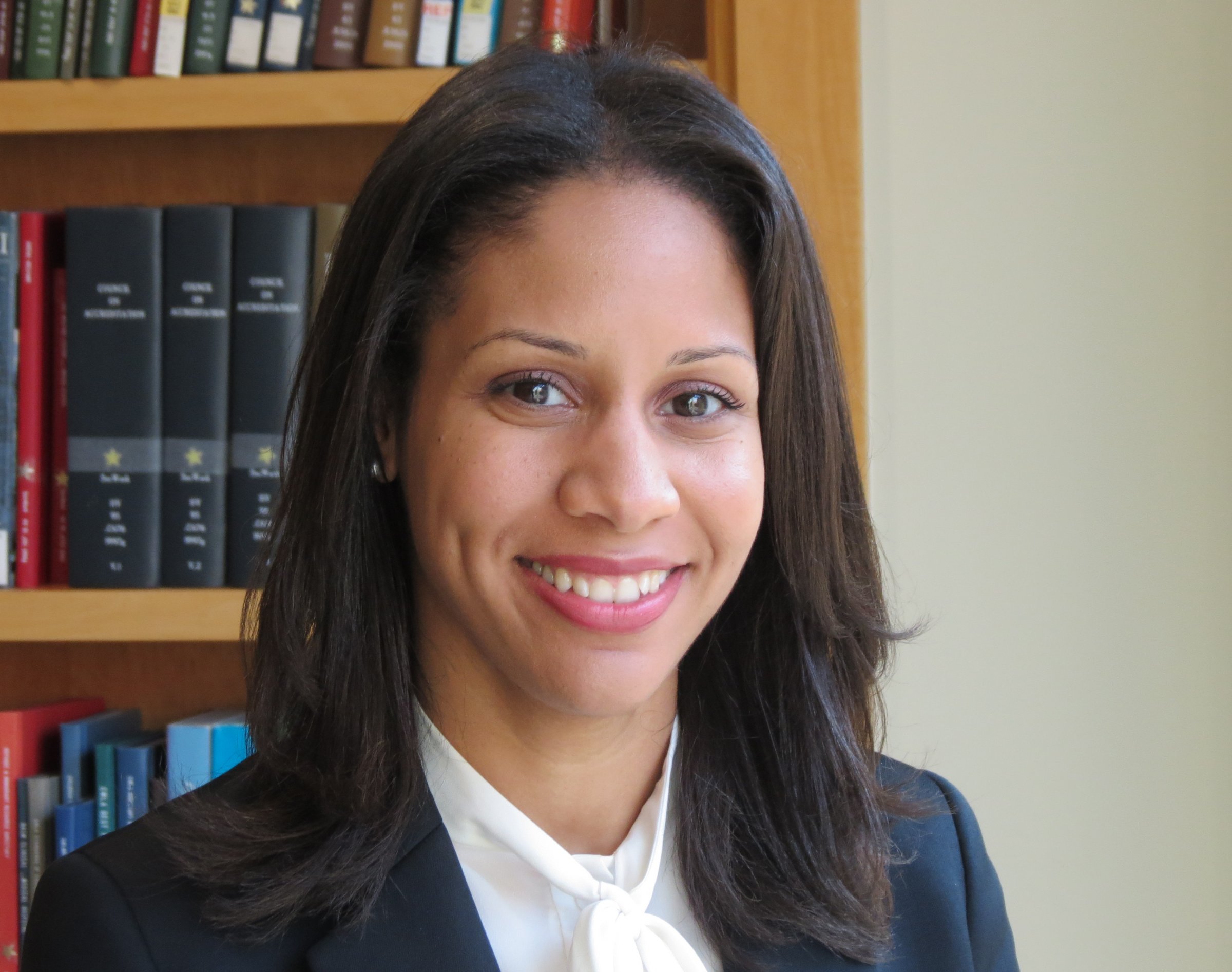 Carmela Alcántara合作论文数School of Social Work, Columbia University1
 Risa Weisberg合作论文数1Bernat Debra H合作论文数College of Medicine, Florida State University1
 Soto José Angel合作论文数Department of Psychology, Pennsylvania State University1Ackerson Kelly合作论文数Western Michigan University1Markowitz J C合作论文数1Niederehe G合作论文数1Caron Zlotnick合作论文数Department of Psychiatry and Human Behavior, Warren Alpert Medical School , Brown University1Nicholas J Sibrava合作论文数1Pérez Benítez Carlos I合作论文数1




