Recent advances in large language models (LLMs) have opened new avenues for accelerating scientific research. While models are increasingly capable of assisting with routine tasks, their ability to contribute to novel, expert-level mathematical discovery is less understood. We present a collection of case studies demonstrating how researchers have successfully collaborated with advanced AI models, specifically Google's Gemini-based models (in particular Gemini Deep Think and its advanced variants), to solve open problems, refute conjectures, and generate new proofs across diverse areas in theoretical computer science, as well as other areas such as economics, optimization, and physics. Based on these experiences, we extract common techniques for effective human-AI collaboration in theoretical research, such as iterative refinement, problem decomposition, and cross-disciplinary knowledge transfer. While the majority of our results stem from this interactive, conversational methodology, we also highlight specific instances that push beyond standard chat interfaces. These include deploying the model as a rigorous adversarial reviewer to detect subtle flaws in existing proofs, and embedding it within a "neuro-symbolic" loop that autonomously writes and executes code to verify complex derivations. Together, these examples highlight the potential of AI not just as a tool for automation, but as a versatile, genuine partner in the creative process of scientific discovery.
The discovery of the *lazy neuron phenomenon* (Li et al., 2022), where fewer than 10% of the feedforward networks (FFN) parameters in trained Transformers are activated per token, has spurred significant interests in *activation sparsity* for enhancing large model efficiency. While notable progress has been made in translating such sparsity to wall-time benefits across CPUs, GPUs, and TPUs, modern Transformers have moved away from the ReLU activation function crucial to this phenomenon. Existing efforts on re-introducing activation sparsity, e.g., by reverting to ReLU or applying top-k masking, often degrade model quality, increase parameter count, or complicate training. Sparse attention, the application of sparse activation to the attention mechanism, often face similar challenges. This paper introduces the Spark Transformer, a novel architecture that achieves high activation sparsity in both FFN and the attention mechanism while maintaining model quality, parameter count, and standard training procedures. Our method realizes sparsity via top-$k$ masking for explicit control over sparsity level. Crucially, we introduce *statistical top-k*, a hardware-accelerator-friendly, linear-time approximate algorithm that avoids costly sorting and mitigates significant training slowdown from standard top-k operators. Furthermore, Spark Transformer reallocates existing FFN parameters and attention key embeddings to form a low-cost predictor for identifying activated entries. This design not only mitigates quality loss from enforced sparsity, but also enhances wall-time benefit. Pretrained with the Gemma-2 recipe, Spark Transformer demonstrates competitive performance on standard benchmarks while exhibiting significant sparsity: only 8\% of FFN neurons are activated, and each token attends to a maximum of 256 tokens. This translates to a 2.5x reduction in FLOPs, leading to decoding wall-time speedups of up to 1.79x on CPU and 1.40xon GPU.
Driven by the advancements in generative AI, large machine learning models have revolutionized domains such as image processing, audio synthesis, and speech recognition. While server-based deployments remain the locus of peak performance, the imperative for on-device inference, necessitated by privacy and efficiency considerations, persists. Recognizing GPUs as the on-device ML accelerator with the widest reach, we present ML Drift--an optimized framework that extends the capabilities of state-of-the-art GPU-accelerated inference engines. ML Drift enables on-device execution of generative AI workloads which contain 10 to 100x more parameters than existing on-device generative AI models. ML Drift addresses intricate engineering challenges associated with cross-GPU API development, and ensures broad compatibility across mobile and desktop/laptop platforms, thereby facilitating the deployment of significantly more complex models on resource-constrained devices. Our GPU-accelerated ML/AI inference engine achieves an order-of-magnitude performance improvement relative to existing open-source GPU inference engines.
Bipartite ranking is a fundamental supervised learning problem, with the goal of learning a ranking over instances with maximal area under the ROC curve (AUC) against a single binary target label. However, one may often observe multiple binary target labels, e.g., from distinct human annotators. How can one synthesize such labels into a single coherent ranking? In this work, we formally analyze two approaches to this problem—loss aggregation and label aggregation—by characterizing their Bayes-optimal solutions. We show that while both approaches can yield Pareto-optimal solutions, loss aggregation can exhibit label dictatorship: one can inadvertently (and undesirably) favor one label over others. This suggests that label aggregation can be preferable to loss aggregation, which we empirically verify.
Scarcity of labeled data, especially for rare events, hinders training effective machine learning models. This paper proposes SYNAPSE-G (Synthetic Augmentation for Positive Sampling via Expansion on Graphs), a novel pipeline leveraging Large Language Models (LLMs) to generate synthetic training data for rare event classification, addressing the cold-start problem. This synthetic data serve as seeds for semi-supervised label propagation on a similarity graph constructed between the seeds and a large unlabeled dataset. This identifies candidate positive examples, subsequently labeled by an oracle (human or LLM). The expanded dataset then trains/fine-tunes a classifier. We theoretically analyze how the quality (validity and diversity) of the synthetic data impacts the precision and recall of our method. Experiments on the imbalanced SST2 and MHS datasets demonstrate SYNAPSE-G's effectiveness in finding positive labels, outperforming baselines including nearest neighbor search.
We consider a weakly supervised learning problem called Learning from Label Proportions (LLP), where examples are grouped into “bags” and only the average label within each bag is revealed to the learner. We study various learning rules for LLP that achieve PAC learning guarantees for classification loss. We establish that the classical Empirical Proportional Risk Minimization (EPRM) learning rule (Yu et al., 2014) achieves fast rates under realizability, but EPRM and similar proportion matching learning rules can fail in the agnostic setting. We also show that (1) a debiased proportional square loss, as well as (2) a recently proposed EasyLLP learning rule (Busa-Fekete et al., 2023) both achieve “optimistic rates” (Panchenko, 2002); in both the realizable and agnostic settings, their sample complexity is optimal (up to log factors) in terms of ϵ, δ, and VC dimension.
Classical wisdom in machine learning holds that the generalization error can be decomposed into bias and variance, and these two terms exhibit a \emph{trade-off}. However, in this paper, we show that for an ensemble of deep learning based classification models, bias and variance are \emph{aligned} at a sample level, where squared bias is approximately \emph{equal} to variance for correctly classified sample points. We present empirical evidence confirming this phenomenon in a variety of deep learning models and datasets. Moreover, we study this phenomenon from two theoretical perspectives: calibration and neural collapse. We first show theoretically that under the assumption that the models are well calibrated, we can observe the bias-variance alignment. Second, starting from the picture provided by the neural collapse theory, we show an approximate correlation between bias and variance.
Protecting user privacy is a major concern for many machine learning systems that are deployed at scale and collect from a diverse set of population. One way to address this concern is by collecting and releasing data labels in an aggregated manner so that the information about a single user is potentially combined with others. In this paper, we explore the possibility of training machine learning models with aggregated data labels, rather than individual labels. Specifically, we consider two natural aggregation procedures suggested by practitioners: curated bags where the data points are grouped based on common features and random bags where the data points are grouped randomly in bag of similar sizes. For the curated bag setting and for a broad range of loss functions, we show that we can perform gradient-based learning without any degradation in performance that may result from aggregating data. Our method is based on the observation that the sum of the gradients of the loss function on individual data examples in a curated bag can be computed from the aggregate label without the need for individual labels. For the random bag setting, we provide a generalization risk bound based on the Rademacher complexity of the hypothesis class and show how empirical risk minimization can be regularized to achieve the smallest risk bound. In fact, in the random bag setting, there is a trade-off between size of the bag and the achievable error rate as our bound indicates. Finally, we conduct a careful empirical study to confirm our theoretical findings. In particular, our results suggest that aggregate learning can be an effective method for preserving user privacy while maintaining model accuracy.
How can we efficiently mitigate the overhead of gradient communications in distributed optimization? This problem is at the heart of training scalable machine learning models and has been mainly studied in the unconstrained setting. In this paper, we propose Quantized Frank-Wolfe (QFW), the first projection-free and communication-efficient algorithm for solving constrained optimization problems at scale. We consider both convex and non-convex objective functions, expressed as a finite-sum or more generally a stochastic optimization problem, and provide strong theoretical guarantees on the convergence rate of QFW. This is done by proposing quantization schemes that efficiently compress gradients while controlling the variance introduced during this process. Finally, we empirically validate the efficiency of QFW in terms of communication and the quality of returned solution against natural baselines.
 Sanjiv Kumar合作论文数Google3
 Mohammad Hossein Bateni合作论文数Google Research3
 Vahab Mirrokni合作论文数Google Research3
 Wittawat Jitkrittum合作论文数Google Research2
 Chong You合作论文数Google DeepMind2
 Vincent Cohen-Addad合作论文数Google2
 Michal Lukasik合作论文数Google Research2
 Amin Karbasi合作论文数Cisco;Foundation AI;Simons Institute for the Theory of Computing2
 Henry Levy合作论文数1David E Culler合作论文数1Jeremiah J. Willcock合作论文数1Jan Wassenberg合作论文数1Jiaxian Guo合作论文数1Zhipeng Jia合作论文数1Kan Wu合作论文数1Andrei Kulik合作论文数1Juhyun Lee合作论文数1Alek Andreev合作论文数1Ignasheva Ekaterina合作论文数1Raman Sarokin合作论文数1
 James Manyika (詹姆斯·马尼卡)合作论文数Google-Alphabet;School of Government, University of Oxford;McKinsey & Company1Felix Chern合作论文数1
 Hossein Esfandiari合作论文数NYC Algorithms and Optimization Team, Google1
 Shreya Pathak合作论文数Department of Computer Science and Engineering, IIT Bombay1
 Euiwoong Lee合作论文数Computer Science and Engineering Division, University of Michigan1
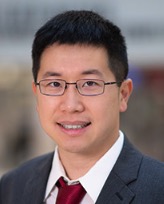 Samson Zhou合作论文数Department of Computer Science & Engineering, Texas A&M University College of Engineering1
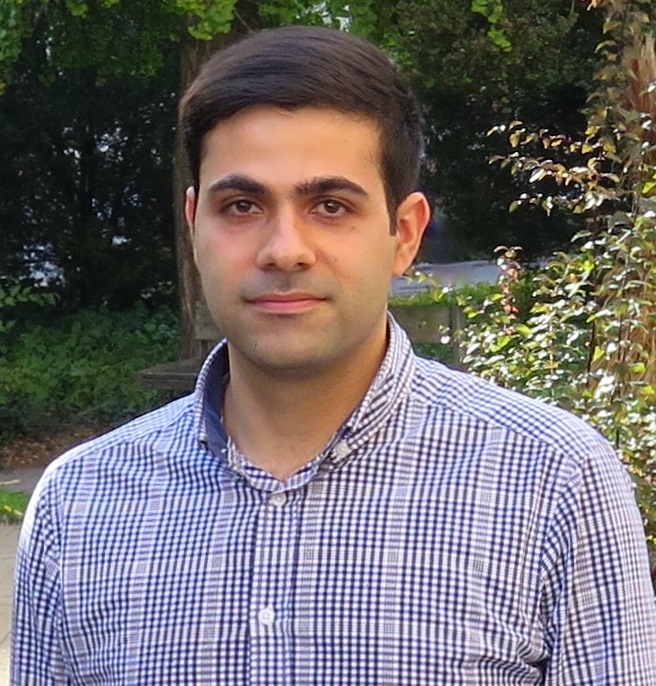 Hamed Hassani合作论文数Department of Electrical and Systems Engineering, University of Pennsylvania;Department of Computer and Information Sciences, University of Pennsylvania;Department of Statistics and Data Science, Wharton Business School, University of Pennsylvania1
 Sashank Reddi合作论文数Google DeepMind1
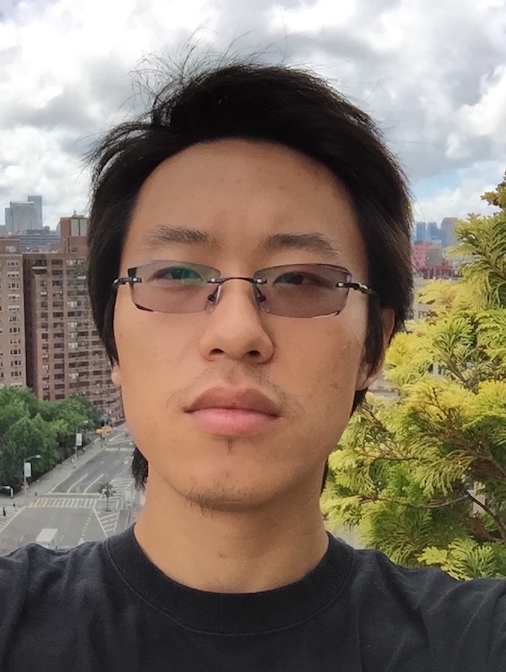 Song Zuo合作论文数Google Research1
 Ioannis (Yannis) Panageas合作论文数Department of Computer Science, Donald Bren School of Information & Computer Science, University of California, Irvine1
 Karthik Chandrashekar合作论文数Weizmann Institute of Science1
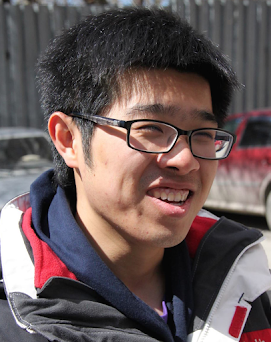 Jieming Mao (毛杰明)合作论文数Google Research1
 Adel Javanmard合作论文数Data Science and Operations Department, Marshall School of Business, University of Southern California1
 Utku Evci合作论文数Google Deepmind1
 Yossi Matias合作论文数Google Research;Tel Aviv University;Verily Life Sciences;SandboxAQ;Israeli Advanced Technology Industries1Thomas Fu合作论文数Google Research1
 Lance Jeremy Fortnow合作论文数Department of Computer Science, College of Computing, Illinois Institute of Technology1
 Ola Svensson合作论文数Theory of Computation Laboratory 2, Institute of Computer and Communication Sciences, School of Computer and Communication Sciences, Ecole Polytechnique Federale de Lausanne1
 Prateek Jain合作论文数Google DeepMind1
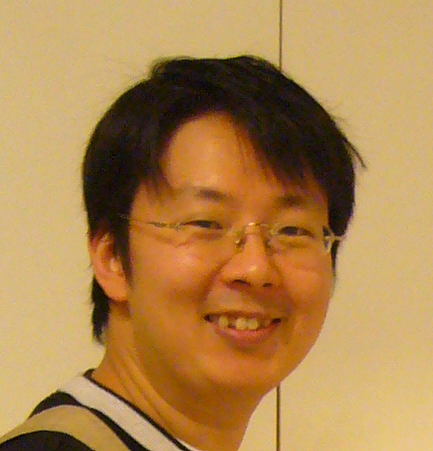 Ken-ichi Kawarabayashi (河原林健一)合作论文数Principles of Informatics Research Division, National Institute of Informatics1
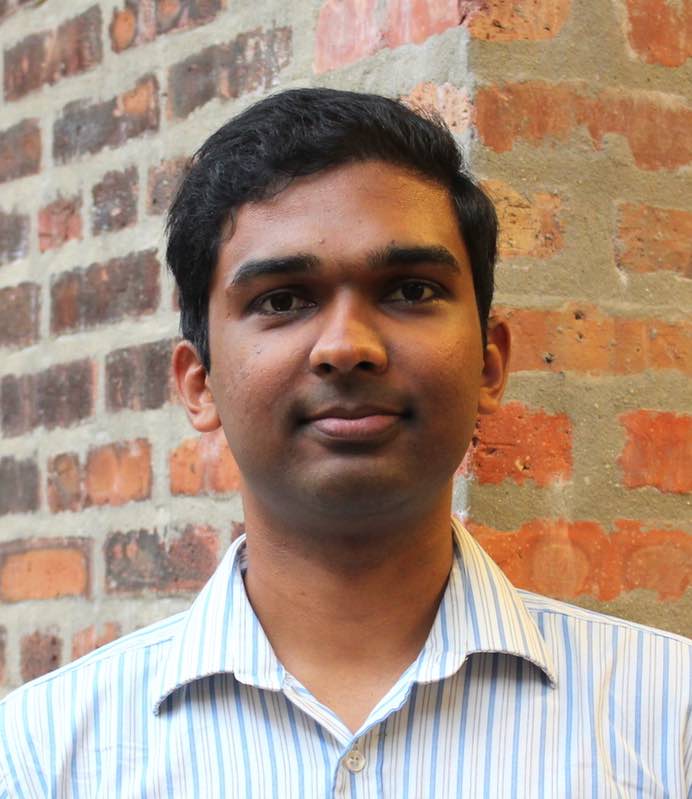 Srinadh Bhojanapalli合作论文数Google Research1
 Aryan Mokhtari合作论文数Department of Electrical and Computer Engineering, The University of Texas at Austin1
 Suvinay Subramanian合作论文数Massachusettes Institute of Technology1
 Matthias Grundmann合作论文数Google Research1
 Silvio Lattanzi合作论文数Algorithm & Optimization Group, Google Research1
 Dimitris Paparas合作论文数Columbia University1
 Felix X. Yu合作论文数1




