BackgroundRafting of organisms on floating objects, long recognised as a key process in biogeography and evolution, has undergone tremendous change with the rapid increase of ocean litter (plastics and other human-made materials). Resulting increases in raft longevity and abundance expand opportunities for marine species' dispersal. Here, we present a conceptual framework for the role of benthic stopovers by artificial rafts and how these likely enhance cumulative species acquisition and dispersal.Stages of Benthic StopoversWe define four stages of benthic stopovers: (1) landing (horizontal transport) or sinking (vertical transport), (2) retention in the benthic habitat (intertidal or subtidal), (3) colonisation by local species, and (4) re-washing (horizontal transport) or re-surfacing (vertical transport).Colonisation and Dispersal From StopoversThe fate of floating items and their attached biota depends on the interplay of local (site-related), regional (oceanographic/climatic) and object characteristics. Available literature suggests that stopover events on shores (horizontal transport) are most likely to happen in complex natural environments like mangrove forests or rocky shores. These can trap and retain litter in the inter- and subtidal zone, with access to suitable rafting species. Large and highly buoyant items, with rigid surfaces resistant to breakage, are most likely to complete stopovers.ConclusionsStopovers can enhance colonisation and dispersal of biota by increasing both the species pool and frequency of dispersal events by litter rafts. We suggest stopovers are far more common than currently reported and play an increasing role in range dynamics, calling for innovative research to address this knowledge gap.
Introduced seaweeds can alter the structure and productivity of marine food webs, especially when they lack top-down control by native herbivores. However, relatively little is known about the role of consumption of introduced seaweeds by native herbivores, and the potential role of seaweed nutrient content to mediate local herbivore consumption. In southeastern USA estuaries, the introduced red seaweed, Gracilaria vermiculophylla, has transformed unvegetated intertidal mudflats into a patchwork of non-native seaweed beds. We used a series of laboratory feeding assays to assess how invertebrate and fish species on the Georgia coast utilize G. vermiculophylla as a novel food resource. Because G. vermiculophylla readily absorbs nutrients, we also tested the role of nutrient enrichment on its consumption. We found that G. vermiculophylla was not significantly consumed by the mud snail Ilyanassa obsoleta nor the mud crab Eurypanopeus despressus, but it was rapidly eaten and even preferred over the native seaweed Ulva lactuca by adult pinfish Lagodon rhomboides. Nutrient enrichment of G. vermiculophylla did not affect consumption rates by the amphipod Ampithoe valida, but did double consumption rates by pinfish over unenriched seaweed. The differential responses of native consumers highlight the importance of evaluating multiple species when investigating introduced species' impacts on recipient communities. Given that consumer identity and nutrient content of the seaweed mediated the consumption of the non-native seaweed, site-specific patterns of consumer populations and environmental conditions could lead to patchy abundance and impacts of the non-native seaweed.
We show that the high seas are colonized by a diverse array of coastal species, which survive and reproduce in the open ocean, contributing strongly to its floating community composition. Analysis of rafting plastic debris in the eastern North Pacific Subtropical Gyre revealed 37 coastal invertebrate taxa, largely of Western Pacific origin, exceeding pelagic taxa richness by threefold. Coastal taxa, including diverse taxonomic groups and life history traits, occurred on 70.5% of debris items. Most coastal taxa possessed either direct development or asexual reproduction, possibly facilitating long-term persistence on rafts. Our results suggest that the historical lack of available substrate limited the colonization of the open ocean by coastal species, rather than physiological or ecological constraints as previously assumed. It appears that coastal species persist now in the open ocean as a substantial component of a neopelagic community sustained by the vast and expanding sea of plastic debris.
Drifting marine debris has been shown to host associated biological communities and facilitate their dispersal. Little is known about how biota engage with, and are transported by, this debris. This study characterizes debris-associated communities and explores the role of plastics in transferring fishes to new geographic regions. ~ 1500 underwater photographs were reviewed from five cruises during 2018–2020: one between Japan and Hawaii encompassing the Western and Eastern Pacific Ocean (Group I), and four passing through the North Pacific Garbage Patch in the Eastern Pacific Ocean (Group II). Debris properties were recorded and 13 associated fish species from 43 debris items were identified. Fish communities around marine debris have low diversity, individual debris items have highly dissimilar species compositions, and species composition is affected by horizontal debris item size. Debris items in Group I have significantly higher fish species diversity and differ in community composition from Group II. Four taxa ( Abudefduf vaigiensis, Histrio histrio, Oplegnathus punctatus, and Petroscirtes spp.) were observed surviving east of the Hawaiian Islands, where they have not been previously reported. Marine debris is found to be a mobile natural habitat substitute that can facilitate long-distance species dispersal. While natural flotsam has long been a potential vector, long-lived and increasingly abundant plastic debris may set the stage for altering fish biogeography.
MARINE DEBRIS AND PELAGIC ECOSYSTEMS Wood, pumice, drifting kelp, and other natural marine debris have long played important roles in marine ecosystems. Today, oceanic “litter” generated by human activities, notably plastics, constitutes the majority of marine debris and is mostly harmful to those ecosystems. In the twentieth century, plastic became a symbol of technological development and globalization of the world’s economy. Cheap, durable, and long-lasting, with a broad variety of properties that are attractive for an array of human uses, plastic penetrated all parts of business and everyday life. In recent decades, growing demand exponentially increased plastic production. Ironically, the negative environmental impacts of plastic are in part an extension of some of the very properties that make it popular, such as its durability and wide availability. Plastic degrades with time into microscopic particles that have been found in every corner of the natural world—on land, in lakes and rivers, and in the ocean. This phenomenon has led to a new description of the present era as the Plasticene: “an era in Earth’s history, within the Anthropocene, commencing in the 1950s, marked stratigraphically in the depositional record by a new and increasing layer of plastic” (Haram et al., 2020). A significant fraction of plastic in the ocean has sources located on land. Depending on chemical composition, some plastic entering the ocean sinks instantly, but the majority is buoyant and remains floating at the ocean’s surface for various durations. The fate of marine debris depends on ocean currents, winds, and waves, which together move floating objects and can transport them over long distances. Some debris released into the ocean transits between distant locations and pollutes remote
Discoveries of persistent coastal species in the open ocean shift our understanding of biogeographic barriers. Floating plastic debris from pollution now supports a novel sea surface community composed of coastal and oceanic species at sea that might portend significant ecological shifts in the marine environment.
Wood, pumice, drifting kelp, and other natural marine debris have long played important roles in marine ecosystems.Today, oceanic "litter" generated by human activities, notably plastics, constitutes the majority of marine debris and is mostly harmful to those ecosystems.In the twentieth century, plastic became a symbol of technological development and globalization of the world's economy.Cheap, durable, and long-lasting, with a broad variety of properties that are attractive for an array of human uses, plastic penetrated all parts of business and everyday life.In recent decades, growing demand exponentially increased plastic production.Ironically, the negative environmental impacts of plastic are in part an extension of some of the very properties that make it popular, such as its durabil-
Invasive species disrupt native ecosystems by restructuring communities and altering ecosystem functions. To restore invaded plant communities, conservation practitioners eradicate invasive species, and re‐establish natives, but a lack of empirical understanding about how restoration methods and herbicide application frequencies affect native and invasive species limits restoration effectiveness. We developed a partnership between scientists and practitioners to evaluate conservation practices used to remove invasive stiltgrass Microstegium vimineum in an ongoing restoration of a Piedmont floodplain forest in Georgia, U.S.A. We examined the effects of the practitioners' existing large‐scale field application methods (herbicide, herbicide + native perennial seeding, herbicide + native perennial planting, and native perennial seeding) and frequencies (single, annual) using a smaller‐scale, controlled experiment. Both herbicide and planting native perennial seedlings reduced the invasive stiltgrass, but the methods varied in their optimal application frequency. Specifically, herbicide required annual application to maintain its potency, but planting natives was most effective following a single herbicide application. Our work highlights the benefits of planting native perennials as an effective alternative to herbicide in restoration plans. Furthermore, unlike the broad‐spectrum herbicide, native plantings did not reduce nearby non‐target taxa density. Our study illustrates trade‐offs in choosing restoration methods; although planting natives reduced the invasive species and provided associated benefits to the native community, this method took multiple growing seasons to establish and could require more up‐front costs than herbicide alone.
When non-native primary producers become successful, the structure and function of native detrital food webs can be fundamentally altered. Salt marsh estuaries of the southeastern USA are in part detritus-based ecosystems and rely on the annual production of detritus from a single native species, the smooth cordgrass Spartina alterniflora . Over the last several decades, the success of a novel primary producer, the red macroalga Agarophyton vermiculophyllum (formerly Gracilaria vermiculophylla ), in a system historically devoid of macroalgae provides the opportunity to measure the effect of non-native basal resources on native detrital pathways. We conducted 2 in situ experiments to compare (1) decomposition rates of A. vermiculophyllum and S. alterniflora and (2) invertebrate colonization rates onto dead A. vermiculophyllum and S. alterniflora . Relative to S. alterniflora , we found that A. vermiculophyllum decomposes more rapidly, losing 80% or more of its biomass within 3 wk, while S. alterniflora lost ~50%. Experimental litterbags with decomposed A. vermiculophyllum and S. alterniflora harbored similar highly abundant invertebrate communities that differed greatly from denuded areas. Our results demonstrate that A. vermiculophyllum provides a complementary source of labile organic matter relative to S. alterniflora , boosting the amount of food and available habitat for small invertebrates of intertidal salt marshes and mudflats. Thus, non-native macrophytes may differentially affect community and ecosystem properties just as much when dead as alive, especially when they are biologically distinct from native species.
Species colonizations (both natural and anthropogenic) can be associated with genetic founder effects, where founding populations demonstrate significant genetic bottlenecks compared to native populations. Yet, many successfully established free-living species exhibit little reduction in genetic diversity-possibly due to multiple founding events and/or high propagule pressure during introductions. Less clear, however, is whether parasites may show differential signatures to their free-living hosts. Parasites with indirect life cycles may particularly be more prone to founder effects (i.e., more genetically depauperate) because of inherently smaller founding populations and complex life cycles. We investigated this question in native (east coast) and introduced (west coast) North American populations of a host snail Tritia obsoleta (formerly Ilyanassa obsoleta, the eastern mudsnail) and four trematode parasite species that obligately infect it. We examined genetic diversity, gene flow, and population structure using two molecular markers (mitochondrial and nuclear) for the host and the parasites. In the host snail, we found little to no evidence of genetic founder effects, while the trematode parasites showed significantly lower genetic diversity in the introduced versus native ranges. Moreover, the parasite's final host influenced infection prevalence and genetic diversity: Trematode species that utilized fish as final hosts demonstrated lower parasite diversity and heightened founder effects in the introduced range than those trematodes using birds as final hosts. In addition, inter-regional gene flow was strongest for comparisons that included the putative historical source region (mid-Atlantic populations of the US east coast). Overall, our results broaden understanding of the role that colonization events (including recent anthropogenic introductions) have on genetic diversity in non-native organisms by also evaluating less studied groups like parasites.
Plastics and other artificial materials pose new risks to the health of the ocean. Anthropogenic debris travels across large distances and is ubiquitous in the water and on shorelines, yet, observations of its sources, composition, pathways, and distributions in the ocean are very sparse and inaccurate. Total amounts of plastics and other man-made debris in the ocean and on the shore, temporal trends in these amounts under exponentially increasing production, as well as degradation processes, vertical fluxes, and time scales are largely unknown. Present ocean circulation models are not able to accurately simulate drift of debris because of its complex hydrodynamics. In this paper we discuss the structure of the future integrated marine debris observing system (IMDOS) that is required to provide long-term monitoring of the state of this anthropogenic pollution and support operational activities to mitigate impacts on the ecosystem and on the safety of maritime activity. The proposed observing system integrates remote sensing and in situ observations. Also, models are used to optimize the design of the system and, in turn, they will be gradually improved using the products of the system. Remote sensing technologies will provide spatially coherent coverage and consistent surveying time series at local to global scale. Optical sensors, including high-resolution imaging, multi-and hyperspectral, fluorescence, and Raman technologies, as well as SAR will be used to measure different types of debris. They will be implemented in a variety of platforms, from hand-held tools to ship-, buoy-, aircraft-, and satellite-based sensors. A network of in situ observations, including reports from volunteers, citizen scientists and ships of opportunity, will be developed to provide data for calibration/validation of remote sensors and to monitor the spread of plastic pollution and other marine debris. IMDOS will interact with other observing systems monitoring physical, chemical, and biological processes in the ocean and on shorelines as well as the state of the ecosystem, maritime activities and safety, drift of sea ice, etc. The synthesized data will support innovative multi-disciplinary research and serve a diverse community of users.
As plastic pollution in the environment has increased rapidly in the last half century, so too has the study of the effects of plastic on marine, aquatic and terrestrial ecosystems. From this research, a series of new terms has emerged to describe the phenomena unique to the presence of plastic-based materials in nature. In this short note, we bring together disparate neologisms into a single lexicon with the aim to encourage use of a unified vocabulary to describe the new reality of ecological, chemical, and geological systems in the age of plastics.
Invasive ecosystem engineers both positively and negatively affect their recipient ecosystems by generating novel habitats. Many studies have focused on alterations to ecosystem properties and to native species diversity and abundance caused by invasive engineers. However, relatively few studies have documented the extent to which behaviors of native species are affected. The red seaweed Gracilaria vermiculophylla (Rhodophyta) invaded estuaries of the southeastern United States within the last few decades and now provides abundant aboveground vegetative cover on intertidal mudflats that were historically devoid of seaweeds. We hypothesized that G. vermiculophylla would affect the foraging behavior of native shorebirds positively for birds that target seaweed-associated invertebrates or negatively for birds that target prey on or within the sediment now covered with seaweed. Visual surveys of mudflats >1 ha in size revealed that more shorebirds occurred on mudflats with G. vermiculophylla relative to mudflats without G. vermiculophylla. This increased density was consistent across 7 of 8 species, with the one exception being the semipalmated plover Charadrius semipalmatus. A regression-based analysis indicated that while algal presence predicted shorebird density, densities of some bird species depended on sediment composition and infaunal invertebrate densities. At smaller spatial scales (200 m2 and <1 m2 ), experimental removals and additions of G. vermiculophylla and focal observations showed strong variation in behavioral response to G. vermiculophylla among bird species. Birds preferentially foraged in bare mud (e.g., C. semipalmatus), in G. vermiculophylla (e.g., Arenaria interpres), or displayed no preference for either habitat (e.g., Tringa semipalmata). Thus, while the presence of the invasive ecosystem engineer on a mudflat appeared to attract greater numbers of these predators, shorebird species differed in their behavioral responses at the smaller spatial scales that affect their foraging. Our research illuminates the need to account for species identity, individual behavior, and scale when predicting the impacts of invasive species on native communities.
Cerithiopsis greenii (C. B. Adams, 1839) is a common intertidal snail on rocky shores in southern New England in the summer and fall, and is also found in estuarine fouling communities. It feeds on the sponge Halichondria bowerbanki and in the laboratory also fed upon the sponge Clathria prolifera. Halichondria bowerbanki has expanded north of Cape Cod, Massachusetts, since the 1950s; we predict that, in concert with both warming trends and with prey expansion, Cerithiopsis has already moved, or will move, into northern New England.
 James Carlton合作论文数Williams College12
 Gregory M. Ruiz (Gregory Ruiz)合作论文数Smithsonian Environmental Research Center10
 Nikolai Maximenko合作论文数School of Ocean and Earth Science and Technology, University of Hawaii at Manoa8
 Mary Crowley合作论文数6
 Luca Centurioni合作论文数Lagrangian Drifter Laboratory, Scripps Institution of Oceanography, University of California, San Diego5
 Andrey Shcherbina合作论文数Scripps Institution of Oceanography, University of California5Jan Hafner合作论文数5
 Cathryn Clarke Murray合作论文数University of British;Earth and Ocean Sciences;University Boulevard;University of British|Earth and Ocean Sciences, University Boulevard5Cynthia L. Wright合作论文数4Verena Hormann合作论文数4Megan I. McCuller合作论文数3
 Erik E Sotka合作论文数Department of Biology;Grice Marine Laboratory;College of Charleston;Grice Marine Laboratory, College of Charleston3
 James (Jeb) Byers合作论文数Odum School of Ecology, University of Georgia3Chela J. Zabin合作论文数3adrienne l pappal合作论文数2davida streett合作论文数2
 niels hobbs合作论文数2
 Lauren Biermann合作论文数Prospect Pl, Plymouth Marine Lab2
 Martin Thiel合作论文数Department of Marine Biology, Universidad Catolica del Norte2
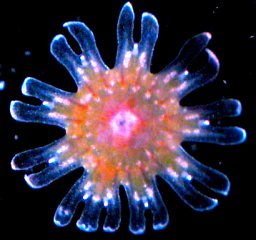 Helm Rebecca R合作论文数2
 Laurent Lebreton合作论文数The Ocean Cleanup;The Modelling House2
 Lauren Stefaniak合作论文数2
 Adriaan Gittenberger合作论文数National Museum of Natural History2
 Jennifer Dijkstra合作论文数University of New Hampshire;Zoology Department;Zoology Department, University of New Hampshire2Gretchen Lambert合作论文数2
 Artur Piotr Palacz合作论文数School of Marine Sciences, University of Maine2Larry G. Harris合作论文数University of New Hampshire2
 Toste Tanhua合作论文数2Charles C. Lambert合作论文数2Arthur C. Mathieson合作论文数2
 Sara P Grady合作论文数2
 Justin E. Stopa合作论文数2
 Cascade J. B. Sorte合作论文数Department of Ecology, Evolution and Marine Biology and the Marine Science Institute, University of California Santa Barbara2Rachel S. Smith合作论文数1Heather A. Leslie合作论文数1Neil Holdsworth合作论文数1Alberto Brosich合作论文数1Kaitlin A. Kinney合作论文数1Judith Pederson合作论文数1Ilan Macadam-Somer合作论文数1Diane Klement合作论文数1
 Antonio Carlos Marques合作论文数1Nicole R. Posth合作论文数1
 Paolo Corradi合作论文数1Joana Mira Veiga合作论文数Deltares1rachel rockblake合作论文数1Catharina Pieper合作论文数1
 Anna-Marie Cook合作论文数1Georg Hanke合作论文数1




