Classical machine learning has proven remarkably useful in post-processing quantum data, yet typical learning algorithms often require prior training to be effective. In this work, we employ a tensorial kernel support vector machine (TK-SVM) to analyze experimental data produced by trapped-ion quantum computers. This unsupervised method benefits from directly interpretable training parameters, allowing it to identify the non-trivial string-order characterizing symmetry-protected topological (SPT) phases. We apply our technique to two examples: a spin-1/2 model and a spin-1 model, featuring the cluster state and the AKLT state as paradigmatic instances of SPT order, respectively. Using matrix product states, we generate a family of quantum circuits that host a trivial phase and an SPT phase, with a sharp phase transition between them. For the spin-1 case, we implement these circuits on two distinct trapped-ion machines based on qubits and qutrits. Our results demonstrate that the TK-SVM method successfully distinguishes the two phases across all noisy experimental datasets, highlighting its robustness and effectiveness in quantum data interpretation.
Fracton codes have been intensively studied as novel topological states of matter, yet their fault-tolerant properties remain largely unexplored. Here, we investigate the optimal thresholds of self-dual fracton codes, in particular, the checkerboard code, against stochastic Pauli noise. By utilizing a statistical-mechanical mapping combined with large-scale parallel tempering Monte Carlo simulations, we calculate the optimal code-capacity threshold of the checkerboard code to be pth 0.107(3). This value is the highest among known threedimensional codes and nearly saturates the theoretical limit for topological codes. Our results further validate the generalized entropy relation for two mutually dual models, H(pth) + H( pth) approximate to 1, and extend its applicability beyond standard topological codes. This verification indicates the Haah's code also possesses a code-capacity threshold near the theoretical limit pth approximate to 0.11. These findings highlight fracton codes as highly resilient quantum memory and demonstrate the utility of duality techniques in analyzing intricate error-correcting codes.
Mapping finite-temperature dynamical phase diagrams of quantum many-body models is a necessary step towards establishing a framework of far-from-equilibrium quantum many-body universality. However, this is quite difficult due, in part, to the severe challenges in representing the volume-law entanglement that is generated under nonequilibrium dynamics at finite temperatures. Here, we address these challenges with an efficient equilibrium quantum Monte Carlo (QMC) framework for computing the finite-temperature dynamical phase diagram. Our method uses energy conservation and the self-thermalizing properties of ergodic quantum systems to determine observables at late times after a quantum quench. We use this technique to chart the dynamical phase diagram of the 2+1D quantum Ising model generated by quenches of the transverse field in initial thermal states. Our approach allows us to track the evolution of dynamical phases as a function of both the initial temperature and transverse field. Surprisingly, we identify quenches in the ordered phase that cool the system as well as an interval of initial temperatures where it is possible to quench from the paramagnetic (PM) to ferromagnetic (FM) phases. Our method gives access to dynamical properties without explicitly simulating unitary time evolution, and is immediately applicable to other lattice geometries and interacting many-body systems. Finally, we propose a quantum simulation experiment on state-of-the-art digital quantum hardware to directly probe the predicted dynamical phases and their real-time formation.
We investigate the ground-state nature of the honeycomb Kitaev-$\Gamma$ model in the material-relevant parameter regime through a combination of classical and quantum simulations. The classical model is imprinted with a tangle of highly structured spin double helices. This helix tangle exhibits $18$ inequivalent helical axes and features a spontaneous periodicity anisotropy and a ${\rm sgn}(\Gamma)$-determined chirality pattern. Infinite PEPS simulations with clusters up to $36$ sites identify hallmarks of this many-body order in the quantum spin-$1/2$ model. Our findings provide a fresh perspective of the Kitaev-$\Gamma$ model and enrich the physics of Kitaev magnetism.
We reconstruct the 2PI vertex Γ(k,p;q) from Monte Carlo measurements of the connected two-particle correlator for the two-dimensional single-component ϕ^4 lattice field theory and follow it across the Ising transition. Resolving the vertex in the irreducible representations of the point group C_4v, we find that the instability is driven by the A_1 (ferromagnetic) channel at zero transfer, whose leading eigenvalue of the symmetrized Bethe–Salpeter kernel approaches unity. Substantial B_1 (nematic) and B_2 (diagonal nematic) contributions cooperate with A_1 across all system sizes, highlighting that the soft sector is multidimensional. In real space, the vertex is short-ranged away from criticality while it develops a power-law tail at the critical point. In the ordered phase, the q=0 eigenvalue collapses because the ferromagnetic weight has condensed into the (one-particle-reducible) order parameter (or collective coordinate for a finite system), although finite-momentum fluctuations persist. By stripping the crossed-channel ladders, we obtain the fully irreducible vertex, which is a local contact – to a very good approximation. Inserted into the parquet and Schwinger–Dyson equations, this contact reproduces the Monte Carlo self-energy with an accuracy better than one-tenth of a percent. This provides a first-principles benchmark of the dynamical local-vertex approximation (DΓA). Additionally, we demonstrate that in the critical region, the physical solution of the parquet equations behaves as a repulsive fixed point, driven initially by a single order-parameter mode.
We introduce ParaToric, a C++ package for simulating the toric code in a parallel field (i.e., X X - and Z Z -fields) at finite temperature. We implement and extend the continuous-time quantum Monte Carlo algorithm of Wu, Deng, and Prokof’ev on the square, triangular, honeycomb, and cubic lattices with either periodic or smooth open boundaries. The package is expandable to arbitrary lattice geometries and custom observables diagonal in either the X X - or Z Z -basis. ParaToric also supports snapshot extraction in both bases, making it ideal for generating training/benchmarking data for other methods, such as lattice gauge theories, cold atom or other quantum simulators, quantum spin liquids, artificial intelligence, and quantum error correction. The software provides bindings to C/C++ and Python, and is thus almost universally integrable into other software projects.
We introduce ParaToric, a C++ package for simulating the toric code in a parallel field (i.e., X X - and Z Z -fields) at finite temperature. We implement and extend the continuous-time quantum Monte Carlo algorithm of Wu, Deng, and Prokof’ev on the square, triangular, honeycomb, and cubic lattices with either periodic or smooth open boundaries. The package is expandable to arbitrary lattice geometries and custom observables diagonal in either the X X - or Z Z -basis. ParaToric also supports snapshot extraction in both bases, making it ideal for generating training/benchmarking data for other methods, such as lattice gauge theories, cold atom or other quantum simulators, quantum spin liquids, artificial intelligence, and quantum error correction. The software provides bindings to C/C++ and Python, and is thus almost universally integrable into other software projects.
Finite-temperature properties of strongly correlated quantum matter are central to condensed matter, chemistry, and high-energy physics, yet are often inaccessible to classical methods such as quantum Monte Carlo (QMC). Here, we investigate dissipative thermal state preparation of frustrated spin systems using digital quantum computers. We focus on two paradigmatic models on the kagome lattice: the antiferromagnetic Heisenberg model (AFHM), whose finite-temperature properties are inaccessible to QMC due to a severe sign problem, and the antiferromagnetic Ising model (AFIM), which serves as a sign-problem-free benchmark. Using IBM quantum processors, we prepare approximate thermal states of the AFIM on kagome lattices with up to 79 spins coupled to 60 environment qubits. We observe the emergence of a robust steady state with an adjustable effective temperature that persists in circuits with over 1000 layers of two-qubit gates. We further study the scalability of the dissipative protocol through classical statevector simulations of the AFIM and AFHM. On lattices with up to 24 sites, we find that the circuit depth to reach thermal equilibrium is independent of system size and grows at most linearly with inverse temperature. These results establish engineered dissipation as a promising approach to finite-temperature quantum simulation of frustrated matter, and point toward regimes where quantum devices may outperform classical methods.
Kitaev’s toric code has become one of the most studied models in physics and is highly relevant to the fields of both quantum error correction and condensed matter physics. Most notably, it is the simplest known model hosting an extended, deconfined topological bulk phase. To this day, it remains challenging to reliably and robustly probe topological phases, as many state-of-the-art order parameters are sensitive to specific models and even specific parameter regimes. With the emergence of powerful quantum simulators which are approaching the regimes of topological bulk phases, there is a timely need for experimentally accessible order parameters. Here we study the ground state physics of the parallel field toric code on the honeycomb, triangular, and cubic lattices using continuous-time quantum Monte Carlo. By extending the concept of experimentally accessible percolation-inspired order parameters (POPs) we show that electric and magnetic anyons are independently confined on the honeycomb and triangular lattices, unlike on the square lattice. Our work manifestly demonstrates that, even in the ground state, we must make a distinction between topological order and (de-)confinement. Moreover, we report multicritical points in the aforementioned confinement phase diagrams. Finally, we map out the topological phase diagrams on the honeycomb, triangular, and cubic lattices and compare the performance of the POPs with other topological order parameters. Our work paves the way for studies of confinement involving dynamical matter and the associated multicritical points in contemporary quantum simulation platforms for Z_{2} lattice gauge theories.
In strongly correlated materials, interacting electrons are entangled and form collective quantum states, resulting in rich low-temperature phase diagrams. Notable examples include cuprate superconductors, in which superconductivity emerges at low doping out of an unusual "pseudogap" metallic state above the critical temperature. The Fermi-Hubbard model, describing a wide range of phenomena associated with strong electron correlations, still offers major computational challenges despite its simple formulation. In this context, ultracold atoms quantum simulators have provided invaluable insights into the microscopic nature of correlated quantum states. Here, we use a quantum gas microscope Fermi-Hubbard simulator to explore a wide range of dopings and temperatures in a regime where a pseudogap is known to develop. By measuring multipoint correlation functions up to fifth order, we uncover a universal scaling behavior in magnetic and higher-order spin-charge correlations characterized by a doping-dependent temperature scale. Accurate comparisons with determinant Quantum Monte Carlo and Minimally Entangled Typical Thermal States simulations confirm that this temperature scale is comparable to the pseudogap temperature [Formula: see text]. Our quantitative findings reveal a qualitative behavior of magnetic properties and spin-charge correlations in an emergent pseudogap and pave the way toward the exploration of charge pairing and collective phenomena expected at lower temperatures.
Rydberg tweezer arrays provide a versatile platform to explore quantum magnets with dipolar XY or van der Waals Ising ZZ interactions. Here, we propose a scheme combining dipolar and van der Waals interactions between two Rydberg states, where the amplitude of the latter can be greater than that of the former, realizing an extended Hubbard model with long-range tunnelings in optical tweezer arrays. On the triangular lattice with repulsive interactions, we predict the existence of a robust supersolid phase with a critical entropy per particle S/N≈0.19 accessible in current Rydberg tweezer experiments supported by large-scale quantum Monte Carlo simulations. We further demonstrate the experimental feasibility by identifying pairs of Rydberg states in Rb87 realizing the required interactions. Such a lattice supersolid is long lived, found over a wide parameter range in an isotropic and flat two-dimensional geometry, and can be realized for hundreds of particles allowing one to directly probe the defect-induced picture of supersolids. Its thermodynamical and dynamical properties can hence be studied at a far larger scale than hitherto possible. Published by the American Physical Society 2025
The low-energy physics of quantum spin ice is known to support an emergent form of quantum electrodynamics (QED), where magnetic monopoles exist and the fine-structure constant is material dependent. In this article, we show how this QED is modified via a coupling to dynamical matter on the centered pyrochlore lattice, a structure that has recently been synthesized using metal-organic frameworks. Specifically, we study the low-energy properties of the S = 1/2 quantum XXZ model on the centered pyrochlore lattice, with a focus on the sign-problem-free region. At fourth order in degenerate perturbation theory, this model hosts a quantum spin liquid distinct from the well-known U(1) quantum spin ice on the pyrochlore because of the presence of dynamical matter in the ground state. Exact diagonalization results are consistent with this quantum spin liquid over an extended region of the ground-state phase diagram, although potential quantum critical points within this region could indicate a richer phase structure. Our work thus expands the physics of quantum spin ice in an experimentally motivated geometry, showing how the emergent QED can be coupled to dynamical matter at zero temperature.
Spin squeezed entanglement enables metrological precision beyond the classical limit. Understood through the lens of continuous symmetry breaking, dipolar spin systems exhibit the remarkable ability to generate spin squeezing via their intrinsic quench dynamics. To date, this understanding has primarily focused on lattice spin systems; in practice however, dipolar spin systemsx2014ranging from ultracold molecules to nuclear spin ensembles and solid-state color centersx2014often exhibit significant amounts of positional disorder. Here, we develop a theory for scalable spin squeezing in a two-dimensional randomly diluted lattice of quantum dipoles, which naturally realize a dipolar XXZ model. Via extensive quantum Monte Carlo simulations, we map out the phase diagram for finite-temperature XY order, and by extension scalable spin squeezing, as a function of both disorder and Ising anisotropy. As the disorder increases, we find that scalable spin squeezing survives only near the Heisenberg point. We show that this behavior is due to the presence of rare tightly-coupled dimers, which effectively heat the system post-quench. In the case of strongly-interacting nitrogen-vacancy centers in diamond, we demonstrate that an experimentally feasible strategy to decouple the problematic dimers from the dynamics is sufficient to enable scalable spin squeezing.
Machine learning algorithms thrive on large data sets of good quality. Here we show that they can also excel in a typical research setting with little data of limited quality, through an interplay of insights coming from machine, and human researchers. The question we address is the unsolved problem of ordering out of a spin-liquid phase described by an emergent rank-2 U(1) gauge theory, as described by [H. Yan et al., Phys. Rev. Lett. 124, 127203 (2020)]. Published Monte Carlo simulations for this problem are consistent with a strong first-order phase transition, but were too noisy for the form of low-temperature order to be identified. Using a highly-interpretable machine learning approach based on a support vector machine with a tensorial kernel (TKSVM), we re-analyze this Monte Carlo data, gaining new information about the form of order that could in turn be interpreted by traditionally-trained physicists. We find that the low-temperature ordered phase is a form of magnetic order analogous to a smectic liquid crystal. This arises due to a subtle thermal order-by-disorder mechanism, that can be understood from the fluctuations of the tensor electric field of the parent rank-2 gauge theory. These results were obtained by a back-and-forth process which closely resembles a collaboration between human researchers and machines. We argue that this "collaborative" approach may provide a blueprint for solving other problems that have not yielded to human insights alone.
The recent experimental detection of the onset of a dynamically prepared, gapped Z2 quantum spin liquid on the ruby lattice brought the physics of frustrated magnetism and lattice gauge theory to Rydberg tweezer arrays [Semeghini , Probing topological spin liquids on a programmable quantum simulator, ]. The thermodynamic properties of such models remain inadequately addressed, yet knowledge thereof is indispensable if one wants to prepare large, robust, and long-lived quantum spin liquids. Using large scale quantum Monte Carlo simulations we find in the model a renormalized classical spin liquid with constant entropy density S/N approaching ln(2)/6 in the thermodynamic limit for all moderate and large values of the detuning δ and starting from T/Ω∼0.5 (in units of the Rabi frequency Ω) down to the lowest temperatures we could simulate, T/Ω∼0.01. With van der Waals interactions, constant entropy plateaus are still found but its value shifts with δ. We comment on the implications of the adiabatic approximation to the dynamical ramps for the electric degrees of freedom, which leads to a reinterpretation of the experimental observations. Published by the American Physical Society 2025
Quantum simulation relies on the preparation and control of low-entropy many-body systems to reveal the behavior of classically intractable models. The development of new approaches for realizing such systems therefore represents a frontier in quantum science. Here we experimentally demonstrate a new protocol for generating ultracold, itinerant many-body states in a tunnel-coupled two-dimensional optical lattice. We do this by adiabatically connecting a near-ground-state-cooled array of up to 50 single strontium-86 atoms with a Bose-Hubbard superfluid. Through comparison with finite-temperature quantum-Monte-Carlo calculations, we estimate that the entropy per particle of the prepared many-body states is approximately 2 k_B, and that the achieved temperatures are consistent with a significant superfluid fraction. This represents the first time that itinerant many-body systems have been prepared from rearranged atoms, opening the door to bottom-up assembly of a wide range of neutral-atom and molecular systems.
Fracton models host unconventional topological orders in three and higher dimensions and provide promising candidates for quantum memory platforms. Understanding their robustness against quantum fluctuations is an important task but also poses great challenges due to the lack of efficient numerical tools. In this work, we establish neural quantum states (NQS) as new tools to study phase transitions in these models. Exact and efficient parametrizations are derived for three prototypical fracton codes — the checkerboard and X-cube model, as well as Haah's code — both in terms of a restricted Boltzmann machine (RBM) and a correlation-enhanced RBM. We then adapt the correlation-enhanced RBM architecture to a perturbed checkerboard model and reveal its strong first-order phase transition between the fracton phase and a trivial field-polarizing phase. To this end, we simulate this highly entangled system on lattices of up to 512 qubits with high accuracy, representing a cutting-edge application of variational neural-network methods. In addition, we reproduce the phase transition of the X-cube model previously obtained with quantum Monte Carlo and high-order series expansion methods. Our work demonstrates the remarkable potential of NQS in studying complicated three-dimensional problems and highlights physics-oriented constructions of NQS architectures.
Quantum spin liquids are elusive long-range entangled states. Motivated by experiments in Rydberg quantum simulators, recent excitement has centered on the possibility of dynamically preparing a state with quantum spin liquid correlation even when the ground state phase diagram does not exhibit such a topological phase. Understanding the microscopic nature of such quantum spin "lake" states and their relationship to equilibrium spin liquid order remains an essential question. Here, we extend the use of approximately symmetric neural quantum states for real-time evolution and directly simulate the dynamical preparation in systems of up to N=384 atoms. We analyze a variety of spin liquid diagnostics as a function of the preparation protocol and optimize the extent of the quantum spin lake thus obtained. In the optimal case, the prepared state shows spin-liquid properties extending over half the system size, with a topological entanglement entropy plateauing close to γ= ln 2. We extract two physical length scales λ and ξ which constrain the extent of the quantum spin lake ℓ from above and below.
Motivated by a recent experiment on a square-lattice Rydberg atom array realizing a long-range dipolar XY model [Chen et al., Nature (2023)], we numerically study the model's equilibrium properties. We obtain the phase diagram, critical properties, entropies, variance of the magnetization, and site-resolved correlation functions. We consider both ferromagnetic and antiferromagnetic interactions and apply quantum Monte Carlo and pseudo-Majorana functional renormalization group techniques, generalizing the latter to a U(1) symmetric setting. Our simulations open the door to directly performing many-body thermometry in dipolar Rydberg atom arrays. Moreover, our results provide new insights into the experimental data, suggesting the presence of intriguing quasi-equilibrium features, and motivating future studies on the non-equilibrium dynamics of the system.
Fracton codes host unconventional topological states of matter and are promising for fault-tolerant quantum computation due to their large coding space and strong resilience against decoherence and noise. In this work, we investigate the ground-state properties and phase transitions of two prototypical self-dual fracton spin models -- the tetrahedral Ising model and the fractal Ising model -- which correspond to error-correction procedures for the representative fracton codes of type-I and type-II, the checkerboard code and the Haah's code, respectively, in the error-free limit. They are endowed with exotic symmetry-breaking properties that contrast sharply with the spontaneous breaking of global symmetries and deconfinement transition of gauge theories. To show these unconventional behaviors, which are associated with sub-dimensional symmetries, we construct and analyze the order parameters, correlators, and symmetry generators for both models. Notably, the tetrahedral Ising model acquires an extended semi-local ordering moment, while the fractal Ising model fits into a polynomial ring representation and leads to a fractal order parameter. Numerical studies combined with analytical tools show that both models experience a strong first-order phase transition with an anomalous $L^{-(D-1)}$ scaling, despite the fractal symmetry of the latter. Our work provides new understanding of sub-dimensional symmetry breaking and makes an important step for studying quantum-error-correction properties of the checkerboard and Haah's codes.
 Matthias Troyer合作论文数Swiss Joint Research Center, Microsoft;Stellenbosch University50
 Nikolay Prokofiev合作论文数Department of Physics, College of Natural Sciences, University of Massachusetts Amherst46
 Boris Svistunov合作论文数Department of Physics, College of Natural Sciences, University of Massachusetts Amherst43
 Anatoly Kuklov合作论文数Department of Engineering;Science and Physics;College of Staten Island;Department of Engineering, College of Staten Island20
 Ke Liu合作论文数17
 Massimo Boninsegni合作论文数Department of Physics, Faculty of Science, University of Alberta17
 Kris Van Houcke合作论文数Department of Physics and Astronomy, Ghent University14Evgeny Kozik合作论文数Department of Physics;University of Massachusetts;Department of Physics, University of Massachusetts10
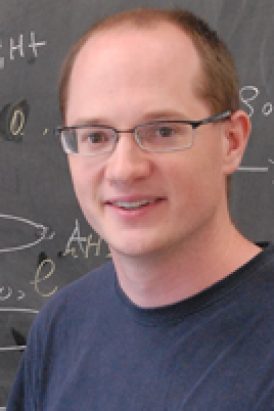 Emanuel Gull合作论文数College of Literature, Science, and the Arts, University of Michigan-Ann Arbor9
 Stefan Rombouts合作论文数Universiteit9Jonas Greitemann合作论文数Arnold Sommerfeld Ctr Theoret Phys, Univ Munich8
 Philipp Werner合作论文数Department of Physics, University of Fribourg8
 Immanuel Bloch合作论文数Quantum Many-Body Systems Division, Ludwig-Maximilians-Universitat Munchen;Max-Planck-Institute of Quantum Optics;Fakultät für Physik, Ludwig-Maximilians-Universitat Munchen8Nicolas Sadoune合作论文数7Dario Hügel合作论文数6
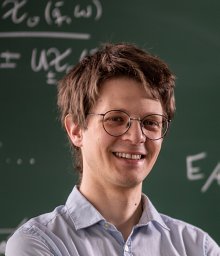 Grusdt Fabian合作论文数Department of Physics and Research Center OPTIMAS, Technische Universität Kaiserslautern6
 Jan Gukelberger合作论文数6Nihal Rao合作论文数5
 Christian Groß合作论文数Physikalisches Institut, Faculty of Science, Eberhard Karls Universität Tübingen;Max-Planck-Institute for Quantum Optics5Ping Nang Ma合作论文数5
 V. W. Scarola合作论文数Condensed Matter Theory Center;Department of Physics;University of Maryland;Condensed Matter Theory Center, University of Maryland5
 Philippe Corboz合作论文数Institute for Theoretical Physics, Institute of Physics, University of Amsterdam5Sebnem Gunes Soyler合作论文数5
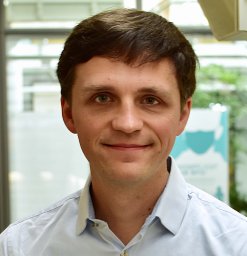 Timon Alexander Hilker合作论文数Max Planck Inst Quantum Opt, D-85748 Garching, Germany4
 Ulrich Schollwöck合作论文数Department for Physics, Ludwig-Maximilians Universität München4Sebastian Fuchs合作论文数4Hugo U. R. Strand合作论文数4
 Ludovic Jaubert合作论文数Laboratoire Ondes et Matière d'Aquitaine, CNRS;University of Bordeaux4
 Peter Anders合作论文数4
 Barbara Capogrosso-Sansone合作论文数Institute for Theoretical;Atomic , Molecular and Optical Physics;Harvard-Smithsonian Center of Astrophysics;Institute for Theoretical, Harvard-Smithsonian Center of Astrophysics4S. Pilati合作论文数3nikolay v prokofev合作论文数3Tobias Pfeffer合作论文数3peter kroiss合作论文数3
 Janik Schönmeier-Kromer合作论文数3L. Gamper合作论文数3
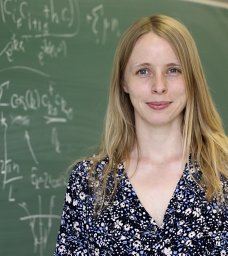 Annabelle Bohrdt合作论文数Tech Univ Munich, Dept Phys, D-85748 Garching, Germany3
 Guillaume Salomon合作论文数Max Planck Inst Quantum Opt, D-85748 Garching, Germany3
 Manfred Sigrist合作论文数Institut fur Theoretische Physik, Eidgenossische Technische Hochschule Zurich;Dep. of Physics, Eidgenössische Technische Hochschule Zürich3
 Victor Gurarie合作论文数Department of Physics, College of Arts and Sciences, University of Colorado, Boulder3Nespolo Jacopo合作论文数Dipartimento di Fisica dell', Università di Pisa and INFN3
 Kun Chen合作论文数University of Science and Technology of China, Univ. of Sci. and Technol. of China3
 Yao Zhiyuan合作论文数Department of Physics, University of Massachusetts3
 Zi Cai (蔡子)合作论文数School of Physics and Astronomy, Shanghai Jiao Tong University3
 Youjin Deng (邓友金)合作论文数Division of Quantum Physics and Quantum Information, Hefei National Laboratory for Physical Sciences at Microscale, University of Science and Technology of China;Division of Theoretical Physics, Department of Modern Physics, University of Science and Technology of China3
 Fuchun Zhang (张富春)合作论文数University of Chinese Academy of Sciences;Kavli Institute for Theoretical Sciences, University of Chinese Academy of Sciences3
 Norman Y. Yao合作论文数Department of Physics, Harvard University3
 Evgeni Burovski合作论文数Laboratoire de Physique Theorique;Universite Paris-Sud3
 Ryo Igarashi合作论文数Nippon Electric Company Ltd.3




