Many forms of traditional raised bed systems could be found around the world. Several of them have been identified as Globally Important Agricultural Heritage Systems (GIAHS) sites by Food and Agriculture Organization of the United Nations. Unlike traditional raised bed systems with similar structures in the Americas, the high bed–low ditch (HBLD) system in tropical and subtropical Asia, which is originated and developed from rice production, has been playing an important role in enhancing food security and maintaining farmer livelihood for centuries. Moreover, products provided by HBLD system are not only important for the livelihood of the local farmers, but also important for people living in the nearby towns and cities especially for vegetable and fruit supply. In this system, the ditches or sunken beds can be used to lower the groundwater table, retain nutrients and soil particles washed from the bed, grow rice or aquatic vegetables, and raise fish or shrimp. The HBLD system can also help to reduce salinity in coastal lowlands due to the presence of ditches. The raised beds can be used to grow various upland crops. Compared with rice monocropping, the adoption of HBLD system significantly improves the cropping intensity, productivity, employment, and income of farmers. Famers’ long-term practices fully demonstrate that this system is a type of sustainable agriculture with strong adaptability to the changes of natural environment. However, it should also be noted that the large-scale development of HBLD systems is not simply dependent on natural conditions, but is also determined by specific socioeconomic factors, such as good transportation facilities, a well market system, and a sufficient supply of labor. As a model of equilibrium between food production and high levels of biodiversity maintenance, the HBLD system is an important agricultural heritage system with global significance, and it should be well preserved and utilized in new ways to realize its important multiple functions under conditions of rapid urbanization in lowland and coastal regions.
Urbanization is one of the major threats to the dynamic inheritance of the agricultural heritage system (AHS). The ability to achieve sustainable development in intra-urban areas is an essential proposition related to the innovation of AHS conservation principles. The Haizhu high bed-low ditch agroecosystem (HHBLDA), a China-Nationally Important Agricultural Heritage System site located at the center of Guangzhou City, is taken as an example in this study. The effect of implementing the Land Acquisition to Keep Agricultural Use (LAKAU) on intra-urban AHS conservation is assessed through literature collection and review, field survey, and in-depth interviews. The results show that the LAKAU was implemented because of a three-decades-long struggle between ecological conservation and urban sprawl. Because of the important functions of ecosystem services, the AHS can coexist with urban land use in the course of rapid urbanization. The LAKAU mode can ensure that the nature of farmland remains unchanged, which is an effective strategy for the conservation of an urban AHS. The resulting problems, such as high operating costs, insufficient agricultural outputs, and insufficient local farmers in the AHS site because of off-farm opportunities, should be addressed by establishing an effective self-sustaining mechanism. Realizing the compatibility of management concepts between the AHS and nature reserves, adapting to the changing role of farmers, and strengthening the acceptance of the AHS by urban managers should attract the attention of decision-makers.
农业的对象是具备控制论系统特征的农业生态系统.农业低碳发展属于生态农业发展范畴.生态农业低碳发展的人为直接调控方法分别来源于传统和民间的农业实践探索、跨学科的现代农业科学研究以及生态友好的高新技术.为了达到低碳目标,不同来源的方法只要有利于系统在整体上顺应和强化自然调控过程就可以根据其在具体系统内的兼容性、协同性和有效性进行选择,并进一步优化组合.这有利于形成多样化的生态农业低碳模式与技术体系.政府自上而下的推进和民间自下而上的行动属于农业生态系统的人为间接调控过程,需要配合形成社会合力,有效推进生态农业低碳发展,助力我国碳中和目标的实现.
为了应对农业生物多样性减少、传统农耕技术和乡村文化丧失、食物与生计安全等问题,联合国粮农组织(FAO)于2002年发起了"全球重要农业文化遗产(GIAHS)"保护倡议.在该倡议提出20周年之际,为了系统认识农业文化遗产的价值及其现实意义,科学分析农业文化遗产保护中的问题与发展前景,邀请了11位来自相关领域的知名专家和遗产保护实践者,进行了一对一的交流访谈,访谈内容包括:农业文化遗产与现代生态农业发展的关系;农业文化遗产的历史文化价值及现实意义;农业文化遗产与非物质文化遗产的关系;农业文化遗产对粮食安全保障的意义;农业文化遗产中农业生物多样性的特征与价值,农业文化遗产在乡村文化振兴中的作用与可持续旅游发展,农业文化遗产对国际公约履约与国际合作的支撑作用;中国典型农业文化遗产保护与发展实践经验等.访谈结果表明:以活态性、动态性、系统性为主要特征的农业文化遗产,蕴含着丰富的农业生物多样性、生态农业技术、传统农耕文化和结构合理的生态景观,对解决工业化和城镇化所带来的生态环境问题、促进农业可持续发展和乡村全面振兴具有重要意义.作为一种特殊的遗产类型,农业文化遗产保护需要建立全新的范式,在强调政府主导作用的同时,还需要建立政策激励机制、产业融合发展机制、多方参与及惠益共享机制,以充分调动当地农民的积极性.
Aims Silicon (Si) plays an important role in rice. Although biodiversity utilization in paddy fields has increased in recent years, Si nutrition of rice in intercropping systems is poorly understood. The present research focused on deciphering the underlying mechanisms involved in rice and water spinach intercropping, which enhance Si uptake by rice. Methods We carried out a series of experiments including field, greenhouse, and incubation experiments to explore the plant-plant-soil interaction mechanisms. Results The field trials showed that rice and water spinach intercropping with different row ratios can increase Si concentration by 9.8 %-52.6 % and Si absorption by 34.7 %-127.8 % in rice leaves at ripening stage compared to rice monoculture. The pot trials further indicated that intercropping can promote rice to increase Si concentration in Si-deficient soil, with a significant increase of 35.9 % in stems and 29.7 % in leaves, and intercropping significantly increased soil CaCl2-Si content by 168.1 % compared to rice monoculture. In-depth research indicated that there was an interspecific rhizosphere interaction under intercropping conditions, which not only induced the up-regulated expression of Si transporter genes in rice roots (OsLsi1, OsLsi2) and stems (OsLsi6), but also stimulated rice roots to secrete more organic acids to increase Si availability in the soil. Moreover, water spinach root exudates helped reduce the polymerization or adsorption of monosilicic acid through proton efflux of roots. Conclusions Rice and water spinach intercropping can greatly enhance Si absorption of rice through several beneficial ways, which will have important practical significance for sustainable rice production, especially in Si-deficient soils.
我国构建农业生态学的学科体系中,不仅把生态系统生态学作为其学科基础,而且把系统论、信息论和控制论同样作为其重要的学科基础.因此,在我国的农业生态学的学科体系中不仅像国外的农业生态学学科体系那样重视包括物种、种群、群落、生态系统和景观层次的农业生态系统的能流物流结构和相互关系;而且还十分重视系统的信息流和资金流,包括自然信息流,以及人们主动收集、传输和利用的人工信息流,劳动所体现的价值流,及其以货币形式反映出来的资金流.我国的农业生态学不仅像国际上农业生态学体系那样很重视包括生产者、消费者和分解者在内的农业生态系统的能流和物流转换结构,而且十分重视农业生态系统的调节与控制机制,包括自然调控机制和人为调控机制,其中人为调控机制又包括了如农业经营者在种植业与养殖业中各种操作所代表的人为直接调控,也包括如市场需求、政府政策、国家法律、社会习俗、教育宣传、信息传播等能够影响农业经营者行为的人为间接调控.在系统论、信息论和控制论基础上构建的农业生态学体系有利于更好地深入剖析我国优秀的传统农业实践,启迪农业生态学相关的基础研究和应用研究,开拓信息时代农业生态转型的创新途径.
To learn the spatial and temporal distribution of Bt proteins in Bt maize leaves, Bt protein levels of Bt maize leaves and their corresponding non-transgenic lines were detected and analysed by the ELISA method. The results showed that Bt proteins were expressed in the leaves of Bt maize varieties during all periods of their growth, while no such Bt proteins were detected in the leaves of non-transgenic maize varieties. The range of leaf Bt proteins was 1.08∼5.81 µg.g−1 FW, which could effectively protect Bt maizes from the corn borer pest during their growth periods. Furthermore, the younger leaves of Bt maizes had significantly lower levels of Bt proteins than their older leaves. In most periods, Bt protein content of Bt maize leaves under drought stress was lower than that under normal growth conditions, but Bt protein content under nutrition stress was higher than that under normal growth conditions. The results provided a full pattern of the spatial and temporal distribution of Bt proteins in Bt maize leaves.
Inappropriate development and overexploitation have seriously degraded aquatic resources in China. Stakeholders identified three fish stock enhancement and biodiversity conservation scenarios for the Beijiang River: S1, increased fish restocking; S2, no fishing season and habitat conservation; and S3, strict pollution control. Potential impacts of these actions on the livelihoods of fishers were evaluated using applied economic modeling. Baseline costs and benefits came from logbooks from 30 fishers and a survey of 90 households in three villages. The financial net benefit for a household was US$1583 (¥11,160) annually, representing a 142% and 387% return on capital and operating costs, respectively. Larger catches associated with S1 and S2 generated a net benefit of US$1651 and US$1822, respectively. Strict pollution control resulting in higher catches (+20%) and lower operating costs (-20%) would increase the net benefit by 15.9% to US$1835 annually. Pollution control would benefit other resource users and is a prerequisite for ecological restoration.
自2002年联合国粮农组织发起“全球重要农业文化遗产(GIAHS)”保护倡议以来,经过10多年发展,农业文化遗产已经得到国际社会的广泛关注.2015年6月联合国粮农组织正式将全球重要农业文化遗产列为常规工作,截至目前已有21个国家的57个项目被列为全球重要农业文化遗产.中国是最早响应者、积极参与者、坚定支持者、重要推动者、成功实践者、主要贡献者,目前不仅以15个项目位列各国之首,而且还率先开展了国家级农业文化遗产发掘与保护,颁布了管理办法,开展了全国性农业文化遗产普查,建立了全国性工作和学术交流机制,引领国际农业文化遗产发掘与保护,助推了乡村振兴、脱贫攻坚和美丽中国建设.2019年6月21-23日,由中国农学会农业文化遗产分会等联合主办的“第六届全国农业文化遗产大会”在四川省成都市郫都区成功召开,李文华院士发来贺信,400多位来自相关高校和科研单位、国家和地方管理部门、部分重要农业文化遗产地的企业和农户代表,就农业文化遗产的特征价值、生态与文化价值实现机制、保护与发展途径等方面的研究成果和实践经验进行了广泛深入交流.现撷取部分嘉宾和专家观点,以飨读者.
过去单从自然科学、技术科学、工程科学的角度看问题已经不足以解决现在的农业生态转型问题了,我们还必须把研究成果通过政策法规转变成社会的行动,这才能最终真正推进我们国家农业的生态转型.
We examined how traditional farmers preserve the genetic diversity of a local common carp (Cyprinus carpio), which is locally referred to as "paddy field carp" (PF-carp), in a "globally important agricultural heritage system" (GIAHS), i.e., the 1,200-y-old rice-fish coculture system in Zhejiang Province, China. Our molecular and morphological analysis showed that the PF-carp has changed into a distinct local population with higher genetic diversity and diverse color types. Within this GIAHS region, PF-carps exist as a continuous metapopulation, although three genetic groups could be identified by microsatellite markers. Thousands of small farmer households interdependently obtained fry and parental carps for their own rice-fish production, resulting in a high gene flow and large numbers of parent carps distributing in a mosaic pattern in the region. Landscape genetic analysis indicated that farmers' connectivity was one of the major factors that shaped this genetic pattern. Population viability analysis further revealed that the numbers of these interconnected small farmer households and their connection intensity affect the carps' inherent genetic diversity. The practice of mixed culturing of carps with diverse color types helped to preserve a wide range of genetic resources in the paddy field. This widespread traditional practice increases fish yield and resource use, which, in return, encourages famers to continue their practice of selecting and conserving diverse color types of PF-carp. Our results suggested that traditional farmers secure the genetic diversity of PF-carp and its viability over generations in this region through interdependently incubating and mixed-culturing practices within the rice-fish system.
The main content of the new book Agroecological Practices for Sustainable Agriculture: Principles, Applications and Making the Transition edited by Alexander Wezel is introduced here.New idea and new methods for agroecology devel-opment which are especially suitable as a reference for China are pinpointed. The major advantages and some weaknesses are also addressed.
Biodiversity use in rice production is not only confined to the paddy field, but is also closely related to the landscape environment where the paddy field is located. The influence of the landscape on rice production includes many factors. The distance of the rice field to factory or mining sites will affect the air quality and water quality of the rice field. The distance of the rice field from cities or towns may affect its accessibility to markets and the number of visitors. Mountains and hills within the same watershed may affect the quality and quantity of the water resources of the rice field. The natural vegetation and different habitats surrounding the rice field may by home to many birds, spiders, frogs and other animals that interact with animals in the rice field. Even other crops close to rice field may have an effect on rice production by competing for water resources, reducing food resources for rice pests, or providing plant residues as compost. Therefore, it is important to have a suitable landscape arrangement for sustainable rice production. In this section, the biodiversity landscape arrangement method used in rice production areas is introduced.
The setting up of policy system for eco-agriculture in China can be divided into two tasks with one on how to practice eco-agriculture by a recommended agricultural green action list, and another on how to recognize eco-agriculture with a certification system. Eco-agricultural certification mainly observes the final results of agriculture operation and judges whether they are complied with the principle of balancing with resources, friendly for nature, well protecting environment and producing safety food. On the other hand, the recommended agricultural green action list mainly concerns about a list of actions which can be chosen from, for the regulation and control of agroecosystem structure, function, input and output during the development of eco-agriculture. The setting up of policy system for eco-agriculture should follow the approaches of firm principles, simple indicators, adaptation for local situa-tions, easy for operation, efficient to incentive, and convenient for verification. The detail design of eco-agriculture certification sys-tem including indicator system, verification method, information exposing system, credibility record system, incentive measures and certification process, are discussed. For the agriculture green action list, the categorization system, the action description, economic support measures and the operation procedure are introduced. The paper can provide a reference for the development of eco-agriculture in China.
上世纪60年代以后,工业化过程野蛮破坏带来的后果逐步显现,人类的环境意识觉醒,以1991年联合国粮农组织在荷兰召开的农业与环境国际会议为标志,农业进入到生态化阶段.农业的目标不仅仅是吃饱穿暖的产品供应和市场盈利的经济效益,还明确了农业要支撑、保护和恢复良好的生态环境,要促进对社会精神文化的正面影响力.
After slash and burn, small subsistence agriculture and then industrial agriculture, agriculture is now entering an ecological stage. The turning point of agro-ecological transition in different countries has often occurred at the period when per capita average GDP range reached 10 thousand to 30 thousand USD. Diversified tactics, routes and terms have been chosen by different countries for agro-ecological transition according to their specific social backgrounds, which was worthy of studying and learning in China. The level of social economic development in China is approaching or reaching the turning point for agro-ecological transition. The central government has proposed a series of important policies that redefined development goal, renewed guiding principles, redesigned development patterns and proposed new technical and management measures for agriculture since 2015. Eco-agriculture has been widely accepted by the public in China today. It was therefore important to clarify the concept of eco-agriculture in relation to other concepts for a unified effort toward agro-ecological transformation. After analysis of the advantages and challenges faced by China, the strategy and tactic for agro-ecological transition in China were proposed in this study.
一、与农相遇:两进两出的人生机缘 孙庆忠(以下简称“孙”):骆老师,您是恢复高考后1978年的第一届研究生,1981年研究生没毕业就赴美进修学习,是国家重点培养的后备力量.从美国回来便肩负重任,1992年后的14年间,您先后担任了华南农业大学的副校长、校长,做了大量开创性的工作.今天,我们以学术人生为主线,请您谈谈与农相遇、与华南农大结缘的历程,以及一生从事农业生态学研究的经历和感受. 骆世明(以下简称“骆”):我接受过很多次采访,谈专业、摆事实、讲道理、舒看法,但基本是讲我身外的事,这是第一次深入谈及我自己,还真不习惯.
Intercropping is an effective agricultural practice for crop production, resource utilization, and pest control. However, aquatic crops (e.g., rice) intercropping is relatively rare. Field experiments of two years/four seasons (early and late seasons in 2012, 2013) was carried out to test the effects of rice-water spinach intercropping on yield, disease and pest control, and Si, N nutrition of rice plant in the present study. The experiment contained three treatments including rice monoculture, water spinach monoculture and rice-water spinach intercropping with three replicates by randomized block design. Results showed that rice-water spinach intercropping significantly reduced the incidence of disease and pest of rice, with a reduction of rice sheath blight by 17.3%-50.6% and rice leaf folders by 5.1%-58.2%. For yield, intercropping resulted in an increase of rice yield by 45.1%-71.7% in early season and 20.9%-34.3% in late season, but a decrease of water spinach yield by 14.1%-37.1% in early season and 3.8%-18.3% in late season. However, rice-water spinach intercropping gave a higher land equivalent ratio (1.02-1.17) therefore improved land utilization efficiency. Furthermore, intercropping significantly increased Si concentration, Si and N absorption in rice leaves in ripening stage compared with rice monoculture. Our findings suggest that rice-water spinach intercropping exhibits yield advantage for rice or total yield, improves Si nutrition of rice and provides an environmentally sound approach in controlling disease and pest.
Intercropping is a sound eco-agriculture model, but aquatic crops (e.g., rice) intercropping is seldom researched. In the present study, rice and water spinach were chosen as the research objects, a field trial was conducted to explore the yields, interspecific relationship and Si, N nutrition of rice under rice-water spinach intercropping for four seasons during two consecutive years (2014-2015). The experiment had five treatments: rice monoculture, water spinach monoculture, and rice-water spinach intercropping ratios of 2:2, 3:2, 4:2, respectively. The results showed that rice-water spinach intercropping significantly increased rice yield, and the increase rates of 2:2, 3:2 and 4:2 intercropping per unit area were 77.5%-120.6%, 64.9%-80.9%, 37.7%-56.0%, respectively. However, intercropping resulted in reduction of water spinach yield. Intercropping significantly increased total yield of rice and water spinach from land equivalent ratios (LER) analysis. The values of LER were more than 1.0, and the ratio of 3:2 intercropping had the best effect. As for the competitive index, rice was more competitive than water spinach in intercropping system, especially in early season. Compared with rice monoculture, rice-water spinach intercropping significantly increased the absorption of Si and N in rice leaves, and Si content of rice leaves during ripening stage, but didn't increase its N content and even slightly reduced it during ripening stage. Intercropping had no significant effect on available Si, ammonium N and nitrate N content in soil. Compared with rice monoculture and intercropping, water spinach monoculture had always the highest available Si, ammonium N and nitrate N contents in soil through the experiment period. The results suggested that rice-spinach intercropping could promote rice to absorb silicon and nitrogen and increase the competitive ability of rice.
 Jiaen Zhang (章家恩)合作论文数College of Natural Resources and Environment, South China Agricultural University56
 Jianwu Wang (王建武)合作论文数Institute of Tropical and Subtropical Ecology,South China Agricultural University33
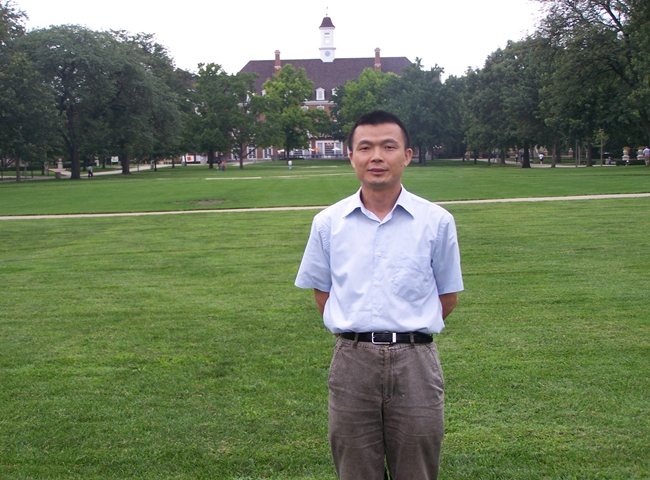 Rensen Zeng (曾任森)合作论文数福建农林大学作物科学学院33
 Huashou Li (黎华寿)合作论文数College of Natural Resources and Environment, South China Agricultural University32
 Kunzheng Cai (蔡昆争)合作论文数College of Natural Resources and Environment, South China Agricultural University32
 Zhong Qin (秦钟)合作论文数College of Natural Resources and Environment, South China Agricultural University25
 Yanqiong Ye (叶延琼)合作论文数College of Natural Resources and Environment, South China Agricultural University13
 Shunshan Duan (段舜山)合作论文数College of Life Science and Technology, Jinan University11
 Yuanjiao Feng (冯远娇)合作论文数College of Natural Resources and Environment, South China Agricultural University11
 Nie Chengrong合作论文数10
 Guikui Chen (陈桂葵)合作论文数College of Agriculture,South China Agricultural University9
 Hongzhi He (贺鸿志)合作论文数College of Natural Resources and Environment, South China Agricultural University8Jin Zhang (张锦)合作论文数7
 Benliang Zhao (赵本良)合作论文数College of Natural Resources and Environment, South China Agricultural University7
 Huaqin Xu (徐华勤)合作论文数College of Agronomy, Hunan Agricultural University7Yinghu Liu合作论文数7ZhenQian Liu (刘振乾)合作论文数6
 Xizhen Zhu (朱夕珍)合作论文数College of Natural Resources and Environment, South China Agricultural University6
 Ying Ouyang合作论文数United States Department of Agriculture Forest Service6
 Jinghua Huang (黄京华)合作论文数College of Agriculture, Guangxi University6Tao Xu (徐涛)合作论文数5
 Xin Chen (陈欣)合作论文数College of Life Sciences, Zhejiang University5Lihua Cui合作论文数5WU Yin-bao (吴银宝)合作论文数4Mao Ye合作论文数4Dan Gao合作论文数4ZhiSan Wang (汪植三)合作论文数4YiJuan Su (苏贻娟)合作论文数4Yun Li (李韵)合作论文数4Yong Wang (王勇)合作论文数4
 Ruilong Wang (王瑞龙)合作论文数College of Natural Resources and Environment, South China Agricultural University4Xuezhu Wu (吴学祝)合作论文数4
 Jianjun Tang (唐建军)合作论文数College of Life Sciences, Zhejiang University4Guoming Quan合作论文数3Chuanchuan Ning合作论文数3
 Min An合作论文数3GE Shao-bin (葛少彬)合作论文数3Keyan Zhu-Salzman合作论文数3
 Xindi Liao (廖新俤)合作论文数College of Animal Science, South China Agricultural University3Muhammadbismillah Khan合作论文数3
 Wenxiong Lin (林文雄)合作论文数College of Agriculture, Fujian Agriculture and Forestry University3Jining Chen合作论文数3Wenling Zhu (朱文玲)合作论文数3
 Muhammad Ijaz合作论文数Dept Clin Med & Surg, Univ Vet & Anim Sci3
 Liangliang Hu (胡亮亮)合作论文数College of Life Sciences, Zhejiang University3j h kent合作论文数2j d i harper合作论文数2
 Jiefen Xie (谢洁芬)合作论文数College of Natural Resources and Environment, South China Agricultural University2




