Interval‐specific congenic strains (ISCS) allow fine mapping of a quantitative trait locus (QTL), narrowing its confidence interval by an order of magnitude or more. In earlier work, we mapped four QTL specifying differential ethanol sensitivity, assessed by loss of righting reflex because of ethanol (LORE), in the inbred long‐sleep (ILS) and inbred short‐sleep (ISS) strains, accounting for approximately 50% of the genetic variance for this trait. Subsequently, we generated reciprocal congenic strains in which each full QTL interval from ILS was bred onto the ISS background and vice versa. An earlier paper reported construction and results of the ISCS on the ISS background; here, we describe this process and report results on the ILS background. We developed multiple ISCS for each Lore QTL in which the QTL interval was broken into a number of smaller intervals. For each of the four QTL regions (chromosomes 1, 2, 11 and 15), we were successful in reducing the intervals significantly. Multiple, positive strains were overlapped to generate a single, reduced interval. Subsequently, this reduced region was overlaid on previous reductions from the ISS background congenics, resulting in substantial reductions in all QTL regions by approximately 75% from the initial mapping study. Genes with sequence or expression polymorphisms in the reduced intervals are potential candidates; evidence for these is presented. Genetic background effects can be important in detection of single QTL; combining this information with the generation of congenics on both backgrounds, as described here, is a powerful approach for fine mapping QTL.
BACKGROUND Linkage studies alone do not produce sufficient resolution to narrow the location of a quantitative trait locus (QTL) to a small-enough chromosomal region for gene identification. One solution to this problem is to use interval-specific congenic recombinant (ISCR) lines to narrow the chromosomal interval known to contain the QTL. In previous work, we mapped four QTLs for differential ethanol sensitivity in the inbred long-sleep (ILS) and inbred short-sleep (ISS) strains and generated reciprocal congenic strains in which each full QTL interval from ILS was bred onto the ISS background and vice versa. METHODS ISCR lines were derived by identifying mice carrying recombination events in the congenic interval during backcrossing of the ISS.ILS.Lore congenics to ISS. Recombinant mice were backcrossed to ISS, and progeny carrying the ISCR chromosome were identified and tested to determine whether the ISCR region carried the donor Lore QTL. RESULTS We developed multiple ISCR lines for each Lore QTL, in which the QTL interval was broken into a number of smaller intervals. For all four QTLs, we reduced the size of the interval, in one case to 3.7 cM. CONCLUSIONS Use of ISCR lines can narrow each Lore candidate region to a few centimorgans. Such an interval size is conducive to brute-force approaches to identify candidate genes, entailing bioinformatics, gene expression, and DNA sequencing strategies.
BACKGROUND:We have identified four major genes or quantitative trait loci (QTLs) that determine duration of loss of righting reflex (LORR), induced by sedative doses of ethanol: Lore1, Lore2, Lore4, and Lore5. Together these genes explain more than 50% of the phenotypic variance for sensitivity to the sedative/hypnotic effects of ethanol between the Inbred Long Sleep (ILS) and Inbred Short Sleep (ISS) strains of mice. The derivation of these strains is reviewed here.METHODS:Each QTL has been bred onto the opposite background (ILS or ISS) through 10 rounds of backcrossing by using QTL-marker-assisted counter selection to produce reciprocal congenic strains. Mice were genotyped for markers that flanked each of the QTLs. Selection for the donor at the desired QTL, and against donor markers at the other four QTLs, allowed rapid fixation of the genetic background. Phenotypic assessment in the ISS-recipient congenic strains was conducted throughout the backcross.RESULTS:By the N5 generation, phenotypic assessments failed to detect significant effects in some sublines; these sublines were discarded and positive lines split to create new replicate sublines. In the N10, all sublines retained the phenotypic difference between heterozygotes and ISS homozygotes; however, the expected additive effect was not found in the Lore1 congenics. On the ILS background, each Lore was captured, as shown by the expected differential LORR. Two strains on the ILS background, and one on the ISS, exhibited the differential effect on blood ethanol concentration associated with the donor strain.CONCLUSIONS:Congenic strains represent an important resource for confirmation of previously identified QTLs, for identification and mapping of additional phenotypes, and for exclusion of candidate genes. QTL-marker-assisted selection rapidly stabilized the genetic background within four generations (based on phenotypic assessments); however, phenotypic selection during the backcrossing to generate congenic strains did not contribute to the successful capture of the ISS QTLs.
Low initial response to alcohol has been shown to be among the best predictors of development of alcoholism. A similar phenotypic measure, difference in initial sensitivity to ethanol, has been used for the genetic selection of two mouse strains, the Inbred Long-Sleep (ILS) and Inbred Short-Sleep (ISS) mice, and for the subsequent identification of four quantitative trait loci (QTLs) for alcohol sensitivity. We now report the application of high throughput comparative gene sequencing in the search for genes underlying these four QTLs. To carry out this search, over 1.7 million bases of comparative DNA sequence were generated from 68 candidate genes within the QTL intervals, corresponding to a survey of over 36,000 amino acids. Eight central nervous system genes, located within these QTLs, were identified that contain a total of 36 changes in protein coding sequence. Some of these coding variants are likely to contribute to the phenotypic variation between ILS/ISS animals, including sensitivity to alcohol, providing specific new genetic targets potentially important to the neuronal actions of alcohol.
Initial insensitivity to alcohol is a strong predictor of human alcoholism, a widespread and heritable health problem. The Long Sleep and Short Sleep lines of mice were developed by genetic selection for high or low alcohol sensitivity. We have identified seven quantitative trait loci (QTLs) specifying differences in alcohol sensitivity using intercross progeny from these selected strains. These QTLs (Lorel-Lore7) together account for approximately 60% of the total genetic variance for this trait. This represents the first report of linkages for genes influencing alcohol action in any mammalian system using stringent, genome-wide mapping criteria.
Numerous algorithms for the identification and genetic mapping of quantitative trait loci (QTL) have been developed. Methods for confirming QTL maps involve either examination of independent segregating populations or the construction of congenic lines differing only in the QTL of interest. Because these projects require a minimum of several years or thousands of marker assessments in laboratory mice, an alternative, faster congenic method has been proposed, In a preliminary study, we tested this method for confirming QTLs identified in crosses between the ILS and ISS selected lines of mice for differential sensitivity to the hypnotic effects of ethanol, Herein, we report the construction of ''segregating congenic'' strains in which each QTL is made homozygous in a single generation, whereas the remainder of the genetic background is allowed to segregate, Sensitivity to ethanol among the progeny of such mice is consistent with predictions, Phenotypic variation is high, as expected, due to the background segregation, and statistical significance was attained in only 2 of 7 comparisons. Such segregating congenic populations may be a valuable research tool for confirming QTL map positions and for subsequent assessment of individual pathways and mechanisms of action of individual QTLs.
Heterokaryon studies suggest that senescent and quiescent human diploid fibroblasts (HDF) contain a common inhibitor of entry into S phase. DNA synthesis can be induced in senescent and quiescent HDF by fusing them with cells containing DNA viral oncogenes such as SV40 T antigen, adenovirus E1A, or human papillomavirus E7. Both senescent and quiescent HDF contained the unphosphorylated form (p110Rb) of the retinoblastoma protein, a putative inhibitor of proliferation. After serum stimulation, senescent HDF did not phosphorylate p110Rb and did not enter S phase, whereas quiescent HDF phosphorylated p110Rb and entered S phase. These findings, combined with the observations that T antigen, E1A, and E7 form complexes with, and presumably inactivate, unphosphorylated p110Rb, suggest that failure to phosphorylate p110Rb may be an immediate cause of failure to enter S phase in senescent HDF.
The mechanism for cessation of proliferation in density-inhibited quiescent human diploid fibroblasts (HDF) and serum-deprived quiescent HDF was compared in two ways. Density-inhibited HDF were fused to either replicating HDF or SV40-transformed HDF and DNA synthesis was measured in the resulting heterokaryons. DNA synthesis was inhibited in the replicating HDF nuclei in heterokaryons in a way that suggested that entry into S phase was blocked, but ongoing DNA synthesis was not inhibited. In contrast, DNA synthesis was induced in the quiescent nuclei in heterokaryons formed with SV40-transformed HDF. Previous experiments had shown that serum-deprived HDF also behave in this way in heterokaryons. To test this similarity further, we examined the inhibitory activity of cell membranes prepared from both types of quiescent HDF. We found that both types of quiescent HDF contain DNA synthesis-inhibitory activity that is (1) effective on replicating HDF; (2) ineffective on SV40-transformed HDF; (3) sensitive to heat and trypsin. Thus, these results support the hypothesis that both density-inhibited HDF and serum-deprived HDF share a common mechanism for arrest in G1 phase. They also suggest that a membrane-bound protein plays a role in the inhibition of DNA synthesis in quiescent HDF.
The mechanism for cessation of proliferation in density-inhibited quiescent human diploid fibroblasts (HDF) and serum-deprived quiescent HDF was compared in two ways. Density-inhibited HDF were fused to either replicating HDF or SV40-transformed HDF and DNA synthesis was measured in the resulting heterokaryons. DNA synthesis was inhibited in the replicating HDF nuclei in heterokaryons in a way that suggested that entry into S phase was blocked, but ongoing DNA synthesis was not inhibited. In contrast, DNA synthesis was induced in the quiescent nuclei in heterokaryons formed with SV40-transformed HDF. Previous experiments had shown that serum-deprived HDF also behave in this way in heterokaryons. To test this similarity further, we examined the inhibitory activity of cell membranes prepared from both types of quiescent HDF. We found that both types of quiescent HDF contain DNA synthesis-inhibitory activity that is (1) effective on replicating HDF; (2) ineffective on SV40-transformed HDF; (3) sensitive to heat and trypsin. Thus, these results support the hypothesis that both density-inhibited HDF and serum-deprived HDF share a common mechanism for arrest in G1 phase. They also suggest that a membrane-bound protein plays a role in the inhibition of DNA synthesis in quiescent HDF.
Senescent human diploid cells (HDC) were fused to replicative transformed cells of different types, and DNA synthesis was monitored in the resulting heterodikaryons. Human cells transformed by simian virus 40 or adenovirus serotype 5 were able to induce DNA synthesis in senescent HDC nuclei in heterodikaryons. In contrast, carcinogen-transformed cells were not able to induce DNA synthesis in senescent HDC nuclei; rather, the transformed nuclei in these heterodikaryons were inhibited from entering S phase. Cells transformed by Rous sarcoma virus and most human tumor cells tested are similarly inhibited by fusion to senescent HDC. These results suggest that the mechanism for transformation by DNA tumor viruses may be fundamentally different from that of other viruses and carcinogens and from that of most human tumor cells. A simple model to explain these results is that (i) senescent HDC contain an inhibitor of entry into S phase; (ii) cells transformed by DNA tumor viruses have gained a transforming factor, perhaps large tumor antigen, that is capable of overriding the normal inhibitor; and (iii) cells transformed by carcinogens or RNA viruses have lost or altered the mechanism for expression of the normal inhibitor yet are still sensitive to it. We propose that this inhibitor is produced in normal cells when they experience conditions that are inadequate for proliferation and that it plays a role in putting the cells into a distinct quiescent state with long-term viability. The override of this inhibitor function in simian virus 40-transformed HDC can explain why they have low viability in plateau-phase cultures and why they die during crisis.
When a nucleus containing 3 H-RNA is grafted into an unlabeled cell the recipient cell nucleus acquires approx. 10 times the concentration of 3 H-RNA acquired by the cytoplasm, which suggests that some RNA molecules shuttle between cytoplasm and nucleus against a concentration gradient. We report here on three lines of evidence that show that the acquisition of radioactive RNA by the recipient cell nucleus is unlikely to result from the synthesis within the recipient nucleus of new RNA from simple radioactive precursors such as might be produced by the breakdown of 3 H-RNA. 1. 1. The size of the labeled precursor pool seems inadequate to account for the labeling of host nuclear RNA through new transcriptions. 2. 2. The 3 H-RNA destined for one-way passage from nucleus to cytoplasm can be diluted out by sequential passage of a labeled nucleus through unlabeled cytoplasms resulting in a nuclear enrichment of the putative shuttling 3 H-RNA. The result of such an operational sequence is that the last unlabeled recipient cell nucleus acquires 100 or more times the concentration of 3 H-RNA found in the cytoplasm, supporting the view that there has been an enrichment for labeled shuttling RNAs. 3. 3. Electron microscopic radioautography reveals that the 3 H-RNA acquired by a recipient cell nucleus is almost entirely non-nucleolar, whereas the 3 H-RNA in a nucleus directly labeled with simple radioactive precursors is largely within nucleoli. This clearly implies that the labeled material that moves from one nucleus to another via the cytoplasm is something more than a simple transcription precursor.
 Lena Gordon合作论文数9
 Beth Bennett合作论文数8
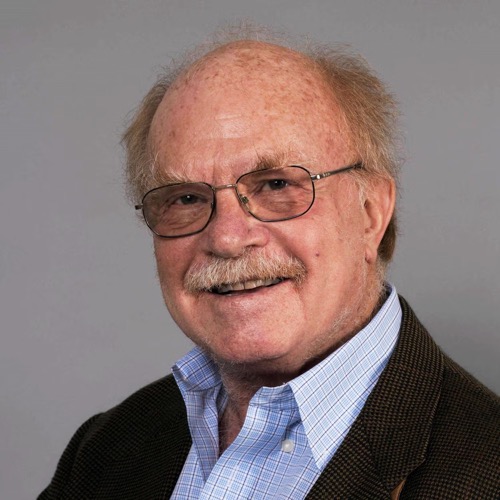 Thomas E. Johnson合作论文数Institute For Behavioral Genetics, University of Colorado Boulder;College of Arts and Sciences, University of Colorado Boulder6GRETCHEN H. STEIN合作论文数3Otakuye Conroy-Ben合作论文数Department of Civil and Environmental Engineering, 110 S. Central Campus Dr., Room 2000, Salt Lake City, UT 84112, United States.3
 James M. Sikela合作论文数Health Sciences Center and Veterans Administration Medical Center, University of Colorado3
 Marissa A. Ehringer合作论文数Institute for Behavioral Genetics, University of Colorado Boulder;Department of Integrative Physiology, College of Arts and Sciences, University of Colorado Boulder3J Thompson合作论文数2
 Frances M. Yang合作论文数Hebrew SeniorLife2
 Phyllis Carosone-Link合作论文数1Fan Yang合作论文数1
 Yan Xu (徐岩)合作论文数1L. Goldstein合作论文数1
 Paul D. Markel合作论文数Department of Psychology, University of Colorado1P. Carosone-Link合作论文数1Laura Atkins合作论文数1N. Phares-Zook合作论文数1Gretchen H. Stein合作论文数1G.E. Wise合作论文数1Lynn K. Gordon合作论文数David Geffen School of Medicine, Jules Stein Eye Institute1
 Jessica Thompson合作论文数Department of Earth Science, University of California Santa Barbara1




