Spin squeezing in a many-body system is a witness for entanglement and can enable measurement sensitivities beyond those achievable by only classical correlations. Here, working with ultracold 7Li atoms in an optical lattice, we demonstrate spin squeezing using short-range contact interactions in both one and three dimensions. In 1D, spin squeezing is shown to be insensitive to density fluctuations caused by holes. In 3D, however, we observe that holes strongly modify the squeezing dynamics, hindering the recently predicted emergence of scalable squeezing in 3D XXZ spin systems. By developing a new theoretical model to account for spin-density coupling, we obtain strong quantitative agreement with the observed squeezing dynamics, resulting in approximate to 2 dB at 7% hole fraction. Our observations highlight the importance of understanding spin-density coupling in the dynamics of many interacting spins and lay the groundwork for improved spin squeezing in systems with only short-range interactions.
Neutral atoms become strongly interacting when their electrons are excited to loosely bound Rydberg states. We investigate the strongly correlated quantum phases of matter that emerge in two-dimensional atom arrays where three Rydberg levels are used to encode an effective spin-1 degree of freedom. Dipolar exchange between such spin-1 Rydberg atoms naturally yields two distinct models: (i) a two-species hardcore boson model, and (ii) upon tuning near a Förster resonance, a dipolar spin-1 XY model. Through extensive, large-scale infinite density matrix renormalization group calculations, we provide a broad roadmap predicting the quantum phases that emerge from these models on a variety of lattice geometries: square, triangular, kagome, and ruby. We identify a wealth of correlated states, including lattice supersolids and simplex phases, all of which can be naturally realized in near-term experiments.
By directly altering microscopic interactions, pressure provides a powerful tuning knob for the exploration of condensed phases and geophysical phenomena1. The megabar regime represents an interesting frontier, in which recent discoveries include high-temperature superconductors, as well as structural and valence phase transitions2-6. However, at such high pressures, many conventional measurement techniques fail. Here we demonstrate the ability to perform local magnetometry inside a diamond anvil cell with sub-micron spatial resolution at megabar pressures. Our approach uses a shallow layer of nitrogen-vacancy colour centres implanted directly within the anvil7-9; crucially, we choose a crystal cut compatible with the intrinsic symmetries of the nitrogen-vacancy centre to enable functionality at megabar pressures. We apply our technique to characterize a recently discovered hydride superconductor, CeH9 (ref. 10). By performing simultaneous magnetometry and electrical transport measurements, we observe the dual signatures of superconductivity: diamagnetism characteristic of the Meissner effect and a sharp drop of the resistance to near zero. By locally mapping both the diamagnetic response and flux trapping, we directly image the geometry of superconducting regions, showing marked inhomogeneities at the micron scale. Our work brings quantum sensing to the megabar frontier and enables the closed-loop optimization of superhydride materials synthesis.
We introduce a novel protocol, which enables Heisenberg-limited quantum-enhanced sensing using the dynamics of any interacting many-body Hamiltonian. Our approach - dubbed butterfly metrology - utilizes a single application of forward and reverse time evolution to produce a coherent superposition of a "scrambled" and "unscrambled" quantum state. In this way, we create metrologically-useful long-range entanglement from generic local quantum interactions. The sensitivity of butterfly metrology is given by a sum of local out-of-time-order correlators (OTOCs) - the prototypical diagnostic of quantum information scrambling. Our approach broadens the landscape of platforms capable of performing quantum-enhanced metrology; as an example, we provide detailed blueprints and numerical studies demonstrating a route to scalable quantum-enhanced sensing in ensembles of solid-state spin defects.
Spin-squeezed states are a resource for quantum-enhanced precision measurement. However, the theoretical foundations for scalable spin squeezing - where quantum enhancement grows with system size - have only been established for systems exhibiting all-to-all interactions. Now, by unveiling a connection to finite-temperature magnetism, scalable squeezing is extended to locally interacting systems.
How long does it take to entangle two distant qubits in a quantum circuit evolved by generic unitary dynamics? We show that if the time evolution is followed by measurements of all but two infinitely separated test qubits, then the entanglement between them can undergo a phase transition and become nonzero at a finite critical time t_c. The fidelity of teleporting a quantum state from an input qubit to an infinitely distant output qubit shows the same critical onset. Specifically, these finite-time transitions occur in short-range interacting two-dimensional random unitary circuits and in sufficiently long-range interacting one-dimensional circuits. The phase transition is understood by mapping the random continuous-time evolution to a finite-temperature thermal state of an effective spin Hamiltonian, where the inverse temperature equals the evolution time in the circuit. In this framework, the entanglement between two distant qubits at times t>t_c corresponds to the emergence of long-range ferromagnetic spin correlations below the critical temperature. We verify these predictions using numerical simulation of Clifford circuits and propose potential realizations in existing platforms for quantum simulation.
Spin squeezing is a form of entanglement that reshapes the quantum projection noise to improve measurement precision. Here, we provide numerical and analytic evidence for the following conjecture: any Hamiltonian exhibiting finite-temperature easy-plane ferromagnetism can be used to generate scalable spin squeezing, thereby enabling quantum-enhanced sensing. Our conjecture is guided by a connection between the quantum Fisher information of pure states and the spontaneous breaking of a continuous symmetry. We demonstrate that spin squeezing exhibits a phase diagram with a sharp transition between scalable squeezing and non-squeezing. This transition coincides with the equilibrium phase boundary for XY order at a finite temperature. In the scalable squeezing phase, we predict a sensitivity scaling that lies between the standard quantum limit and the scaling achieved in all-to-all coupled one-axis twisting models. A corollary of our conjecture is that short-ranged versions of two-axis twisting cannot yield scalable metrological gain. Our results provide insights into the landscape of Hamiltonians that can be used to generate metrologically useful quantum states. Generating highly squeezed states for quantum sensing requires precise entanglement properties, which makes it a hard task. Now a conjecture identifies a realistic regime of magnetic order at finite temperatures that enables scalable spin squeezing.
The standard quantum limit bounds the precision of measurements that can be achieved by ensembles of uncorrelated particles. Fundamentally, this limit arises from the non-commuting nature of quantum mechanics, leading to the presence of fluctuations often referred to as quantum projection noise. Quantum metrology relies on the use of non-classical states of many-body systems to enhance the precision of measurements beyond the standard quantum limit1,2. To do so, one can reshape the quantum projection noise—a strategy known as squeezing3,4. In the context of many-body spin systems, one typically uses all-to-all interactions (for example, the one-axis twisting model4) between the constituents to generate the structured entanglement characteristic of spin squeezing5. Here we explore the prediction, motivated by recent theoretical work6–10, that short-range interactions—and in particular, the two-dimensional dipolar XY model—can also enable the realization of scalable spin squeezing. Working with a dipolar Rydberg quantum simulator of up to N = 100 atoms, we demonstrate that quench dynamics from a polarized initial state lead to spin squeezing that improves with increasing system size up to a maximum of −3.5 ± 0.3 dB (before correcting for detection errors, or roughly −5 ± 0.3 dB after correction). Finally, we present two independent refinements: first, using a multistep spin-squeezing protocol allows us to further enhance the squeezing by roughly 1 dB, and second, leveraging Floquet engineering to realize Heisenberg interactions, we demonstrate the ability to extend the lifetime of the squeezed state by freezing its dynamics. In the dipolar XY model, quench dynamics from a polarized initial state lead to spin squeezing that improves with increasing system size, and two refinements show further enhanced squeezing and extended lifetime of the squeezed state by freezing its dynamics.
By directly altering microscopic interactions, pressure provides a powerful tuning knob for the exploration of condensed phases and geophysical phenomena. The megabar regime represents an exciting frontier, where recent discoveries include novel high-temperature superconductors, as well as structural and valence phase transitions. However, at such high pressures, many conventional measurement techniques fail. Here, we demonstrate the ability to perform local magnetometry inside of a diamond anvil cell with sub-micron spatial resolution at megabar pressures. Our approach utilizes a shallow layer of Nitrogen-Vacancy (NV) color centers implanted directly within the anvil; crucially, we choose a crystal cut compatible with the intrinsic symmetries of the NV center to enable functionality at megabar pressures. We apply our technique to characterize a recently discovered hydride superconductor, CeH$_9$. By performing simultaneous magnetometry and electrical transport measurements, we observe the dual signatures of superconductivity: local diamagnetism characteristic of the Meissner effect and a sharp drop of the resistance to near zero. By locally mapping the Meissner effect and flux trapping, we directly image the geometry of superconducting regions, revealing significant inhomogeneities at the micron scale. Our work brings quantum sensing to the megabar frontier and enables the closed loop optimization of superhydride materials synthesis.
The competition between scrambling unitary evolution and projective measurements leads to a phase transition in the dynamics of quantum entanglement. Here, we demonstrate that the nature of this transition is fundamentally altered by the presence of long-range, power-law interactions. For sufficiently weak power-laws, the measurement-induced transition is described by conformal field theory, analogous to short-range-interacting hybrid circuits. However, beyond a critical power-law, we demonstrate that long-range interactions give rise to a continuum of non-conformal universality classes, with continuously varying critical exponents. We numerically determine the phase diagram for a one-dimensional, long-range-interacting hybrid circuit model as a function of the power-law exponent and the measurement rate. Finally, by using an analytic mapping to a long-range quantum Ising model, we provide a theoretical understanding for the critical power-law.
Nitrogen-vacancy (NV) centers in diamond have shown promise as inherently localized electric-field sensors, capable of detecting individual charges with nanometer resolution. Working with NV ensembles, we demonstrate that a detailed understanding of the internal electric field environment enables enhanced sensitivity in the detection of external electric fields. We follow this logic along two complementary paths. First, using excitation tuned near the NV's zero-phonon line, we perform optically detected magnetic resonance (ODMR) spectroscopy at cryogenic temperatures in order to precisely measure the NV center's excited-state susceptibility to electric fields. In doing so, we demonstrate that the characteristically observed contrast inversion arises from an interplay between spin-selective optical pumping and the NV centers' local charge distribution. Second, motivated by this understanding, we propose and analyze a novel scheme for optically-enhanced electric-field sensing using NV ensembles; we estimate that our approach should enable order of magnitude improvements in the DC electric-field sensitivity.
Expanding and improving the repertoire of numerical methods for studying quantum lattice models is an ongoing focus in many-body physics. While the density matrix renormalization group (DMRG) has been established as a practically useful algorithm for finding the ground state in 1D systems, a provably efficient and accurate algorithm remained elusive until the introduction of the rigorous renormalization group (RRG) by Landau et al. [Nature Physics 11, 566 (2015)]. In this paper, we study the accuracy and performance of a numerical implementation of RRG at first order phase transitions and in symmetry protected topological phases. Our study is motived by the question of when RRG might provide a useful complement to the more established DMRG technique. In particular, despite its general utility, DMRG can give unreliable results near first order phase transitions and in topological phases, since its local update procedure can fail to adequately explore (near) degenerate manifolds. The rigorous theoretical underpinnings of RRG, meanwhile, suggest that it should not suffer from the same difficulties. We show this optimism is justified, and that RRG indeed determines accurate, well-ordered energies even when DMRG does not. Moreover, our performance analysis indicates that in certain circumstances seeding DMRG with states determined by coarse runs of RRG may provide an advantage over simply performing DMRG.
We implement and characterize a numerical algorithm inspired by the $s$-source framework [Phys. Rev.~B 93, 045127 (2016)] for building a quantum many-body ground state wavefunction on a lattice of size $2L$ by applying adiabatic evolution to the corresponding ground state at size $L$, along with $L$ interleaved ancillae. The procedure can in principle be iterated to repeatedly double the size of the system. We implement the algorithm for several one dimensional spin model Hamiltonians, and find that the construction works particularly well when the gap is large and, interestingly, at scale invariant critical points. We explain this feature as a natural consequence of the lattice expansion procedure. This behavior holds for both the integrable transverse-field Ising model and non-integrable variations. We also develop an analytic perturbative understanding of the errors deep in either phase of the transverse field Ising model, and suggest how the circuit could be modified to parametrically reduce errors. In addition to sharpening our perspective on entanglement renormalization in 1D, the algorithm could also potentially be used to build states experimentally, enabling the realization of certain long-range correlated states with low depth quantum circuits.
We produce a trimerized kagome lattice for ultracold atoms using an optical superlattice formed by overlaying triangular lattices generated with two colors of light at a 2:1 wavelength ratio. Adjusting the depth of each lattice tunes the strong intratrimer (J) and weak intertrimer (J') tunneling energies, and also the on-site interaction energy U. Two different trimerization patterns are distinguished using matter-wave diffraction. We characterize the coherence of a strongly interacting Bose gas in this lattice, observing persistent nearest-neighbor spatial coherence in the large U/J' limit, and that such coherence displays asymmetry between the strongly and the weakly coupled bonds.
We present a framework for modeling superconducting circuits that integrates classical microwave analysis with circuit quantization. Our framework enables the calculation of the lossy eigenmodes of superconducting circuits, and we demonstrate the method by analyzing several circuits relevant to multiplexed, Purcell filtered transmon readout architectures. We show that the transmon relaxation times obtained by our method agree with the established approximation $T_1 \approx C/\text{Re}[Y(i\omega_q)]$ away from environmental resonances and do not vanish on resonance. We also show that the hybridization of the modes in the readout circuit is highly sensitive to the bandwidth of the Purcell filter.
We describe and implement a family of entangling gates activated by radio-frequency flux modulation applied to a tunable transmon that is statically coupled to a neighboring transmon. The effect of this modulation is the resonant exchange of photons directly between levels of the two-transmon system, obviating the need for mediating qubits or resonator modes and allowing for the full utilization of all qubits in a scalable architecture. The resonance condition is selective in both the frequency and amplitude of modulation and thus alleviates frequency crowding. We demonstrate the use of three such resonances to produce entangling gates that enable universal quantum computation: one iSWAP gate and two distinct controlled Z gates. We report interleaved randomized benchmarking results indicating gate error rates of 6% for the iSWAP (duration 135ns) and 9% for the controlled Z gates (durations 175 ns and 270 ns), limited largely by qubit coherence.
We show that parametric coupling techniques can be used to generate selective entangling interactions for multi-qubit processors. By inducing coherent population exchange between adjacent qubits under frequency modulation, we implement a universal gate set for a linear array of four superconducting qubits. An average process fidelity of ℱ = 93% is estimated for three two-qubit gates via quantum process tomography. We establish the suitability of these techniques for computation by preparing a four-qubit maximally entangled state and comparing the estimated state fidelity with the expected performance of the individual entangling gates. In addition, we prepare an eight-qubit register in all possible bitstring permutations and monitor the fidelity of a two-qubit gate across one pair of these qubits. Across all these permutations, an average fidelity of ℱ = 91.6 ± 2.6% is observed. These results thus offer a path to a scalable architecture with high selectivity and low cross-talk.
Machine learning techniques have led to broad adoption of a statistical model of computing. The statistical distributions natively available on quantum processors are a superset of those available classically. Harnessing this attribute has the potential to accelerate or otherwise improve machine learning relative to purely classical performance. A key challenge toward that goal is learning to hybridize classical computing resources and traditional learning techniques with the emerging capabilities of general purpose quantum processors. Here, we demonstrate such hybridization by training a 19-qubit gate model processor to solve a clustering problem, a foundational challenge in unsupervised learning. We use the quantum approximate optimization algorithm in conjunction with a gradient-free Bayesian optimization to train the quantum machine. This quantum/classical hybrid algorithm shows robustness to realistic noise, and we find evidence that classical optimization can be used to train around both coherent and incoherent imperfections.
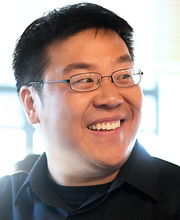 Norman Y. Yao合作论文数Department of Physics, Harvard University15
 Michael Scheer合作论文数Dept Phys, Princeton Univ4
 Bingtian Ye合作论文数4Alexa Staley合作论文数3Emily Davis合作论文数3Weijie Wu合作论文数3a s caldwell合作论文数School of Materials Engineering, Purdue University3
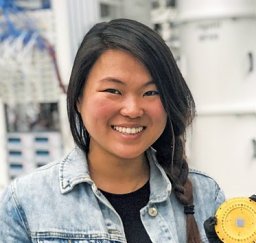 Sabrina Hong合作论文数Google Quantum AI, Santa Barbara, CA 93105 USA3
 Satcher Hsieh合作论文数Dept Phys, Univ Calif Berkeley3
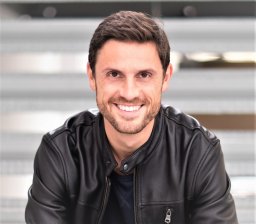 Diego Scarabelli合作论文数Columbia Univ, Dept Appl Phys & Appl Math, New York, NY 10027 USA3
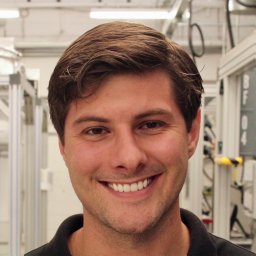 Peter J. Karalekas合作论文数AWS Ctr Quantum Comp, Pasadena, CA 91125 USA3Riccardo Manenti合作论文数Rigetti Computing3Alexander Papageorge合作论文数E.L. Ginzton Lab., Stanford Univ.;c3Matthew Reagor合作论文数3
 da Silva Marcus P合作论文数Disruptive Information Processing Technologies Group, Raytheon BBN Technologies3
 W. J. Zeng合作论文数Quantonation;Unitary Foundation3
 Prawiroatmodjo G E D K合作论文数3
 Nasser Alidoust合作论文数Center for Quantum Computing, Amazon Web Services3Chong Zu合作论文数3
 Nikolas Tezak合作论文数OpenAI3N. Didier合作论文数3
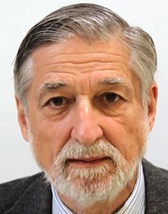 Bertrand I. Halperin合作论文数Department of Physics, Harvard University3
 Johannes Otterbach合作论文数Fachbereich Physik;Technische Universitat Kaiserslautern;Fachbereich Physik, Technische Universitat Kaiserslautern3
 Chad Rigetti合作论文数Departments of Physics and Applied Physics;Yale University3
 Snir Gazit合作论文数Dept Phys, Univ Calif Berkeley3
 Benjamin Bloom合作论文数Department of Physics;MIT-Harvard Center for Ultracold Atoms;Research Laboratory of Electronics;Massachusetts Institute of Technology;Massachusetts Institute of Technology, MIT-3Colm A. Ryan合作论文数2Alexander Hudson合作论文数2Chris Osborn合作论文数2Marcus Bintz合作论文数2Chris Olund合作论文数2
 Bryce Kobrin合作论文数2
 Lauren Capelluto合作论文数IBM Quantum, IBM2Genya Crossman合作论文数Rigetti Comp2
 Kamal Yadav合作论文数Medanta Inst Liver Transplantat & Regenerat Med2
 Jayss Marshall合作论文数Rigetti Comp2Smith Robert S.合作论文数2
 Yimu Bao合作论文数Dept Phys, Univ Calif Berkeley2boris kobrin合作论文数2
 P. Bhattacharyya合作论文数Dept Phys, Univ Calif Berkeley2
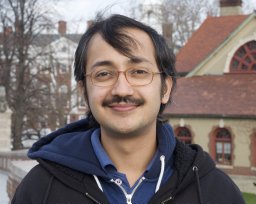 Shubhayu Chatterjee合作论文数Department of Physics, University of California2
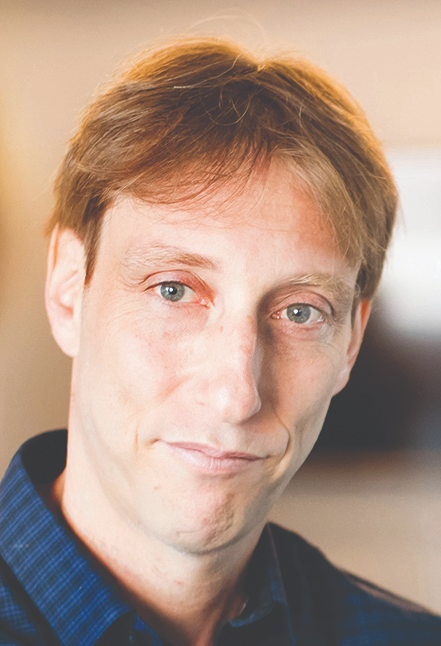 Ehud Altman合作论文数Department of Physics, University of California, Berkeley2
 Raymond Jeanloz合作论文数Department of Earth & Planetary Science, University of California, Berkeley;Hoover Institution, Stanford University2
 Cat-Vu H. Bui合作论文数Bio Engineering Laboratory, Department of Biosystems Science and Engineering, Eidgenossische Technische Hochschule Zurich2
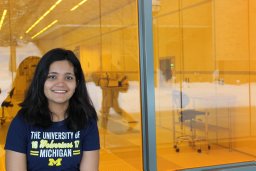 Saniya Deshpande合作论文数Dept. of Electr. Eng. & Comput. Sci., Univ. of Michigan;c;Dept. of Electr. Eng. & Comput. Sci., Univ. of Michigan2
 Michael Selvanayagam合作论文数2
 Viktor Struzhkin合作论文数Geophysical Laboratory, Carnegie Institution Washington2
 John McGreevy合作论文数Department of Physics, University of California, San Diego2
 Zachary M. Geballe合作论文数Department of Earth and Planetary Science, University of California2




