Covering a stent with a membrane (stent graft) allows treatment of diverse coronary abnormalities such as aneurysms, rupture and fistulas (which, until recently, required surgical therapy). A stent graft could also reduce embolic complications associated with angioplasty of saphenous vein grafts. The objective of this study is to evaluate bovine pericardium as a graft for conventional stents. In vitro testing of the bovine pericardium disclosed an elasticity of 15% and a resistance to rupture of 0.22 kg/mm2, well above the pressure commonly used during stent deployment. In 18 pigs, 29 of 32 (90.63%) attempts to implant stent grafts were successful. Histology of acute porcine studies revealed correct apposition of the stent graft to the vessel wall, subacute and chronic (10 days and 1 month) samples showed adequate endothelization and exclusion of proliferative media. Twenty stents were placed in 15 patients with a 100% success rate. Seven patients had coronary aneurysms and in all a complete exclusion of the aneurysm was obtained without complications. Fourteen patients have a follow-up of 6 or more months with evidence of clinical restenosis in 2 (14.28%), whereas angiographic follow-up in 9 patients, which included the 2 cases with recurrent angina, evidenced restenosis in 3 of 14 stents (21.4%), two of which were overlapped in the LAD of one patient and one corresponded to a series of 9 stents (in 5 patients) placed in saphenous vein grafts. It is concluded that bovine pericardium is a suitable material for stent-grafts and its efficacy to seal coronary aneurysms was demonstrated. These results warrant a larger comparative study to better define its restenosis rate and further delineate its usefulness in the treatment of diseased saphenous vein grafts.
Restenosis rates following Palmaz-Schatz stenting vary between 13 and 36%. To determine whether the nearly three-fold interseries difference in restenosis rates reflects systematic factors (demographic and procedural variables such as post-treatment lumen diameter) rather than random variation, we pooled 486 lesions treated with the Palmaz-Schatz coronary stent in the U.S. Multicenter Registry (n = 259) with the single-center Beth Israel Hospital experience (n = 227) and analyzed the combined series using a continuous geometric model of restenosis. A greater proportion of lesions (66 vs. 50%; P < 0.001) in the Multicenter cohort represented restenosis after a prior intervention. The Multicenter experience also showed a smaller minimum lumen diameter following stent placement (2.61 vs. 3.43 mm; P < 0.001), higher post-stent percent stenosis (16 vs. -2%; P < 0.001), and less acute gain (1.79 vs. 2.67 mm; P < 0.001) than lesions treated in the Beth Israel cohort. At 6-month follow-up, the angiographic restenosis rate (> or = 50% diameter stenosis) was significantly higher in the Multicenter group (35 vs. 27%; P = 0.05), despite the development of less absolute late loss (0.96 vs. 1.32 mm; P < 0.001). Multivariable modeling, however, showed that the only independent predictors of restenosis were a post-procedure lumen diameter < 2.80 mm (odds ratio = 1.57; P = 0.04), diabetes mellitus (odds ratio = 3.55; P < 0.001), and prior restenosis (odds ratio = 1.84; P = 0.008).(ABSTRACT TRUNCATED AT 250 WORDS)
BACKGROUND:Several metallic intracoronary stents are currently undergoing preliminary evaluation to ascertain potential benefit as means to reduce the 30-40% incidence of restenosis after balloon angioplasty. METHODS AND RESULTS:To determine the incidence and correlates of restenosis after placement of Palmaz-Schatz stents in native coronary arteries in the first group of patients selected for this procedure, clinical and quantitative angiographic data from 206 consecutive patients (221 stenoses) with successful stent placement (diameter stenosis < 50%) were analyzed. Six patients (2.9%) had thrombosis-mediated stent closure within 1 month after stent placement and were excluded from long-term angiographic follow-up. One hundred eighty-one (91%) of the remaining 200 patients had angiography at 5.8 +/- 2.1 months. Patients with and without follow-up did not differ in any baseline characteristic; in particular, history of restenosis at the site stented (73% versus 65%), placement of multiple overlapping stents (17% versus 20%), and mean poststent diameter stenosis (16 +/- 12% versus 14 +/- 12%). The overall incidence of restenosis (diameter stenosis > or = 50% at follow-up) in this group at high risk for restenosis was 36% (95% confidence interval, 29-43%) on a per-stenosis basis. The incidence of restenosis when a single stent was placed was 30% (95% confidence interval, 23-37%). Risk was dependent upon a history of restenosis (present versus absent 36% versus 16%, p = 0.02) and upon whether or not a poststent stenosis < or = 0% was achieved (6% versus 33%, p = 0.02). When multiple overlapping stents were placed, restenosis occurred at 64% of sites, and placement of multiple stents was discouraged during the later phases of this study as these results became apparent. CONCLUSIONS:Although multiple stents appear to yield a poor long-term result, placement of single stents may offer a benefit compared with standard coronary angioplasty, particularly if an excellent angiographic result can be obtained in patients without prior restenosis. Further randomized trials in such patients are needed.
Stenting of native coronary arteries with a balloon-expandable stent was attempted in 226 patients after elective angioplasty. Delivery of the device was successful in 213 (94%) of the patients. Of these, 39 received aspirin and dipyridamole only (group 1) and 174 received aspirin, dipyridamole, and warfarin for 1-3 months (group 2). There was no abrupt closure (less than or equal to 1 day) or perioperative death in either group. In-hospital or perioperative complications in group 1 compared with group 2 were as follows: subacute closure (1-14 days), seven (18%) patients versus one (0.6%) patient, respectively, p less than 0.0001; myocardial infarction, five (13%) patients versus one (0.6%) patient, respectively; condition requiring urgent bypass surgery, one (2.5%) patient versus no patients, respectively. Thus, the incidence of major complications such as death, myocardial infarction, or a condition requiring urgent bypass surgery was 15% in group 1 and 0.6% in group 2. Clinical follow-up revealed that 92% of the patients were asymptomatic at 3 months after stenting compared with 6% before stenting (p less than 0.0001). Of the 13 patients who were symptomatic, nine underwent cardiac catheterization and, ultimately, successful elective coronary angioplasty or bypass surgery. We conclude that a high delivery success rate can be expected with this device and that clinical thrombosis is less frequent in anticoagulated patients than in nonanticoagulated patients. Furthermore, in this selected patient population, coronary stenting results in a low incidence of in-hospital and perioperative complications. Clinical success, defined by absence of symptoms, appears to be sustained at 3 months.
Complications that occurred in 247 patients who underwent successful elective stenting to native coronary arteries with the Palmaz-Schatz balloon expandable stent included subacute thrombosis in 7 patients (2.8%), myocardial infarction in 3 (1.2%), death 3 (1.2%), urgent bypass surgery in 4 (1.6%) and major bleeding events in 24 (9.7%). Angiographic restenosis occurred in 21 (20%) of 103 patients who received a single stent.Subgroup analysis, however, revealed that restenosis of a single stent occurred in 3 (7%) of 45 patients without prior angioplasty compared with 25 (27%) of 91 patients with prior angioplasty. Patients with "suboptimal" angioplasty results (dissection) who received a single stent seemed to have a higher thrombosis rate perioperatively (4 [4%] of 98), but no higher incidence of restenosis (7 [15%] of 46) than that of the total group of patients who received a single stent.Coronary stenting may be a valuable adjunct to coronary angioplasty in carefully selected patients. Complication rates are similar to those of routine angioplasty; however, angiographic restenosis may be reduced in certain subsets of patients.
 Sheldon Goldberg合作论文数8M Savage合作论文数5
 David L Fischman合作论文数From Florida Heart Institute5Ra Schatz合作论文数4
 Richard A. Schatz合作论文数Ralph H. Johnson Veterans Affairs Medical Center4C Walker合作论文数3
 Eric Topol合作论文数Department of Molecular Medicine, The Scripps Research Institute;Division of Cardiovascular Diseases, Scripps Clinic;Skaggs Graduate School of Chemical and Biological Sciences, The Scripps Research Institute3
 Donald Baim合作论文数Baim Institute for Clinical Research3Paul S Teirstein合作论文数3R Rake合作论文数3Sg Ellis合作论文数2MW Cleman合作论文数2Jw Hirshfeld合作论文数2Maurice Buchbinder合作论文数2John W. Hirshfeld合作论文数2
 Richard R. Heuser合作论文数Arizona Heart Institute2Yaron Almagor合作论文数2
 Stephen Ellis合作论文数Department of Cardiovascular Medicine, Cleveland Clinic Foundation2Ian M. Penn合作论文数2E. Fleck合作论文数1J STAGG合作论文数1N Weissman合作论文数1M. Zelizko合作论文数1Hs Cabin合作论文数1N.S. Patel合作论文数1L. Maillard合作论文数1M Nobuyoshi合作论文数1R Waksman合作论文数1J Margolis合作论文数1B Kluck合作论文数1DL Fischman合作论文数1P Gilmore合作论文数1D Baim合作论文数1Mg Vandormael合作论文数1Jn Hamburger合作论文数1Im Penn合作论文数1Ps Teirstein合作论文数1P Tripuraneni合作论文数1S Fenton合作论文数1Dj Diver合作论文数1
 Michael Cleman合作论文数Cardiovascular Medicine, Internal Medicine, Yale School of Medicine, Yale University1W. Rutsch合作论文数1
 Patrick Serruys合作论文数CORRIB Research Centre for Advanced Imaging and Core Laboratory, University of Galway;National University of Ireland1Chaim Lotan合作论文数1Jorge Gaspar合作论文数1
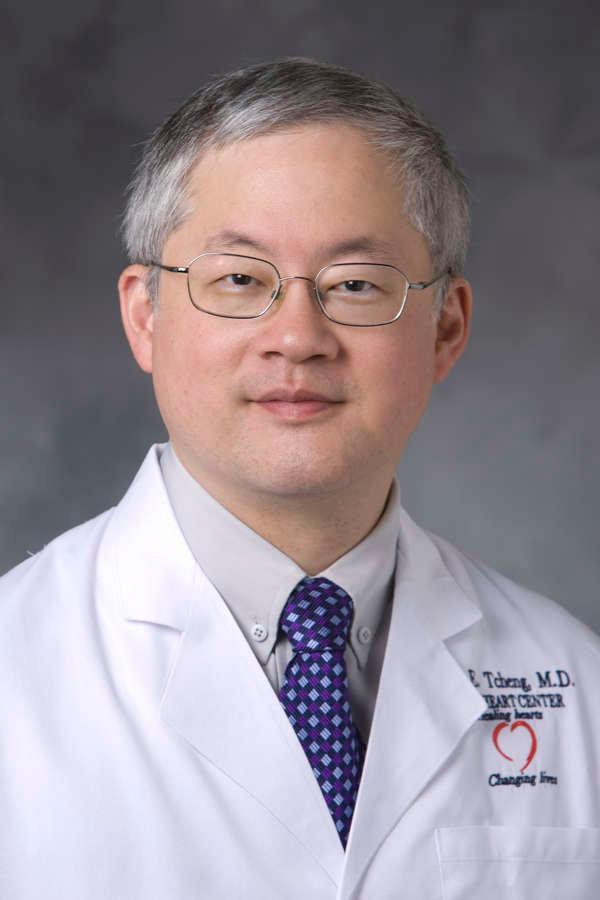 James Enlou Tcheng合作论文数Department of Medicine, School of Medicine, Duke University1
 Paul Teirstein合作论文数Scripps Clinic;Prebys Cardiovascular Institute1Mun K. Hong合作论文数1
 Joseph P Carrozza合作论文数1




