In the context of sustainable urban water management, the estimation of mass fluxes plays a fundamental role in the assessment of the anthropogenic impacts of xenobiotics in urban water systems. Numerous well-known methods exist for parameter estimation and process identification in aquifers and surface waters. Thus, the need has evolved for appropriate applicable methods especially for urban areas. This article provides an overview of new and known methods that are applied in our investigations for estimating fluxes within and between different compartments which are influenced by urban sewer systems. Multiple-scale approaches combining measuring and modelling methods to estimate the mass fluxes on a large (>100 km ) and medium (<10 km 2 ) scale are discussed. Additionally, methods are considered that allow the quantification of interaction processes between the compartments on a small (<1000 m 2 ) scale.
Kurzfassung Xenobiotika werden zunehmend als ökotoxikologisch relevant für die aquatische Umwelt und den Menschen angesehen. Das Verhalten und die Auswirkungen dieser Stoffe in der Umwelt sind bisher nur wenig umfassend untersucht worden und werden deshalb im Rahmen des Projektes WASSER Leipzig durch das UFZ in einem urban geprägten Einzugsgebiet bearbeitet. Dieser Artikel stellt erste Analysen des Grund- und Oberflächenwassers vor. Es wurden die Gehalte der Industriechemikalien Bisphenol A und t-Nonylphenol, der polyzyklischen Duftstoffe Galaxolid und Tonalid, des antiepileptischen Medikaments Carbamazepin sowie von Koffein bestimmt, die ein ubiquitäres Vorkommen zeigten. In den Vorflutern wurden mittlere Konzentrationen von bis zu einigen 100 ng/l gemessen, die auf den Einfluss geklärter aber auch ungeklärter Abwässer zurückgeführt werden können. Im Grundwasser zeigten sich bis auf Bisphenol A geringere Werte. Die Belastung des Grundwassers ist auf Abwasserleckagen aus der Kanalisation zurückzuführen. Mithilfe einer Faktorenanalyse der hydrochemischen Messwerte lassen sich die Xenobiotika hinsichtlich ihres hydrochemischen Verhaltens im Grundwasser differenzieren.
Xenobiotika werden zunehmend als ökotoxikologisch relevant für die aquatische Umwelt und den Menschen angesehen. Das Verhalten und die Auswirkungen dieser Stoffe in der Umwelt sind bisher nur wenig umfassend untersucht worden und werden deshalb im Rahmen des Projektes WASSER Leipzig durch das UFZ in einem urban geprägten Einzugsgebiet bearbeitet. Dieser Artikel stellt erste Analysen des Grund- und Oberflächenwassers vor. Es wurden die Gehalte der Industriechemikalien Bisphenol A und t-Nonylphenol, der polyzyklischen Duftstoffe Galaxolid und Tonalid, des antiepileptischen Medikaments Carbamazepin sowie von Koffein bestimmt, die ein ubiquitäres Vorkommen zeigten. In den Vorflutern wurden mittlere Konzentrationen von bis zu einigen 100 ng/l gemessen, die auf den Einfluss geklärter aber auch ungeklärter Abwässer zurückgeführt werden können. Im Grundwasser zeigten sich bis auf Bisphenol A geringere Werte. Die Belastung des Grundwassers ist auf Abwasserleckagen aus der Kanalisation zurückzuführen. Mithilfe einer Faktorenanalyse der hydrochemischen Messwerte lassen sich die Xenobiotika hinsichtlich ihres hydrochemischen Verhaltens im Grundwasser differenzieren.
The white-rot fungus Irpex lacteus has been reported to be an efficient degrader of polycyclic aromatic hydrocarbons, polychlorinated biphenyls and pentachlorophenol. The fungus produces ligninolytic enzymes laccase, lignin peroxidase and manganese peroxidase (MnP), the latter being the major one produced. MnP was purified using anion exchange and size exclusion chromatography. SDS-PAGE showed the purified MnP to be a monomeric protein of 37 kDa (37.5 kDa using MALDI-TOF) with an isoelectric point at 3.55. The pH optimum was relatively broad, from 4.0 to 7.0 with a peak at pH 5.5. Kinetic constants K-m were 8 mu M for H2O2 and 12 or 31 mu M for Mn2+ depending on the substrate. The enzyme did not perform oxidation in the absence of H2O2 or Mn2+. MnP was active at 5-70 degrees C with an optimum between 50-60 degrees C. At temperatures above 65 degrees C the enzyme rapidly lost activity. Degradation of four representatives of PAHs (phenanthrene, anthracene, fluoranthene, and pyrene) was tested and the enzyme showed the ability to degrade them in vitro. Major degradation products of anthracene were identified. The results confirm the role of MnP in PAH degradation by L lacteus, including cleavage of the aromatic ring. (c) 2005 Elsevier SAS. All rights reserved.
While the degradation of polycyclic aromatic hydrocarbons by bacteria and fungi has been broadly investigated, less is known about the metabolism of these compounds by algae. The goal of the experiments was to test the degradability of phenanthrene by the green alga Scenedesmus obliquus ES-55 (Chlorophyceae) and to identify the metabolites. It was shown that S. obliquus ES-55 metabolized phenanthrene. Under light conditions, phenanthrene (14 mg/L) inhibits cell division by more than twice. However, the metabolic processes in the cells affected by phenanthrene continued because the content of chlorophyll increased. In the exponential phase under phototrophic conditions the alga degraded phenanthrene. Phenanthrene was removed by algae up to 42 % in BBM medium and up to 24 % in Kuhl medium. Dihydroxy-dihydro-phenanthrene, a degradation metabolite in fungi, bacteria and cyanobacteria, could also be detected as a transformation product of S. obliquus ES-55. Further detected common metabolites foster the assumption that both phototrophic and non-photothrophic organisms metabolize phenanthrene via a similar pathway. The present study is the first evidence of the ability of an axenic culture of the green alga S. obliquus to biotransform phenanthrene into other metabolites.
The use of SPME for in vivo monitoring of herbicide levels in plant tissues is evaluated. Fibers are exposed to the plant tissue with the aid of buffer located at the fiber/tissue interface region. Following this extraction period the extracted amount is estimated by solvent desorption and LC-MS-MS.
In this study the fate of the endocrine disrupting compounds like bisphenol A (BPA) and nonylphenols (NP) were investigated in a lab scale test system for constructed wetlands. Mass balances, removal rates and adsorption factors were determined in BPA and NP pretreated systems using C-13-labelled BPA and NP. The results show that the elimination of BPA by microbial activity could be assessed with this approach. However, complete mass balances were not possible due to the respiratory activity of the plants. A half-live of similar to6.6 d for BPA was measured in constructed wetlands and thus the compound can be degraded in constructed wetlands. A biodegradation of technical NP could not be proven. However, due to the high sorption capacity of the rhizosphere/gravel bed system the compounds were retained to a higher extent. The straight chain NP (n-NP) as model compound was rapidly degraded to more than 90% showing the inappropriateness of such compounds as a surrogate for technical mixtures. The test reactor combined with the stable isotope approach is a highly effective tool for analysing the fate of such compounds in constructed wetlands and in model reactors of complex environmental systems.
The capability of plants to promote the microbial degradation of pollutants in rhizosphere soil is a principal mechanism of phytoremediation of PAH-contaminated soil. The formation of a specific rhizosphere microbocenosis with a high degradative potential toward contaminants is largely determined by plant species. The comparative PAH-degradation in unplanted soil and in soil planted with reed (Phragmites australis) and alfalfa (Medicago sativa) was studied in pot experiments during 2 years. Both alfalfa and reed successfully remediated contaminated soil by degrading 74.5 and 68.7% of PAHs, respectively. The study of the rhizosphere, rhizoplane, and unplanted-soil microflora in experimental pots showed that alfalfa stimulated the rhizosphere microflora of PAH-contaminated soil more effectively than did reed. Alfalfa clearly enhanced both the total number of microorganisms (1.3 times, according to fluorescence microscopy data) and the rate of the PAH-degrading population (almost seven times, according to plate counting). The degradative potential of its rhizosphere microflora toward PAHs was higher than the degradative activity of the reed rhizosphere. This study provides relevant information for the successful application of alfalfa to phytoremediate PAH-contaminated soil.
A multistep fractionation procedure for the separation of nonpolar aromatic compounds with respect to cytochrome P4501A induction is presented. Normal-phase HPLC on nitrophenylpropyl silica and cyanopropyl silica was tested for group-specific separation as a first fractionation step. Subsequent individual compound-specific PAH fractionation was done by means of reversed-phase HPLC. Electron-donor-acceptor HPLC and size-exclusion chromatography were applied to separate PAHs, PCBs, PCNs and PCDD/Fs according to their number of aromatic carbon atoms, their hydrophobicity, their degree of chlorination, their planarity and their molecular size. The method was validated for complex environmental mixtures on the basis of two sediment extracts.
An automated hollow fibre membrane extraction technique was developed for the GC–MS determination of pharmaceutical and endocrine disrupting compounds in water samples. Enrichment was carried out inside a porous polypropylene hollow fibre membrane, which separated the aqueous and organic phases and regulated the transfer of analytes. n-Octanol placed inside the hollow fibre was used as the acceptor solution. A water–solvent ratio of about 300:1 was used to concentrate the analytes. After 1 hour’s extraction of the water sample under magnetic stirring, 1 μl of the n-octanol phase was automatically injected from the hollow fibre into the GC–MS. Development work included examining the influence of different sample matrices, volumes, extraction times and extraction solvents. The detection limits, linearity and standard deviations of the method were determined using drugs such as ibuprofen, phenazone and carbamazepine as well as the endocrine disrupting compounds, technical nonylphenols, bisphenol A, 17α-ethinylestradiol and tonalide by way of example.
The efficiency of ponds and vertical flow constructed wetlands regarding the retention and elimination of the two endocrine disrupters nonylphenol (NP) and bisphenol A (BPA) was investigated. Average inflow concentrations for the different sampling periods in all systems ranged from 0,81 to 3,20 pg/L for NP and from 0,67 to 7,55 μg/L for BPA. The elimination rate of NP from the untreated wastewater ranged between 47 and 95% for all systems. The investigated ponds showed a slightly lower elimination efficiency (average 58%) than the constructed wetlands (average of 72%). For both systems, the elimination rate of BPA was generally higher (82%) than that of NP (68%). Constructed wetlands with almost complete nitrification (efluent concentration of ammonium < 1 mg/L) showed a relatively higher elimination rate of NP and BPA than systems with incomplete nitrification.
A HPLC-MS(MS) method is presented here for reaction monitoring of the oxidation of isothiazolium salts with H2O2/acetic acid. The comprehension of this mechanism was the aim of this work using several N-functionalized substances for the investigation. The strong acidic reaction mixture was separated on a RP-18 reversed-phased column without any sample pretreatment and occurring intermediates were identified by API-MS(MS) techniques. Thus, it was possible to gain detailed information about the course of oxidation and to develop an oxidation scheme of existing reaction pathways.
Partition of fluorene, phenanthrene and pyrene in the cultures of the basidiomycete Pleurotus ostreatus (oyster mushroom) was determined by GC-MS analysis coupled with SPME directly within the growing mushroom fruit-body. Headspace (HS) SPME of the corresponding straw/mycelium culture provided information on the contents of PAHs remaining, thus enabling the transfer ratios of PAHs to be estimated. ASE-GC-MS was applied by way of comparison.
Bitterfeld (Germany) was a major site of chemical production in the former German Democratic Republic with chloralkali electrolysis as the basic process. Effluents were dumped via the creek Spittelwasser into the rivers Mulde and Elbe. Despite the fact that the chloralkali industry is known as a possible source of polychlorinated naphthalenes (PCNs), to date no data about PCN pollution in the region of Bitterfeld and downstream regions are available. Therefore, sediments of the creek Spittelwasser were isomer-specifically analysed for penta-, hexa- and heptachlorinated naphthalenes using GC/MS. Concentrations of 880, 543 and 1120 ng/g dry weight were found, respectively. The isomer pattern suggests chloralkali industry as the major source of PCN contamination. Because of their toxicological relevance we suggest to include PCNs into monitoring and risk assessment programs of the rivers Mulde and Elbe downstream of Bitterfeld.
Representatives of polycyclic aromatic hydrocarbons (PAHs) were degraded by ligninolytic fungus Irpex lacteus. The products were analyzed by GC–Ion trap mass spectrometry. The combination of full scan mass spectra, product ion scans (MS–MS) and derivatization of the degradation products of anthracene, phenanthrene, fluoranthene and pyrene provided further insight in the degradation mechanism initiated by I. lacteus. Particularly, the product ion scans enabled the interpretation of unknown degradation products, even though they were only produced at trace level. Most of the structures suggested were later confirmed with authentic standards.
Chemie Ingenieur TechnikVolume 73, Issue 6 p. 716-716 Article Azacage Compounds as Efficient Tools for Enhancing Metal Ion and Anion Extraction K. Wichmann, K. WichmannSearch for more papers by this authorM. Grotjahn, M. GrotjahnSearch for more papers by this authorK. Gloe, K. Gloe Institute of Inorganic Chemistry, TU Dresden, 01062 Dresden, GermanySearch for more papers by this authorM. Möder, M. Möder Centre for Environmental Research Leipzig-Halle, 04318 Leipzig, GermanySearch for more papers by this authorL. Dunsch, L. Dunsch Institute for Solid State and Materials Research Dresden, 01171 Dresden, GermanySearch for more papers by this authorH. Stephan, H. Stephan Institute of Bioinorganic and Radiopharmaceutical Chemistry, Research Center Rossendorf, 01314 Dresden, GermanySearch for more papers by this authorF. Vögtle, F. Vögtle Kekulé-Institute of Organic Chemistry und Biochemistry, University of Bonn, 53121 Bonn, GermanySearch for more papers by this author K. Wichmann, K. WichmannSearch for more papers by this authorM. Grotjahn, M. GrotjahnSearch for more papers by this authorK. Gloe, K. Gloe Institute of Inorganic Chemistry, TU Dresden, 01062 Dresden, GermanySearch for more papers by this authorM. Möder, M. Möder Centre for Environmental Research Leipzig-Halle, 04318 Leipzig, GermanySearch for more papers by this authorL. Dunsch, L. Dunsch Institute for Solid State and Materials Research Dresden, 01171 Dresden, GermanySearch for more papers by this authorH. Stephan, H. Stephan Institute of Bioinorganic and Radiopharmaceutical Chemistry, Research Center Rossendorf, 01314 Dresden, GermanySearch for more papers by this authorF. Vögtle, F. Vögtle Kekulé-Institute of Organic Chemistry und Biochemistry, University of Bonn, 53121 Bonn, GermanySearch for more papers by this author First published: 12 July 2001 https://doi.org/10.1002/1522-2640(200106)73:6<716::AID-CITE7161111>3.0.CO;2-SAboutPDF ToolsRequest permissionExport citationAdd to favoritesTrack citation ShareShare Give accessShare full text accessShare full-text accessPlease review our Terms and Conditions of Use and check box below to share full-text version of article.I have read and accept the Wiley Online Library Terms and Conditions of UseShareable LinkUse the link below to share a full-text version of this article with your friends and colleagues. Learn more.Copy URL Share a linkShare onFacebookTwitterLinked InRedditWechat No abstract is available for this article. Volume73, Issue6Juni 2001Pages 716-716 RelatedInformation
In this study electrospray mass spectrometry was used to investigate spherical azacages as host molecules for metal ions systems. Two different pyridino cryptands, [bis-tren(tris-pyridine)amine L1 and bis-tren(tris-pyridine)phenylamide L2] were examined with regard to their affinity for coordinating metal ions such as Ag+, Hg2+, Ni2+, Zn2+, and Co2+. The complex formation was performed in a water/methylene chloride system as well as in pure water, and subsequent electrospray mass spectrometry described the behavior and partition of the complex species. Generally, L1 shows higher ability in the coordination of metal ions and the strongest binding for Ag+. L2 gives significant interactions only with Ag+ and Co2+. Collision activation experiments were used to study the stability of complex species and to distinguish between species formed in solution and during electrospray.
Within the scope of bioassay-directed identification of dioxin-like toxicants in complex environmental samples, EC50-based and fixed-effect-level-based 2,3,7,8-tetrachlorodibenzo-p-dioxin (TCDD) toxicity equivalents (TEQs) were compared to assess 7-ethoxyresorufin-O-deethylase (EROD) inducing potency of sediment fractions using the rainbow trout liver cell line RTLW1 as bioassay system. Toxicity equivalents on the basis of fixed effect levels are suggested in order to minimize interpretation problems due to the superposition of enzyme-inducing and enzyme-inhibiting effects. Bioassay-directed fractionation of a contaminated sediment extract in the industrial region of Bitterfeld (Germany) based on fixed-effect-level TEQs indicated high dioxin-like activity in the lipophilic sediment fractions containing the prototypic arylhydrocarbon receptor (AhR) agonists polychlorinated biphenyls (PCBs) and polycyclic aromatic hydrocarbons (PAHs). However, only a small part of the EROD induction could be attributed to the PCBs and PAHs that were analyzed. Significant EROD induction occurred also with some of the more polar fractions.
A method for the determination of chlorophenols in soil samples using accelerated solvent extraction (ASE) with water as the solvent combined with solid-phase microextraction (SPME) and GC/MS has been developed. Important ASE parameters, such as extraction temperature and time, were optimized using a spiked wetland soil. The effect of small amounts of organic modifiers on the extraction yields was studied. An extraction temperature of 125 degrees C and 10 min extractions performed three times proved optimal. Two ASE-SPME procedures without and with an organic modifier (5% acetonitrile) were evaluated with respect to precision and detection limits (LOD). The reproducibility of replicate water extractions/SPME determinations (n = 6) was in the range 7-20% relative standard deviation for the nine chlorophenols investigated. LOD values in the low-ppb range were achieved for all chlorophenols. The ASE-SPME procedure presented here was applied to the determination of chlorophenols in soil samples taken from contaminated areas near Bitterfeld, Germany.
The enzyme-induced decomposition and biodegradation of PCB were investigated. 2,5-Dichlorobiphenyl (PCB 9) and 2,2′,5,5′-tetrachlorobiphenyl (PCB 52) were used as example compounds to study efficiency and mechanism of the degradation processes. It was found that the application of horseradish peroxidase (HRP) together with defined amounts of hydrogen peroxide removed 90% of the initial concentration of PCB 9 and 55% of the initial concentration of PCB 52 from an aqueous solution after a reaction period of 220 min. Dechlorination was observed as the initial step. Although the metabolites identified were mainly chlorinated hydroxybiphenyls, benzoic acids and non-substituted 1,1′-biphenyl, some higher chlorinated biphenyl isomers also appeared. The biodegradation of PCB 9 using the white rot fungus Trametes multicolor took about four weeks and reduction was about 80% of the initial concentration. The metabolites produced (dichlorobenzenes, chlorophenols and alkylated benzenes) were not quite the same as those observed upon incubation with HRP.
 P Popp合作论文数7S Schrader合作论文数6M Wahren合作论文数5Rainer Herzschuh合作论文数5Peter Popp合作论文数Department of Analytical Chemistry, Helmholtz-Zentrum für Umweltforschung/German Centre for Integrative Biodiversity Research (iDiv) Halle-Jena-Leipzig5Peter Kuschk合作论文数4G Strauch合作论文数3
 Andreas Musolff合作论文数3M Kietzmann合作论文数3
 Gerrit Schüürmann合作论文数Technische Universitat Bergakademie Freiberg;Department Okologische Chemie, UFZ3
 Janusz Pawliszyn合作论文数School of Chemical Engineering and Technology, Sun Yat-sen University3
 Werner Brack合作论文数Faculty of Biological Sciences, Goethe University Frankfurt;Department of Effect-Directed Analysis, Helmholtz-Zentrum Fur Umweltforschung3
 Mario Schirmer合作论文数Department of Hydrogeology, Helmholtz Centre for Environmental Research – UFZ3
 Tomáš Cajthaml合作论文数Institute for Environmental Studies, Faculty of Science, Charles University3Peter Kranke合作论文数3
 Sebastian Leschik合作论文数3Frido Reinstorf合作论文数Hochschule Magdeburg-Stendal Fachbereich Wasser- und Kreislaufwirtschaft3denise fontaine合作论文数2
 Helmut Segner合作论文数Centre for Fish and Wildlife Health, University of Bern2Fritz Vögtle合作论文数2J. Bourne合作论文数2Karsten Gloe合作论文数2K. Wichmann合作论文数2Rainer Wennrich合作论文数Department of Analytical Chemistry, UFZ – Helmholtz Centre for Environmental Research2Michel Preda合作论文数2
 Albrecht Paschke合作论文数2
 Holger Weiss合作论文数2Joachim Stach合作论文数2Peter Morgenstern合作论文数2K Freyer合作论文数2Maurice Morency合作论文数2H. C. Treutler合作论文数2
 Tobias Kind合作论文数Davis Genome Center;University of California , Davis;Davis Genome Center, University of California , Davis2V. Šašek合作论文数2B Blume合作论文数1A Wiessner合作论文数1Raymond Mineau合作论文数1mathias remmler合作论文数1U Thuss合作论文数1P Keil合作论文数1
 Holger Stephan合作论文数1Heather L. Lord合作论文数1R. Eisert合作论文数1H LOSTER合作论文数1
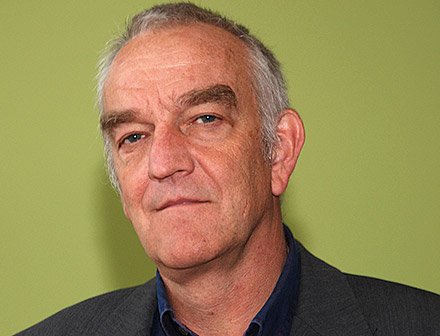 Hans-Hermann Richnow合作论文数Department of Isotope Biogeochemistry, Helmholtz Centre for Environmental Research1
 Rolf Altenburger合作论文数Helmholtz Centre for Environmental Research1
 Martin Grotjahn合作论文数1
 Henner Hollert合作论文数Institute und Einrichtungen, Fachbereich Biowissenschaften, Goethe-Universitat Frankfurt am Main1




