ABSTRACT Fusarium subglutinans has been associated with mango floral and vegetative malformation, although confusion exists regarding the etiology of the disease. A wild-type isolate of F. subglutinans causing mango malformation disease was transformed with the GUS (beta-glucuronidase) reporter and hygromycin resistance genes. Five stable transformants were isolated containing varying copy numbers at different integration sites. Specific GUS activity was quantified for the transformants, whereas no activity was recorded for the wild-type isolate. The transformants and the wild-type isolate were inoculated into healthy mango floral and vegetative buds. Typical symptoms of misshapen shoots with short internodes, stubby leaves, and bunchy, malformed inflorescences were observed 6 to 8 weeks following inoculation. The presence of GUS-stained mycelium of the pathogen viewed microscopically within infected plant organs provided unequivocal evidence that F. subglutinans is indeed a causal agent of mango malformation disease.
Five local oak species, Quercus boissieri, Q. calliprinus, Q. cerris, Q. ithaburensis and a. libani were identified as hosts of Tuber melanosporum, the black truffle of Perigord, following inoculation of roots, a. cerris and a. libani developed abundant mycorrhizal roots, similar to the amount found in roots of Q. pubescens, the traditional host of this mycorrhizal fungus. Roots of Q. ilex. Q. hartwissiana and a. pedunculiflora, introduced species in Israel, were also heavily colonized by the mycorrhizal fungus. Mycorrhized hazel (Corylus avellana) roots, were also obtained by the same inoculation procedure. Recovery of T. melanosporum from roots of inoculated oak was improved when chloramphenicol was added to the isolation medium. Recovery varied between 14 and 54% for C. avellana and Q. calliprinus, respectively. Recovery was highest for the two local species, Q. calliprinus (54%) and Q. boissieri (50%), followed by a. pubescens (44%) and Q. ilex (41%). Identification of the isolated fungi was conducted using arbitrarily-primed PCR. Identical band patterns were observed among AP-FCR-amplified DNA extracted from an authentic culture of the fungus, ascocarps (truffles) and cultures isolated from roots. In addition, AP-PCR was reliable for differentiating between representative isolates of T. melanosporum, T. magnatum, T. borchii, T. maculatum, T. dryophilum, T. macrosporum and T. uncinatum.
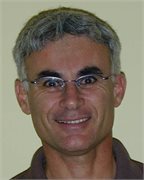 Stanley Freeman合作论文数Department of Plant Pathology and Weed Research, Agricultural Research Organization3
 Y. Pinkas合作论文数2D. Gidoni合作论文数1N. Dudai合作论文数1H. Efrat合作论文数1E. Becker合作论文数1C. Ginzburg合作论文数1D Plakhine合作论文数1R. Maor合作论文数1Y. Peretz-Alon合作论文数1A. Sztjenberg合作论文数1Aida Zviebil合作论文数1Neta Mor合作论文数1Orna Ucko合作论文数1Miriam Kimchi合作论文数1svetlana alexandrov合作论文数1Tamar Lahav合作论文数1Orly Erlich合作论文数1leah cohen合作论文数1Tirza Zahavi合作论文数1I Sela合作论文数1
 David Silverman合作论文数Roche Products, Welwyn Garden City, UK1b rubin合作论文数1
 Roni Cohen合作论文数1Fouad Akad合作论文数1
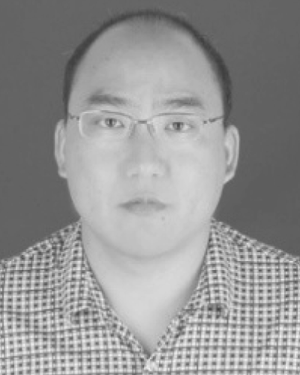 Yongxiang Wang合作论文数Shandong Provincial Hospital, Shandong First Medical University1Gafny Ron合作论文数1
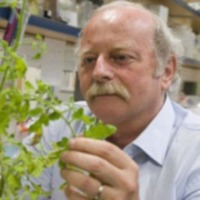 Henryk Czosnek合作论文数Institute of plant Sciences and Genetics in Agriculture, The Robert H Smith Faculty of Agriculture, Food and Environment, The Hebrew University of Jerusalem1
 Yigal Cohen合作论文数The Mina and Everard Goodman Faculty of Life Sciences, Bar-Ilan University1
 Efraim Lewinsohn合作论文数Agricultural Research Organization1
 Jonathan Gressel合作论文数Department of Plant & Environmental Sciences, Weizmann Institute of Science1
 Ilan Mor合作论文数Soreq NRC1Zamir D合作论文数1
 Robert Fluhr合作论文数Department of Plant and Environmental Sciences, Weizmann Institute of Science1
 Dov Prusky合作论文数Department of Postharvest Science of Fresh Produce, Agricultural Research Organization, The Volcani Center1M. Wysoki合作论文数1A. Yaniv合作论文数1M. Lang合作论文数1Ytzhaq Mahrer合作论文数1L. Klein合作论文数1Mishael Mor合作论文数1Y. Ben-Yephet合作论文数1Y. Kleifeld合作论文数1G. Kritzman合作论文数1A. Omari合作论文数1A. Nir合作论文数1
 J. Katan合作论文数Department of Plant Pathology and Microbiology, The Robert H. Smith Faculty of Agriculture, Food & Environment, The Hebrew University of Jerusalem1




