We give an overview of the science objectives and mission design of the "Spectroscopic Time-Resolving Observatory for Broadband Energy X-rays" observatory, which has been proposed as a NASA probe-class (similar to$1.5B) mission in response to the Astro2020 recommendation for an X-ray probe.
The Spectroscopic Time-Resolving Observatory for Broadband X-rays (STROBE-X) is a proposed NASA Astrophysics Probe-class mission. STROBE-X is a time domain and multi-messenger mission designed to provide an unparalleled laboratory for probing strong gravity and the behavior of matter in extreme environments. The instrument suite encompasses a wide-field monitor and two pointed instruments to provide transient discovery and the capability for rapid follow-up with broadband (0.2-30 keV), high time resolution spectroscopy. Over 10,000 pointed observations will be conducted each year and STROBE-X will be able to slew to targets within minutes in response to transients triggered by on-board or ground alerts. Here, we present an overview of the STROBE-X science drivers, mission design, and instrument complement.
Aims. Solar Orbiter launched in February 2020 with the goal of revealing the connections between the Sun’s interior, atmosphere, and the heliosphere. The Solar Orbiter Heavy Ion Sensor (HIS) is a time-of-flight ion mass spectrometer dedicated to measuring heavy ions in the solar wind. Methods. We present an overview of the first measurements of heavy ion composition from HIS, reviewing the methods used to transform the spectra obtained on board into scientific data products and examining two solar wind case studies as well as the statistical properties of the heavy ion composition observed by HIS. We also carried out a comparison with prior measurements of heavy ions at L1. Results. The HIS data set provides the first mass- and charge-resolved heavy ion measurements in the inner heliosphere. Conclusions. These high temporal resolution data have the potential to transform our understanding of the connections between the solar wind and its origin at the Sun, as well as the interaction between the solar wind and the environment around planets, comets, and in the interstellar medium.
Mercury’s southern inner magnetosphere is an unexplored region as it was not observed by earlier space missions. In October 2021, BepiColombo mission has passed through this region during its first Mercury flyby. Here, we describe the observations of SERENA ion sensors nearby and inside Mercury’s magnetosphere. An intermittent high-energy signal, possibly due to an interplanetary magnetic flux rope, has been observed downstream Mercury, together with low energy solar wind. Low energy ions, possibly due to satellite outgassing, were detected outside the magnetosphere. The dayside magnetopause and bow-shock crossing were much closer to the planet than expected, signature of a highly eroded magnetosphere. Different ion populations have been observed inside the magnetosphere, like low latitude boundary layer at magnetopause inbound and partial ring current at dawn close to the planet. These observations are important for understanding the weak magnetosphere behavior so close to the Sun, revealing details never reached before.
The ESA-JAXA BepiColombo mission to Mercury will provide simultaneous measurements from two spacecraft, offering an unprecedented opportunity to investigate magnetospheric and exospheric particle dynamics at Mercury as well as their interactions with solar wind, solar radiation, and interplanetary dust. The particle instrument suite SERENA (Search for Exospheric Refilling and Emitted Natural Abundances) is flying in space on-board the BepiColombo Mercury Planetary Orbiter (MPO) and is the only instrument for ion and neutral particle detection aboard the MPO. It comprises four independent sensors: ELENA for neutral particle flow detection, Strofio for neutral gas detection, PICAM for planetary ions observations, and MIPA, mostly for solar wind ion measurements. SERENA is managed by a System Control Unit located inside the ELENA box. In the present paper the scientific goals of this suite are described, and then the four units are detailed, as well as their major features and calibration results. Finally, the SERENA operational activities are shown during the orbital path around Mercury, with also some reference to the activities planned during the long cruise phase.
The Solar Orbiter mission seeks to make connections between the physical processes occurring at the Sun or in the solar corona and the nature of the solar wind created by those processes which is subsequently observed at the spacecraft. The mission also targets physical processes occurring in the solar wind itself during its journey from its source to the spacecraft. To meet the specific mission science goals, Solar Orbiter will be equipped with both remote-sensing and in-situ instruments which will make unprecedented measurements of the solar atmosphere and the inner heliosphere. A crucial set of measurements will be provided by the Solar Wind Analyser (SWA) suite of instruments. This suite consists of an Electron Analyser System (SWA-EAS), a Proton and Alpha particle Sensor (SWA-PAS), and a Heavy Ion Sensor (SWA-HIS) which are jointly served by a central control and data processing unit (SWA-DPU). Together these sensors will measure and categorise the vast majority of thermal and suprathermal ions and electrons in the solar wind and determine the abundances and charge states of the heavy ion populations. The three sensors in the SWA suite are each based on the top hat electrostatic analyser concept, which has been deployed on numerous space plasma missions. The SWA-EAS uses two such heads, each of which have 360° azimuth acceptance angles and ±45° aperture deflection plates. Together these two sensors, which are mounted on the end of the boom, will cover a full sky field-of-view (FoV) (except for blockages by the spacecraft and its appendages) and measure the full 3D velocity distribution function (VDF) of solar wind electrons in the energy range of a few eV to ∼5 keV. The SWA-PAS instrument also uses an electrostatic analyser with a more confined FoV (−24° to +42° × ±22.5° around the expected solar wind arrival direction), which nevertheless is capable of measuring the full 3D VDF of the protons and alpha particles arriving at the instrument in the energy range from 200 eV/q to 20 keV/e. Finally, SWA-HIS measures the composition and 3D VDFs of heavy ions in the bulk solar wind as well as those of the major constituents in the suprathermal energy range and those of pick-up ions. The sensor resolves the full 3D VDFs of the prominent heavy ions at a resolution of 5 min in normal mode and 30 s in burst mode. Additionally, SWA-HIS measures 3D VDFs of alpha particles at a 4 s resolution in burst mode. Measurements are over a FoV of −33° to +66° × ±20° around the expected solar wind arrival direction and at energies up to 80 keV/e. The mass resolution (m/Δm) is > 5. This paper describes how the three SWA scientific sensors, as delivered to the spacecraft, meet or exceed the performance requirements originally set out to achieve the mission’s science goals. We describe the motivation and specific requirements for each of the three sensors within the SWA suite, their expected science results, their main characteristics, and their operation through the central SWA-DPU. We describe the combined data products that we expect to return from the suite and provide to the Solar Orbiter Archive for use in scientific analyses by members of the wider solar and heliospheric communities. These unique data products will help reveal the nature of the solar wind as a function of both heliocentric distance and solar latitude. Indeed, SWA-HIS measurements of solar wind composition will be the first such measurements made in the inner heliosphere. The SWA data are crucial to efforts to link the in situ measurements of the solar wind made at the spacecraft with remote observations of candidate source regions. This is a novel aspect of the mission which will lead to significant advances in our understanding of the mechanisms accelerating and heating the solar wind, driving eruptions and other transient phenomena on the Sun, and controlling the injection, acceleration, and transport of the energetic particles in the heliosphere.
Strofio is a scientific investigation to sample in-situ the neutral atoms in Mercury's exosphere. Strofio is based on a novel mass spectrograph that determines the particle mass-per-charge (m/q) by a time-of-flight (TOF) technique. This novel technique achieves a mass resolution (m/Delta m) at mass 18 of >100, with a high sensitivity of 0.14 (counts/s)/(particles/cm(3)) and a mass of only 4kg. Strofio employs a rotating electric field to "stamp" the start time of the incoming ionized particles and a micro-channel plate (MCP) detector to record the stop time and position. This eliminates the need for foils or shutters, resulting in nearly 100% duty cycle and a low mass design. Strofio is funded by NASA to fly on the European Space Agency mission BepiColombo to the planet Mercury. It is part of the four instrument SERENA suite situated on the Mercury Planetary Orbiter (MPO), which will enter in a 400 x 1500km polar orbit. This paper describes the theory of operation, the instrument components, and focuses on the front end electronics and processing required to read and accumulate the particle data.
Strofio is a scientific investigation to sample in-situ the neutral atoms in Mercury's exosphere. Strofio is based on a novel mass spectrograph that determines the particle mass-per-charge (m/q) by a time-of-flight (TOF) technique. This novel technique achieves a mass resolution (m/Δm) at mass 18 of >;100, with a high sensitivity of 0.14 (counts/s)/(particles/cm3) and a mass of only 4kg. Strofio employs a rotating electric field to “stamp” the start time of the incoming ionized particles and a micro-channel plate (MCP) detector to record the stop time and position. This eliminates the need for foils or shutters, resulting in nearly 100% duty cycle and a low mass design. Strofio is funded by NASA to fly on the European Space Agency mission BepiColombo to the planet Mercury. It is part of the four instrument SERENA suite situated on the Mercury Planetary Orbiter (MPO), which will enter in a 400 × 1500km polar orbit. This paper describes the theory of operation, the instrument components, and focuses on the front end electronics and processing required to read and accumulate the particle data.
IBEX provides the observations needed for detailed modeling and in-depth understanding of the interstellar interaction (McComas et al. in Physics of the Outer Heliosphere, Third Annual IGPP Conference, pp. 162–181, 2004; Space Sci. Rev., 2009a, this issue). From mission design to launch and acquisition, this goal drove all flight system development. This paper describes the management, design, testing and integration of IBEX’s flight system, which successfully launched from Kwajalein Atoll on October 19, 2008. The payload is supported by a simple, Sun-pointing, spin-stabilized spacecraft with no deployables. The spacecraft bus consists of the following subsystems: attitude control, command and data handling, electrical power, hydrazine propulsion, RF, thermal, and structures. A novel 3-step orbit approach was employed to put IBEX in its highly elliptical, 8-day final orbit using a Solid Rocket Motor, which provided large delta-V after IBEX separated from the Pegasus launch vehicle; an adapter cone, which interfaced between the SRM and Pegasus; Motorized Lightbands, which performed separation from the Pegasus, ejection of the adapter cone, and separation of the spent SRM from the spacecraft; a ShockRing isolation system to lower expected launch loads; and the onboard Hydrazine Propulsion System. After orbit raising, IBEX transitioned from commissioning to nominal operations and science acquisition. At every phase of development, the Systems Engineering and Mission Assurance teams supervised the design, testing and integration of all IBEX flight elements.
The design of large superpressure balloons has received significant attention in recent years due to the successful demonstration of various enabling technologies and materials. Of particular note is the “pumpkin” shaped balloon concept, which allows the stress in the envelope to be limited by the surface geometry. Unlike a sphere, where the radius used to determine the stress is determined by the volume of the balloon, the pumpkin utilizes a system of meridional tendons to react the loading in one direction, and form a number of lobes, which limit the stress in the circumferential direction. A suitable superpressure balloon has been designed using this technology which will carry 2 kg in the atmosphere of Mars. The deployment of this balloon is assumed to occur while falling on a decelerator suitably designed for the Mars atmosphere. The inflation is accomplished by a 10 kg system suspended at the nadir of the balloon. As the system falls toward the surface of the planet, helium gas is transferred into the balloon, forming a partially inflated system very similar to an ascending zero pressure balloon. This analysis incorporates the flow of the planetary gas around the inflating balloon which alters the pressure distribution and shape. As a result, stresses are seen to increase beyond the design values which will require the balloon to be redesigned to accommodate this type of dynamic deployment.
The Mars Pathfinder has demonstrated that a relatively low cost program can produce a wealth of data which is useful to the scientific community. To this end, the use of a superpressure balloon as an observation platform for Mars exploration has been a goal of many scientists for some time. The many reasons to consider the use of a long duration balloon as an observational platform on Mars were outlined in a concept known as the Mars Aerial Platform (MAP) which was a candidate NASA Discovery Mission. The collection of unprecedented, high-resolution science data over the Martian surface for an extended period of time would permit a new perspective on the nature and history of Mars. A superpressure balloon capable of containing the lifting gas for seven days would permit the platform to circumnavigate the planet. Continuous measurements of atmospheric properties such as wind, temperature and pressure could be obtained along with detailed images of the planet surface. In addition to these images, a magnetometer with sufficient resolution could be flown in order to quantify the influence of recently identified geologic formations on the magnetic field of the planet. Due to the rarefied atmosphere present at the lower altitudes of Mars, the balloon must be uniquely designed to limit the stresses in the ultra-thin film required for this long duration application. This paper will present such a design, and list a set of candidate materials that could be used for the construction of the observation platform in the near future.
A model is developed herein for predicting the evolution of interface degradation, matrix cracking, and delamination at multiple sites in laminated continuous fiber composite plates subjected to monotonic and/or cyclic mechanical loading. Due to the complicated nature of the many cracks and their interactions, a multi-scale micro-meso-local-global methodology is deployed in order to model all damage modes. Interface degradation is first modeled analytically on the microscale, and the results are homogenized to produce a cohesive zone model that is capable of predicting interface fracture. Subsequently, matrix cracking in the plies is modeled analytically on the meso-scale, and this result is homogenized to produce ply level damage dependent constitutive equations. The evolution of delaminations is considered on the local scale, and this effect is modeled using a three dimensional finite element algorithm. Results of this analysis are homogenized to produce damage dependent laminate equations. Finally, global response of the damaged plate is modeled using a plate finite element algorithm. Evolution of all three modes of damage is predicted via interfacing all four scales into a single multi-scale algorithm that is computationally tenable for use on a desktop computer. Results obtained herein suggest that this model may be capable of accurately predicting complex damage patterns such as that observed at open holes in laminated plates.
 Stefano Livi合作论文数Max Planck Institute for Aeronomy, Lindau, Germany6
 Frederic Allegrini合作论文数Southwest Research Institute;Department of Physics and Astronomy, College of Sciences, The University of Texas at San Antonio5
 Peter Wurz合作论文数4
 Jim M. Raines合作论文数Department of Climate and Space Sciences and Engineering, College of Engineering, University of Michigan Ann Arbor4
 A. Aronica合作论文数4George C. Ho合作论文数4M. Desai合作论文数3F. Nuccilli合作论文数3I. Dandouras合作论文数3G. Fremuth合作论文数3Mangano V合作论文数3J. Hayes合作论文数3S. Orsini合作论文数3
 Rosanna Rispoli合作论文数INAF-IFSI3Martin Wieser合作论文数3
 François Leblanc合作论文数Service d’Aeronomie, CNRS3
 Harald Jeszenszky合作论文数3
 Anna Milillo合作论文数Institute for Space Astrophysics and Planetology, National Institute of Astrophysics;European Space Astronomy Centre3Nello Vertolli合作论文数INAF-IFSI3Carl L. Schwendeman合作论文数2F. Giner合作论文数2
 Gunter Laky合作论文数2J. Rynö合作论文数2C. Urdiales合作论文数2S. Persyn合作论文数2
 Roberto Bruno合作论文数2Gianluigi De Geronimo合作论文数2
 Steven Persyn合作论文数2S. Shuvalov合作论文数2
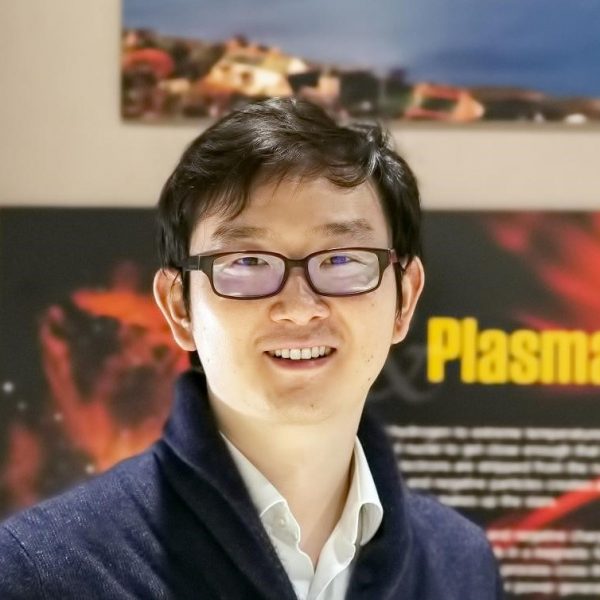 Chuanfei Dong合作论文数Department of Astronomy, Boston University;Discovery Plasma Science Department, Princeton Plasma Physics Laboratory;Department of Astrophysical Sciences, Princeton University2A. De Los Santos合作论文数2j l rand合作论文数2Terri J. Brandt合作论文数2Clio Sleator合作论文数2Peter A. Jenke合作论文数2Malgorzata Michalska合作论文数2D. Moissenko合作论文数2A. Kazakov合作论文数2
 Jillian Redfern合作论文数2H. T. Smith合作论文数2Gianluigi Zampa合作论文数2Chanda Prescod-Weinstein合作论文数2
 Stavro Ivanovski合作论文数2
 Takashi Okajima合作论文数2A. Olivieri合作论文数2A. Shestakov合作论文数2H. Fischer合作论文数2Frederic Leblanc合作论文数2Sándor Szalai合作论文数2




