The UNOS Kidney Transplant Registry is now fully operational. Aside from scientific reports from UCLA, analysis of the same data base from investigators who initiate projects through UNOS central in Richmond, as well as from HICFA and USRDS, can be anticipated. Plans are underway to simplify the reporting process. With the large number of accumulated cases, it should be possible to analyze many factors in the future. Presently, histocompatibility differences in living related vs cadaver donors and degrees of HLA mismatching among recipients of cadaveric kidneys are major factors. Immunization by transplant rejection is the second most important factor.
BACKGROUND:Although receiving a cadaveric kidney matched at the HLA-A, B, and DR loci enhances graft survival in cyclosporine-treated patients, the value of a national system of kidney allocation based on HLA matching, with the attendant increased likelihood of better matching, is still questioned. Some fear that the costs of a national system are unjustified when only a small fraction of donors would exactly match any of the 16,000 potential recipients anyway. We estimated the effect on graft survival of the use of HLA matching for all allocations of cadaveric kidneys in the United States.METHODS:The graft-survival rates in five mutually exclusive groups of transplants with increasing numbers of HLA mismatches were estimated by partitioning the data for 22,190 first-time recipients of cadaveric kidneys. Overall graft survival was projected as a weighted average with use of the percentages of transplants in the hierarchical groups in recipient waiting pools of various sizes. We compared the benefits and costs of HLA matching in a national system with those of introducing cyclosporine, which was projected to enhance graft survival by 7 percentage points at 10 years.RESULTS:Sharing kidneys nationally on the basis of hierarchical HLA matching was estimated to enhance graft survival by an additional 5 percentage points at 10 years. The anticipated five-year cost of national allocation of kidneys by HLA matching for 7000 recipients, including consideration of the costs of graft removal and dialysis after transplant rejection, would be +4F6.5 million less than the cost of using cyclosporine alone.CONCLUSIONS:The use of an HLA allocation system will not add to the cost of renal transplantation, but it will improve the long-term results to the same extent as cyclosporine. We propose the initiation of a national kidney-sharing system based on hierarchical levels of HLA matches.
When assessing single-locus DNA information in reference to forensic and parentage problems, most proposed statistical methods (Baird et al, 1986; Gjertson et al, 1988; Morris et al, to be published; and Berry, submitted for publication) incorporate continuous measurement errors (ε) into their calculations. Errors arise while distinguishing length of enzyme-cleaved fragments from mobility in gel electrophoresis. Statistically, actual true gene size plus measurement error constitutes the underlying model for an observed allele (sometimes on the log scale) where errors are usually assumed to be distributed normally with mean zero and variance α2.
Vox SanguinisVolume 57, Issue 2 p. 158-160 Beneficial Effect of Transfusion on Kidney Transplants Paul I. Terasaki, Corresponding Author Paul I. Terasaki Department of Surgery, UCLA School of Medicine, Los Angeles, Calif., USAUniversity of California UCLA School of Medicine 1000 Veteran Avenue Los Angeles, CA 90024 (USA)Search for more papers by this author Paul I. Terasaki, Corresponding Author Paul I. Terasaki Department of Surgery, UCLA School of Medicine, Los Angeles, Calif., USAUniversity of California UCLA School of Medicine 1000 Veteran Avenue Los Angeles, CA 90024 (USA)Search for more papers by this author First published: September 1989 https://doi.org/10.1111/j.1423-0410.1989.tb01158.xCitations: 4AboutPDF ToolsRequest permissionExport citationAdd to favoritesTrack citation ShareShare Give accessShare full text accessShare full-text accessPlease review our Terms and Conditions of Use and check box below to share full-text version of article.I have read and accept the Wiley Online Library Terms and Conditions of UseShareable LinkUse the link below to share a full-text version of this article with your friends and colleagues. Learn more.Copy URL Share a linkShare onEmailFacebookTwitterLinkedInRedditWechat References 1 Terasaki PI, Mickey MR, Kreisler M.: Presensitization and kidney transplant failures. Postgrad Med J 1971; 47: 89–100. 2 Opelz G., Terasaki PI: Identification of unresponsive transplant recipients. Lancet 1972; 1: 868–870. 3 Opelz G., Terasaki PI: Histocompatibility matching utilizing responsiveness as a new dimension. Transplant Proc 1972; 4: 433–437. 4 Hume DE: Kidney Transplantation; in FT Rapaport, J. Dausset (eds): Human Transplantation. New York, Grune and Stratton, 1968, p 110. 5 Morris PJ, Ting A., Stocker J.: Leukocyte antigens in renal transplantation. 1. The paradox of blood transfusions in renal transplantation. Med J Aust 1968; ii: 1088. 6 Michielsen P.: Hemodialysis et transplantation renale. EDTA Proc 1966; 3: 162. 7 Dossetor JB, MacKinnon KJ, Gault MH, et al: Cadaver kidney transplants. Transplantation 1967; 5: 844. 8 Billingham RE, Sparrow EM: The effect of prior intravenous infections of dissociated epidermal cells and blood on the survival of skin homografts in rabbits. J Embryo1 Exp Morphol 1955; 3: 265. 9 Opelz G., Sengar DPS, Mickey MR, et al: Effect of blood transfusions on subsequent kidney transplants. Transplant Proc 1973; 4: 253. 10 Opelz G., Terasaki PI: Prolongation effect of blood transfusions on kidney graft survival. Transplantation 1976; 22: 380–383. 11 van Es AA, Balner H.: Effect of pretransplant transfusions on kidney allograft survival. Transplant Proc 1979; 11: 127. 12 Opelz G., Terasaki PI, Graver B., et al: Blood transfusions and renal transplantation. Transplant Proc 1979; 11: 1889–1891. 13 Tiwari JL: Review: Kidney transplantation and transfusion; in PI Terasaki (ed): Clinical Kidney Transplants 1985. Los Angeles, UCLA Tissue Typing Laboratory, 1985, pp 257–272. 14 Opelz G.: Improved kidney graft survival in non-transfused recipients. Transplant Proc 1997; 19: 149–152. 15 Terasaki PI, Mickey MR, Cecka M., et al: Overview; in Clinical Transplants 1987. Los Angeles, UCLA Tissue Typing Laboratory, 1988, pp 467–490. Citing Literature Volume57, Issue2September 1989Pages 158-160 ReferencesRelatedInformation
Female C57BL/10 mice 2 and 14 months of age were killed 3, 6, 9, 12, 18 and 24 h after injection with 0.4 mg of benzo[a]pyrene-trans-7,8-dihydrodiol. The amount of carcinogen bound to DNA isolated from liver and kidney of each mouse was determined as benzo[a]pyrene-7,8,9,10-tetrol liberated upon acid hydrolysis of the DNA and measured by synchronous scanning fluorometry. Considerable variability was observed and a subset of animals in the middle-aged group failed to sustain appreciable damage upon injection of the carcinogen. Nevertheless, repair of DNA-bound carcinogen from both the liver and kidney of 2-month-old animals was clearly evident. In the subset of 14-month-old animals who sustained damage, evidence for removal of DNA-bound carcinogen was marginal.
From the first 15 years of clinical kidney transplantation, the principal single “truth” to emerge is that the HLA chromosome is the major factor influencing outcome of transplantation and that there is a marked difference between matching for two HLA chromosomes (HLA-identical sibs), one HLA chromosome (parental donors), and zero HLA chromosomes (cadaver donor transplants). Aside from the use of imuran and prednisone, which were introduced in 1962, there have been no new major factors and therefore the outcome of transplantation has not changed for the last 15 years, despite massive efforts to improve immunosuppression and histocompatibility matching methods. However, now with the retrospective identification of transfusion as being a major factor, it is expected that a major change in the outcome of transplantation will occur in the coming years. Together with the new emerging ability to account for multiple factors using computers and new developments in immunosuppression and HLA-DR matching, higher transplant survival rates in the immediate future are almost assured.
Using actuarial methods, factors influencing long-term graft survival were examined in 33,594 recent (since 1974) kidney transplants reported to the University of California, Los Angeles, Transplant Registry. One- and 10-year graft-survival rates as well as late (from 3 through 10 years) graft-loss rates (half-lives) were determined. The donor-recipient relationship had the greatest influence on long-term graft survival. Transplants between HLA-identical siblings had graft-survival rates of 89% at 1 year and 68% at 10 years, compared with 76% and 43% for parental donors, and 58% and 26% for cadaver donor transplants, respectively. These differences were also evident from the graft half-lives, which were 22 years for HLA-identical sibling, 12 years for parental, and 8 years for cadaver donor allografts. In cadaver donor transplants, matching for HLA-A,B antigens had the greatest influence on long-term graft survival, with a 15% 10-year graft survival (39% vs. 24%) and 7-year half-life (14 vs. 7 years) advantage seen with the best (zero HLA-A,B mismatches) compared with the worst (4 HLA-A,B) cases, respectively. Some of the factors studied, such as transplant number and pretransplant transfusions, tended to influence the short- rather than long-term graft-survival rates. Others, including HLA-A,B matching, early graft function and the recipient's original disease, influenced both early and late graft survival. Over all, histocompatibility between donor and recipient had by far the greatest influence on the long-term success of renal allografts.
Even when HLA is completely matched in sibling donor transplants, as many as one third of the transplants are lost in 10 years. This means that a second or third histocompatibility locus plays some role in rejection of kidney grafts. We postulate that the second locus is Lewis. First, because among 18 second cadaver donor transplant patients having Lewis antibodies, the 1-year graft survival rate was 32% compared to 61% in 37 patients without Lewis antibodies (P = .02). The Lewis antibodies presumably were produced in the course of rejection of the first graft and had an effect on the success of the second graft. As indirect evidence, Lewis mismatching would be expected to occur more frequently in black patients than white, and correspondingly, a lower graft survival rate was noted in black patients receiving sibling, parent, and cadaver donor grafts.
1. The 3-month actual graft survival of 6-antigen matched transplants in the UNOS program was 96% compared to 85% in control kidneys which were not shipped (p = 0.004). Actuarial graft survival at 1 year was 89% for the 6-antigen matched kidneys and 78% for the controls (p = 0.02). 2. Several individual centers reported 1-year graft survival rates of 85-95% (in the first half of this volume). Various immunosuppressive protocols and attention to patient care resulted in high 10-year survival of 53% in 1 instance (Leuven). 3. The 1-year graft survival peaked at about 77% for transplants performed in 1985, 1986, and 1987. 4. Among transplants performed since 1984, HLA matching of cadaver donor transplants showed a 13% difference at 1 year between the best and worst A,B,DR matches, which expanded in 3 years to an 18% difference. 5. The center effect, which produces about a 13% difference in 1-year graft survival for cadaver donors, decreased to 0 in HLA-identical transplants. Thus, when the donor and recipient were histocompatible, all centers were able to achieve superior results. The results of the 6-antigen Match Study appear to validate this conclusion. 6. Preformed antibody is associated with a 9% decrease in graft survival for greater than 50% PRA in first grafts and 4% in second grafts. For peak antibodies, the difference was 7% for first grafts and 11% for second grafts. 7. Platelet flow cytometry in 23 patients with a positive flow cytometry crossmatch to T cells furnished a further refinement in grouping the patients. All 11 patients with a negative platelet crossmatch had functioning grafts at 1 month whereas only 5 of 12 patients with a positive platelet crossmatch had a functional graft at 1 month (p = 0.003). 8. The duration of first graft effect on the second graft has diminished considerably as immunosuppression improved. Patients whose first graft survived more than a year and who had a high 1-year graft survival of the second graft lost their second graft at an accelerated rate after the first year. At the end of 4 years, their survival was the same as that of the responder patients who had rejected their first grafts within 3 months. 9. False positive crossmatches, especially in "highly" sensitized patients were identified by the use of DTT. Transplants into 69 patients who were positive by the standard test but negative after DTT had a 94% 1-month function rate.(ABSTRACT TRUNCATED AT 400 WORDS)
Cyclosporine-treated recipients of primary cadaver donor renal transplants had a one-year graft survival rate of 79% if they received pretransplant blood transfusions (n = 5308). The one-year survival rate for nontransfused recipients (n = 709) was significantly lower at 69% (P less than 0.001). The transfusion effect was larger in black recipients (a 17% difference) than in white recipients (5%). The effect was also larger in recipients of grafts poorly matched for HLA-A, B, -B, DR, or -DR antigens than in recipients of well-matched grafts. Transfusions did not significantly improve graft survival in recipients with zero or one HLA-A, B or -B, DR, or zero -DR-mismatched grafts. However, transfusions accounted for increases of 10%, 14%, and 17% in patients receiving grafts mismatched at 2, 3, or 4 HLA-B, DR antigens, respectively. Several factors including cyclosporine and HLA matching have contributed to improving graft survival rates in nontransfused recipients. Sensitization was noted in 20% of transfused patients awaiting primary renal transplants in Southern California, as compared with 10% in transplanted patients, suggesting a tendency to transplant nonsensitized patients. Of the sensitized patients, 75% were female. Based on these data, we suggest that high survival of primary kidney allografts in the cyclosporine era can best be maintained by the continued use of pretransplant transfusions for the majority of recipients--or, alternatively, by HLA matching for patients who are at higher risk of becoming sensitized.
We have developed an empirical method of estimating paternity exclusion rates for any genetic system by counting exclusions among fictitious "nonfather" paternity cases generated from true paternity disputes. Especially for multiallele multiloci systems, this technique has advantages over traditional formulae methods in that it replaces tedious (and, in some cases, impossible) computations with simple data file manipulations, and it avoids introducing quantities such as gametic disequilibrium and recombination fraction that are difficult to measure. Exclusion rates for standard and one-parent paternity cases are given for three racial groups (Caucasians, blacks, and Hispanics) in four genetic systems (HLA, ABO, MNSs, and Rh). Beside the method, of interest are our findings of higher HLA exclusion rates (93.25% for Caucasians, 94.62% for blacks, and 95.82% for Hispanics) compared with rates previously reported and high combined exclusion rates (89.59% for Caucasians, 91.65% for blacks, and 92.54% for Hispanics) in one-parent paternity cases.
The effect of HLA matching on one-year first cadaver donor graft survival rates between best and worst matches was 6% (P less than 0.001) for A, B; 7% (P less than 0.001) for DR; 9% (P less than 0.001) for A, DR; 15% (P less than 0.001) for B, DR; and 17% (P less than 0.001) for A, B, DR. For second cadaver donor grafts, the differences were comparable. Analysis of the cyclosporine-treated patients separately yielded similar results: 5% (NS) for A, B; 7% (P less than 0.001) for DR; 13% (P less than 0.001) for A, DR; 16% (P less than 0.001) for B, DR; and 18% (P less than 0.001) for A, B, DR. The most significant effect of matching was achieved by zero mismatching B and DR antigens. The one-year graft survival for patients with zero A, B, DR mismatch was 88% with cyclosporine. Without cyclosporine, zero mismatched A, B, DR grafts survive at 84%; this difference is not statistically significant. Zero mismatching for class I and II antigens (that is, A, DR or B, DR with cyclosporine) gives one-year graft survivals of 84% and 87%, respectively. The zero mismatching HLA class I and II antigen effect is lost when even one antigen is mismatched. Transfusions improved the one-year graft survival 10% in cyclosporine-treated patients, but not in those who were not treated with cyclosporine. Seventy-one patients transfused with more than 4 units of blood, zero B, DR mismatched, and treated with cyclosporine had a 91% one-year graft survival. Recipient pool sizes for obtaining zero A, B, DR or B, DR mismatched donors are calculated. Zero A, B, DR mismatched patients can be transplanted at a 19% frequency with a 10,000 recipient pool. The success rate for zero mismatching of class I and class II antigens indicates that kidney sharing and large recipient pool sizes are a reasonable policy.
The ultimate goal of a mathematical/statistical model is to give a complete quantitative expression of the relation between variables describing outcome and antecedent, conditioning variables. One would like to express graft survival, for example, in terms of the multitude of variables that jointly determine how long and how well a given graft will function. The model could be expressed by equations, graphs, tables or combinations of these modes. The ideal is probably unattainable, and considerable simplification is necessary, particularly considering that each transplant/potential transplant is unique.
Now that the results of kidney transplantation are improving to relatively high rates, we need more sensitive measures of transplant outcome than graft and patient survival. A subjective assessment by the transplant surgeon, evaluated as grade A, B, C, D, or F at 3 months, 6 months, 1 year, and annually thereafter has long been available to the UCLA Transplant Registry but has been largely unused, primarily on the basis of credibility. We are particularly interested now in exploiting the extensive information that is routinely recorded in the course of postoperative management of patients. It is not clear at present what forms of analysis will be informative. We report here the use of a summary score based on serum creatinine recorded during the early postoperative period—the first 60 days.
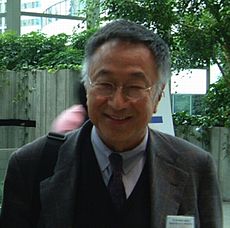 Paul Terasaki (寺崎一郎)合作论文数Department of Surgery, School of Medicine, University of California, Los Angeles81
 Gerhard Opelz合作论文数Institute of Immunology University of Heidelberg25P I Terasaki合作论文数16James C Cicciarelli合作论文数8Donna L Vredevoe合作论文数7S Perdue合作论文数6Kamal K Mittal合作论文数6
 Min S. Park合作论文数UCLA Tissue Typing Laboratory, University of California Los Angeles5Dharam P Singal合作论文数5M TAKASUGI合作论文数4Pi Terasaki合作论文数4S Takemoto合作论文数4ED ALBERT合作论文数4
 David W. Gjertson合作论文数Department of Pathology and Laboratory Medicine, University of California, Los Angeles4
 J Michael Cecka合作论文数Department of Pathology and Laboratory Medicine, David Geffen School of Medicine, University of California4S CATS合作论文数3DJ COOK合作论文数3RA REISFELD合作论文数3MA PELLEGRINO合作论文数3BEVERLY GRAVER合作论文数3
 David Chia合作论文数3
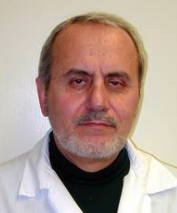 Soldano Ferrone合作论文数Departments of Surgery and of Orthopedic Surgery, Massachusetts General Hospital, Harvard Medical School3Masahiro Kiuchi合作论文数3Yuichi Iwaki合作论文数3Gary S. Rachelefsky合作论文数3
 Thomas E. Starzl合作论文数University of Pittsburgh3Nori Sasaki合作论文数3G Ayoub合作论文数2D Bernoco合作论文数2Dps Sengar合作论文数2Rl Walford合作论文数2ST PERDUE合作论文数2Y Cho合作论文数2S Saito合作论文数2Takasugi M合作论文数2
 E. Richard Stiehm合作论文数David Geffen School of Medicine, University of California, Los Angeles2J.M Cecka合作论文数2Setsuya Naito合作论文数2Tanous D. Faris合作论文数2Victor D Newcomer合作论文数2D. R. Goyette合作论文数2
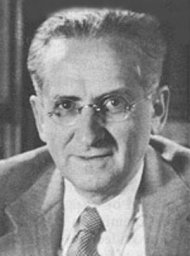 Jacob Marschak合作论文数University of California Los Angeles Los Angeles2
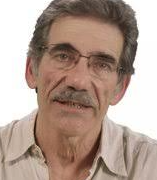 Howard Takiff合作论文数Laboratorio de Genética Molecular, Instituto Venezolano de Investigaciones Científicas2M Takasugi合作论文数1SS BALL合作论文数1C Yuge合作论文数1J Takasugi合作论文数1Cv Sumaya合作论文数1




