This article concerns the challenge of reliable broadband passive sonar target detection and tracking in complex acoustic environments. Addressing this challenge is becoming increasingly crucial for safeguarding underwater infrastructure, monitoring marine life, and providing defense during seabed warfare. To that end, a solution is proposed based on a vector-autoregressive model for the ambient noise and a heavy-tailed statistical model for the distribution of the raw hydrophone data. These models are integrated into a Bernoulli track-before-detect (TkBD) filter that estimates the probability of target existence, target bearing, and signal-to-noise ratio (SNR). The proposed solution is evaluated on both simulated and real-world data, demonstrating the effectiveness of the proposed ambient noise modeling and the statistical model for the raw hydrophone data samples to obtain early target detection and robust target tracking. The simulations show that the SNR at which the target can be detected is reduced by 4 dB compared to when using the standard constant false alarm rate detector-based tracker. Further, the test with real-world data shows that the proposed solution increases the target detection distance from 250 m to 390 m. The presented results illustrate that the TkBD technology, in combination with data-driven ambient noise modeling and heavy-tailed statistical signal models, can enable reliable broadband passive sonar target detection and tracking in complex acoustic environments and lower the SNR required to detect and track targets.
Bearings-only target tracking using raw acoustic data typically achieves better tracking performance at lower signal-to-noise ratios (SNR) compared to approaches that rely on direction-of-arrival (DOA) preprocessing. However, using raw data directly as observations renders standard Kalman filter-type algorithms inapplicable, since the likelihood when using raw acoustic data depends only on second-order statistics. While particle filter-based methods can overcome this limitation, they are often computationally demanding, particularly in high-dimensional state spaces. To address this, we present a maximum a posteriori-based method to approximate the Bayesian filter recursions, which can handle likelihoods that depend only on the second-order statistics of the observations. The method formulates the observation update as an optimization problem and applies a Laplace approximation to estimate the posterior mean and covariance. This enables the direct use of raw observations while avoiding the computational cost associated with particle filtering. The method is validated through simulations and real-world data from a sea trial. Results show that the proposed approach achieves robust tracking performance at low SNR, outperforming the traditional target-tracking approach that uses DOA-based preprocessing of the acoustic data. Hence, it offers a computationally efficient alternative to particle filters for target tracking applications that utilize raw acoustic data.
A signal-of-opportunity-based method to automatically calibrate the orientations and shapes of a set of hydrophone arrays using the sound emitted from nearby ships is presented. The calibration problem is formulated as a simultaneous localization and mapping problem, where the locations, orientations, and shapes of the arrays are viewed as the unknown map states, and the position, velocity, etc., of the source as the unknown dynamic states. A sequential likelihood ratio test, together with a maximum a posteriori source location estimator, is used to automatically detect suitable sources and initialize the calibration procedure. The performance of the proposed method is evaluated using data from two 56-element hydrophone arrays. Results from two sea trials indicate that: 1) signal sources suitable for the calibration can be automatically detected; 2) the shapes and orientations of the arrays can be consistently estimated from the different data sets with shape variations of a few decimeters and orientation variations of less than 2(degrees) and 3) the uncertainty bounds calculated by the calibration method are in agreement with the true calibration uncertainties. Furthermore, the bearing time record from a sea trial with an autonomous mobile underwater signal source also shows the efficacy of the proposed calibration method. In the studied scenario, the root-mean-square bearing tracking error was reduced from 4(degrees) to 1(degrees) when using the calibrated array shapes compared to assuming the arrays' to be straight lines. Also, the beamforming gain increased by approximately 1 dB.
Underwater surveillance using passive sonar and track-before-detect technology requires accurate models of the tracked signal and the background noise. However, in an underwater environment, the signal channel is time-varying and prior knowledge about the spatial distribution of the background noise is unavailable. In this paper, an autoregressive model that captures a time-varying signal level caused by multi-path propagation is presented. In addition, a multi-source model is proposed to describe spatially distributed background noise. The models are used in a Bernoulli filter track-before-detect framework and evaluated using both simulated and sea trial data. The simulations demonstrate clear improvements in terms of target loss and improved ability to discern the target from the noisy background. An evaluation of the track-before-detect algorithm on the sea trial data indicates a performance gain when incorporating the proposed models in underwater surveillance and tracking problems.
A theoretically sound likelihood function for passive sonar surveillance using a hydrophone array is presented. The likelihood is derived from first order principles along with the assumption that the source signal can be approximated as white Gaussian noise within the considered frequency band. The resulting likelihood is a nonlinear function of the delay-and-sum beamformer response and signal-to-noise ratio (SNR).Evaluation of the proposed likelihood function is done by using it in a Bernoulli filter based track-before-detect (TkBD) framework. As a reference, the same TkBD framework, but with another beamforming response based likelihood, is used. Results from Monte-Carlo simulations of two bearings-only tracking scenarios are presented. The results show that the TkBD framework with the proposed likelihood yields an approx. 10 seconds faster target detection for a target at an SNR of -27 dB, and a lower bearing tracking error. Compared to a classical detect-and-track target tracker, the TkBD framework with the proposed likelihood yields 4 dB to 5 dB detection gain.
Otnes, Roald Wilhelm; Zetterberg, Per; Blouin, Stephane; Nordenvaad, Magnus Lundberg; Austad, Havard; Dombestein, Elin Margrethe Bohler. Distributed fusion in underwater sensor networks: Fusing bearing information. Underwater Acoustics Conference & Exhibition (UACE) 2019 s. 809-816
In this paper, we propose a new approach for target tracking using bearings-only estimates. Our focus is on the case where the estimates are produced by groups of individual sensors, e.g., sensor buoys or nodes. We estimate the position and velocity of the target by modelling the bearing estimates as a mixture of a uniform distribution and a von Mises distribution. To solve the tracking problem, we use a) an algorithm based on a centralized particle filter (CPF) meaning that each bearing measurement gets communicated to a central computer at which the tracking is performed; b) each group of sensors performs its own bearing tracking with a local particle filter and communicates that result to a central computer at which an extended Kalman filter (EKF) is used to track the target's position and velocity. This method will be refereed to as the Local Partical Filter with a centralized extended Kalman Filter (LPF-EKF). The methods are evaluated using simulated data and we note that both methods are able to track the target even in the case of a high number of uniformly distributed bearings. Moreover, CPF gives a slightly higher probability of being able to track the target as compared to LPF-EKF.
In this paper we propose and analyze a new approach for synchronization of OFDM based underwater communication systems with significant Doppler spread. In order to keep cyclic prefix overhead low - long OFDM symbols are needed which in turn leads to significant inter-carrier interference (ICI). For signal acquisition and synchronization we propose the use of a special OFDM symbol which has regions of null subcarriers i.e. subcarriers where no power is transmitted but also still has subcarriers for channel estimation and payload data. By estimating the signal to noise ratio on candidate demodulation positions we can calculate a “would-be” signal to noise ratio by adding up the power on the active subcarriers and dividing it by the power in the null subcarriers. By only using the inner subcarriers in a region of null subcarreries resistance against Doppler spread is achieved. We optimize and compare the proposed solution against a base-line solution which uses a pre-amble with a hyperbolic frequency modulated signal. We find our solution to compare well and present bit error rate and frame error rate results on a complete system which uses our proposed acquisition and synchronization scheme.
This technical note introduces the closed form maximum likelihood estimator for estimating the coefficients of the non-parametric frequency response function from system identification experiments. It is assumed that the experiments consist of repeated pulse excitations and that both the excitation and system response are measured which leads to an error-in-variables setting. Monte Carlo simulations indicate that the estimator achieves efficiency at low signal-to-noise ratios with only few measurements. Comparison with the least-squares estimator shows that better, unbiased results are obtained.
A noise variance estimator in complex-valued models with unknown signal subspace is proposed. Highlighted is that the conventional, maximum likelihood based, way of estimating the noise variance in this setting is highly biased, especially in low sample support and/or low SNR scenarios. The proposed estimator is derived by exploiting that the distribution of the sample covariance eigenvalues can be derived in closed form. By imposing the signal subspace structure, i.e., the multiplicity of the noise eigenvalue, the estimate is found through optimization of the considered likelihood. Simulations show that the presented approach, although slightly biased, improves on standard techniques.
This paper shows how a particle smoother-based system identification method can be applied for estimating the trajectory of road vehicles. As sensors, a combination of an accelerometer measuring the road surface vibrations and a magnetometer measuring magnetic disturbances mounted on the side of the road are considered. First, sensor models describing the measurements of the two sensors are introduced. It is shown that these depend on unknown, static parameters that have to be considered in the estimation. Second, the sensor models are combined with a two-dimensional constant velocity motion model. Third, the system identification algorithm is introduced which iteratively runs a Rao-Blackwellized particle smoother to estimate the vehicle trajectory followed by an expectation-maximization step to estimate the parameters. Finally, the method is applied to both simulation and measurement data. It is found that the method works well in general and some issues when real data is considered are identified as future work.
This paper presents modeling of wave propagation in pavements from a system identification point of view. First, a model based on the physical structure is derived. Second, experiment design and evaluation are discussed and maximum-likelihood estimators for estimating the model parameters are introduced, assuming an error-in-variables setting. Finally, the proposed methods are applied to measurement data from two experiments under varying environmental conditions. It is found that the proposed methods can be used to estimate the dispersion curves of the considered waveguide and the results can be used for further analysis.
Reliable channel estimation and effective interference cancellation are essential for enhancing the performance of multiple-input-multiple-output (MIMO) underwater acoustic communication (UAC) systems. In this paper, an efficient user-parameter-free Bayesian approach, referred to as sparse learning via iterative minimization (SLIM), is presented. SLIM provides good channel estimation performance along with reduced computational complexity compared to iterative adaptive approach (IAA). Moreover, RELAX-BLAST, which is a linear minimum mean-squared error (MMSE)-based symbol detection scheme, is implemented efficiently by making use of the conjugate gradient (CG) method and diagonalization properties of circulant matrices. The proposed algorithm requires only simple fast Fourier transform (FFT) operations and facilitates parallel implementations. These MIMO UAC techniques are evaluated using both simulated and in-water experimental examples. The 2008 Surface Processes and Acoustic Communications Experiment (SPACE08) experimental results show that the proposed MIMO UAC schemes can enjoy almost error-free performance even under severe ocean environments.
We consider using the conjugate gradient (CG) algorithm to equalize a time-varying channel in an orthogonal frequency division multiplexing (OFDM) system. Preconditioning technique to accelerate the convergence of the CG algorithm is discussed, where we show that when the Doppler spread becomes higher, the commonly used diagonal preconditioner, despite its simpleness, can perform even worse than without preconditioner. In such a case, a preconditioner with a more complex structure is proposed.
In this paper, modeling of the pavement as a wave propagation medium and estimation of the corresponding model parameters is approached from a system identification perspective. A model based on the physical background is proposed and the corresponding parameters are then estimated from measurement data. In order to achieve the latter, two estimators are proposed, their performance evaluated, and then applied to the measurement data. It is found that the proposed methods are applicable and the results show that different eigenmodes of the structure are excited.
This paper addresses a novel method for vehicle tracking using an extended Kalman filter and measurements of road surface vibrations from a single accelerometer. First, a measurement model for vibrations caused by vehicular road traffic is developed. Then the identifiability of the involved parameters is analyzed. Finally, the measurement model is combined with a constant speed motion model and the Kalman filter is derived. Simulation and measurement results indicate that the approach is feasible and show where further development is needed.
This article proposes a Bayesian procedure to calculate posterior probabilities of active effects for unreplicated two-level factorials. The results from a literature survey are used to specify individual prior probabilities for the activity of effects and the posterior probabilities are then calculated in a three-step procedure where the principles of effects sparsity, hierarchy, and heredity are successively considered. We illustrate our approach by reanalyzing experiments found in the literature.
We consider an orthogonal frequency-division multiplexing (OFDM) transmission scheme over wideband underwater acoustic channels, where the propagation paths can experience distinct Doppler effects (manifested in signal scales) and time of arrivals (manifested in lags). We capture such an effect in this paper with a multi-scale multi-lag (MSML) model, and show that the resulting frequency-domain MSML-OFDM channel is subject to inter-carrier interference (ICI), whose amount differs per subcarrier. The corresponding channel matrix can still be approximated as highly sparse, but lacks a specific structure that can optimally be exploited by those low-complexity equalizers proposed for narrowband channels. In this paper, we propose to use the conjugate gradient (CG) algorithm to equalize the channel iteratively. The suitability of the preconditioning technique, that often accompanies the CG to accelerate the convergence, is discussed for the MSML-OFDM channel. We show that in order for the preconditioner to function properly, optimal resampling is indispensible.
This paper addresses multi-input multi-output (MIMO) communications over sparse acoustic channels suffering from frequency modulations. An extension of the recently introduced SLIM algorithm, which stands for sparse learning via iterative minimization, is presented to estimate the sparse and frequency modulated acoustic channels. The extended algorithm is referred to as generalization of SLIM (GoSLIM). The sparseness is exploited through a hierarchical Bayesian model, and because GoSLIM is user parameter free, it is easy to use in practical applications. Moreover this paper considers channel equalization and symbol detection for various MIMO transmission schemes, including both space-time block coding and spatial multiplexing, under the challenging channel conditions. The effectiveness of the proposed approaches is demonstrated using in-water experimental measurements recently acquired during WHOI09 and ACOMM10 experiments.
The paper derives the reference prior for complex covariance matrices. The reference prior is a noninformative prior that circumvents some of the weaknesses of common alternatives in multidimensional settings. As a consequence, inference based on this prior renders well-behaving solutions that in many cases outperform traditionally used approaches. The main obstacle is that inference based on this prior require integration over high-dimensional spaces which have no closed form solutions. A focus of the paper is therefore to discuss efficient implementation strategies based on Markov chain Monte Carlo methods. It is identified that certain structures can be treated analytically both for the case where the parameter of interest is the covariance matrix itself but also for cases in which the covariance matrix is a nuisance parameter that characterizes noise color. Evaluation in both these settings also verify the superior performance obtained by using the proposed prior as compared to traditional techniques to treat unknown covariance matrices.
 Wolfgang Birk合作论文数Control Engn Grp, Lulea Univ Technol6
 Roland Hostettler合作论文数6
 Isaac Skog合作论文数ACCESS Linnaeus Center, Royal Institute of Technology5
 Gustaf Hendeby合作论文数Linköping University4
 John Daniel Bossér合作论文数Dept. of Electrical Engineering, Linköping University3
 Karasalo, I.合作论文数3Oberg, T.合作论文数3bernt nilsson合作论文数2n olofsson合作论文数2
 Jian Li (李荐)合作论文数Spectral Analysis Laboratory, Department of Electrical & Computer Engineering, University of Florida2
 Kexin Zhao合作论文数Snap Inc.2
 Jun Ling合作论文数Careray Digital Medical Technology Co., Ltd.2
 Per Zetterberg合作论文数ACCESS Linnaeus Center, KTH Royal Institute of Technology2
 Erland Sangfelt合作论文数2
 Rob Remis合作论文数Department of Microelectronics, Faculty of Electrical Engineering, Mathematics, and Computer Science, Delft University of Technology2
 Zijian Tang (汤子健)合作论文数2
 Bernt Nilsson合作论文数1
 Stéphane Blouin合作论文数1Håvard Austad合作论文数1
 Anton Kullberg合作论文数Div Automat Control, Linkoping Univ1
 Robin Forsling合作论文数Dept Elect Engn, Linkoping Univ1
 van Walree, P.合作论文数Norwegian Defence Res. Establ. (FFI), Horten, Norway;c1Nilsson, B.合作论文数1
 Tao Xu合作论文数1
 G.J.T. Leus合作论文数Department of Microelectronics, Faculty of Electrical Engineering, Mathematics and Computer Science, Delft University of Technology1
 Barry Van Veen合作论文数Department of Electrical and Computer Engineering, University of Wisconsin-Madison1
 Hao He合作论文数Amazon Web Services1
 Lennart Svensson合作论文数Department of Electrical Engineering, Chalmers University of Technology1
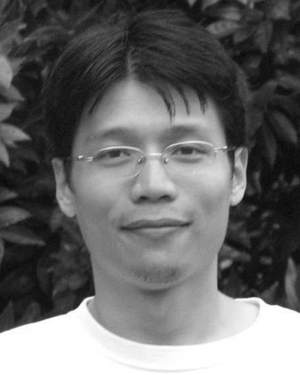 Xing Tan合作论文数Department of Electrical and Computer Engineering, University of Florida1
 Bjarne Bergquist合作论文数Division of Quality Technology and Statistics, Luleå University of Technology1
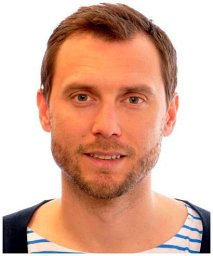 Erik Gudmundson合作论文数KTH - Royal Institute of Technology, Lund University1
 Ali Pezeshki合作论文数Department of Electrical and Computer Engineering, Colorado State University1
 Erik Vanhatalo合作论文数Luleå University of Technology;Quality and Environmental Management1
 Hugo M. Tullberg合作论文数Ericsson Research1
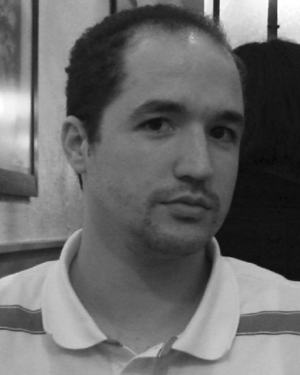 Tarik Yardibi合作论文数1
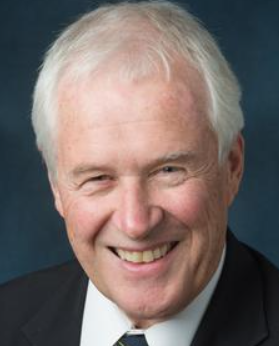 Louis Scharf合作论文数Colorado State University1
 Henry Cox合作论文数Lockheed Martin Corporation1




