A benzene solution of Cp*Ir(CO)(2) was irradiated for 10 h at room temperature, and then the reaction solution was exposed to air overnight, affording two cis-trans isomeric diiridium(Ir-Ir) complexes [Cp*Ir(mu-CO)(Ph)](2) (1 and 4), a mononuclear iridium complex Cp*Ir(CO)(Ph)(2) (2), a diiridium(Ir-Ir) complex Cp*(2)(CO)(2)Ir-2(mu(2)-C6H4) (3), a novel hexanuclear iridium complex [Cp*(2)(mu(2)-Ph)(mu(2)-H)Ir-2](mu(3)-CO2)[Ir-4(CO)(11)] (5), and trace biphenyl. The molecular structures of complexes 1-5 have been determined by single-crystal X-ray diffraction analysis. Moreover, we studied the reactivities and possible formation paths of some of these complexes. (C) 2013 Elsevier B.V. All rights reserved.
Dinuclear iridium complexes [(C5Me4)(CH2)(n)(C5Me4)][Ir(COD)](2) (2a: n = 2; 2b: n = 3; 2c: n = 4) are obtained from the reactions of the corresponding dilithium salts Li-2[(C5Me4)(CH2)(n)(C5Me4)] (n = 2-4) with [Ir(mu-Cl)(COD)](2). Further oxidation of 2 affords iodo-bridged polymeric iridium complexes [(C5Me4)(CH2)(n)(C5Me4)(IrI2)(2)](m), (3a: n = 2; 3b: n = 3; 3c: n = 4). Dinuclear iridium complexes [(C5Me4)(CH2)(n)(C5Me4)][IrI2(PPh3)](2) (4a: n = 2; 4b: n = 3; 4c: n = 4) and [(C5Me4)(CH2)(n)(C5Me4)][IrI2(CO)](2) (5b: n = 3; 5c: n = 4) are obtained from the reactions of 3 with PPh3 and CO, respectively. Dinuclear dicarbonyl iridium complexes [(C5Me4)(CH2)(n)(C5Me4)][Ir(CO)(2)](2) (6b: n = 3; 6c: n = 4) are obtained from the reactions of 3 with Zn and CO. Additionally, the cyclometalated dinuclear iridium complexes 7b,c, 8b,c, 9b,c, and 10b,c are obtained from the reactions of 3 with the corresponding nitrogen ligands in the presence of KOH. The molecular structures of complexes 2a, 4a, 5b, 6c, and 7b have been determined by single-crystal X-ray diffraction analysis. Moreover, we found that complexes 3 and 4 are efficient catalysts for the selective amine cross-coupling reaction.
Reliable channel estimation and effective interference cancellation are essential for enhancing the performance of multiple-input-multiple-output (MIMO) underwater acoustic communication (UAC) systems. In this paper, an efficient user-parameter-free Bayesian approach, referred to as sparse learning via iterative minimization (SLIM), is presented. SLIM provides good channel estimation performance along with reduced computational complexity compared to iterative adaptive approach (IAA). Moreover, RELAX-BLAST, which is a linear minimum mean-squared error (MMSE)-based symbol detection scheme, is implemented efficiently by making use of the conjugate gradient (CG) method and diagonalization properties of circulant matrices. The proposed algorithm requires only simple fast Fourier transform (FFT) operations and facilitates parallel implementations. These MIMO UAC techniques are evaluated using both simulated and in-water experimental examples. The 2008 Surface Processes and Acoustic Communications Experiment (SPACE08) experimental results show that the proposed MIMO UAC schemes can enjoy almost error-free performance even under severe ocean environments.
The cascade oxidative annulation reactions of benzoylacetonitrile with internal alkynes proceed efficiently in the presence of a rhodium catalyst and a copper oxidant to give substituted naphtho[1,8-bc]pyrans by sequential cleavage of C(sp(2))-H/C(sp(3))-H and C(sp(2))-H/O-H bonds. These cascade reactions are highly regioselective with unsymmetrical alkynes. Experiments reveal that the first-step reaction proceeds by sequential cleavage of C(sp(2))-H/C(sp(3))-H bonds and annulation with alkynes, leading to 1-naphthols as the intermediate products. Subsequently, 1-naphthols react with alkynes by cleavage of C(sp(2))-H/O-H bonds, affording the 1:2 coupling products. Moreover, some of the naphtho[1,8-bc]pyran products exhibit intense fluorescence in the solid state.
We introduce a new approach using the Bayesian framework for the reconstruction of sparse Synthetic Aperture Radar (SAR) images. The algorithm, named SLIM, can be thought of as a sparse signal recovery algorithm with excellent sidelobe suppression and high resolution properties. For a given sparsity promoting prior, SLIM cyclically minimizes a regularized least square cost function. We show how SLIM can be used for SAR image reconstruction as well as SAR image enhancement. We evaluate the performance of SLIM by using realistically simulated complex-valued backscattered data from a backhoe vehicle. The numerical results show that SLIM can satisfactorily suppress the sidelobes and yield higher resolution than the conventional matched filter or delay-and-sum (DAS) approach. SLIM outperforms the widely used compressive sampling matching pursuit (CoSaMP) algorithm, which requires the delicate choice of user parameters. Compared with the recently developed iterative adaptive approach (IAA), which iteratively solves a weighted least squares problem, SLIM is much faster. Due to the computational complexity involved with SAR imaging, we show how SLIM can be made even more computationally efficient by utilizing the fast Fourier transform (FFT) and conjugate gradient (CG) method to carry out its computations. Furthermore, since SLIM is derived under the Bayesian model, the a posteriori distribution given by the algorithm provides us with a confident measure regarding the statistical properties of the SAR image pixels.
We consider cooperative positioning using acoustic range measurements for underwater sensor networks. Severe multipath scattering from the seabed and ocean surface can result in inaccurate range measurements. The direct path is not necessarily the strongest path or the first arrival. Then, the range measurements based on the first or strongest arrival could be significantly biased. We introduce herein a new centralized cooperative positioning algorithm, referred to as the weighted steepest descent algorithm (WSDA), for underwater sensor networks. We assume that for each acoustic ranging channel, multiple range measurements corresponding to several propagation paths, one of which is the direct path, are available for cooperative positioning. Since it is unknown a priori which path is the direct path, we must identify it first. We show that WSDA can be used to automatically identify the direct path. We also show via numerical examples that WSDA is an effective and efficient approach to cooperative positioning in underwater sensor networks.
Thermal treatment of Ru-3(CO)(12) with equimolar amounts of (1H-inden-3-yl)diphenylphosphine and (1H-inden-2-yl)diphenylphosphine in octane gave two isomeric trinuclear ruthenium clusters Ru-3(mu(2)-H) (mu(3)-3-Ph2PC9H6)-(CO)(9) (1) and Ru-3(mu(2)-H) (mu(3)-2-Ph2PC9H6) (CO)(9) (2), respectively, via a C-H bond cleavage. Heating either 1 or 2 in octane afforded the trinuclear and tetranuclear ruthenium clusters Ru-3(mu(3)-PPh)(mu(3)-C9H6)(CO)(9) (3) and Ru-4(mu(4)-PPh) (mu(4)-C9H6)(CO)(11) (4) via double C-P bond cleavage. Thermal treatment of Ru-3(CO)(12) with (4,7-dimethyl-1H-inden-3-yl)diphenylphosphine in octane gave trinuclear ruthenium cluster Ru-3(mu(2)-H)(mu(3)-3-Ph2PC11H10)(CO)(9) (5) via a C-H bond cleavage. Heating 5 in octane afforded a trinuclear ruthenium cluster Ru-3(mu(3)-PPh)(mu(3)-C11H10)(CO)(9) (6) and two isomeric tetranuclear ruthenium clusters Ru-4(mu(3)-PPh)(mu(2).-eta(5):eta(1)-C11H10)(CO)(11) (7) and [Ru-4(mu(4)-PPh)(mu(4)-C11H10)(CO)(11)] (8) via double C P bond cleavage. Thermal treatment of Ru-3(CO)(12) with (3,4,7-trimethyl-1H-inden-1-yl)diphenylphosphine in toluene afforded two trinuclear ruthenium clusters Ru-3(mu(2)-H)(2)(mu(3)-3-Ph2PC12H11)(CO)(8) (9) via both sp(3) and sp2 C H bond cleavage and Ru-3(mu(2)-PPh2)(mu(3)eta(2):eta(2):eta(5)-C12H13)(CO)(6) (10) via a C P bond cleavage. Thermal treatment of Ru3(CO)12 with (3-methy1-1Hinden-1-yOdiphenylphosphine in toluene afforded a trinuclear ruthenium duster Ru-3(mu(2)-H)(mu(3)-3-Ph2PC10H8)(CO)(9)] (11) via a C H bond cleavage. The molecular structures of complexes 1-5 and 7-11 have been determined by single-crystal X-ray diffraction analysis.
Through waveform diversity, multiple-input multiple-out put (MIMO) radar can provide higher resolution, improved sensitivity, and increased parameter identifiability compare d to more traditional phased-array radar schemes. Existing met hods for target estimation, however, often fail to provide accur ate MIMO angle-range-Doppler images when there are only a few data snapshots available. Sparse signal recovery algorithms, including manyl1-norm based approaches, can offer improved estimation in that case. In this paper, we present a regularized minimization approach to sparse signal recove ry. Sparse Learning via Iterative Minimization, or SLIM, follo ws an lq-norm constraint (for0 < q ≤ 1), and can thus be used to provide more accurate estimates compared to the l1-norm based approaches. We herein compare SLIM, through imaging examples and examination of computational complexity, to several well-known sparse methods, including the widely-u sed CoSaMP approach. We show that SLIM provides superior performance for sparse MIMO radar imaging applications at a low computational cost. Furthermore, we will show that the user parameter q can be automatically determined by incorporating the Bayesian information criterion. IEEE Transactions on Signal Processing Submitted in December, 2009 EDICS#: SAM-RADR 1This material is based on research sponsored in part by the U. S. Army Research Laboratory and the U. S. Army Research Office under c ont act/grant No. W911NF-07-1-0450, the National Science Foundation (NS F) under Grant No. ECCS-0729727, the Office of Naval Research under Gr ant No. N00014-09-1-0211, the Komen Breast Cancer Foundation unde r grant No. BCTR0707587, the SMART Fellowship Program, the Swedish Res earch Council (VR), and the European Research Council (ERC). The v iews and conclusions contained herein are those of the authors and sh ould not be interpreted as necessarily representing the official polic ies or endorsements, either expressed or implied, of the U.S. Government. The U.S . Government is authorized to reproduce and distribute reprints for Gove rnmental purposes notwithstanding any copyright notation thereon. 2Xing Tan is with the Department of Electrical and Computer En gineering, University of Florida, Gainesville, FL 32611-6130, USA. Ph one: (352) 3925241; Fax: (352) 392-0044; Email: tanxing@ufl.edu. 3William Roberts is with the Department of Electrical and Com puter Engineering, University of Florida, Gainesville, FL 32611 -6 30, USA. Phone: (352) 392-5241; Fax: (352) 392-0044; Email: wroberts83@ho tmail.com. 4Jian Li is with the Department of Electrical and Computer Eng ineering, University of Florida, Gainesville, FL 32611-6130, USA. Ph one: (352) 392-2642; Fax: (352) 392-0044; Email: li@dsp.ufl.edu. Please address all correspondence to Jian Li. 5Petre Stoica is with the Department of Information Technolo gy, Uppsala University, Uppsala, Sweden. Phone: 46-18-471-7619; Fax: 46-18-511925; Email: ps@it.uu.se. I. I NTRODUCTION A classical, phased-array radar consists of a set of antennas transmitting scaled versions of a single waveform. By adjusting the phase at each antenna, a phased-array radar can be used to concentrate a narrow beam of energy onto a scene of interest [1], [2]. In this way, more energy can be focused on a target, and a higher signal-to-noise ratio (SNR) can be achieved at the receiver stage of a system. Alternatively, a multiple-input multiple-output (MIMO) r adar, through waveform diversity and at an expense of reduced SNR, can be used to effectively image an entire scene of interest within a single coherent processing interval (see , e.g., [3]–[13]). Through careful construction of its transmissi on sequences, a MIMO radar can be used to achieve higher resolution [11], [12], improved sensitivity [11] (capable of detecting slower moving targets in the scene), and better parameter identifiability [14] (capable of uniquely estima ting the parameters of more targets). The increasing popularity of MIMO radar among researchers has led to further performance improvements through advanced waveform synthesis [15]– [21], beampattern design [22]–[25], and receive filter desi gn [15], [26]. The principal function of any radar is to provide an estimate for the location, speed, and amplitude of targets in a scene of interest [27]. At the receiver, data-independent estima tion techniques, including delay-and-sum (DAS) or matched filte ring, are traditionally adopted due to their low computation al burden and high-SNR properties. However, data-independen t approaches suffer from high sidelobe levels and low resolut ion. For a narrowband MIMO radar (since reflected waveforms will be linearly independent), adaptive beamforming approache s, such as CAPON [28] and APES [29], can instead be used to minimize interference and improve resolution. Data-depen dent approaches require a large number of data snapshots to provi de accurate detection, especially in the presence of high leve ls of noise or clutter interference. In practice, however, the nu mber of data snapshots is frequently restricted by the stationar ty of the scene. In most radar imaging applications, the number of targets in the scene of interest is substantially less than the numbe r of potential source locations. Sparse signal recovery techni ques, originally proposed in the statistics, signal processing a d machine learning communities (e.g., see [30]–[34]), can be used to provide more accurate target descriptions. For exam ple, the iterative adaptive approach (IAA), a nonparametri c and user-parameter free algorithm, was originally present ed in [35] to provide, together with the Bayesian information criterion (BIC), sparse signal representation for passive ensing, channel estimation, and single-antenna radar applica tions. In [26], IAA was extended to perform angle-range-Doppler imaging for MIMO radar, and was further shown to outperform conventional data-adaptive estimation techniques. IAA wa s proven to provide accurate estimation even when the number of data snapshots was low (or even when a single snapshot was obtained). Improved performance with IAA, however, comes at a cost of significantly increased computational burden at the receiver stage of the radar system (compared to more
Through waveform diversity, multiple-input multiple-output (MIMO) radar can provide higher resolution, improved sensitivity, and increased parameter identifiability compared to more traditional phased-array radar schemes. Existing methods for target estimation, however, often fail to provide accurate MIMO angle-range-Doppler images when there are only a few data snapshots available. Sparse signal recovery algorithms, including many l1-norm based approaches, can offer improved estimation in that case. In this paper, we present a regularized minimization approach to sparse signal recovery. Sparse learning via iterative minimization (SLIM) follows an lq-norm constraint (for 0 <; q ≤ 1), and can thus be used to provide more accurate estimates compared to the l1-norm based approaches. We herein compare SLIM, through imaging examples and examination of computational complexity, to several well-known sparse methods, including the widely used CoSaMP approach. We show that SLIM provides superior performance for sparse MIMO radar imaging applications at a low computational cost. Furthermore, we will show that the user parameter q can be automatically determined by incorporating the Bayesian information criterion.
We present a belief propagation (BP)-based sparse Bayesian learning (SBL) algorithm, referred to as the BP-SBL, to recover sparse transform coefficients in large scale compressed sensing problems. BP-SBL is based on a widely used hierarchical Bayesian model, which is turned into a factor graph so that BP can be applied to achieve computational efficiency. We prove that the messages in BP are Gaussian probability density functions and therefore, we only need to update their means and variances when we update the messages. The computational complexity of BP-SBL is proportional to the number of transform coefficients, allowing the algorithms to deal with large scale compressed sensing problems efficiently. Numerical examples are provided to demonstrate the effectiveness of BP-SBL.
We introduce a maximum a posteriori (MAP) algorithm and a sparse learning via iterative minimization (SLIM) algorithm to synthetic aperture radar (SAR) imaging. Both MAP and SLIM are sparse signal recovery algorithms with excellent sidelobe suppression and high resolution properties. The former cyclically maximizes the a posteriori probability density function for a given sparsity promoting prior, while the latter cyclically minimizes a regularized least squares cost function. We show how MAP and SLIM can be adapted to the SAR imaging application and used to enhance the image quality. We evaluate the performance of MAP and SLIM using the simulated complex-valued backscattered data from a backhoe vehicle. The numerical results show that both MAP and SLIM satisfactorily suppress the sidelobes and yield higher resolution than the conventional matched filter or delay-and-sum (DAS) approach. MAP and SLIM outperform the widely used compressive sampling matching pursuit (CoSaMP) algorithm, which requires the delicate choice of user parameters. Compared with the recently developed iterative adaptive approach (IAA), MAP and SLIM are computationally more efficient, especially with the help of fast Fourier transform (FFT). Also, the a posteriori distribution given by the algorithms provides us with a basis for the analysis of the statistical properties of the SAR image pixels.
Sparse Bayesian learning (SBL) has been used as a signal recovery algorithm for compressed sensing. It has been shown that SBL is easy to use and can recover sparse signals more accurately than the well-known Basis Pursuit (BP) algorithm. However, the computational complexity of SBL is quite high, which limits its use in large-scale problems. We propose herein an efficient Gibbs sampling approach, referred to as GS-SBL, for compressed sensing. Numerical examples show that GS-SBL can be faster and perform better than the existing SBL approaches.
We present in this paper a regularized sparse signal recovery algorithm, referred to as sparse learning via iterative minimization (SLIM), to provide ground moving target indication (GMTI) through multiple-input multiple-output (MIMO) radar angle-Doppler imaging. A slow-time modulation scheme with code division multiplexing is employed to achieve transmit diversity. In this way, we avoid the high correlation properties of orthogonal waveforms and the Doppler ambiguity that is encountered with Doppler division multiplexing schemes. After removing jammer and clutter effects using semi-unitary projections, we show that SLIM, using primary data only, is able to form sparse angle-Doppler images and to provide for accurate target localization.
Linear minimum mean-squared error (LMMSE)-based channel equalization is widely used in multi-input multioutput (MIMO) underwater acoustic communications (UAC). The practical challenge of LMMSE based schemes is the necessity of matrix inversion which generally imposes heavy computational burden on the receiver. To obtain the LMMSE filters efficiently, we exploit the conjugate gradient method and the diagonalization properties of circulant matrices. The proposed scheme is based on fast Fourier transform operations and can be implemented in parallel, which makes it a promising candidate for real-time MIMO underwater acoustic communications. Both numerical and SPACE'08 experimental examples are presented to demonstrate the effectiveness of the proposed approach.
We consider cooperative positioning using acoustic range measurements for underwater sensor networks, including networks formed by autonomous unmanned underwater vehicles (UUVs). Severe multipath scattering from the seabed and ocean surface can result in inaccurate range measurements. In an inhomogeneous medium, such as sea water, the direct path is not necessarily the strongest path or the first arrival. Then, the range measurements based on the first or strongest arrival could be significantly biased. We introduce herein a new centralized cooperative positioning algorithm, referred to as the weighted Gerchberg-Saxton algorithm (WGSA), for underwater sensor networks. We assume that for each acoustic ranging channel, multiple range measurements corresponding to several propagation paths, one of which is the direct path, are available for cooperative positioning. Since it is unknown a priori which path is the direct path, we must identify it first. We show that WGSA can be used to automatically identify the direct path. We also show using numerical examples that WGSA is an effective and efficient approach to cooperative positioning in underwater sensor networks.
Multiple-input multiple-output (MIMO) radar can provide higher resolution, improved sensitivity, and increased parameter identifiability compared to phased-array radar schemes. When a scene of interest contains only a limited number of targets, sparse signal recovery algorithms, including many l1-norm based approaches, can be used to perform MIMO angle-range-Doppler imaging. Herein, we present a regularized minimization approach to sparse signal recovery. Sparse Learning via Iterative Minimization, or SLIM, follows an lq-norm constraint (for 0 < q ? 1), and can thus be used to provide sparser estimates, compared to the l1-norm based approaches, for MIMO radar imaging.
Sparse Bayesian Learning (SBL) has been used as a sparse signal recovery algorithm for compressed sensing. It has been shown that SBL is easy to use and can recover sparse signals more accurately than the l 1 based optimization approaches, which require a delicate choice of user parameters. We propose herein a modified Expectation Maximization (EM) based SBL algorithm referred to as SBL-alpha and a block Gibbs sampling algorithm referred to as BGS-alpha, both of which are based on a three-stage hierarchical Bayesian model. We compare both methods to a widely used benchmark SBL algorithm, which is equivalent to SBL-alpha with a = 0. We show that SBL-alpha with alpha = 1 not only is more accurate than the benchmark SBL algorithm in terms of the reconstruction error, but also converges faster. BGS-alpha with alpha = 1.5 is more accurate than SBL-1, but requires more computations.
Effective training sequences and reliable channel estimation algorithms are essential for enhancing the performance of multi-input multi-output (MIMO) underwater acoustic communications (UAC). Also, effective interference cancellation schemes are crucial for reliable symbol detection. In this paper, the problem of designing MIMO training sequences is considered. Moreover, we present a sparse learning via iterative minimization (SLIM) algorithm for enhanced channel estimation and reduced computational complexity. Furthermore, RELAX-BLAST, a linear minimum mean-squared error based symbol detection scheme, is implemented efficiently by exploiting the conjugate gradient method and diagonalization properties of circulant matrices. The proposed MIMO UAC techniques are evaluated using both simulated and experimental examples.
We consider sidelobe reduction and resolution enhancement in synthetic aperture radar (SAR) imaging via an iterative adaptive approach (IAA) and a sparse Bayesian learning (SBL) method. The nonparametric weighted least squares based IAA algorithm is a robust and user parameter-free adaptive approach originally proposed for array processing. We show that it can be used to form enhanced SAR images as well. SBL has been used as a sparse signal recovery algorithm for compressed sensing. It has been shown in the literature that SBL is easy to use and can recover sparse signals more accurately than the l 1 based optimization approaches, which require delicate choice of the user parameter. We consider using a modified expectation maximization (EM) based SBL algorithm, referred to as SBL-1, which is based on a three-stage hierarchical Bayesian model. SBL-1 is not only more accurate than benchmark SBL algorithms, but also converges faster. SBL-1 is used to further enhance the resolution of the SAR images formed by IAA. Both IAA and SBL-1 are shown to be effective, requiring only a limited number of iterations, and have no need for polar-to-Cartesian interpolation of the SAR collected data. This paper characterizes the achievable performance of these two approaches by processing the complex backscatter data from both a sparse case study and a backhoe vehicle in free space with different aperture sizes.
 Jian Li (李荐)合作论文数Spectral Analysis Laboratory, Department of Electrical & Computer Engineering, University of Florida19
 Petre Stoica合作论文数Information Technology Department, Division of Systems and Control, Uppsala University8
 Baiquan Wang (王佰全)合作论文数Department of Chemistry, College of Chemistry, Nankai University7
 Shansheng Xu (徐善生)合作论文数南开大学7
 william roberts合作论文数6Haibin Song (宋海斌)合作论文数College of Chemistry, Nankai University6
 Bin Li (李滨)合作论文数College of Chemistry, Nankai University6
 Ming Xue合作论文数Garmin International4
 Jun Ling合作论文数Careray Digital Medical Technology Co., Ltd.3
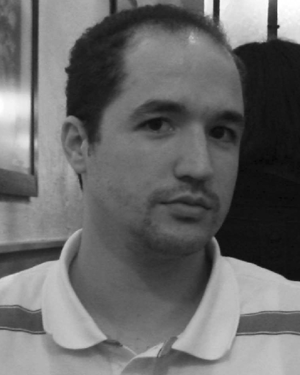 Tarik Yardibi合作论文数3
 John M Shea合作论文数University of Florida2peter stoica合作论文数1
 matteo sedehi合作论文数1Bingxian Liu合作论文数1
 Magnus Lundberg Nordenvaad合作论文数1
 Santiago, E.A.合作论文数Dept. of Electr. Eng., Univ. of Texas at Dallas;c1
 Chunhui Liu合作论文数Sch Elect Comp Energy Engn Tempe, Arizona State Univ1
 Hao He合作论文数Amazon Web Services1
 Zhaofu Chen合作论文数Electrical Engineering and Computer Science Department, Northwestern University1
 Kexin Zhao合作论文数Snap Inc.1M.L. Nordenvaad合作论文数1
 Duc Vu合作论文数1




