In today’s successful Learning Management System (LMS), gathering thousands of students, emergent collective dynamics drive innovative learning experiences where learners help each other in online forums. The benefits of those behaviors were theorized in Vygotsky’s socio-constructivism theory where he insists that the knowledge development of not so formal peer exchanges is beneficial to all participants. Observing and understanding how those dynamics occur could improve course design and help tutors intervene to sustain collective learning. But, although the scientific community acknowledges the importance of theses dynamics, few works have yet been able to grasp and display them in a format tailored to the Massive Open Online Courses (MOOCs)’ instructors. Indeed, only recently have researches been able to articulate the required continuous Natural Language Processing (NLP) and Social Network Analysis (SNA). In this research, we propose an innovative model to compute a collective activity indicator to answer the problem of detecting and visualizing the collective dynamics from the MOOCs’s forums interactions. We also present datasets collected from several LMSs and used to illustrate the portability, scalability, interactivity of our first visualizations. Our approach should help develop indicators and Learning Dashboard (LDB) of collective actions for MOOCs.
Socio-constructivism and connectivism theories pinpoint the importance of collaboration for learning. Nevertheless , the online social interactions underlying the collaboration processes are still not well understood. As a result, learning designers have difficulties creating effective collaborative activities in Massive Open On-line Courses (MOOCs). As for online learners, they are often isolated and require a lot of self-regulation to succeed. The research effort presented in this paper covers a review of visualization techniques supporting the online collaborative learning process. Our findings show that some visualizations have the potential to develop the learners' reflexivity. Therefore, we give an overview of collaboration importance and how it could be enhanced with such visualizations. Our goal is to identify a new approach to visualize learners' activities in MOOCs, while supporting collaboration and self-regulation.
Discussion and exchange among peers have being hailed as an essential part of learning since at least, Vygot-sky's socio-constructivist theory. There, learning is presented as a subtle and dynamical collective process. Hence, despite numerous efforts to understand how learners engage and maintain inspiring discussions, researchers continue to question how to effectively reinforce the collective actions. In Learning Management Systems (LMSs) they propose Learning Dashboards (LDBs) to learners, tutors, and managers to help them monitor various learning indicators. But only recently have they employed Natural Language Processings (NLPs) and Social Network Analysis (SNA) techniques to display temporal indicators incorporating the fo-rums' content analysis and the learners' behavioral patterns. In this study, we present our design efforts to model a scalable and portable indicator of collective actions. We aim to support tutors' monitoring of fo-rums' activities through explorable visualizations. We review previous researches about visual explorations of Forums' content and online collaboration's measures. We expose in progress visualizations built from three different datasets and propose directions towards further development of indicators to monitor collective actions.
In this paper we discuss the simulation of a learning network using NetLogo. The aim of the simulation is to study how different collaboration behaviours can influence the growth of collaboration in a learning network. We will use the simulation to test several hypotheses in order that we can design a "social search engine" for the learning network. The search engine should be designed in such a way that it brings together users who profit most from collaborating.
In this article we describe a system that matches learners with complementary content expertise in reaction to a learner-request for knowledge sharing. It works through the formation of ad hoc, transient communities, that exist for a limited period of time and stimulate learners socially to interact. The matchmaking system consists of a request module, a population module and a community module, all supported by a database that contains learning content, learner information and output of the system. The request module allows the learner to type in a request, the time span in which an answer should be provided and the content it is related to. The population module selects suitable learners to populate the community by determining their content competence, sharing competence, eligibility and availability. Modular Object-orientated Dynamic Learning Environment ( MOODLE) is used to host the community. A first experiment is briefly described that shows that content competence can be successfully determined using our method. Future experiments are discussed that aim at establishing the feasibility of the overall design.
Tutors have only limited time to support the learning process. In this paper, we introduce a model that helps answering the questions of students. The model invokes the knowledge and skills of fellow students by bringing them together based on the combination of question posed and their study progress and supports them with text fragments selected from the material studied. We will explain how we used LSA to select and support these peers; examine the calibration of the LSA-parameters and conclude with a small practical simulation to show that the results of our model are fit for use in experiments with students.
Learning in a so-called Learning Network is particularly attractive to self-directed learners, who themselves decide on their learning programme as well as the timing, pace and place of their studies. However, such learners may easily become isolated, which is detrimental to their studies. Furthermore, supporting them in their studies rapidly leads to staff overload. This paper discusses ad hoc transient communities as a means of tackling both problems. Such communities are well poised to enhance the sociability of a Learning Network and increase learning effectiveness.
Tutors have only limited time to support the learning process. In this paper, we introduce a model that helps answering the questions of students. The model invokes the knowledge and skills of fellow students by bringing them together based on the combination of question posed and their study progress and supports them with text fragments selected from the material studied. We will explain how we used LSA to select and support these peers; examine the calibration of the LSA-parameters and conclude with a small practical simulation to show that the results of our model are fit for use in experiments with students.
To enhance users' social embedding within Learning Networks, we propose to establish so called ad hoc transient communities. These communities serve a particular shared goal, exist for a limited period of time, and operate according to specific social exchange policies that foster knowledge sharing. This paper introduces the concept behind this type of communities and describes the conditions and policies needed to encourage knowledge sharing.
Tutors have only limited time to support the learning process. In this paper, we introduced a model that helps answer the questions of students. The model invoked the knowledge and skills of fellow students, who jointly formed an ad hoc, transient community. The paper situated the model within the context of a Learning Network, a self-organised, distributed system, designed to facilitate lifelong learning in a particular knowledge domain. We discussed the design of the model and explained how we selected and supported capable peers. Finally, we examined the calibration of the model and a simulation, which was intended to verify if the model is fit for use in experiments with students. The results indicate that, indeed, it is possible to identify and support capable peers efficiently and effectively.
Tutors have only limited time to support the learning process. In this paper, we introduced a model that helps answer the questions of students. The model invoked the knowledge and skills of fellow students, who jointly formed an ad hoc, transient community. The paper situated the model within the context of a Learning Network, a self-organised, distributed system, designed to facilitate lifelong learning in a particular knowledge domain. We discussed the design of the model and explained how we selected and supported capable peers. Finally, we examined the calibration of the model and a simulation, which was intended to verify if the model is fit for use in experiments with students. The results indicate that, indeed, it is possible to identify and support capable peers efficiently and effectively.
 Peter Sloep合作论文数Centre for Learning Sciences and Technologies13
 Liesbeth Kester合作论文数Open University of the Netherlands12
 Peter Van Rosmalen合作论文数Open University of the Netherlands12
 Francis Brouns合作论文数Open University of the Netherlands12
 Rob Koper合作论文数Educational Technology Expertise Centre, Open University of the Netherlands8Adriana J. Berlanga合作论文数The Centre for Learning Sciences and Technologies, Open University5
 Madeth May合作论文数LIESP Laboratory3
 Sebastien Iksal合作论文数Department of Artificial;Cognitive Sciences;ENST Bretagne - Technopôle de Brest Iroise;Department of Artificial|Cognitive Sciences, ENST Bretagne - Technopôle de Brest Iroise3
 Souleymane Oumtanaga合作论文数2
 Judith Schoonenboom合作论文数University of Amsterdam2
 Peter Foltz合作论文数Institute of Cognitive Science, University of Colorado Boulder1
 Hendrik Drachsler合作论文数Center for Learning Sciences and Technologies, Open University of the Netherlands1
 Marco Kalz合作论文数Open University of the Netherlands1
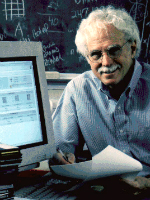 Thomas K. Landauer合作论文数Department of Psychology, University of Colorado;Pearson Education1Jan Van Bruggen合作论文数Open University of the Netherlands1Sandra Jhean-Larose合作论文数Équipe CHArt: Cognition Humaine et Artificielle, EPHE-CNRS1
 Fridolin Wild合作论文数Oxford Brookes University1
 Guy Denhiere合作论文数LPC1
 Herbert Baier合作论文数1Christina Stahl合作论文数1Cédrick Bellissens合作论文数1Arlindo Oliveira合作论文数Department of Computer Science and Engineering of Instituto Superior Tecnico (IST), the school of Engineering of Lisbon Technical University.1




