This paper discusses the role of makerspaces in supporting circular entrepreneurship and their potential contribution to urban regeneration. Urban regeneration addresses urban challenges through sustainable and inclusive transformations. Circular makerspaces can support this direction by providing resources for makers and promoting a circular economy, while potentially acting as hubs for circular social innovation. However, to entrepreneurial mindsets towards a circular economy. This study uses a mixed-method approach, including action research, surveys, observations and case studies, to analyse the design and implementation of a circular accelerator programme in makerspaces across seven cities in Europe and Turkiye, supported with data gathered from 105 makers and 40 projects in circular entrepreneurship. The research suggests potential benefits such as the improvement of entrepreneurial skills, environmental impact awareness, and the enhanced network and collaborations, fostering further opportunities for the development of circular economy. The paper suggests that acceleration programmes via makerspaces focused on circular economy can have multiple benefits for both the makers and their urban context. These findings could support administrators, municipalities, urban planners and policy makers to examine additional ways to support urban regeneration and sustainability.
This research paper aims to co-design a theoretical framework and methodological guidelines to monitor the performance, outcomes, and impact of Citizen Science projects. Hence, the proposed methodology com- bines the previous research efforts on the engagement of external stakeholders into a composite monitoring tool, which allows measuring and comparing CS project progress towards defined objectives. The develop- ment of methodology adopted a pragmatic mixed-method research design. Firstly, analysis of the theoretical sources and available monitoring tools provided the basis for a conceptual framework and identification of measurement indicators. The rationale of the conceptual framework was based on the co-creation workshop and stakeholders` interviews. In addition, the aggregation of indicators during the expert Focus group re- search resulted in a meaningful design of the composite CS Performance Index. The designed methodology is a part of the three-year Horizon 2020 “Science with and for Society” project INCENTIVE (Grant Agreement No. 101005330) that brings on board four Research Performing and Funding Organizations: the University of Twente, the Autonomous University of Barcelona, the Aristotle University of Thessaloniki and the Vilnius Gedi- minas Technical University. Methodological guidelines set the structure for applying the monitoring in four national CS Hubs and support their coordination. In particular, the values of the indicators could be compared with the targets set, with the respective values of other Citizen Science Hubs, or to worldwide trends.
Smart specialization has emerged as a vital strategy for driving responsible research and innovation across Europe. Despite its growing importance, the integration of web-based platforms to support decision-making in policy contexts remains underexplored. This study addresses this gap by examining how such platforms can enhance stakeholder engagement and decision-making processes in regional innovation policies. Using structural equation modeling and survey data from 686 respondents across four European countries (United Kingdom/Scotland, Greece, the Netherlands and Spain), we uncover that the presence of both experienced and novice stakeholders does facilitate innovation policy effectiveness. Our findings reveal that stakeholders who find web-based applications valuable for smart specialization tend to have a more favorable view of the decision-making processes and express higher satisfaction with the consensus achieved. This research highlights that web-based platforms can effectively support stakeholder engagement regardless of policy expertise levels, offering significant benefits for regional policymaking. Based on our research, integrating web-based applications into smart specialization strategies will enhance decision-making, support diverse stakeholders and improve overall policy effectiveness.
This study presents a valuable dataset supporting regional research and innovation systems in four European regions: Vestland (Norway), Kriti (Greece), Galicia (Spain), and Overijssel (Netherlands). It focuses on understanding citizens' perceptions of research and innovation dilemmas within these regions. The dataset comprises 14 questions aligned with the Responsible Research and Innovation framework, evaluating stakeholders' techno-moral attitudes towards technological change and socio-economic outcomes. A survey conducted between April and July 2020 gathered responses from 7,729 individuals, ensuring broad age and gender representation. This dataset is highly valuable for regional policymaking and policymakers' engagement strategies, enhancing equity and effectiveness in addressing grand societal challenges. Research outcomes reveal citizens' aspirations for developmental trajectories prioritizing quality-of-life, renewable energy, and support for innovative SMEs in their regions. The study contributes to existing research by highlighting limited citizen trust and expectations of effective government actions in addressing societal challenges at the regional level.
The current excel file constitutes the INCENTIVE Reporting Database, meaning a repository of the data that were accumulated in WP4 (described within Deliverable 4.1). The results presented here are the main input for the elaboration of Deliverable 4.2 and Deliverable 4.3.
The aim of this chapter is to review how citizen science programs can contribute to each SDG, supported also by successful cases. Prerequisites have been the inclusion of at least one case from all five global areas and the field of interest is well spread through various study areas while the cases are only RFO or RPO projects. The design and implementation of this research is structured as follows. Each SDG is analyzed in a separate chapter. To begin with, the main goals of the relevant SDG are mentioned. The chapter continues with the relevance of citizen science projects to the respective goal. Ultimately, an example on how a citizen science project can make the goal effective is chosen. The case studies are selected based on their location, the timeframe of the project, and are structured beginning with the people or institutions involved, continuing with the project description and concluding with the project's contribution to the relevant SDG. The chapter then proceeds to a comparative case study analysis, with results and discussion in order to extract conclusions.
This dataset contains the results of the monitoring activities that were conducted during the RRI2SCALE project to measure their performance and impact. More Info: Throughout the project, regional authorities and other project partners closely monitored an indicators list and collected the necessary data. Two key data collection methods employed were the following: (i) Regional authorities compiled short reports based on semi-structured templates every four months; and (ii) Feedback collection from participants in key project activities, such as the multistakeholder dialogues and the co-creation workshop. The current dataset provides all the information collected through the above methods.
The 15-minute-city concept represents an increasingly popular urban policymaking and planning paradigm that seeks to shift attention to the neighborhood as a “place” rather merely a spatial and functional planning unit. The core premise of the concept is that critical urban services and amenities should be reachable within 15 min of walking or cycling from a residence. The urban-planning principles that enable the realization of the 15-minute city variably embody planning in mixed-use neighborhood units, proximity-based planning, planning for active transport, citizen participation in planning, and innovation and intelligence-driven planning. We revisit these urban-planning premises in the light of emerging social, physical, and structural developments through 2030, with a focus on European cases. The findings provide important additions and recommendations to the urban-planning principles of 15-minute cities along the themes of proximity-based planning, the use of land and urban form, urban governance and citizen participation, and inclusive digitalization. The paper moves the discussion on the 15-minute city forward and will be helpful for urban planners, policymakers, and scholars seeking to envision and create a more sustainable, inclusive, and vibrant future in cities.
The maker movement is rapidly growing and evolving into a living instrument for urban planning and circular economy. At its core, collaborative spaces that offer a variety of services (i.e., networking, knowledge transfer, training, etc.) and equipment, are making their appearance, with several typologies such as fablabs, makerspaces, or techshops. These spaces are mainly focused on stimulating creativity and enabling transformation of ideas into actual products and solutions, while actively supporting social collaboration and circular innovation. Nevertheless, in most cases, innovation support is limited to project development, without being followed by support on commercialisation, access to funding, and in general the stimulation of entrepreneurship, leaving high market potential untapped. This study explores the design of a circular maker entrepreneurship programme that is directly executed from within a makerspace to provide training and mentoring on fundamental business aspects and entrepreneurial skills, while supporting access to funding and market-driven networking. The programme introduced is currently being deployed in seven makerspaces, in six EU countries, delivering some first insights on the sustainability of this endeavour, including key challenges, limitations and mitigation measures.
This dataset contains the results of a short survey to assess the realisation probability and the desirability of alternative techno-moral scenarios in the domains of intelligent cities, intelligent transport, and intelligent energy. More info: RRRI2SCALE partners designed and implemented a validation process to assess whether the six techno-moral scenarios developed previously (two per domain, i.e., intelligent cities, intelligent transport and intelligent energy) meet high-quality scenario criteria (are probable, desirable, different from one another, complete and internally consistent). More specifically, for the deliberation with the citizens, videos presenting the scenarios were created and uploaded on the RRI2SCALE website and social media (available here: https://rri2scale.eu/index.php/regional-validation-of-scenarios/). Citizens from the four regions (i.e., Kriti, Galicia, Overijssel and Vestland) were prompted to participate in a short survey, assigning scores to scenarios’ desirability and probability. The dataset uploaded includes all the replies received. Facebook was the primary platform selected to facilitate and promote the scenario deliberation process. According to statistics provided by the Facebook “Ads Manager” tool, the RRI2SCALE campaign reached more than 31,000 people. Almost half of them (about 13,000) watched the videos, more than 2,000 people clicked on the survey link, and finally, we collected 279 valid survey replies from citizens of the four regions. Among the people who clicked on the survey link, 60% were male, while most (about 62%) fall within the age of 45-64. Among 279 valid replies received, 114 replies were received from the citizens of Galicia, 93 from Kriti, 37 from Vestland and 35 from Overijssel. From another perspective, among the 279 valid replies received, 92 replies refer to the Intelligent Cities scenarios, 104 replies refer to the Intelligent Transport scenarios, and 83 replies refer to the Intelligent Energy scenarios.
This dataset contains the demographic information and the replies that field experts provided in a Delphi survey performed by the RRI2SCALE project to identify future developments in the domains of intelligent cities, intelligent transport, and intelligent energy. More info: In an age of rapid changes in demographics, businesses, technology and lifestyles, policymakers operating at territorial (regional, local) level are challenged to design policies with a forward-looking perspective. Yet, the future is uncertain and most often unpredictable and hence, they strive to predict future developments and their economic and policy implications. Since the early 1960s, several technology-forecasting methods have been developed. RRI2SCALE performed a Delphi survey aiming to forecast future developments in the domains of intelligent cities, intelligent transport, and intelligent energy. In particular, we first conducted a literature review to develop 38 survey statements that reflect on the probability of appearance of potential drivers (i.e., developments that causes change, affect, or shape the future), trends (e.g., notable characteristics of a phenomenon), and impacts on the domains of focus. Then, 120 experts from across Europe in the fields of intelligent cities, transport, and energy, as well as territorial Responsible Research and Innovation (RRI) were recruited to participate in a Delphi survey. As typical for this type of study, the survey took place in two rounds, enabling participants to revise their responses in the light of other participants’ views. In the second round of the study, 88 experts participated. In the first round of the Delphi survey, 954 experts were contacted, and 120 valid replies were received (13.5% response rate). Almost half of the 120 panel participants self-declared holding “High” level of expertise in the territorial aspects of digitalisation (44%). Similarly, 41% of them were self-reported as experts in RRI, 33% as experts in intelligent cities, 27% in intelligent transport and 17% in intelligent energy. Besides, most participants declared living in Europe. Indicatively, 18% of them resided in Greece, 8% in the United Kingdom, 8% in Italy and 7% in Spain. Finally, 46% of them participated in the survey as members of academia or the research society, 22% of them as members of governmental bodies, and 9% of them as business experts. The dataset uploaded includes all the replies received.
The advancement of the internet in recent years is undeniable, as well as the use of social networks impact on consumer behavior. Thus, this article aims to analyze some publications of academic papers that relate consumer behavior to social networks, published in the main Brazilian journals, from 2004 to 2017, at AnAPAD. To meet this objective, a bibliographic research was conducted with a quantitative approach in which it was possible to select articles related to the topic. The data collection was done through 90 works found, of which only 9 are related to the theme, which represents 10% of the total. For the analysis of the articles, we used a form with 16 variables ranging from the year of publication, authoring number, research methodology to the presence of words in the title and in the keywords. The results indicate that the most published anal was in the EnPAD with 66,6%, that São Paulo (33,3%) was the state that had the largest publications, the majority (88,8%) of articles have multiple authorship, which 55,5% of the articles used quantitative descriptive research with secondary data and the case study as a research technique. The most commonly used keywords were consumer behavior as well as titles. Finally, it was identified that authors are not predominant on the subject.
This paper presents outcomes from the cluster workshop of the Horizon2020 SUNRISE, MUV, Cities4People and Metamorphosis projects, and specifically the workshop session for the use of co-creation tools and techniques across the four Horizon2020 projects. The workshop was organised by CIVITAS SATELLITE in cooperation with the Innovation and Networks Executive Agency of the European Commission on the 19th of November 2019 at the premises of INEA in Brussels. Several different participation techniques & tools are being used by the projects, including co-creation workshops, serious games, interviews, simple questionnaires at the place of the intervention, field trips, school scans and thematic walks/scans, cultural probes, focus groups, etc.. In general lines, the projects have opted for practical, hands-on tools rather than online and complicated tools. A series of key learnings about the practical use of those tools emerged; co-creation activities should try to incorporate diverse neighbourhoods and settings; it is preferable that only one challenge is addressed at a time; evidence is an excellent prompt for discussion; discussion topics should be important to the participants, rather than the organisers; silent observation helps achieve a deeper understanding; and methods and tools that involve the physical presence of the users at the place of intervention are most effective.
In recent years, the European Union has been promoting social innovation and new business models to support the long-term transition towards low-emission, sustainable urban development. To this end, a demand-driven approach is seen as key to enhancing the wealth of sustainable urban planning and mobility solutions, increasing their relevance and responsiveness to real life challenges, saving public Research & Development investment resources and most importantly, nurturing the uptake of those solutions by their end users. In addition, cities are seen as ideal places of experimentation because they accumulate a wealth of activities and stakeholders, as well as the complex networks and transactions among those. This paper presents results from the Horizon2020 Research and Innovation Project “Cities-4-People”, financed under the ‘Smart, green and integrated transport’ part of the Horizon2020 Work Programme of 2016 - 2017, topic “New ways of supporting development and implementation of neighbourhood-level and urban-district-level transport innovations” (MG-4.5-2016). More particularly, in this paper we present the methodology, results and conclusions for the co-creation of sustainable urban planning and mobility solutions in the city of Trikala. This phase of the project took place during the period April 2018 – September 2018 and was administered by the Trikala project team of the Cities-4-People consortium (Q-Plan International and E-Trikala).
The “smart city” has risen to global prominence over the past two decades as an urban planning and development strategy. As a broad but contested toolkit of technological services and policy interventions aimed at improving the efficacy and efficiency of urban systems, the “smart city” is subject to several pressing critiques. This paper acknowledges these concerns, but recognizes the potential of “urban intelligence” to enhance the resiliency of metropolitan areas. As such, we focus on an under-researched dimension of smart city urbanism: its application in peripheral urban areas. The paper introduces a threefold typology of: (a) geographic (spatial); (b) hard (material); and (c) soft (social) urban peripherality. Second, it reviews the concept of urban resilience and considers how its central characteristics can inform the objectives and implementation of “smart city” infrastructures and planning. Six European smart city plans are assessed via a qualitative content analysis, to identify the target of smart city actions; the characteristics of urban resilience mobilized; and the spatial focus of planned interventions. The comparative analysis reveals a variegated set of smart-city approaches. Notably, “smart” actions aimed at enhancing social innovation are the most common type of intervention, while overall there remains a strong tendency for smart urbanism to focus on the urban core. We conclude by calling for a research agenda addressing smartness in, of, and for, peripheral urban spaces and communities.
 Christos Politis合作论文数9
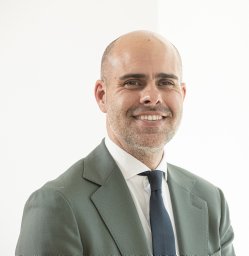 Luca Mora合作论文数Academy of Architecture and Urban Studies, Tallinn University of Technology5
 Artemis Psaltoglou合作论文数Corresponding author.4E. Karachaliou合作论文数3
 Julie Metta合作论文数Corresponding author.2
 Anastasia Panori合作论文数Corresponding author.2
 Katharina Fellnhofer合作论文数Department of Sociology, Harvard University2
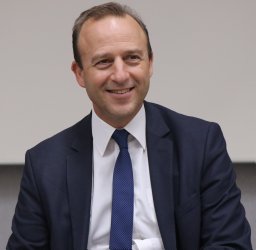 Efstratios Stylianidis合作论文数Dept . of Cadastre;Aristotle University of Thessaloniki;Dept . of Cadastre, Aristotle University of Thessaloniki2
 Alasdair Reid合作论文数Stop TB Department, WHO2
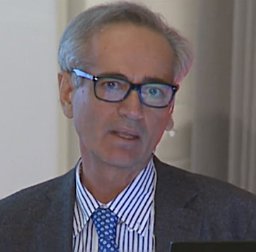 Nicos Komninos合作论文数URENIO Research, Aristotle University of Thessaloniki2Meia Wippoo合作论文数1Xavier Leal合作论文数1Nikolaos Tokas合作论文数1Isidoros Passas合作论文数1
 Alexandros Skondras合作论文数1Elena Hörndler合作论文数1Toni Eiser合作论文数1Thomas Bakratsas合作论文数1Gabriella Quaranta合作论文数1Kevin Trendafili合作论文数1
 Ioannis Tavantzis合作论文数1
 Evangelos Genitsaris合作论文数School of Civil Engineering, Aristotle University of Thessaloniki1
 Paraskevi Tarani合作论文数Aristotle Univ Thessaloniki, Aristotle Univ Campus1
 Dimitrios Nalmpantis合作论文数Sch Civil Engn, Aristotle Univ Thessaloniki1Monika Maciuliene合作论文数Fac Social Sci Arts & Humanities, Kaunas Univ Technol1
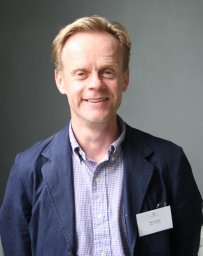 Mark Deakin合作论文数Liver Unit, Queen Elizabeth Hospital1
 Georgia Pozoukidou合作论文数1
 Aelita Skarzauskiene合作论文数Mykolas Romeris University1
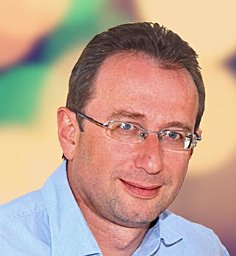 Panagiotis Tsarchopoulos合作论文数Embedded Systems Unit, European Commission1
 Aristotelis Naniopoulos合作论文数1
 Isabel Froes合作论文数IT University of Copenhagen1
 Jean-Paul Addie合作论文数Department of Geography;York University;Department of Geography, York University1
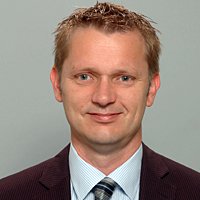 René Wintjes合作论文数University of Maastricht1
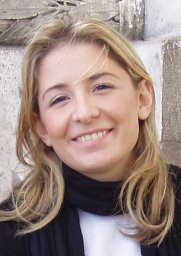 Christina Kakderi合作论文数University of Thessaloniki;Spatial Development Research Unit;Aristotle University of Thessaloniki;University of Thessaloniki, Aristotle University of Thessaloniki1
 Greta Nasi合作论文数1
 Stefano De Falco合作论文数1
 Elena Sefertzi合作论文数Dr of Sociology, Ag. Anastasias 8, 54634 Thessaloniki, Greece1




