Though Darwin and his copious work remain the focus of much of the history of biology even into the twenty-first century, the development of evolutionary biology throughout the twentieth century has been the subject of a great deal of significant historical analysis. As the scholarship on topics such as selection, speciation, or human evolution indicates the history of ideas is alive and well when it comes to evolutionary biology. Histories of evolution have not ignored wider social and cultural contexts either, as accounts of debates over sexual selection, group selection, and altruism, creationism, and sociobiology make clear.
The Handbook of the Historiography of Biology is intended to foster a conversation about the historiographic traditions that have informed the history of biology. Explicit historiographical reflections by leading scholars in the history of biology will highlight important trends and innovations in the continuous stream of original research that has created this field. This will make it easier for new scholars to join the field and make their own original contributions.
W.D. Hamilton was most known for his work on two topics: social evolution and parasites. Although at first glance these seem to be disparate interests, they share many attributes and have logical connections within evolutionary biology. Nevertheless, Hamilton’s contributions in these areas met with very different receptions, with his place in the field of social evolution assured, but his work on the role of parasites perceived as more specialized. We take an historical approach to examine the reasons for this difference.
W.D. Hamilton was most known for his work on two topics: social evolution and parasites. Although at first glance these seem to be disparate interests, they share many attributes and have logical connections within evolutionary biology. Nevertheless, Hamilton's contributions in these areas met with very different receptions, with his place in the field of social evolution assured, but his work on the role of parasites perceived as more specialized. We take an historical approach to examine the reasons for this difference.
Multicellularity was one of the most significant innovations in the history of life, but its initial evolution remains poorly understood. Using experimental evolution, we show that key steps in this transition could have occurred quickly. We subjected the unicellular yeast Saccharomyces cerevisiae to an environment in which we expected multicellularity to be adaptive. We observed the rapid evolution of clustering genotypes that display a novel multicellular life history characterized by reproduction via multicellular propagules, a juvenile phase, and determinate growth. The multicellular clusters are uniclonal, minimizing within-cluster genetic conflicts of interest. Simple among-cell division of labor rapidly evolved. Early multicellular strains were composed of physiologically similar cells, but these subsequently evolved higher rates of programmed cell death (apoptosis), an adaptation that increases propagule production. These results show that key aspects of multicellular complexity, a subject of central importance to biology, can readily evolve from unicellular eukaryotes.
Previous articleNext article No AccessBook ReviewsRichard York;, Brett Clark. The Science and Humanism of Stephen Jay Gould. 223 pp., index. New York: Monthly Review Press, 2011. $16.95 (paper).Mark E. BorrelloMark E. Borrello Search for more articles by this author PDFPDF PLUSFull Text Add to favoritesDownload CitationTrack CitationsPermissionsReprints Share onFacebookTwitterLinkedInRedditEmail SectionsMoreDetailsFiguresReferencesCited by Isis Volume 103, Number 1March 2012 Publication of the History of Science Society Article DOIhttps://doi.org/10.1086/666452 Views: 17Total views on this site © 2012 by The History of Science Society. All rights reserved.PDF download Crossref reports no articles citing this article.
Previous articleNext article No AccessBook ReviewsJan Sapp. The New Foundations of Evolution: On the Tree of Life. xxii + 425 pp., illus., bibl., index. New York: Oxford University Press, 2009. $39.95 (paper).Mark E. BorrelloMark E. Borrello Search for more articles by this author PDFPDF PLUSFull Text Add to favoritesDownload CitationTrack CitationsPermissionsReprints Share onFacebookTwitterLinkedInRedditEmail SectionsMoreDetailsFiguresReferencesCited by Isis Volume 102, Number 1March 2011 Publication of the History of Science Society Article DOIhttps://doi.org/10.1086/660220 Views: 40Total views on this site © 2011 by The History of Science Society. All rights reserved.PDF download Crossref reports no articles citing this article.
Much of the history of the evolutionary debate since Darwin has focused on the level at which natural selection occurs. Most biologists acknowledge multiple levels of selection - from the gene, the trait, and the organism, to the family, the group, and the species. However, it is the debate about group selection that Mark E. Borrello focuses on in Evolutionary Restraints. Tracing the history of biological attempts to determine whether selection could lead to the evolution of fitter groups, Borrello takes as his focus the British naturalist V. C. Wynne-Edwards, who proposed that animals could regulate their own population levels and thereby avoid overexploitation of their food and other resources. By the mid-twentieth century, Wynne-Edwards became the primary advocate for group selection theory and precipitated a debate that engaged the most significant evolutionary biologists, including Ernst Mayr, John Maynard Smith, G. C. Williams, and Richard Dawkins. The resultant interpretations and arguments bled out into broader conversations about population regulation, environmental crises, and the evolution of human and animal social behavior. Evolutionary Restraints illuminates both the process of science and the role of controversy in the process. From its origins in Darwin's own thinking, this debate, Borrello reminds us, remains relevant and alive to this day.
The purpose of this paper is to explore the relationship between evolutionary theory and ethology in the work of Konrad Lorenz, Niko Tinbergen and VC Wynne-Edwards, the farmer, hunter, and census taker of the title respectively I am especially interested in the idea of the ethologists Lorenz and Tinbergen that animal behavior and human behavior were equally appropriated subjects of biological analysis Their approach is contrasted with Wynne-Edwards's group selective account of the evolution of social behavior. Finally, I argue that Wynne-Edwards's dogged commitment to group selection theory helped create the theoretical space within which subsequent researchers could develop more careful analyses.
Great is the power of steady misrepresentation; but the history of science shows that fortunately this power does not long endure. - Darwin, On the Origin of Species A false statement, backed by great prestige, propagates exponentially at second and third hand. - Wright, Genie and Organismic Selection, Evolution INTRODUCTION In the above quotes, both Charles Darwin and Sewall Wright bemoan the power and persistence of misinterpretation. In both cases diese scientists were concerned with the treatment of their theories by the broader scientific community and die lay pubUc. Separated by more than a century, these thoughts provide a background for the discussion of the theory of group selection as it developed in die mid- to latetwentieth century in the work of the English ecologist Vero Copner Wynne-Edwards. In this chapter I examine the ways that the work of Theodosius Dobzhansky and SewaU Wright influenced Wynne-Edwards. It is known to biologists and historians alike that Wynne-Edwards developed a dieory of group selection in the postsynthesis period that generated a heated debate. What is not so known is diat Wynne-Edwards was consciously constructing his theory in a manner he thought consistent with Wright and Dobzhansky. Indeed, Wynne-Edwards conceived of his own work as an ecological naturalist's verification of the models of Wright, consistent with the fieldwork of Dobzhansky. Although the hardened form of the modern synthesis may have ultimately focused research along particular individuafist Unes, this was not the only interpretation of the canonical works that constituted the synthesis. Wynne-Edwards is almost universally presented as an in evolutionary studies, as either a misguided simpleton or an outright crank. Nevertheless, WynneEdwards saw himself as part of a natural continuation of the evolutionary synthesis, and he presented his work Ui ways that stressed his association with the architects of the synthesis, particularly Theodosius Dobzhansky and SewaU Wright. These associations were more than simply rhetorical. Wynne-Edwards derived key ideas and practices from the architects. This association is far more Ultimate and extensive than the secondary literature leads us to assume. Analysis of this association raises important questions about notions like insider and outsider or continuity versus breaks in the synthesis historiography. BIOGRAPHY Vero Copner Wynne-Edwards was born in 1906 and later attended Leeds Grammar and Rugby Schools where he developed his early interest in astronomy and natural history. While at Rugby, the young Wynne-Edwards was much impressed by some visiting lecturers, including JuUan Huxley. Wynne-Edwards noted in his diary, Huxley was one visitor who lectured awfully well (1985, p. 488). Wynne-Edwards left Rugby in 1924 with hopes of Himalayan expeditions studying alpine fauna and flora. The headmaster and his father, however, had, perhaps not surprisingly, more practical plans. The headmaster suggested die study of medicine so diat Wynne could act as an expeditionary doctor, and his father suggested further formal study. In die end, Wynne entered New College, Oxford to read zoology in October of 1924 with Julian Huxley as his tutor. This relationship was to last only a year as Huxley accepted die chair of Zoology at King's College London before the end of 1925. Huxley's successor was Charles Elton (a former student of Huxley himself). According to Wynne-Edwards, Elton's influence was to be much more specific and enduring (1985, p. 490). A pioneer of animal ecology and the founder of the Bureau of Animal Population at Oxford University in 1932, Elton is credited as having Ut, after their first tutorial, an interest in population ecology that burned for the rest of Wynne-Edwards's life. Much later, Elton became one of many biologists who dismissed Wynne-Edwards's theories. Wynne-Edwards graduated with first-class honors in zoology in 1927 and became Senior Scholar of New College for 1927-1929. …
 Thomas Suddendorf合作论文数School of Psychology, University of Queensland2
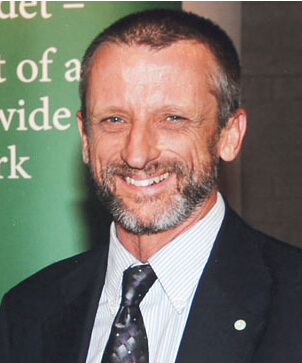 Colin Allen合作论文数Department of Philosophy, University of California, Santa Barbara2
 Gregory Radick合作论文数School of Philosophy, University of Leeds2
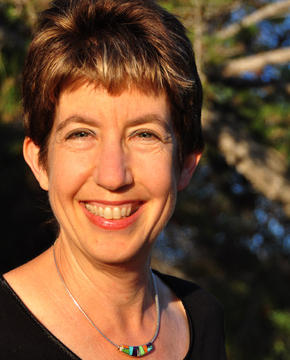 Marlene Zuk合作论文数College of Biological Sciences, University of Minnesota2
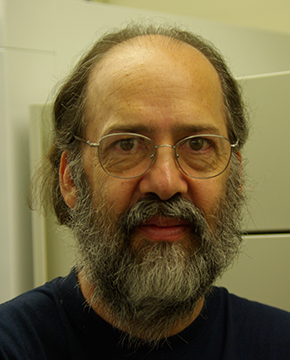 R. Ford Denison合作论文数College of Biological Sciences, University of Minnesota1
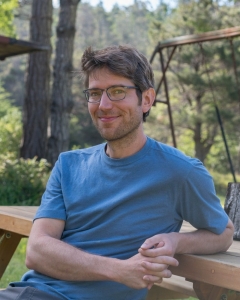 William C. Ratcliff合作论文数School of Biological Sciences, College of Sciences, Georgia Institute of Technology1
 Oren Harman合作论文数Bar-Ilan University1
 Michael Travisano合作论文数Department of Biology;University of Houston;Department of Biology, University of Houston1
 Michael R. Dietrich合作论文数Department of History and Philosophy of Science, The Dietrich School of Arts & Sciences, University of Pittsburgh1




