Artificial Intelligence (AI) is increasingly used in critical applications. Thus, the need for dependable AI systems is rapidly growing. In 2018, the European Commission appointed experts to a High-Level Expert Group on AI (AI-HLEG). AI- HLEG defined Trustworthy AI as 1) lawful, 2) ethical, and 3) robust and specified seven corresponding key requirements. To help development organizations, AI-HLEG recently published the Assessment List for Trustworthy AI (ALTAI). We present an illustrative case study from applying ALTAI to an ongoing development project of an Advanced Driver-Assistance System (ADAS) that relies on Machine Learning (ML). Our experience shows that ALTAI is largely applicable to ADAS development, but specific parts related to human agency and transparency can be disregarded. Moreover, bigger questions related to societal and environmental impact cannot be tackled by an ADAS supplier in isolation. We present how we plan to develop the ADAS to ensure ALTAI-compliance. Finally, we provide three recommendations for the next revision of ALTAI, i.e., life-cycle variants, domainspecific adaptations, and removed redundancy.
With the growing capabilities of autonomous vehicles, there is a higher demand for sophisticated and pragmatic quality assurance approaches for machine learning-enabled systems in the automotive AI context. The use of simulation-based prototyping platforms provides the possibility for early-stage testing, enabling inexpensive testing and the ability to capture critical corner-case test scenarios. Simulation-based testing properly complements conventional on-road testing. However, due to the large space of test input parameters in these systems, the efficient generation of effective test scenarios leading to the unveiling of failures is a challenge. This paper presents a study on testing pedestrian detection and emergency braking system of the Baidu Apollo autonomous driving platform within the SVL simulator. We propose an evolutionary automated test generation technique that generates failure-revealing scenarios for Apollo in the SVL environment. Our approach models the input space using a generic and flexible data structure and benefits a multi-criteria safety-based heuristic for the objective function targeted for optimization. This paper presents the results of our proposed test generation technique in the 2021 IEEE Autonomous Driving AI Test Challenge. In order to demonstrate the efficiency and effectiveness of our approach, we also report the results from a baseline random generation technique. Our evaluation shows that the proposed evolutionary test case generator is more effective at generating failure-revealing test cases and provides higher diversity between the generated failures than the random baseline.
The increasing levels of software- and data-intensive driving automation call for an evolution of automotive soft-ware testing. As a recommended practice of the Verification and Validation (V&V) process of ISO/PAS 21448, a candidate standard for safety of the intended functionality for road vehicles, simulation-based testing has the potential to reduce both risks and costs. There is a growing body of research on devising test automation techniques using simulators for Advanced Driver-Assistance Systems (ADAS). However, how similar are the results if the same test scenarios are executed in different simulators? We conduct a replication study of applying a Search-Based Software Testing (SBST) solution to a real-world ADAS (PeVi, a pedestrian vision detection system) using two different commercial simulators, namely, TASS/Siemens PreScan and ESI Pro-SiVIC. Based on a minimalistic scene, we compare critical test scenarios generated using our SBST solution in these two simulators. We show that SBST can be used to effectively generate critical test scenarios in both simulators, and the test results obtained from the two simulators can reveal several weaknesses of the ADAS under test. However, executing the same test scenarios in the two simulators leads to notable differences in the details of the test outputs, in particular, related to (1) safety violations revealed by tests, and (2) dynamics of cars and pedestrians. Based on our findings, we recommend future V&V plans to include multiple simulators to support robust simulation-based testing and to base test objectives on measures that are less dependant on the internals of the simulators.
Several areas have been improved with Deep Learning during the past years. For non-safety related products adoption of AI and ML is not an issue, whereas in safety critical applications, robustness of such approaches is still an issue. A common challenge for Deep Neural Networks (DNN) occur when exposed to out-of-distribution samples that are previously unseen, where DNNs can yield high confidence predictions despite no prior knowledge of the input. In this paper we analyse two supervisors on two well-known DNNs with varied setups of training and find that the outlier detection performance improves with the quality of the training procedure. We analyse the performance of the supervisor after each epoch during the training cycle, to investigate supervisor performance as the accuracy converges. Understanding the relationship between training results and supervisor performance is valuable to improve robustness of the model and indicates where more work has to be done to create generalized models for safety critical applications.
As Netscape co-founder Marc Andreessen famously remarked in 2011, software is eating the world -- becoming a pervasive invisible critical infrastructure. Data on the distribution of software use and development in society is scarce, but we compile results from two novel surveys to provide a fuller picture of the role software plays in the public and private sectors in Sweden, respectively. Three out of ten Swedish firms, across industry sectors, develop software in-house. The corresponding figure for Sweden's government agencies is four out of ten, i.e., the public sector should not be underestimated. The digitalization of society will continue, thus the demand for software developers will further increase. Many private firms report that the limited supply of software developers in Sweden is directly affecting their expansion plans. Based on our findings, we outline directions that need additional research to allow evidence-informed policy-making. We argue that such work should ideally be conducted by academic researchers and national statistics agencies in collaboration.
Mutation testing is the state-of-the-art technique for assessing the fault-detection capacity of a test suite. Unfortunately, mutation testing consumes enormous computing resources because it runs the whole test suite for each and every injected mutant. In this paper we explore fine-grained traceability links at method level (named focal methods), to reduce the execution time of mutation testing and to verify the quality of the test cases for each individual method, instead of the usually verified overall test suite quality. Validation of our approach on the open source Apache Ant project shows a speed-up of 573.5x for the mutants located in focal methods with a quality score of 80%.
Background: Mutation testing is the state-of-the-art technique for assessing the fault detection capacity of a test suite. Unfortunately, it is seldom applied in practice because it is computationally expensive. We witnessed 48 hours of mutation testing time on a test suite comprising 272 unit tests and 5,258 lines of test code for testing a project with 48,873 lines of production code. Aims: Therefore, researchers are currently investigating cloud solutions, hoping to achieve sufficient speed-up to allow for a complete mutation test run during the nightly build. Method: In this paper we evaluate mutation testing in the cloud against two industrial projects. Results: With our proof-of-concept, we achieved a speed-up between 12x and 12.7x on a cloud infrastructure with 16 nodes. This allowed to reduce the aforementioned 48 hours of mutation testing time to 3.7 hours. Conclusions: We make a detailed analysis of the delays induced by the distributed architecture, point out avenues for further optimisation and elaborate on the lessons learned for the mutation testing community. Most importantly, we learned that for optimal deployment in a cloud infrastructure, tasks should remain completely independent. Mutant optimisation techniques that violate this principle will benefit less from deploying in the cloud.
More than 90 % of all computers are embedded in different types of systems, for example mobile phones and industrial robots. Some of these systems are real-time systems; they have to produce their output within certain time constraints. They can also be safety critical; if something goes wrong, there is a risk that a great deal of damage is caused. Industrial Extended Automation System 800xA, developed by ABB, is a realtime control system intended for industrial use within a wide variety of applications where a certain focus on safety is required, for example power plants and oil platforms. The software is currently written in C and C++, languages that are not optimal from a safety point of view. In this master's thesis, it is investigated whether there are any plausible alternatives to using C/C++ for safety critical real-time systems. A number of requirements that programming languages used in this area have to fulfill are stated and it is evaluated if some candidate languages fulfill these requirements. The candidate languages, Java and Ada, are compared to C and C++. It is determined that the Java-to-C compiler LJRT (Lund Java-based Real Time) is a suitable alternative. The practical part of this thesis is concerned with the introduction of Java in 800xA. A module of the system is ported to Java and executed together with the original C/C++ solution. The functionality of the system is tested using a formal test suite and the performance and memory footprint of our solution is measured. The results show that it is possible to gradually introduce Java in 800xA using LJRT, which is the main contribution of this thesis. (Less)
 Sten Vercammen合作论文数University of Antwerp2
 Hamid Ebadi合作论文数Chalmers University of Technology2
 Serge Demeyer合作论文数Department of Computer Science, University of Antwerp2
 Olof Lennartsson合作论文数1Francois-Xavier Jegeden合作论文数1Elias Sonnsjö合作论文数1Linus Christensson合作论文数1Joshua Bronson合作论文数1Martin Karsberg合作论文数1Kasper Socha合作论文数RISE Res Inst Sweden1Fredrik Olsson合作论文数1
 Afonso Fontes合作论文数1
 Joakim Wernberg合作论文数Swedish Entrepreneurship Forum1Jens Henriksson合作论文数Semcon Sweden AB, Gothenburg, Sweden1
 Ulrik Franke合作论文数Royal Inst Technol, S-10044 Stockholm, Sweden1
 Martin Andersson合作论文数Lund University1
 Thomas Olsson合作论文数Tampere University of Technology Tampere1Mohammad Ghafari合作论文数1
 Mahshid Helali Moghadam合作论文数Dept. of Comput. Eng., Univ. of Kashan;c;Dept. of Comput. Eng., Univ. of Kashan1
 Christian Berger 0001合作论文数University of Gothenburg1
 Donghwan Shin合作论文数School of Computing, KAIST1
 Dominik Bork合作论文数1
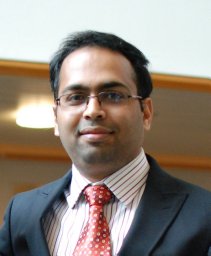 Sathyamoorthy Sankar R合作论文数Department of Microtechnology and Nanoscience, Chalmers University of Technology1
 Georg Grossmann合作论文数1
 Dalila Tamzalit合作论文数University of Nantes1
 Raja Ben Abdessalem合作论文数Société Nationale des Chemins de Fer Luxembourgeois1
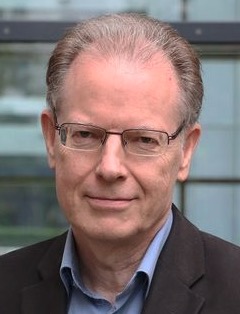 Colin Atkinson合作论文数School of Business Informatics and Mathematics, University of Mannheim1Camille Salinesi合作论文数Université Paris 1 - Sorbonne1
 Cristofer Englund合作论文数Intelligent Systems Laboratory, Halmstad University1
 Gregory Gay合作论文数University of Minnesota1
 Bernd Neumayr合作论文数Johannes Kepler University Linz1
 Lars Tornberg合作论文数Department of Microtechnology and Nanoscience;Chalmers University of Technology;Department of Microtechnology and Nanoscience, Chalmers University of Technology1
 Said Assar合作论文数Institut Telecom1
 Marten Van Sinderen合作论文数Electrical Engineering, Mathematics and Computer Science (EEMCS) of the University of Twente (UT)1
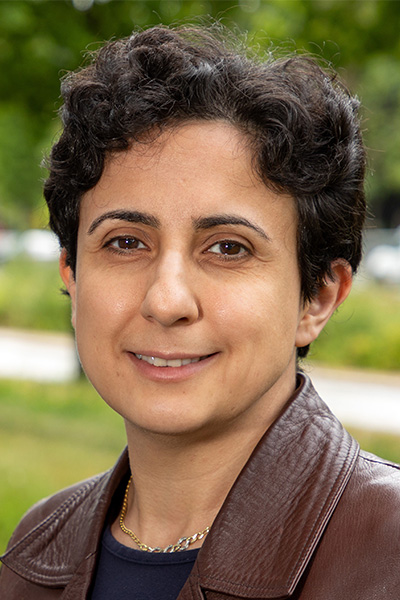 Shiva Nejati合作论文数School of Electrical Engineering and Computer Science, Faculty of Engineering, University of Ottawa1
 Sigrid Eldh合作论文数1
 Manfred A. Jeusfeld合作论文数Department of Information Technology, School of Informatics, University of Skövde1




