Vision is tuned to animals' ecologies, evolving in response to specific light environments and visual needs. Transitions to fossorial lifestyles impose strong selective pressures favoring adaptations for underground life, such as increased skull ossification and reduced eye protrusion. Fossoriality may simultaneously relax constraints on vision leading to diminished visual capabilities. Caecilians (Gymnophiona)-specialized, fossorial amphibians-possess reduced eyes covered by skin or bone. For years, these traits, along with the presence of a single photoreceptor expressing one functional opsin gene, have been interpreted as evidence of limited vision, including an inability to focus or perceive color. Our results challenge these assumptions: we identified the long-wavelength-sensitive (LWS) opsin gene in 13 species of caecilians spanning 8 of 10 recognized families. Molecular evidence indicates that LWS is intact and transcribed in the eye of at least one species (Caecilia orientalis). However, the specific photoreceptor type expressing LWS remains uncertain, as our survey of cone phototransduction genes revealed a mosaic of losses, and anatomical observations from five families did not conclusively identify cone-like cells, though they revealed highly organized retinae even in families with vestigial eyes. Altogether, our results suggest that vision in caecilians may be underestimated and the role of color perception in their ecology is possible.
Egg-laying amphibian females produce lipid-rich “milk” to feed offspring after hatching
When you take the time to observe another organism, there is a sort of gravity that can take hold, a mixture of curiosity and connection that expands and strengthens the more you interact with that organism. Yet, in research, a connection with one's study organism can, at times, feel countercultural. Study organisms are sometimes viewed more as tools to conveniently study biological questions. Here, we explicitly highlight the importance of organism-centered research not only in scientific discovery, but also in conservation and in the communication and perception of science.
Natural history museums are vital repositories of specimens, samples and data that inform about the natural world; this Formal Comment revisits a Perspective that advocated for the adoption of compassionate collection practices, querying whether it will ever be possible to completely do away with whole animal specimen collection.
Abstract Many tetrapods (four‐legged animals) have lost their limbs during their evolution. They move (locomote) by specific patterns of body muscle contraction and relaxation. Key Concepts Limbless tetrapod locomotion is based on lateral undulation, but has many variations according to taxon, ecology, and behavior. New techniques, such as 3‐D CT‐scanning, x‐ray cine, modeling and robotics have increased our understanding of the functional morphology of limbless locomotion. Gliding, flying, and swimming, as well as terrestrial locomotion, are part of the repertoire of various tetrapods. Study of the development and ecology of locomotor modes is providing new insights into the evolution of limbless locomotion. Robots that mimic limbless tetrapod locomotion are being developed for new medical and environmental uses.
Integrative ZoologyVolume 15, Issue 6 p. 624-625 LETTER TO THE EDITOR Darwinian principles of diversification and the current biodiversity crisis Marvalee H. WAKE, Corresponding Author mhwake@berkeley.edu Department of Integrative Biology and Museum of Vertebrate Zoology, University of California, Berkeley, California, USA Correspondence: Department of Integrative Biology, University of California, Berkeley, CA 94720-3140, USA. Email: mhwake@berkeley.eduSearch for more papers by this author Marvalee H. WAKE, Corresponding Author mhwake@berkeley.edu Department of Integrative Biology and Museum of Vertebrate Zoology, University of California, Berkeley, California, USA Correspondence: Department of Integrative Biology, University of California, Berkeley, CA 94720-3140, USA. Email: mhwake@berkeley.eduSearch for more papers by this author First published: 16 April 2020 https://doi.org/10.1111/1749-4877.12445Read the full textAboutPDF ToolsRequest permissionExport citationAdd to favoritesTrack citation ShareShare Give accessShare full text accessShare full-text accessPlease review our Terms and Conditions of Use and check box below to share full-text version of article.I have read and accept the Wiley Online Library Terms and Conditions of UseShareable LinkUse the link below to share a full-text version of this article with your friends and colleagues. Learn more.Copy URL Share a linkShare onEmailFacebookTwitterLinked InRedditWechat No abstract is available for this article. Volume15, Issue6November 2020Pages 624-625 RelatedInformation
We recognize a frog largely because of its shape—short body, long legs, and absence of a tail. These features are modifications of the “vertebrate body plan,” a head, a body, four appendages, and a tail. However, evolving lineages of vertebrates have modified that theme in incredibly diverse ways. Research by Senevirathne et al. (1) shows that there are exciting ways to explore the origin of vertebrate novelties. The features that characterize vertebrates are innovations, new structures. The head is “new,” a product of the inception of neural crest cells streaming into the “head” region and forming new structures (e.g., jaws, gill bars, teeth, and the like) (2, 3); vertebrae—the fundamental postcranial segmental units for which the subphylum is named—are new, because bone is “new” and restricted to vertebrates, invented by the inception of mineralization in specific mesodermal sites (4). Modifying the body plan is the stuff of evolution and the great biodiversity of vertebrate animals. Concepts about developmental processes, adaptation, and many other features emerged as consequences of the study of body plan diversification. Vertebrate animals have been the foci of study for hundreds, if not thousands, of years. Aristotle (5, 6) referred to many vertebrates, including frogs, in his discussions of both animal structure and the essence of life, from which diversity arose. The evolution of the first terrestrial vertebrates (class Amphibia, subphylum Vertebrata) has therefore received considerable attention! The closest relatives to frogs (Anura, “no tail”) are salamanders (Caudata, “tailed”), which have followed more closely the ancestral vertebrate (tetrapod) plan of having a moderately long body, four relatively short limbs of nearly the same length, and a tail, and caecilians (Gymnophiona, “naked snake”), elongate, limbless, and usually tailless amphibians. The oldest known salamander, frog, and caecilian fossils are Jurassic (some 200 Ma) (7⇓–9 … [↵][1]1Email: mhwake{at}berkeley.edu. [1]: #xref-corresp-1-1
Ecologically functional traits are the product of several, at times opposing, selective forces. Thus, ecomorphological patterns can be disrupted locally by biotic interactions, such as competition, and may not be consistent across lineages. Here, we studied the evolution of claws and toepads in relationship to macrohabitat (vegetation), use of structural microhabitat (perch height) and congeneric competition for two distantly related Lesser Antillean anole clades: the Anolis bimaculatus and Anolis roquet series. We collected univariate and geometric morphometric data from 254 individuals across 22 species to test the hypotheses that functional morphology should covary with both vegetation and perch height and that the presence of a competitor may disrupt such covariation. Our data showed predictable associations between morphology and macrohabitat on single-species islands but not when a congeneric competitor was present. The outcomes of competition differed between series, however. In the A. bimaculatus series, species with a sympatric congener diverged in claw and toepad traits consistent with functional predictions, whereas A. roquet series anoles showed either no association between habitat and morphology or the opposite pattern. Our results demonstrated that ecomorphological patterns across macrohabitats can be disrupted by competition-driven microhabitat partitioning and that specific morphological responses to similar ecological pressures can vary between lineages.
The performance of an organism in its environment frequently depends more on its composite phenotype than on individual phenotypic traits. Thus, understanding environmental adaptation requires investigating patterns of covariation across functionally related traits. The replicated adaptive radiations of Greater Antillean Anolis lizards are characterized by ecological and morphological convergence, thus, providing an opportunity to examine the role of multiple phenotypes in microhabitat adaptation. Here, we examine integrated claw and toepad morphological evolution in relation to habitat partitioning across the adaptive radiations of Greater Antillean anoles. Based on analysis of 428 specimens from 57 species, we found that different aspects of claw morphology were associated with different perch dimensions, with claw height positively associated with perch diameter and claw curvature positively associated with perch height. Patterns of integration also varied across claw and toepad traits, likely driven by correlative selection for performance on smoother and rougher substrates. Finally, rates of evolution differed between claw and toepad traits, with claw length evolving faster than all other traits despite having no predicted functional importance. Our results highlight the multivariate nature of phenotypic adaptation and suggest that phenotypic integration across Greater Antillean anoles is driven by fine-scale correlative selection based on structural habitat specialization.
The reproductive modes of vertebrates include many "natural experiments." Some characterize most or all of the members of large groups such as mammals, others are specific to only a few, such as species of frogs or fish. Fertilization of eggs, how the eggs develop, the biology of parents and embryos, etc., tell a grand story of evolution and adaptation.
Conservation of species and ecosystems is increasingly difficult because anthropogenic impacts are pervasive and accelerating. Under this rapid global change, maximizing conservation success requires a paradigm shift from maintaining ecosystems in idealized past states toward facilitating their adaptive and functional capacities, even as species ebb and flow individually. Developing effective strategies under this new paradigm will require deeper understanding of the long-term dynamics that govern ecosystem persistence and reconciliation of conflicts among approaches to conserving historical versus novel ecosystems. Integrating emerging information from conservation biology, paleobiology, and the Earth sciences is an important step forward on the path to success. Maintaining nature in all its aspects will also entail immediately addressing the overarching threats of growing human population, overconsumption, pollution, and climate change.
The role of women in the American Society of Ichthyologists and Herpetologists has evolved during the past 100 years. In the early years of the Society, the role of women was largely limited to assisting men in research and administration. One exceptional woman was Helen Thompson Gaige, a herpetologist at the University of Michigan, who served as Editor-in-Chief of Copeia for most of the period from 1937 to 1950. Women have become more visible and engaged in all aspects of the Society only during the past few decades. Of note, the first woman President, Marvalee Wake, was not elected until 1982, and since then, just five more women, three herpetologists and two ichthyologists, have been elected to that Society leadership position. We offer comments from our own experiences to show how our engagement with the Society has influenced our careers.
Although we are used to the idea that many organisms stop growing when they reach a predictable size, in many taxa, growth occurs throughout the life of an organism, a phenomenon referred to as indeterminate growth. Our comparative analysis suggests that indeterminate growth may indeed represent the ancestral condition, whereas the permanent arrest of growth may be a more derived state. Consistent with this idea, in diverse taxa, the basal branches show indeterminate growth, whereas more derived branches arrest their growth. Importantly, in some closely related taxa, the termination of growth has evolved in mechanistically distinct ways. Also, even within a single organism, different organs can differ with respect to whether they terminate their growth or not. Finally, the study of tooth development indicates that, even at the level of a single tissue, multiple determinate patterns of growth can evolve from an ancestral one that is indeterminate.
The Anthropocene is recognized (though not yet formally defined) as the time when human impacts are widespread on Earth. While some of the impacts are essential to supporting large human populations and can be sustainable in the long run, others can irretrievably damage the life support systems upon which the global society has come to depend, or spark rapid changes to which societies cannot adapt fast enough. Among these dangerous trends are increasing climate disruption, extinctions, loss of non-human-dominated ecosystems, pollution, and population overgrowth. Interactions between these five trends exacerbate their potential to trigger harmful global change. Reducing the resultant risks requires effective cooperation between scientists and policy makers to develop strategies that guide for environmental health over the next few decades. To that end, the Scientific Consensus on Maintaining Humanity’s Life Support Systems in the 21st Century was written to make accessible to policy makers and others the basic scientific underpinnings and widespread agreement about both the dangers of and the solutions to climate disruption, extinctions, ecosystem loss, pollution and population overgrowth. When it was released in May 2013, the document included endorsements by 522 global change scientists, including dozens of members of various nations’ most highly recognized scientific bodies, from 41 countries around the world. Since then, endorsements have grown to more than 1300 scientists plus more than 1700 others – business people, NGO representatives, students, and the general public – spanning more than 60 countries. Now also available in Spanish and Chinese, the document has proven useful in helping to stimulate national and international agreements. Further information about the genesis, uses, the signatories, and how to endorse it can be found at http://consensusforaction.stanford.edu/ . Such communication between scientists, policy makers, and the public at large will be essential for effective guidance to address global change as the Anthropocene progresses.
 David B. Wake合作论文数Department of Integrative Biology, College of Letters & Science, University of California, Berkeley14
 Bernd Fritzsch合作论文数Department of Neurological Sciences, College of Medicine, University of Nebraska Medical Center4
 Gabriela Parra-Olea合作论文数Departamento de Zoologia;Instituto de Biologia;Departamento de Zoologia, Instituto de Biologia4
 Darrel Frost合作论文数American Museum of Natural History4
 Jonathan A Campbell合作论文数Department of Biology;University of Texas at Arlington4
 J Hanken合作论文数3Claude Gascon合作论文数3Martha L. Crump合作论文数3Andrea Schmidt合作论文数3
 Ian Wang合作论文数Department of Environmental Science, Policy and Management, College of Natural Resources, University of California, Berkeley3
 Mikael Fortelius合作论文数Department of Geosciences and Geography, University of Helsinki3
 Joe Mendelson合作论文数Department of Herpetology, Zoo Atlanta;Amphibian Ark3
 Richard Griffiths合作论文数School of Anthropology and Conservation, University of Kent3
 James P. Collins合作论文数School of Life Sciences, Arizona State University3
 Michelle D. Boone合作论文数Department of Biology, Miami University3
 Ibáñez Roberto合作论文数Smithsonian Tropical Research Institute3
 Che Weldon合作论文数Unit for Environmental Science and Management, North-West University3
 Andrew R. Blaustein合作论文数Department of Integrative Biology, College of Science, Oregon State University3Kevin M. Wright合作论文数3
 Harold Mooney合作论文数Department of Biology, School of Humanities and Sciences, Stanford University;Stanford Woods Institute for the Environment, Stanford University;Freeman Spogli Institute for International Studies, Stanford University3
 Peter Daszak合作论文数EcoHealth Alliance;Center for Infection and Immunity, Columbia University Mailman School of Public Health3
 Adam Summers合作论文数Department of Biology, School of Aquatic and Fishery Sciences, College of the Environment, University of Washington3
 Edmund D. Brodie III合作论文数Department of Biology, College and Graduate School of Arts & Sciences, University of Virginia3
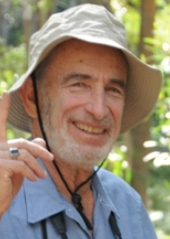 Paul R. Ehrlich合作论文数Center for Conservation Biology, Stanford University;Department of Biology, Stanford University3
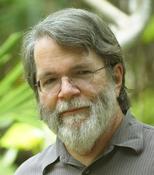 Ross Alford合作论文数Centre for Tropical Environmental and Sustainability Science, James Cook University3
 Rodolfo Dirzo合作论文数Stanford Woods Institute for the Environment, Department of Biology, Stanford University3
 Brian Hall合作论文数Department of Biology, Faculty of Science, Dalhousie University3
 Helio Ricardo da Silva合作论文数3Kevin C. Zippel合作论文数3
 Jussi T Eronen合作论文数Department of Geology, Helsinki University3
 Luis A. Coloma合作论文数Section of Integrative Biology C0930, University of Texas;Pontificia Universidad Cato ´ lica del Ecuador, University of California;Pontificia Universidad Cato ´ lica del Ecuador, University of California, Berkeley3James Diffendorfer合作论文数3
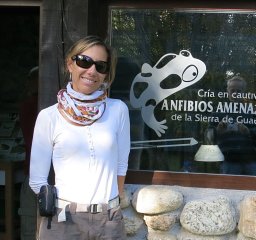 Patricia A Burrowes合作论文数Department of Biology, University of Puerto Rico3
 Anthony D. Barnosky合作论文数Jasper Ridge Biological Preserve, Stanford University;Department of Integrative Biology, University of California, Berkeley;Department of Biology, Stanford University3
 Elizabeth Hadly合作论文数Department of Biology, School of Humanities and Sciences, Stanford University3
 Michael J. Lannoo合作论文数School of Medicine, Indiana University3
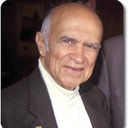 George Rabb合作论文数3
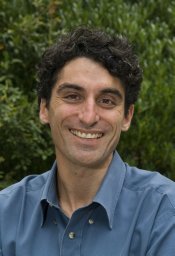 Christopher J. Raxworthy合作论文数Department of Herpetology, American Museum of Natural History;Division of Vertebrate Zoology, American Museum of Natural History;Institute for Comparative Genomics, American Museum of Natural History;Richard Gilder Graduate School, American Museum of Natural History3
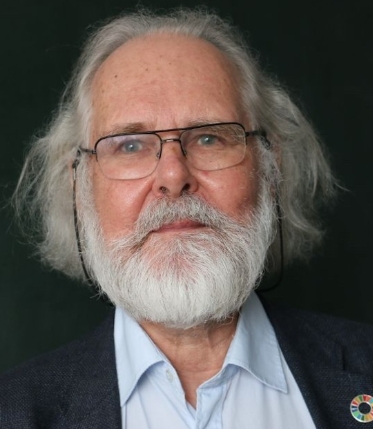 Nils Chr. Stenseth (尼尔斯·克里斯蒂安·斯坦塞斯)合作论文数Centre for Ecological and Evolutionary Synthesis, Department of Biosciences, Faculty of Mathematics and Natural Sciences, University of Oslo;Vanke School of Public Health, Tsinghua University3Kim M. Howell合作论文数3Alex D. Hyatt合作论文数3
 Rohan Pethiyagoda合作论文数Department of Biology;Boston University;Department of Biology, Boston University3Rafael L. Joglar合作论文数3
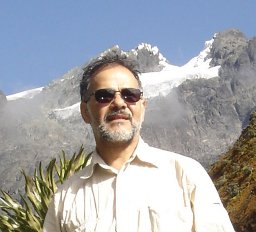 Enrique La Marca合作论文数Laboratorio de Biogeografia;Escuela de Geografia;Facultad de Ciencias Forestales;Universidad de Los Andes;Laboratorio de Biogeografia, Universidad de Los Andes3
 Timothy Richard Halliday (Timothy R. Halliday)合作论文数Open University3Sergius L. Kuzmin合作论文数3
 Louis Du Preez合作论文数School of Environmental Sciences and Development, North-West University3
 Federico Bolaños合作论文数Escuela de Biología, Universidad de Costa Rica3
 Mark Stanley Price合作论文数Department of Zoology, University of Oxford3




