In both academia and the pharmaceutical industry, large-scale assays for drug discovery are expensive and often impractical, particularly for the increasingly important physiologically relevant model systems that require primary cells, organoids, whole organisms, or expensive or rare reagents. We hypothesized that data from a single high-throughput imaging assay can be repurposed to predict the biological activity of compounds in other assays, even those targeting alternate pathways or biological processes. Indeed, quantitative information extracted from a three-channel microscopy-based screen for glucocorticoid receptor translocation was able to predict assay-specific biological activity in two ongoing drug discovery projects. In these projects, repurposing increased hit rates by 50- to 250-fold over that of the initial project assays while increasing the chemical structure diversity of the hits. Our results suggest that data from high-content screens are a rich source of information that can be used to predict and replace customized biological assays.
The to date largest comparative study of nine state-of-the-art drug target prediction methods finds that deep learning outperforms all other competitors. The results are based on a benchmark of 1300 assays and half a million compounds.
We repurpose a High-Throughput (cell) Imaging (HTI) screen of a glucocorticoid receptor assay to predict target protein activity in multiple other seemingly unrelated assays. In two ongoing drug discovery projects, our repurposing approach increased hit rates by 60- to 250-fold over that of the primary project assays while increasing the chemical structure diversity of the hits. Our results suggest that data from available HTI screens are a rich source of information that can be reused to empower drug discovery efforts.
In the context of drug discovery, a key problem is the identification of candidate molecules that affect proteins associated with diseases. Inside Janssen Pharmaceutica, the Chemogenomics project aims to derive new candidates from existing experiments through a set of machine learning predictor programs, written in single-node C++. These programs take a long time to run and are inherently parallel, but do not use multiple nodes. We show how we reimplemented the pipeline using Apache Spark, which enabled us to lift the existing programs to a multi-node cluster without making changes to the predictors. We have benchmarked our Spark pipeline against the original, which shows almost linear speedup up to 8 nodes. In addition, our pipeline generates fewer intermediate files while allowing easier checkpointing and monitoring.
An important computational tool in drug design is target prediction where either for a given chemical structure the interacting biomolecules (e.g. proteins) must be identified. Chemical structures interact with different biomolecules if they have similar 3D structure. Thus, the outputs of the prediction are highly interdependent from each other. Furthermore, we have partially labelled molecules since not all training molecules are measured of being active on each biomolecule. The Merck Kaggle challenge on chemical compound activity was won by Hinton’s group with deep networks. This indicates the high potential of deep learning in drug design and attracted the attention of big pharma. However, the unrealistically small scale of the Kaggle dataset does not allow to assess the value of deep learning in drug target prediction if applied to in-house data of pharmaceutical companies. Even a publicly available drug activity data base like ChEMBL is magnitudes larger than the Kaggle dataset. ChEMBL has 13 M compound descriptors, 1.3 M compounds, and 5 k drug targets, compared to the Kaggle dataset with 11 k descriptors, 164 k compounds, and 15 drug targets. On the ChEMBL database, we compared the performance of deep learning to seven target prediction methods, including two commercial predictors, three predictors deployed by pharma, and machine learning methods that we could scale to this dataset. Deep learning outperformed all other methods with respect to the area under ROC curve and was significantly better than all commercial products. Deep learning surpassed the threshold to make virtual compound screening possible and has the potential to become a standard tool in industrial drug design.
An important computational tool in drug design is target prediction where either for a given chemical structure the interacting biomolecules (e.g. proteins) must be identified. Chemical structures interact with different biomolecules if they have similar 3D structure. Thus, the outputs of the prediction are highly interdependent from each other. Furthermore, we have partially labelled molecules since not all training molecules are measured of being active on each biomolecule. The Merck Kaggle challenge on chemical compound activity was won by Hinton’s group with deep networks. This indicates the high potential of deep learning in drug design and attracted the attention of big pharma. However, the unrealistically small scale of the Kaggle dataset does not allow to assess the value of deep learning in drug target prediction if applied to in-house data of pharmaceutical companies. Even a publicly available drug activity data base like ChEMBL is magnitudes larger than the Kaggle dataset. ChEMBL has 13 M compound descriptors, 1.3 M compounds, and 5 k drug targets, compared to the Kaggle dataset with 11 k descriptors, 164 k compounds, and 15 drug targets. On the ChEMBL database, we compared the performance of deep learning to seven target prediction methods, including two commercial predictors, three predictors deployed by pharma, and machine learning methods that we could scale to this dataset. Deep learning outperformed all other methods with respect to the area under ROC curve and was significantly better than all commercial products. Deep learning surpassed the threshold to make virtual compound screening possible and has the potential to become a standard tool in industrial drug design.
 Jörg Kurt Wegner合作论文数Johnson and Johnson Innovative Medicine7
 Hugo Ceulemans合作论文数Katholieke Universiteit Leuven6
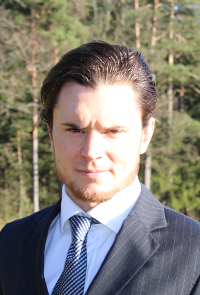 Gunter Klambauer合作论文数Institute for Machine Learning, Johannes Kepler University Linz;Institute of Bioinformatics, Johannes Kepler University Linz5
 Roel Wuyts合作论文数IMEC;Distrinet group at the KULeuven4
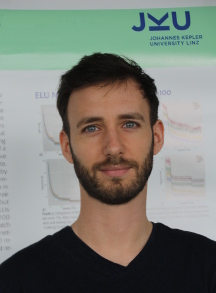 Thomas Unterthiner合作论文数Helsing3
 Andreas Mayr合作论文数Institute for Machine Learning, Johannes Kepler University Linz3
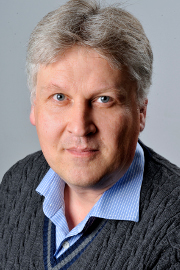 Sepp Hochreiter合作论文数Institute for Machine Learning, Johannes Kepler University Linz;NXAI3
 Alexander Emilov Vapirev合作论文数Space Science Center, University of New Hampshire3Ingrid Velter合作论文数2Andrey Gedich合作论文数2
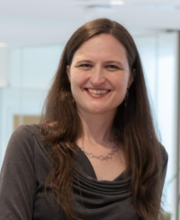 Anne E. Carpenter合作论文数Broad Institute2Vialard Jorge E合作论文数2
 Chupakhin Vladimir合作论文数Laboratory of Chémoinformatics, University of Strasbourg2
 Ádám Arany合作论文数KU Leuven2
 Wolfgang De Meuter合作论文数Vrije Universiteit Brussel2E. Gustin合作论文数2Dries Harnie合作论文数Software Languages Lab, Vrije Unversiteit Brussel2
 Yves Moreau合作论文数University of Leuven2
 Peter J. J. A. Buijnsters合作论文数2
 Yolanda Chong合作论文数2
 Jaak Simm合作论文数G-Research2
 Shantanu Singh合作论文数Dept. of Computer Science and Engg., The Ohio State University2Mathijs Saey合作论文数1
 Djork-Arné Clevert合作论文数Pfizer;AIDD-ITN;Explainable AI for Molecules - AiChemist MSCA DN Horizon Europe1




