Introduction: Alopecia treatments can incur significant patient costs; however, this monetary impact has yet to be characterized in scarring alopecia (SA) patients. Our study aims to characterize the financial burden of SA and its psychosocial impact. Methods: We conducted a cross-sectional study using survey data collected by the Scarring Alopecia Foundation between December 2, 2022, and December 16, 2022. Financial burden metrics and quality of life impacts were analyzed using RStudio. Results: A total of 1,047 individuals (97.4% female, mean age 57.8 years) completed the survey. Most patients (51.4%) spent USD 1-100 monthly on medical treatments, followed by USD 101-250 (22.8%). Annual costs for nonprescription treatments were most commonly USD 1,000. No differences were seen between general dermatologist and hair loss specialist patients. Most patients felt only somewhat supported or not supported by insurance with no difference between public and private coverage. Additionally, no financial metrics were significantly associated with differences in quality of life. Conclusion: Regardless of provider type, patients with SA face substantial out-of-pocket costs for nonmedical items with limited insurance support. Further advocacy is needed to lessen the financial burden faced by SA patients.
Background: Baricitinib (Bari), an oral, selective, Janus kinase inhibitor, is approved for severe alopecia areata (AA) in adults and is being studied in children. Methods: BRAVE-AA-PEDS is a phase 3 trial of pediatric subjects (6 to <18 years [y]) with severe AA (Severity of Alopecia Tool [SALT] score ≥50); BRAVE-AA1 and -AA2 are trials in adults. In BRAVE-AA-PEDS (adolescents, 12 to <18y) and BRAVE-AA1/AA2, subjects were randomly assigned to once-daily Bari 4mg, Bari 2mg, or placebo. Primary endpoint was % of patients with SALT score ≤20 at Week (W) 36. We compared baseline (BL) characteristics and W36 efficacy and safety in adolescents (N=257) vs adults (N=1200). Results: BL characteristics of adolescents and adults, respectively: female, 49.4% vs 60.7%; mean age(y), 14.7 vs 37.5; mean onset age(y), 7.9 vs 25.3, mean disease duration(y), 6.4 vs 12.2; mean current AA episode duration(y), 3.2 vs 3.9; BL SALT score 95-100, 63.8% vs 53.2%. In adolescents and adults, respectively, SALT score <20 was achieved by 42.4% vs 34% of patients on Bari 4mg, 27.4% vs 19.7% on Bari 2mg, and 4.5% vs 4.1% on placebo. Of patients with BL SALT score 50-94, 68% of adolescents vs 48% of adults achieved the primary endpoint. Common adverse events: headache, acne, and upper respiratory tract infection. Conclusion: Bari is effective and safe for severe AA in both adolescents and adults. Adolescents had higher W36 response rates despite higher BL severity, suggesting benefits of early intervention.
BACKGROUND:Janus kinase inhibitors (JAKis) have transformed the treatment of alopecia areata (AA), but not all patients respond to initial therapy. The utility of switching between JAKis in treatment-refractory AA remains underexplored. OBJECTIVE:To evaluate the efficacy and safety of switching between JAKis in patients with severe AA. METHODS:In this multicenter retrospective study, we analyzed 108 patients with severe AA who switched between oral JAKis after a minimum treatment duration of 6 months. Treatment response was assessed using the Severity of Alopecia Tool (SALT). Multivariable logistic regression was used to identify predictors of response to a second JAKi. RESULTS:Overall, 48.8% of patients achieved SALT ≤20 on their second JAKi, and 32.6% achieved SALT ≤10. Of 21 patients who received a third JAKi, 52.4% achieved SALT ≤20 and 38.1% achieved SALT ≤10. Patients who responded to their first JAKi were more likely to respond to a second (odds ratio, 3.33; 95% CI, 1.22-9.68; P = .022). Adverse events were mild and consistent with prior reports. LIMITATIONS:Retrospective design, treatment heterogeneity, and potential selection bias. CONCLUSIONS:Switching between JAKis appears to be a viable strategy for severe AA patients, especially those responding to prior JAKi. Prior response may help guide treatment sequencing.
Introduction Ritlecitinib, an oral, selective JAK3/TEC family kinase inhibitor, demonstrated efficacy and safety up to 48 weeks in patients aged ≥12 years with alopecia areata (AA) in the ALLEGRO phase 2b/3 study (NCT03732807). This updated integrated safety analysis evaluated the safety of ritlecitinib up to ~5 years in patients with AA in two phase 2a studies (NCT04517864; NCT02974868), the phase 2b/3 study, and an ongoing long-term, phase 3, open-label study (NCT04006457) from the ALLEGRO program. Methods Safety data were pooled from the 4 studies. Proportions and incidence rates (IRs; IR/100 patient-years [PYs]) of adverse events (AEs) are reported for the any-ritlecitinib (any dose) and ritlecitinib 50-mg ± 200-mg (50 mg ± 4-week 200-mg loading dose) groups. These analysis groups are not additive and are overlapping populations, with the any-ritlecitinib group including all patients. Results In the any-ritlecitinib (n=1294) and 50-mg ± 200-mg (n=1228) groups, median duration of exposure was 1204 (3539.5 PYs) and 1197 (3261.5 PYs) days, respectively. AEs occurred in 1158 (89.5%; 167.9/100 PYs) and 1070 (87.1%; 148.1/100 PYs) patients in the any-ritlecitinib and 50-mg ± 200-mg groups, respectively. The most common AEs included headache, positive SARS-CoV-2 test, and nasopharyngitis. Serious AEs occurred in 88 (6.8%; 2.5/100 PYs) patients in the any-ritlecitinib group and 84 (6.8%; 2.6/100 PYs) patients in the 50-mg ± 200-mg group, and included 2 deaths (breast cancer and acute respiratory failure/cardiorespiratory arrest) in the 50-mg ± 200-mg group. Discontinuations due to AEs occurred in 7.0% and 6.6% in the any-ritlecitinib and 50-mg ± 200-mg groups, respectively. IRs for both groups were 0.1/100 PYs for opportunistic infections; 1.0/100 PYs for herpes zoster; 0.3/100 PYs for malignancies, excluding nonmelanoma skin cancer; and 0.2/100 PYs for major adverse cardiovascular events. Conclusion Ritlecitinib was generally well tolerated ~5 years in patients with AA. Safety was consistent with previously reported data. Funding This study was funded by Pfizer Inc.
Introduction: Previous data on baricitinib treatment in severe alopecia areata (AA) has shown that treatment response varies by baseline disease severity and by duration of current episode. In general, hair regrowth response varies, and clinicians lack data on how long to optimally treat patients to achieve response. In the literature, time to onset of improvement (defined as 30% improvement from baseline SALT score, i.e. SALT30 can predict ultimate achievement of SALT score ≤20 by Week 52. In this analysis, we evaluated improvement(SALT30) and meaningful response(SALT score ≤20), in clinically relevant subpopulations to characterize time required to treat patients based on their disease presentation. Procedure: Patients randomized to treatment with baricitinib 4mg daily for up to 52 weeks were evaluated from the pooled BRAVE AA1/AA2 phase 3 trials according to four clinically relevant subpopulations divided by baseline SALT score (severe: 50-94; very severe: 95-100) and current AA episode duration (<4 years; >4 years). Patients achieving SALT30 improvement across visits was evaluated for each subpopulation. Among those achieving SALT30, proportion of patients achieving SALT score ≤20 through Week 52 was evaluated at the timepoint during which SALT30 improvers began to plateau. Non- Responder Imputation was used for the missing SALT30 and SALT score ≤20. Results: Among subpopulations with baseline severe AA, the proportion of SALT30 improvers plateaued between 24weeks (61-70%) and 36 weeks (63%-73%) of treatment. Among those who reached SALT30 improvement at Week 24, achievement of SALT score ≤20 at Week 52 was 75% vs. 65%, respectively among those with < 4 years vs. > 4 years duration of current episode. In the baseline very severe AA group, the proportion of SALT30 improvers continued to increase through 52 weeks without plateau. Discussion: This data suggests that 'how long to treat’ with baricitinib 4 mg monotherapy can be tailored to patient baseline characteristics. Evidence of improvement (SALT30) is seen relatively early among those patients with baseline severe SALT score(50-94). Most who achieve improvement at 6 months achieve clinical response (SALT score < 20) within a year of treatment. This suggests that if improvement is seen by 6 months, treatment should be continued to achieve optimal outcomes. Patients with a very severe SALT score (95-100) at baseline (i.e. alopecia totalis or universalis) show continuing (SALT30) improvement up to 1 year. Very severe AA may need at least 1 year to see evidence of treatment effect before considering a stop or switch in therapy, and longer treatment may be required in some improvers to achieve optimal outcomes.
 Brett King合作论文数Department of Dermatology, Yale School of Medicine, Yale University31
 Isabel Pupo Wiss合作论文数26
 James Pathoulas合作论文数26Chloe Walker合作论文数25Kelly E. Flanagan合作论文数25Dina Hagigeorges合作论文数23Kristen Kelley合作论文数22Dustin H. Marks合作论文数22Athena Manatis-Lornell合作论文数21
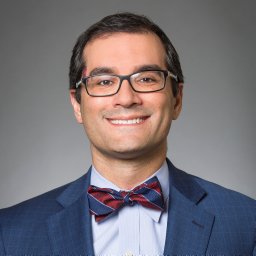 Mostaghimi Arash合作论文数Beth Israel Deaconess Medical Center21
 Jerry Shapiro合作论文数Department of Dermatology, Grossman School of Medicine, New York University20Shivali Devjani合作论文数18
 Atanaskova Mesinkovska Natasha合作论文数Dermatology–Plastic Surgery Institute, Cleveland Clinic18Ogechi Ezemma合作论文数17Laura J Burns合作论文数17Yves Dutronc合作论文数14
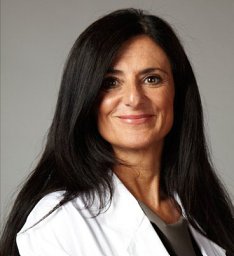 Bianca Maria Piraccini合作论文数Department of Specialised Experimental and Diagnostic Medicine, Alma Mater Studiorum Universita' di Bologna;Department of Medical and Surgical Sciences, University of Bologna14Shaheir Ali合作论文数11Li-Chi Chen合作论文数11Maya S Collins合作论文数11M. Ohyama合作论文数11Okhovat Jean-Phillip合作论文数11Guanglei Yu合作论文数10
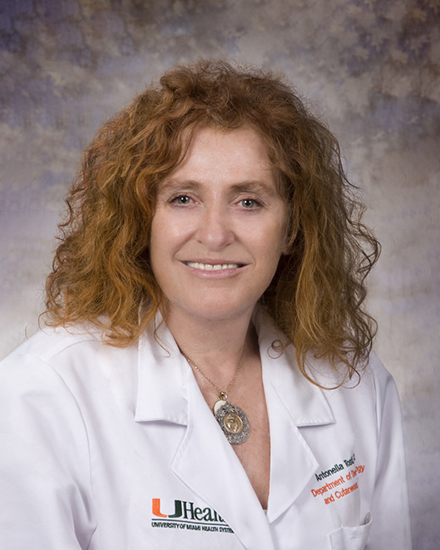 Antonella Tosti合作论文数Dr. Phillip Frost Department of Dermatology and Cutaneous Surgery, Miller School of Medicine, University of Miami10
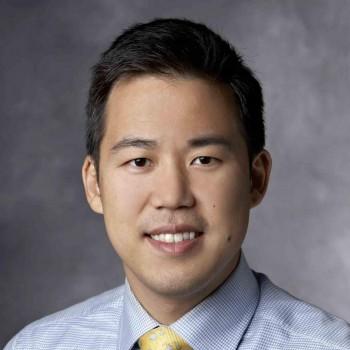 Justin M Ko合作论文数Dermatology Department, Stanford University Clinical
Stanford Dermatology
450 Broadway St
Pavilion B 4th Fl MC 5338
Redwood City, CA 9406310Chino Ogbutor合作论文数9Huang Kathie P合作论文数9
Justin M Ko合作论文数Dermatology Department, Stanford University Clinical
Stanford Dermatology
450 Broadway St
Pavilion B 4th Fl MC 5338
Redwood City, CA 9406310Chino Ogbutor合作论文数9Huang Kathie P合作论文数9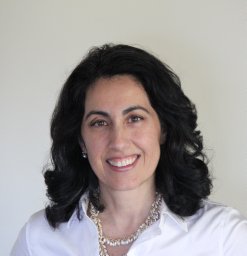 Paradi Mirmirani合作论文数Department of Dermatology, University of California9Amy McMichael合作论文数9
 Brianna De Souza合作论文数8Colleen Hamilton合作论文数8
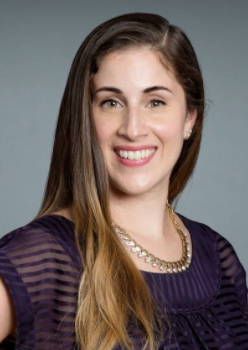 Kristen Lo Sicco合作论文数Department of Dermatology, Grossman School of Medicine, New York University8
 Rodney Sinclair合作论文数Sinclair Dermatology;Department of Medicine, Melbourne Medical School, University of Melbourne;Faculty of Medicine, Dentistry and Health Sciences, University of Melbourne8Lauren R Penzi合作论文数7Chiara Chiasserini合作论文数7Najwa Somani合作论文数7
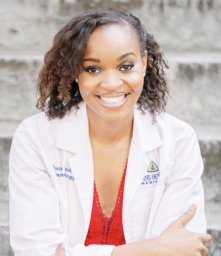 Crystal Aguh合作论文数Department of Dermatology, Johns Hopkins School of Medicine7Saavedra Arturo P合作论文数7
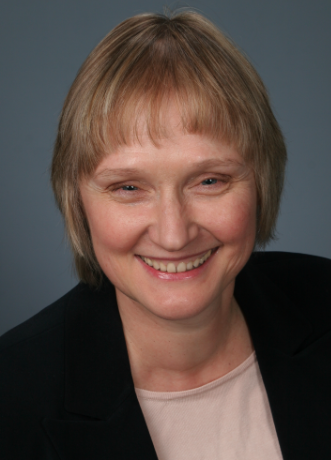 Maria Hordinsky合作论文数Department of Dermatology, Medical School, University of Minnesota7James Cassella合作论文数6
 Sonya Prasad合作论文数6Susan Ball合作论文数6
 Brittany Craiglow合作论文数Department of Dermatology, Yale School of Medicine, Yale University6Jill Kolodsick合作论文数5Sara J Li合作论文数5Wilma F. Bergfeld合作论文数5Mariko Yasuda合作论文数4Balaji Jothishankar合作论文数4Alexandre Lejeune合作论文数4




