This paper presents a computationally efficient design of modified cosine-based decimation filters. One of the main contributions of this paper is the proposal of a multiplierless finite impulse response low-order linear-phase filter to increase spurious signal rejection in the so-called folding bands. The resulting filters feature reduced computational complexity compared with other recent proposals in the literature, as well as higher folding-band attenuation than traditional comb filters. The frequency behavior of the proposed class of decimation filters is compared with generalized comb filters as well as other proposals in the recent literature. Moreover, this paper addresses field-programmable gate array implementation of the proposed filters in a variety of structures, including both nonrecursive and recursive architectures, and it evaluates and compares the performance of these architectures in terms of area and power consumption. A critical comparison is provided with the goal of highlighting key design issues and computational efficient implementations for the interested reader.
The aim of this paper is twofold. On one hand, it presents the results of the search for good punctured systematic recursive convolutional encoders suitable for application in serially concatenated convolutional codes (SCCCs) operating in two different target regions: at low-to moderate signal-to-noise ratios (SNRs), i.e., in the so called waterfall region, and at high SNRs. On the other hand, it provides some useful design guidelines for choosing the constituent encoders in an SCCC. The results of the search for good SCCCs operating in the waterfall region rely upon an effective algorithm, based on density evolution technique, first proposed in a companion paper. Good punctured SCCCs were obtained through considerations deduced by the behaviour of the bit error probability of an SCCC for high values of both SNR and interleaver length, i.e., through asymptotic considerations. The mother codes in the serial concatenation are rate 1/2 recursive convolutional encoders (RCC) found by an exhaustive search for encoders tailored to SCCC schemes, using two different selection criteria. Extensive tables of optimized puncturing patterns for various mother codes and SCCCs are presented along with sample simulation results.
Novel emerging tools are allowing the manipulation and control of biological cells and their functions, e.g., sensing, actuation, and communication through biochemical stimuli. These tools have the potential to enable the implementation of man-made networks of biological computing devices, i.e., Internet of Bio-things. In this work, signal transduction pathways, i.e., cells' chemical reactions that process biochemical signals, are proposed for the design of analog linear filters to be utilized as components in the Internet of Bio-things. These filters, which exploit the crosstalk of signal transduction pathways to achieve the desired response, are here modeled and analyzed. The relations between filter properties and biochemical parameters are presented with the goal of designing a notch filter. A preliminary numerical example is also given as proof-of-concept.
Comb filters are a class of low-complexity filters especially useful for multistage decimation processes. However, the magnitude response of comb filters presents a droop in the passband region and low stopband attenuation, which is undesirable in many applications. In this work, it is shown that, for stringent magnitude specifications, sharpening compensated comb filters requires a lower-degree sharpening polynomial compared to sharpening comb filters without compensation, resulting in a solution with lower computational complexity. Using a simple three-addition compensator and an optimization-based derivation of sharpening polynomials, we introduce an effective low-complexity filtering scheme. Design examples are presented in order to show the performance improvement in terms of passband distortion and selectivity compared to other methods based on the traditional Kaiser-Hamming sharpening and the Chebyshev sharpening techniques recently introduced in the literature.
In this work, we propose a new method to design sharpened comb filters to attain given specifications on the acceptable maximum passband distortion as well as on selec-tivity. The key idea hinges upon the definition of a sharpening polynomial with as many coefficients as the number of constraints imposed. The sharpening filter design is then optimized through a Particle Swarm Optimization algorithm in order to find power-of-2 coefficients for the sharpening polynomial so as to desig a multiplierless decimation filter. A design example is discussed in order to contrast the magnitude responses of the proposed filters among each other, to show the improved performance in terms of passband distortion and selectivity with respect to classical comb filter, and to highlight the key design steps of the proposed design.
This paper proposes a class of decimation filters with reduced passband signal distortion and improved spurious signal rejection across the folding bands. These filters are well-suited to decimation of oversampled digital signals processed by wideband digital receivers and Sigma Delta AD converters. The total decimation factor is split between two stages of decimation and zero rotation in a nonrecursive form is applied at the lower rate in order to reduce the computational complexity of the proposed filters. We also address a framework to implement multiplierless filters and to compensate for the passband droop introduced by this class of filters. For increased flexibility, we generalize the transfer function by allowing different orders between the two stages of decimation.The paper presents many examples to clearly describe the design procedure. Comparisons are also given with the goal of contrasting the magnitude responses of the proposed filters with the ones of three other techniques recently proposed in the literature, as well as with classical comb filters. (C) 2014 The Franklin Institute. Published by Elsevier Ltd. All rights reserved.
This paper presents an efficient design of low-complexity wide-band compensators to improve the passband characteristic of Cascaded Integrator Comb (CIC) filters. The proposed compensators are designed using the amplitude transformation method recently presented in a companion paper. This work also provides a simple formula to obtain the coefficients of the compensator. Design examples and comparisons were addressed to show that the proposed compensation filters have better frequency characteristics compared to other wide-band compensators recently presented in the literature.
A simple and efficient method to design multiplierless two-stage comb-based decimation filters is presented. The proposed scheme takes advantage of the Chebyshev sharpening, recently introduced in literature, to obtain higher selectivity in comparison to traditional comb filters. The resulting filter has better magnitude response characteristics and fewer Additions Per Output Sample (APOS) with respect to other two-stage comb-based filters available in literature.
In this paper, we present a class of low-complexity decimation filters for oversampled discrete-time signals. The proposed class of filters improves the frequency response of classical comb filters in two respects. First, it introduces extra-attenuation around the so-called folding bands, i.e., frequency intervals whose spurious signals are folded down to baseband during the decimation process. Second, this class reduces the passband distortion via an effective droop-compensator block, thus increasing the passband of the decimation filters. Like comb filters, the proposed class can be realized through multiplierless architectures, which are also discussed thoroughly in the paper. Unlike comb filters, the proposed filters have superior spurious signal rejection and a greatly reduced droop in the signal passband. These features make the proposed filters suitable for multistage decimation applications, such as reconfigurable software radio receivers, as well as for decimating oversampled digital signals produced by Sigma Delta A/D converters. The paper discusses several useful techniques for designing the proposed filters in a variety of architectures with emphasis on non-recursive architectures. Design examples are discussed to highlight the key frequency features along with implementation issues aimed at reducing the computational complexity of the filters. (C) 2013 Elsevier Inc. All rights reserved.
This paper presents a novel two-stage class of decimation filters with superior spurious signal rejection performance around the so-called folding bands, i.e., frequency intervals whose signals get folded down to baseband due to decimation. The key idea to enhance signal rejection in the frequency domain lies on an effective way to place the zeros of a classical comb filter in the aforementioned folding bands. On the other hand, the paper provides a mathematical framework for designing two-stage multiplierless and nonrecursive structures of the proposed filters. Examples are provided to highlight the key steps in the design of the proposed filters. Moreover, the frequency behavior of the proposed filters in both baseband and stopband is compared with classical and generalized comb filters, and a droop compensator is proposed to counteract the passband distortion of the proposed filters.
This paper presents an efficient design of comb-based decimation filters extensively used in the first stage of multistage decimation architectures. The contribution of this work is the introduction of a multiplierless Finite Impulse Response (FIR) low-order linear-phase corrector filter to decrease the passband droop while simultaneously improving the attenuation of classical comb filters in the so-called folding bands. Upon using polyphase decomposition, the proposed filters can be operated at a lower rate. The resulting filters feature compensated passband droop and higher folding-band attenuation than traditional comb filters, while require only shift-and-add operations. Comparisons with other architectures in literature are provided to emphasize the main features along with the key design steps of the proposed filters.
This brief addresses the design of multiplierless decimation filters using an extended set of cyclotomic polynomials (CPs) as constituent filters. It extends the results presented in a companion paper by one of the coauthors to CPs with indexes in the set {1, ... , 200}, and it presents the z-transfer functions of all CPs with indexes from 61 to 200. One of the key observations stemming from the results of this brief is that CPs with indexes in the set {105, ... , 200} still have very effective coefficients, i.e., integers belonging to {-1, 0,+1}, but z-transfer functions have to be recursive. Regardless of the application to multirate filters considered in this brief, these polynomials can also be used for designing classical finite-impulse response filters. Moreover, this brief provides guidelines to simplify the design of constituent decimation filters in multistage architectures and to reduce computational complexity of the proposed filters. Finally, comparisons are given with respect to other techniques in the literature.
In this paper we present a novel two step design technique for Low Density Parity Check (LDPC) codes, which, among the others, have been exploited for performance enhancement of the second generation of Digital Video Broadcasting-Satellite (DVB-S2). In the first step we develop an efficient algorithm for construction of quasi-random LDPC codes via minimization of a cost function related to the distribution of the length of cycles in the Tanner graph of the code. The cost function aims at constructing high girth bipartite graphs with reduced number of cycles of low length. In the second optimization step we aim at improving the asymptotic performance of the code via edge perturbation. The design philosophy is to avoid asymptotically weak LDPCs that have low minimum distance values and could potentially perform badly under iterative soft decoding at moderate to high Signal to Noise Ratio (SNR) values. Subsequently, we present sample results of our LDPC design strategy, present their simulated performance over an AWGN channel and make comparisons to some of the construction methods presented in the literature.
Multirate signal processing has become a key topic enabling efficient techniques for digital information processing in a variety of applications such as digital transceivers s for wireless as well as satellite communication systems, digital broadcasting, high performance audio and video, multimedia services, and signal compression. In the wireless communications arena, multirate signal processing ...
The design of low-complexity filters based on the first 104 Cyclotomic Polynomials (CPs) has received great interest because CPs have coefficients belonging to the set {-1, 0, 1}, thus yielding simple and efficient multiplierless structures. Recently, the design of CP filters has been extended in a search space containing the first 200 CPs and it has been shown that their recursive z-transfer functions still have coefficients in the set {-1, 0, 1}, resulting in complexity reductions especially for narrow passband filters. In this paper, it is shown that any filter with arbitrarily narrow passband can be designed regardless of the CP's indexes such that the resulting cascade of recursive building blocks has minimum number of additions.
In this brief, we address the design of economical recursive generalized comb filters (GCFs) by proposing an efficient technique to quantize the multipliers in the z-transfer function employing power-of-2 (PO2) terms. GCFs are efficient anti-aliasing decimation filters with improved selectivity and quantization noise rejection performance around the so-called folding bands with respect to classical comb filters. The proposed quantization technique guarantees perfect pole-zero cancelation in the rational z-transfer function of the GCFs, thus totally avoiding instability problems. Moreover, we propose the use of a simple droop compensator for the sake of recovering the passband droop distorting the useful digital signal in the baseband. A design example is proposed with the aim of showing the application of the proposed technique, and a practical architecture of a sample third-order GCF is discussed.
We derive the probability that a randomly chosen NL-node over $S$ gets localized as a function of a variety of parameters. Then, we derive the probability that the whole network of NL-nodes over $S$ gets localized. In connection with the asymptotic thresholds, we show the presence of asymptotic thresholds on the network localization probability in two different scenarios. The first refers to dense networks, which arise when the domain $S$ is bounded and the densities of the two kinds of nodes tend to grow unboundedly. The second kind of thresholds manifest themselves when the considered domain increases but the number of nodes grow in such a way that the L-node density remains constant throughout the investigated domain. In this scenario, what matters is the minimum value of the maximum transmission range averaged over the fading process, denoted as $d_{max}$, above which the network of NL-nodes almost surely gets asymptotically localized.
Editorial for the special issue Spectrum Sharing and Sensing for Future Broadband Networks: The Cognitive Radio Technology
 Marina Mondin合作论文数Department of Electrical and Computer Engineering, College of Engeering, Computer Science, and Technology, California State University, Los Angeles50
 Fred Daneshgaran合作论文数Electrical Engineering, UCLA Division of Physical Sciences42
 Gordana Jovanovic Dolecek合作论文数Department of Electronics, Instituto Nacional de Astrofísica, Óptica y Electrónica14F. Mesiti合作论文数8
 David Ernesto Troncoso Romero合作论文数Div Ciencias Ingn & Tecnol, Univ Autonoma Estado Quintana Roo7Alessandro Boch合作论文数5
 Bartolo Scanavino合作论文数4
 Fabio Mesiti合作论文数Dip. Di Elettronica, Politecnico di Torino3peter t j liang合作论文数2mrityun chakraborty合作论文数2j chang合作论文数2d chen合作论文数2y sun合作论文数2j lu合作论文数2
 Gaetano Palumbo合作论文数Dipartimento di Ingegneria Elettrica Elettronica e dei Sistemi, Universita di Catania2
 Maurits Ortmanns合作论文数Institute of Microelectronics, Faculty of Electrical Engineering and Computer Science, University of Ulm;Steinbeis Transfer Center Mixed-Signal IC Design and Consulting2
 Vincent C. Gaudet合作论文数Dept Elect & Comp Engn, Univ Alberta2
 Andrea Neviani合作论文数Department of Information Engineering;University of Padova;Department of Information Engineering, University of Padova2
 Shanthi Pavan合作论文数Department of Electrical Engineering, Indian Institute of Technology, Madras2
 Reza Lotfi合作论文数Ferdowsi University of Mashhad2
 Letizia Lo Presti合作论文数UnitelmaSapienza2Jerry Sobelman合作论文数2
 Ali Sheikholeslami合作论文数The Edward S. Rogers Sr. Department of Electrical & Computer Engineering, Faculty of Applied Science and Engineering, University of Toronto2
 Emanuela Falletti合作论文数2
 Gabriele Manganaro合作论文数MediaTek2
 Wouter.A. Serdijn合作论文数Department of Microelectronics, Faculty of Electrical Engineering, Mathematics and Computer Science, Delft University of Technology2
 Paolo Mulassano合作论文数Compagnia di San Paolo2
 Mohab Anis合作论文数Department of Electrical and Computer Engineering, University of Waterloo;School of Sciences and Engineering, American University in Cairo;INNOVETY LLC2
 Sorin Cotofana合作论文数Computer Engineering Laboratory, Faculty of Electrical Engineering, Mathematics and Computer Science, Delft University of Technology2
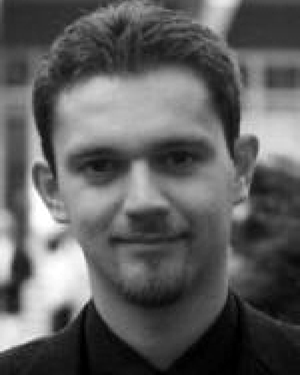 Fabrizio Sellone合作论文数2
 Yehia Massoud合作论文数Innovative Technologies Labs, King Abdullah University of Science and Technology2
 Aleksandar Tasic合作论文数2
 Jipeng Li合作论文数2
 Anas A. Hamoui合作论文数2seong hwan cho合作论文数1Angelo Calafato合作论文数1felix lustenberger合作论文数1
 Ricardo Garcia Baez合作论文数1norikazu takahashi合作论文数1eduard alarcon cot合作论文数1
 Ignacio Santamaria合作论文数Department of Communications Engineering, Universidad de Cantabria1
 SeongHwan Cho合作论文数Department of Semiconductor System Engineering, School of Electrical Engineering, Korea Advanced Institute of Science and Technology1
 Chua-Chin Wang (王朝欽)合作论文数College of Engineering, National Sun Yat-sen University1
 Massimiliano Pierobon合作论文数Department of Computer Science and Engineering, School of Computing, University of Nebraska-Lincoln;Department of Biochemistry, University of Nebraska-Lincoln1
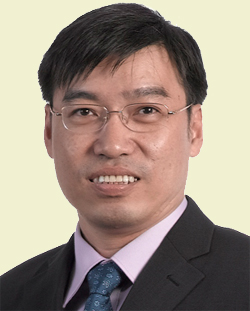 Chip Hong Chang合作论文数School of Electrical and Electronic Engineering, Nanyang Technological University1
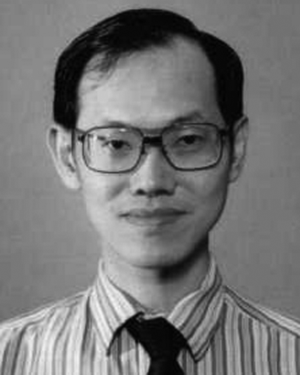 Yong Ching Lim合作论文数School of Electrical and Electronic Engineering, Nanyang Technological University1
 Huijun Gao (高会军)合作论文数School of Astronautics, Harbin Institute of Technology1
 Daniele Borio合作论文数Location And Navigation ( PLAN ) Group;Department of Geomatics Engineering;University of Calgary;Location And Navigation ( PLAN ) Group, University of Calgary1
 Hamid Sadjadpour合作论文数Department of Electrical and Computer Engineering, Baskin School of Engineering, University of California, Santa Cruz;Kresge College, University of California, Santa Cruz1




