This study analyses the process of recognition of mutilated Republican ex-combatants who remained in Spain at the end of the civil war in April 1939. Unlike the Caballeros Mutilados, they were not integrated into any institution that protected them, nor did they have access to the privileges enjoyed by the mutilated ex-combatants of the rebel army. From the end of the 1960s, they began to demand the recognition of social and economic rights, initiating a long legislative and vindicatory process that lasted more than two decades. It was not until the 1980s that their demands and identification as former members of the republican army were satisfied.
The defeated of the Spanish Civil War constituted a large group with diverse profiles and conditions. Among them are the specific victims, the ex-combatants and civilians who were maimed and disabled, some of whom went into exile. This research analyses their situation on arrival in France, where they soon found themselves immersed in a new war that affected them deeply. The continuation of the associationism within the framework of the The League of Mutilated and War Invalids of the Army of the Republic, born in 1938, was considered the channel to claim the improvement of their living conditions. The results point to a recovery began to take place slowly from 1945 onwards thanks to the persistent work carried out by the association
The article aims to analyse the structure, staff and functions of the so-called Oficina de Enlace, created in 1962 for informational purposes within the Ministry of Information and Tourism. To this end, the existing funds in the General Administration Archive have been used, to which qualitative techniques have been applied for the treatment offered by the documentation, as well as the Bolet & iacute;n Oficial del Estado. From its study we deduce that the office, renamed as of 1974 as Gabinete de Enlace, carried out tasks of surveillance, monitoring, espionage and social control of groups and individuals of a great ideological variety, thus exceeding the purpose defined in the moment of its creation, and acting as support of repressive organisms. Some functions continued to be performed in the first biennium of the Transition to Democracy until their subtle disappearance from 1977, thus confirming the maintenance of dictatorship institutions after Franco's death.
El estudio que presentamos analiza el proceso de reconocimiento de los republicanos excombatientes mutilados que permanecieron en el interior de España al finalizar la guerra civil en abril de 1939. A diferencia de los Caballeros Mutilados, no fueron integrados en ninguna institución que les protegiera ni tuvieron acceso a los privilegios concedidos a los excombatientes mutilados del ejército rebelde. Desde finales de los años sesenta comenzaron a reclamar derechos sociales y económicos, iniciando un largo proceso jurídico y reivindicativo que duró más de dos décadas. En el periodo de la Transición se aprobó un conjunto legislativo que satisfizo sus demandas, aunque se caracterizó por la lentitud y una gran complejidad burocrática.
El artículo que presentamos tiene como objetivo analizar la estructura, personal y funciones de la denominada Oficina de Enlace, creada en 1962 con fines de coordinación informativa en el seno del Ministerio de Información y Turismo. A tal fin se han utilizado los fondos del Archivo General de la Administración, a los que se ha aplicado técnicas cualitativas para el tratamiento de datos que ofrece la documentación, así como al Boletín Oficial del Estado. De su estudio deducimos que la Oficina de Enlace, renombrada a partir de 1974 como Gabinete de Enlace, realizó tareas de coordinación, pero también de vigilancia y control a colectivos e individuos de una gran variedad ideológica, sobrepasando el propósito definido en el momento de su creación y actuando como soporte para organismos policiales. Algunas funciones continuaron siendo desempeñadas en el primer bienio de la Transición a la democracia hasta su desaparición silenciosa a partir de 1977, una circunstancia que confirma el mantenimiento de instituciones de la dictadura tras la muerte de Franco.
El artículo presenta una base de datos donde se recogen registros sobre la representación digital de la Guerra Civil española, el Franquismo y la Transición a la democracia. Se explica el procedimiento seguido en la construcción de este instrumento, tanto en el procedimiento metodológico como en las técnicas de recogida de datos, la catalogación de los hallazgos según el sistema de Dublin Core, su organización en colecciones –páginas web, blogs, audiovisuales digitales y redes sociales– así como las exposiciones virtuales creadas para temáticas específicas. El acceso abierto permite la consulta a todos los interesados en su utilización para la docencia, la investigación y la adquisición de conocimiento.
This article analyses the social reaction to Francisco Franco’s exhumation from his burial place in the Valley of the Fallen at the end of 2019. This decision was taken by virtue of compliance with the so-called Historical Memory Law approved in 2007 and generated a great social debate. Apart from opinions in favour and against that decision coming from the political spectrum of the left and right, respectively, we observed a new attitude, that of humour, present in tweets and memes. By analyzing a collection of memes that circulated in Twitter and WhatsApp groups, our research shows that the new media have brought in content and symbolism that ridicule the late dictator, trivialise the treatment given to the “Caudillo” [Leader] of Spain for nearly four decades and contribute to an uninhibited interpretation of memory policies.
Social networks have an increasingly significant role in our daily lives, from superficial aspects to more relevant topics, such as the transmission of present and past values to contemporary society. One of their most original roles is that of becoming a support and record of recent history and memory, that is to say, brief virtual spaces which act as new ways of resisting that traumatic or little-known episodes are forgotten. This article intends to analyze said phenomenon taking the Spanish Civil War and the posterior Francoism as an example, with the objective of learning how they fulfill their function of generating, spreading and representing the resistance against forgetting. Methods of digital research were applied as well as sources from digital databases.
La extensión de Internet en la sociedad ha actuado como un gran revulsivo para el movimiento asociativo memorial. El recurso a las redes sociales y a los formatos de la Web 2.0 como las páginas web o los blogs, es el más utilizado entre el colectivo. Sin embargo, algunas asociaciones han optado por la producción de revistas y newsletters digitales como medios más directos y de contenidos más extensos. En este marco, el objetivo que planteamos es analizar estos productos comunicativos a fin de comprobar qué contenidos transmiten, cómo los estructuran y cuáles son las funciones que cumplen en el ecosistema mediático memorial. La colección Boletines de la Historia y la Memoria de la base de datos HISMEDI, integrada por veinticuatro registros, ha sido la muestra seleccionada como objeto de estudio (http://evi.linhd.uned.es/projects/hismedi/om/). La hipervinculación y la posibilidad de interactuar con los usuarios configuran una información singular y una distribución en red de noticias sobre la actualidad de la memoria.
ResumenLa eclosión a principios del siglo XXI del movimiento asociativo por la memoria en España ha generado una profusa participación social en la generación de contenidos sobre el periodo 1939-1975. La amplia gama de actores mnemónicos surgidos en estos años escribe sus recuerdos, difunde sus actividades o demanda reivindicaciones en diversos lugares digitales, como los blogs configurados a modo de espacios públicos para escribir sobre asuntos privados. El objetivo que propone este artículo es analizar estos cuadernos de la memoria, comprobar la identidad de los autores, conocer las temáticas y su posible contribución al conocimiento histórico con la finalidad de comprender cómo las nuevas tecnologías y los espacios digitales impactan la narración y la representación del pasado. Para ello se han seleccionado los recursos recolectados en el Portal Hispana, Internet Archive, Blog Search Engine, así como la colección de la Blogosfera de la base de datos del proyecto HISMEDI integrada por 255 blogs.
Las redes sociales desempeñan un papel cada vez más importante en nuestra vida cotidiana, desde aspectos superficiales hasta cuestiones relevantes como la transmisión de valores presentes y pasados a la sociedad actual. Uno de los cometidos más originales es el de erigirse en soportes y registros de la historia y la memoria recientes, es decir, en breves espacios virtuales que actúan como nuevas formas de resistencia al olvido de episodios traumáticos o poco conocidos. Este artículo se propone analizar este fenómeno tomando como ejemplo las cuentas de la Guerra Civil española y el Franquismo consecuente, a fin de conocer el modo en que ejercen su función de generación, difusión y representación de la resistencia contra el olvido. Se han aplicado métodos de investigación digital y fuentes procedentes de bases de datos digitales.
Una casualidad fatal, que no podemos ignorar, ha hecho coincidir el número que presentamos de la revista Historia y Memoria con la expansión de una pandemia provocada por un virus, el Covid-19, que amenaza con golpear hasta el último rincón del planeta. Como sabemos, no es la primera vez que la humanidad se enfrenta a mortíferas pandemias globales. Las enfermedades transportadas por comerciantes, guerreros, soldados, conquistadores, migrantes de todo tipo han contribuido a forjar reinos, naciones, imperios y colonias. Robert B. Marks, vincula los orígenes del mundo moderno a las causas y consecuencias de la Peste Negra de mediados del siglo XIV, a la que considera «una de las mayores catástrofes sufridas por la Humanidad en Europa occidental y Asia oriental»[1]. Sería imposible explicar la expansión europea y la conformación de una economía mundo hegemonizada por el «Viejo Continente» sin comprender lo que el autor denomina el Antiguo Régimen Biológico. Las consecuencias de la Peste Negra también fueron devastadoras para los pobladores de lo que para el imaginario colectivo de los europeos era un «nuevo continente»... [1] Robert B. Marks, Los orígenes del mundo moderno (Barcelona: Crítica, 2007), 38
Chapter 23 Gender, Media, and Modernity Adrian Bingham, Adrian BinghamSearch for more papers by this authorMatilde Eiroa, Matilde EiroaSearch for more papers by this authorSusanne Kinnebrock, Susanne KinnebrockSearch for more papers by this authorClaire McCallum, Claire McCallumSearch for more papers by this author Adrian Bingham, Adrian BinghamSearch for more papers by this authorMatilde Eiroa, Matilde EiroaSearch for more papers by this authorSusanne Kinnebrock, Susanne KinnebrockSearch for more papers by this authorClaire McCallum, Claire McCallumSearch for more papers by this author Book Editor(s):Klaus Arnold, Klaus ArnoldSearch for more papers by this authorPaschal Preston, Paschal PrestonSearch for more papers by this authorSusanne Kinnebrock, Susanne KinnebrockSearch for more papers by this author First published: 13 August 2019 https://doi.org/10.1002/9781119161783.ch23 AboutPDFPDF ToolsRequest permissionExport citationAdd to favoritesTrack citation ShareShareShare a linkShare onFacebookTwitterLinked InRedditWechat Summary This chapter explores the gendering of media markets, media debates about changing gender roles brought about by modernity, and the attempts to challenge and resist traditional gender ideologies from the mid-nineteenth century to the present. It focuses on six European countries – Britain, France, Germany, Spain, Italy, and Russia – in order to identify variations created by different levels of economic development, contrasting political frameworks (democracy, fascism, communism and dictatorship) and alternative religious systems (Protestantism, Catholicism, and atheism), as well as a multitude of social and cultural permutations. The chapter is structured around three chronological sections – the mid-nineteenth century to the outbreak of World War I, 1914 to the 1960s, and the 1970s to the present – capturing some of the most important shifts across the periods. Despite notable changes over the decades and variations across Europe, the resilience of many assumptions about gender and sexuality remains striking. The Handbook of European Communication History RelatedInformation
No AccessNarrative der Guerra Civil in der digitalen Gesellschaft: Dimension und BeiträgeMatilde EiroaMatilde Eiroahttps://doi.org/10.14220/9783737009447.93SectionsPDF/EPUB ToolsAdd to favoritesDownload CitationsTrack Citations ShareShare onFacebookTwitterLinkedInRedditEmail About Previous chapter Next chapter FiguresReferencesRelatedDetails Download book coverBroken Narratives.Volume 4 1. AuflageISBN: 978-3-8471-0944-0 eISBN: 978-3-7370-0944-7HistoryPublished online:August 2019 PDF download
The digital environment has enabled the creation of new genres and formats that give birth to an array of digital-born sources at the disposal of historians. The traditional digitised sources that refer us to conventional archives are now joined by a series of on-line resources with valuable information on the history and culture of today’s world, which should not be ignored by the historiography focused on studying the recent past as well as historiography aiming to analyse the dialogues between past and present. In this document, we have chosen one of those sources, blogs, and we propose methodological guidelines for their analysis. Moreover, a specific analysis is proposed on blogs related to the history and memory of the Spanish Civil War and Franco’s regime.
After the Second World War, anti-communists of different backgrounds from Central and Eastern European countries decided to settle in Franco's Spain, where they sought safety and a place to live during the Cold War. This article will provide an overview of their political profiles and assess the reasons these exiles chose Spain, a country excluded from the United Nations until 1955 and led by Francisco Franco. The article also shows how they settled in the dictatorship linked to the Nazis and Italian Fascists, and the ways in which they continued their struggles against Communism with public and private resources.
The online world generates new types of historical evidence while new technological and cognitive mechanisms cause novel and unexpected manifestations of history and memory. This article explores some of the many issues that arise from the practice of digital research, especially concerning those sources that are born "digital". Such issues include their classification, their credibility and their conversion into historical knowledge. We distinguish history in the digital age from history born digital, and we propose a theory of how digital-born sources affect heuristics and transmission of historical legacies.
 ferrero blanco合作论文数university of granada5
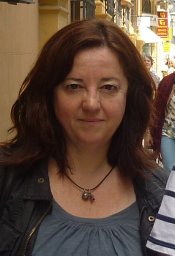 encarnacion barranquero texeira合作论文数Univ Malaga3
 Manuel Alvaro Duenas合作论文数Fac Formac Prof & Educ, Hist Contemporanea & Decano, Univ Autonoma Madrid2
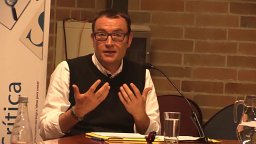 Anaclet Pons合作论文数2
 Juan Carlos Illan合作论文数1
 Claire McCallum合作论文数Univ Exeter, Exeter, Devon, England1Severiano Rojo Hernandez合作论文数1
 Adrian Bingham合作论文数Department of History, Faculty of Arts and Humanities, The University of Sheffield1
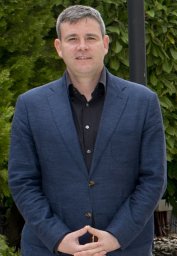 Raul Magallon Rosa合作论文数III de Madrid1
 Susanne Kinnebrock合作论文数Department of Media, Knowledge and Communication, University of Augsburg1
 Angeles Egido合作论文数1




